Keep tabs on your favorite ETFs with a personalized weekly tracker. Create a Watchlist now →



Investing in the Megatrends of the Future
The Future Fund Long/Short ETF is a solution that capitalizes on key megatrends forging the economy of the future.


Keep up with what matters in ETFs
Get timely ETF insights, market trends, and top ideas straight to your inbox.
Your newsletter subscriptions with us are subject to ETF Central's Privacy Policy and Terms and Conditions.
The recently launched Future Fund Long/Short ETF (FFLS) can be characterized as a thematic solution that seeks to provide investors with exposure to megatrends that have the potential to reshape the structure of an industry. As such, the fund will primarily invest in companies capable of reshaping the global economy in an impactful way for years to come.
This article will examine the megatrends of focus for this solution, highlight the investment strategy employed by the manager, and detail the opportunities available to investors.
Like what you're reading?
Stay in the loop — get the latest ETF insights: trends, analysis, and expert picks.
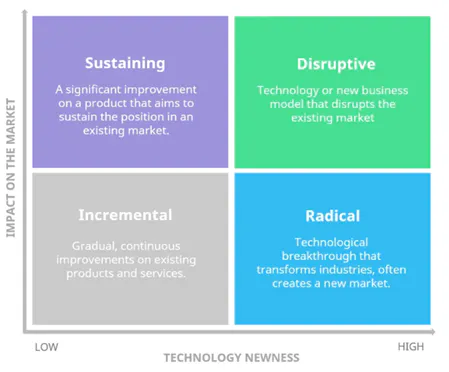
Megatrends & Disruptive Innovation
A megatrend is considered a powerful, transformative force that could shape the global economy, business, and society. While a megatrend can take many forms, such as environmental (i.e., Climate Change) or demographic focused (i.e., Aging Population), their occurrence will result in a seismic socioeconomic shift over time. Over the last two decades, increased – and ongoing – disruptive innovation has accompanied megatrends; resulting in a monumental shift across varying industries and markets. The Future Fund Long/Short ETF aims to invest in companies that are building new disruptive technologies and products that address the prevailing megatrends changing our world, as they offer the potential for superior growth opportunities for investors.
The Future Fund’s Megatrends of Focus
While there are several megatrends changing the societal landscape, the Future Fund has identified ten that they believe will have great significance over the next decade; bringing about disruptive innovations that will reshape the structure of industries in the years ahead.
Social Networking | Replacing Traditional Media
Social media is disrupting traditional media by changing how advertisers communicate with existing and prospective customers. The managers of the fund believe recent share trends of advertising dollars shifting from linear TV and cable toward social media will accelerate going forward, as we become a more digitally native society.
Mobility | Working and Interacting from Anywhere
Consumers and businesses are purchasing goods and services and acquiring information very differently than in the past, presenting huge disruption opportunities for innovative companies. While the Apple ecosystem has been the biggest beneficiary of this change, it allows consumers and businesses flexibility to get everything they need on their phones, work from home, as well as manage their homes, finances, and nearly every aspect of their lives from wherever they are.
E-Commerce | Disintermediation of Brick-and-Mortar Retail
Brick and mortar stores are being displaced by online retailers. For example, Amazon has forced all retailers to change their models to deliver goods to buyers’ homes and to allow them to sample, try, or ask for opinions about items they buy. Nearly all large retailers have developed omnichannel offerings. Retailers with the most built-out direct channels and the best technology are gaining shares from those who invested too little. As a result, demand for retail space continues to shrink while squeezing middleman profits.
Climate Sustainability | How Technology can Fight Climate Change
With government incentives to reduce carbon emissions and a younger generation who are focused on saving the environment, climate sustainability has become one of the major trends where early innovators can disrupt and take share from those who continue to waste resources and harm the environment. Tesla is the poster child for leading the transition to a new sustainable energy world in automobiles, but other innovative sustainable companies are harnessing solar energy, wind, and conserving natural resources to keep the earth green.
Automation | Artificial Intelligence (AI) and Robotics Replacing Labor
Automation is everywhere. Artificial intelligence (AI), relying on combining computers and data, are able to problem solve and make decisions that mimic the human mind. AI is used more and more by retailers, banks, and airlines as a first line of service for their customers. In other industries, robots produce most cars and appliances, self-service is the new normal in nearly every service we use, and email and texts have replaced live interactions between humans. In hospitals, robots are supplementing surgeons’ skills. Transportation and fulfillment are increasingly run autonomously. Those most aggressive at replacing humans with machines can bring costs down substantially, cut prices, and grow market share, disrupting those who don’t embrace automation.
Big Data and Security | Data Management, Privacy and Productivity
Nearly every company uses cloud services to store and allow employees to access information, which Amazon, Microsoft, and Google collectively control. This environment has improved data management, access and productivity. On the other side of the spectrum, there is a huge demand for data privacy and protection services where firms like Palo Alto, Mandiant, and Crowdstrike lead.
People Living Longer | Healthcare and Technology Converging
The population is getting older. The median age across the globe reached 30 in 2019, up from 21.5 in 1970, due to a declining global birth rate combined with an aging population. In 2020, 13.5% of the world’s population was 60 and over while 25.4% were 14 and under. Global population growth is now half of its peak rate of 2.2% in 1962-63. This creates huge opportunities for innovation in medicine and surgical instruments that extend the lives of our older population, as well as for businesses catering to people marrying older and bearing fewer children.
Fintech | Digital Transactions and Financial Innovation
We are already on the precipice of a cashless society. Innovation in FinTech means coming up with different ways to transact business, invest, and manage assets that didn’t exist a decade ago. For example: buy now / pay later (BNPL) is an innovation that didn’t exist five years ago. With its advent, nearly every major credit card and financial newcomer can get sellers to pay a commission in lieu of buyers paying interest while enjoying their purchases before fully paying for them. Also, different models for managing assets now exist that are commission-free and more transparent.
Lifestyle Betterment | Fitness, Staying Young, Enjoying Life
As people age, their desire to stay fit and look younger is driving consumption. They eat healthier and take advantage of more cosmetic surgery. At the same time, they are enjoying their lives more, traveling, buying pets, and splurging on self-indulgences and luxury brands like never before. The workplace has become far more casual. Working from home or remotely seems like a secular change – one that is likely to outlast the current pandemic as employees enjoy greater work/life balance.
24/7 Information and Entertainment | Delivered Digitally
The advent of 24/7 information and entertainment has changed the way we consume both. We can search for relevant facts and information any time day or night, and get instant results delivered digitally on our phones. We can stream movies, YouTube videos, or podcasts just about anywhere there’s Wi-Fi, even on our TVs.
The opportunity available to investors
The Future Fund Long/Short ETF (FFLS) utilizes a long/short investment strategy, thus it will invest in companies that are best able to exploit their stated megatrends of focus and short companies most disrupted by these same megatrends.
For investors, this investment solution provides them with the opportunity to gain exposure to companies that are advancing the business and innovation landscape. As such, it can be considered a future-focused solution. By investing in companies that are able to capitalize on these megatrends, investors have the potential to profit from long-term trends that may benefit the world we live in.
Please note this article is for information purposes only and does not in any way constitute investment advice. It is essential that you seek advice from a registered financial professional prior to making any investment decision.

Latest ETF News
See all ETF newsThere's an ETF for That? Humanoid Robotics and Physical AI


How Some ETF Issuers Use Their Own Funds for Cash Management

These Public-Private ETFs Invest in Polymarket and Anduril

There's an ETF for That? Frontier Markets




 Advantages of ETFs over Mutual Funds1/6
Lower Costs
In this guide, we'll explore the advantages of ETFs over mutual funds, giving you valuable insights into why ETFs have gained significant popularity among investors like yourself.
Leveraged ETFs: Unlocking the Potential for Amplified Returns1/6
Understanding Leveraged ETFs
Explore leveraged ETFs: potential for amplified returns & risks. 5 ETFs to consider across equities, commodities & fixed income.
What is a Leveraged ETF?1/6
Introducing Leveraged and Inverse ETFs
In this guide, we'll dive into the world of leveraged ETFs, exploring their definition, mechanics, potential risks, and rewards.
Recent educational content

ETF Trends
ETF Industry KPIs October 5, 2026
This week’s KPI data overview highlights key metrics and trends shaping the ETF landscape.

ETF Trends
ETF Industry KPIs September 28, 2026
This week’s KPI data overview highlights key metrics and trends shaping the ETF landscape.
ETF Trends
ETF Industry KPIs September 22, 2026
This week’s KPI data overview highlights key metrics and trends shaping the ETF landscape.
First Look ETF
First Look ETF: Income, Corporate Arbitrage, and Growth and Value Investing
First Look ETF September 2026: iCapital, Mast Investments and North Square unpack new ETFs targeting monthly income, merger arbitrage and complementary growth and value exposure.

Browse all educational columns



ETFs’ Next Act: From Access to Selection
With 1,790 new products launched by July 2026, choosing is harder than ever. Our Global ETF Survey 2026, built on 620 professional investors and allocators, shows how active, fixed income, options-based and thematic ETFs are reshaping fund selection.