Turn ETF ideas into real portfolios. Try the builder now →



Investing in agricultural commodities
Geopolitical risks continue to threaten the supply of certain agricultural commodities. Is there an opportunity for investors seeking to diversify their portfolios?

Keep up with what matters in ETFs
Get timely ETF insights, market trends, and top ideas straight to your inbox.
Your newsletter subscriptions with us are subject to ETF Central's Privacy Policy and Terms and Conditions.
There is a whole range of reasons as to why investors have flocked to commodities in 2022. Uncertain market environments, geopolitical risks, as well as supply and demand issues have all played a role in shaping how investors see the outlook for this year and beyond. Invesco recently reported its commodities ETFs had seen an astronomical $3.2 billion of inflows this year due to concerns about inflation, rising interest rates, and unwavering geopolitical tensions. In this article, we take a closer look at agricultural commodities, consider the opportunities for investors, and conclude by examining four agricultural commodity ETFs.
Like what you're reading?
Stay in the loop — get the latest ETF insights: trends, analysis, and expert picks.
Agricultural commodities – What are they?
While there is no universal definition for agricultural commodities (AC), Cornell Law School provides a succinct delineation of AC as: “Plant and animal products and their by-products, such as crops, forestry products, hydroponics, nursery stock, aquaculture, meat, on-farm generated manure, and fish and seafood products”. The list does not end there though - other examples of what can be classified as agricultural commodities include sugar, coffee, palm oil and more. This is important to note because agricultural commodities are primary sources of consumption for humans.
Impressive year-to-date returns – Should investors pay attention?
Agricultural commodity ETFs have performed exceptionally well for the year. For example, Teucrium’s Wheat Fund (NYSE:WEAT) and Agricultural Fund (NYSE:TAGS) are both up by double-digits since the beginning of the year. Other AC ETFs covered in this article have also outperformed the market for the year. While past performance in no way guarantees future returns, given the supply and demand shock the industry has experienced, it would not be surprising to see these rallies continue for the short and medium term.
Why gain exposure to agricultural commodities?
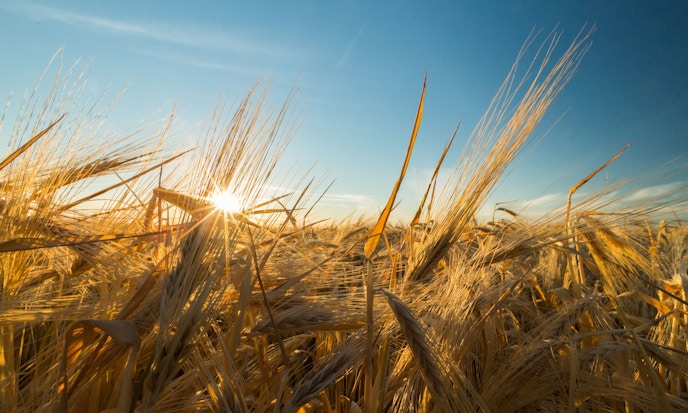
As aforementioned, agricultural crops serve as primary sources of consumption for our nourishment and sustenance. Crop yields are essential to feeding the continuously increasing global population. In other words, agricultural commodities are something we will always need. One such crop that is of significant value is wheat - which according to this peer-reviewed article is a staple crop for 35% of the world’s population.
Ukraine’s exports of wheat
Russia’s invasion of Ukraine was a devastating blow to the world grain supply. To put it in perspective, from 2020 to 2021, Ukraine exported 44.9 million tonnes of wheat, corn and barley. The conflict, which began earlier this year, has severely impeded the country’s ability to continue its production and export capacity as they deal with Russian aggression. While Ukraine, Russia and Turkey did successfully negotiate and sign a trilateral deal to continue shipments of Ukrainian grain, the nature of the deal is opaque and shaky at best. Case in point: Vladimir Putin’s comments earlier this month, in which he criticized the very same deal he signed, were a catalyst for wheat futures to go up by 6.9%. In other words, there is no guarantee the deal will last given the tumultuous nature of war and the possibility of the deal being nullified.
Final takeaway on agricultural commodities
While no one can predict with 100% certainty when geopolitical externalities will subside, it’s unlikely that anyone will be giving up their bread, cereals, or crackers any time soon. As long as demand remains strong, the following ETFs may be of interest to investors seeking exposure to agricultural commodities.
4 agricultural commodity ETFs worth examining
WEAT – (Teucrium Wheat Fund)
- AUM: $367.40 M
- Total Expense Ratio: 1.14%
- YTD Performance: +18.29%
- 3-Year Performance: +68.51%
TAGS – (Teucrium Agricultural Fund)
- AUM: $47.33 M
- Total Expense Ratio: 0.13%
- YTD Performance: +14.92%
- 3-Year Performance: +67.77%
VEGI – (iShares MSCI Global Agriculture Producers ETF)
- AUM: $280.97 M
- Expense Ratio: 0.39%
- YTD Performance: +2.52%
- 3-Year Performance: +54.76
DBA – (Invesco DB Agriculture Fund ETF)
- AUM: $1,529.52 M
- Expense Ratio: 0.91%
- YTD Performance: +4.05%
- 3-Year Performance: +35.32%
Please note this article is for information purposes only and does not constitute investment advice.

Latest ETF News
See all ETF newsCould Water ETFs Be the Next AI Bottleneck Trade?

What is a Boomer Candy ETF?

ETF Comparison: NEOS Nasdaq-100 High Income ETF (QQQI) Versus Goldman Sachs Nasdaq-100 Premium Income ETF (GPIQ)





 Advantages of ETFs over Mutual Funds1/6
Lower Costs
In this guide, we'll explore the advantages of ETFs over mutual funds, giving you valuable insights into why ETFs have gained significant popularity among investors like yourself.
Leveraged ETFs: Unlocking the Potential for Amplified Returns1/6
Understanding Leveraged ETFs
Explore leveraged ETFs: potential for amplified returns & risks. 5 ETFs to consider across equities, commodities & fixed income.
What is a Leveraged ETF?1/6
Introducing Leveraged and Inverse ETFs
In this guide, we'll dive into the world of leveraged ETFs, exploring their definition, mechanics, potential risks, and rewards.
Recent educational content

ETF Trends
ETF Industry KPIs September 8, 2026
This week’s KPI data overview highlights key metrics and trends shaping the ETF landscape.

ETF Trends
ETF Industry KPIs August 31, 2026
This week’s KPI data overview highlights key metrics and trends shaping the ETF landscape.
ETF Trends
ETF Industry KPIs August 24, 2026
This week’s KPI data overview highlights key metrics and trends shaping the ETF landscape.
What’sTheFund
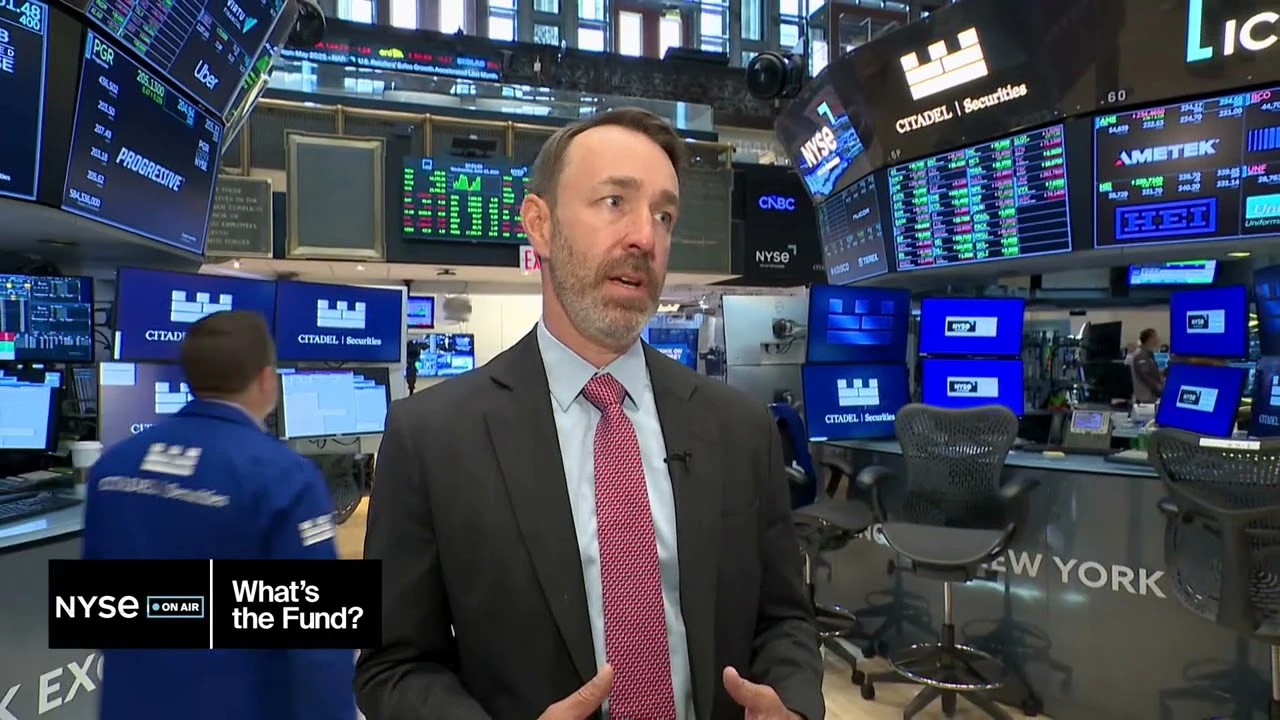
What's the Fund | Ocean Park Diversified Income ETF (DUKZ)
James St Aubin, Chief Investment Officer at Ocean Park Asset Management, discuss the DUKZ ETF, exposing investors to the whole spectrum of asset classes in the fixed income markets, through their rules-based process.

Browse all educational columns



Expert-Built ETF Portfolios, All in One Place
Don’t start from scratch. Discover ready-made ETF portfolios built by professionals to match different goals, timelines, and market views. Use them as inspiration or as a starting point for your own allocation.