Ready-made ETF portfolios built for real investor needs. Explore now →



Inside the XRP ETF Surge and the Traders Driving It
Leveraged XRP ETFs exploded in popularity, but they are built for speed, not patience, and the difference matters.

Keep up with what matters in ETFs
Get timely ETF insights, market trends, and top ideas straight to your inbox.
Your newsletter subscriptions with us are subject to ETF Central's Privacy Policy and Terms and Conditions.
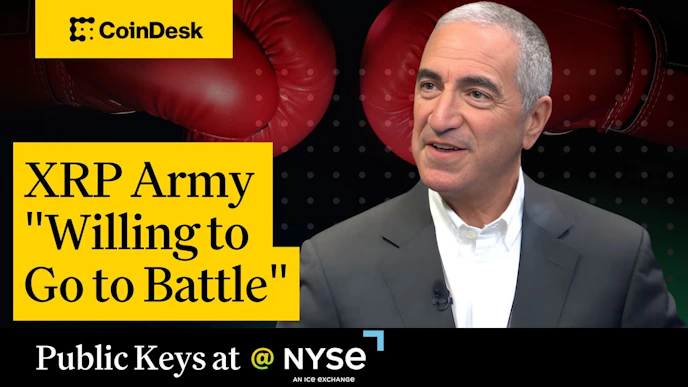
Sal Gilbertie, Founder and CEO of Teucrium, the issuer behind the first XRP ETF in the United States, Teucrium 2x Long Daily XRP ETF (XXRP), joins CoinDesk's Jennifer Sanasie on Public Keys where he breaks down how the double-leveraged ETF works, why the XRP community drove half a billion dollars in inflows in just 12 weeks, and why he's still bullish on Ripple's long-term role in global finance. Plus, his take on the Clarity Act and why corn might be the best portfolio hedge right now.
Global ETF Survey 2026 is Live!
With 1,790 new products launched by July 2026, choosing is harder than ever. Our Global ETF Survey 2026, built on 620 professional investors and allocators, shows how active, fixed income, options-based and thematic ETFs are reshaping fund selection.
A Half-Billion Dollar Start That Grabbed Attention
Sal Gilbertie does not overcomplicate the headline number. His firm pulled in $500 million in just 12 weeks after launching a leveraged XRP ETF.
In the ETF world, that kind of momentum is rare. In crypto, it is even more striking.
What makes it more surprising is that the fund does not hold actual XRP. It is a derivative-based product that tracks price exposure instead of owning the asset itself.
Still, demand poured in. Gilbertie credits a highly engaged XRP community that he describes as loyal and action-oriented. They did not just talk about belief in XRP. They showed it through capital flows.
How Leveraged ETFs Actually Work
The appeal of a leveraged ETF is easy to understand. Investors get amplified exposure. In this case, two times the daily movement of XRP.
Put in simple terms, if XRP rises 1 percent in a day, the ETF aims to rise 2 percent. If XRP falls 1 percent, the ETF aims to drop 2 percent.
The complication comes from the daily reset. Every single day, the fund recalibrates its exposure. That means performance over time does not simply mirror double the underlying asset.
Gilbertie explains it with a practical example. If you hold 10 units of exposure and the price doubles, the fund must rebalance and increase holdings to maintain that two times exposure for the next day.
This creates a major issue in volatile markets. If prices move up and down without a clear trend, investors can lose money even if XRP ends up flat over time.
That is why Gilbertie stresses a key point. These are short-term trading tools, not long-term investments. Without a clear directional view, the structure works against the investor.
Traders vs Investors: A Clear Divide
At launch, the leveraged XRP ETF attracted a wide mix of participants. Many were simply excited to access XRP exposure through a regulated product.
But the market did not stay that way for long.
As spot XRP ETFs entered the market, investor behavior shifted. Long-term holders moved toward products that actually own XRP. These are better suited for portfolio allocation and passive strategies.
Meanwhile, leveraged ETFs found their natural audience. Active traders. People looking to capture short-term price movements and willing to manage risk closely.
The split is now clear. Spot ETFs for investors. Leveraged ETFs for traders.
The Case for XRP Beyond Price
Gilbertie’s optimism about XRP is not centered on price predictions. He focuses on function.
The XRP Ledger is designed for fast and efficient money transfers. Transactions can settle in a matter of seconds. That stands in contrast to traditional systems that still rely on slower processes.
He points out a simple reality. Financial infrastructure has not kept pace with modern expectations. Moving money across borders is still expensive and slow.
XRP offers a potential solution. Whether it becomes dominant is still uncertain, but the use case is real.
Gilbertie makes it clear that price is unpredictable. Adoption and utility are what matter in the long run.
Ripple’s Consistency Stands Out
Another pillar of his thesis is the company behind XRP.
Ripple has spent more than a decade focused on a single goal. Building a global payments network powered by blockchain technology.
Gilbertie highlights their discipline. They have avoided constant pivots and stayed committed to their mission. They are also expanding strategically through acquisitions and regulatory approvals.
The goal is to create a fully integrated financial ecosystem that can compete in a digital-first economy.
In a space where many projects chase trends, that kind of consistency is rare.
Why Education Matters More Than Ever
One of the more revealing parts of the discussion is the emphasis on investor education.
Gilbertie’s firm released a guide explaining how leveraged ETFs work and what risks they carry. This is not just marketing. It reflects a real gap in understanding.
Many investors are drawn to the idea of amplified returns but overlook the mechanics behind them. Daily resets, volatility drag, and compounding effects can all erode returns over time.
Gilbertie encourages investors to learn before they trade. Not just for his product, but for any leveraged ETF.
The message is simple. If you do not understand how it works, you should not be using it.
Macro Forces Shaping the Market
Beyond XRP, Gilbertie is watching broader trends that could shape both crypto and traditional markets.
One key focus is regulation. He points to ongoing efforts to bring clarity to the crypto industry through legislation. While progress is slow, even partial agreement is a positive signal.
Interestingly, he views disagreement as a sign that a deal may be close. If neither side is fully satisfied, it often means compromise is happening.
Still, even if laws pass, the real work begins afterward. Regulators will spend months defining the rules that companies must follow.
Clarity will help, but it will not create instant change.
The Bottom Line
The rise of leveraged XRP ETFs tells a bigger story about today’s markets.
There is strong demand for crypto exposure, but not all products are built the same. Some are designed for long-term belief. Others are built for short-term action.
Gilbertie’s message is consistent throughout. Know what you are buying. Understand the risks. Match the product to your strategy.
Because in fast-moving markets, the difference between investing and trading is not just style. It is outcome.
Please note this article is for information purposes only and does not in any way constitute investment advice. It is essential that you seek advice from a registered financial professional prior to making any investment decision.


Latest ETF News
See all ETF news






 Advantages of ETFs over Mutual Funds1/6
Lower Costs
In this guide, we'll explore the advantages of ETFs over mutual funds, giving you valuable insights into why ETFs have gained significant popularity among investors like yourself.
Leveraged ETFs: Unlocking the Potential for Amplified Returns1/6
Understanding Leveraged ETFs
Explore leveraged ETFs: potential for amplified returns & risks. 5 ETFs to consider across equities, commodities & fixed income.
What is a Leveraged ETF?1/6
Introducing Leveraged and Inverse ETFs
In this guide, we'll dive into the world of leveraged ETFs, exploring their definition, mechanics, potential risks, and rewards.
Recent educational content

First Look ETF
First Look ETF: Income, International, and Cash Flow ETFs
In this season 6 episode of First Look ETF, Stephanie Stanton @etfguide examines the latest ETF marketplace trends with NYSE and guests.


ETF Trends
ETF Industry KPIs October 5, 2026
This week’s KPI data overview highlights key metrics and trends shaping the ETF landscape.

ETF Trends
ETF Industry KPIs September 28, 2026
This week’s KPI data overview highlights key metrics and trends shaping the ETF landscape.
ETF Trends
ETF Industry KPIs September 22, 2026
This week’s KPI data overview highlights key metrics and trends shaping the ETF landscape.
Browse all educational columns



ETFs’ Next Act: From Access to Selection
With 1,790 new products launched by July 2026, choosing is harder than ever. Our Global ETF Survey 2026, built on 620 professional investors and allocators, shows how active, fixed income, options-based and thematic ETFs are reshaping fund selection.