NYSE CRTR Economy Event Watch the replay →



Inflation-Beating ETFs: How they really performed in 2022
Investors looking for an actual inflation hedge in their portfolios should give this a read.


Keep up with what matters in ETFs
Get timely ETF insights, market trends, and top ideas straight to your inbox.
Your newsletter subscriptions with us are subject to ETF Central's Privacy Policy and Terms and Conditions.
With gas hitting over $7.25 per gallon and food prices up 10% year over year, you're probably feeling the pain of inflation in your monthly budget. I’ve got bad news – it's even worse for your portfolio. The S&P 500 finished the first half of 2022 firmly in bear market territory at a -20.25% loss, making it its worst first half in more than 50 years. Bond yields also hit above 3%, leading to the worst bond bear market in 40 years.
The culprit? Inflation – a rise in the price of a basket of common goods as measured by the consumer price index (CPI). What’s caused it? I won't speculate, but probably something to do with the lax monetary policy of the COVID-19 era (quantitative easing and money printer) and current supply chain snags worldwide.
Investors looking to hedge against the value-destroying effects of inflation only have so many choices. Series I Savings Bonds are fantastic and currently offer a 9.62% interest rate, but you can only buy $10,000 annually. Naturally, an entire slew of exchange-traded products touting "inflation protection" have sprung up overnight, attracting high inflows based on their promises.
How have they really performed, though? Let's take a look at some notable asset categories.
Get data on 14,000+ ETFs
Access Trackinsight's reliable and comprehensive data with 500M+ points on 14,000+ ETFs.
Equities
People often parrot that "stocks beat inflation," and yes, it's true that over the long term, they do. However, in the short-term, they don't, and can tank pretty hard due to market or idiosyncratic risks. It's hard to develop reliable profit expectations from stocks when their volatility is affected by so many variables outside of inflation.
Case in point, consider the Horizons Kinetics Inflation Beneficiaries ETF (INFL). This ETF is actively managed and seeks to beat inflation by investing in global equities that benefit from rising prices in real assets (commodities, real estate, etc.) or those that can pass rising costs onto consumers, so revenues rise alongside expenses (thus protecting their margins).
It seems to have done its job…somewhat. Year-to-date (as of July 6th), INFL is down just -10.54% vs -19.77% for the S&P 500. The problem is you could have achieved roughly the same results for a lower cost with passive index funds that track the consumer staples or energy sectors. INFL costs a hefty 0.85% expense ratio, whereas Select Sector ETFs from State Street don't exceed 0.10%.
Commodities
Commodities are usually a so-so investment. This asset class tends to provide a low to negative correlation with stocks and bonds along with high volatility, which makes it a good diversifier according to Modern Portfolio Theory. However, commodities funds suffer from numerous drawbacks, including contango, Schedule K-1 forms, and high expense ratios. Some more actively managed funds try to mitigate this by using a different legal structure or picking futures contracts in backwardation.
Nonetheless, this year has been a fantastic one for commodity bulls. Year-to-date, the benchmark Invesco DB Commodity Index Tracking Fund (DBC) is up 17.93%. Earlier this month it was up higher, but because oil comprises roughly half the ETF, the current downturn in energy has impacted it somewhat. Still, for exposure to a broad basket of 14 commodities including energy, grains, and precious metals, DBC is hard to beat.
We can't discuss commodities without mentioning the often-touted inflation protection of gold. We hear it all the time – gold is a store of value, it beats inflation. Yes, over the very long term (think 100+ years), it does. In the short term? Gold is very volatile and can lose its value quickly. Year-to-date, the SPDR Gold Shares ETF (GLD) has traded more or less flat to end at -3.68%. It's certainly performed better than equities and bonds, but not as good as a broad basket of commodities.
Treasury-Inflation Protected Securities (TIPS)
TIPS are U.S. government bonds indexed against inflation. Unlike I-Bonds, as inflation rises, the principle of TIPS is adjusted higher over time. This increases the bond’s coupon, as the interest rate is being applied to a higher value. Theoretically, TIPs should offer pretty good inflation protection. The problem is, at the end of the day, they’re still bonds.
Being bonds, TIPS have duration, a measure of their price sensitivity to changes in interest rates, with the two being inversely related. For example, if rates are anticipated to increase by 1%, a TIPS with a duration of seven years is expected to lose about 7% of its value and vice-versa if rates fall. All things being equal, TIPS really only protect against sudden, unexpected inflation.
This is a problem. Interest rates tend to rise when inflation does. Rate increases are the primary monetary policy tool the Federal Reserve enacts to curb inflation. The recent 75 basis point hike is a prime example. Year-to-date, after a series of rate hikes, the iShares TIPS Bond ETF (TIP) is down 11.40%. Long-term TIPs suffered even worse, while short-term TIPS suffered less.
Mentioned ETFs
Further reading

Latest ETF News
See all ETF newsMoneyShow Chart of the Day 6/3/26: AI. AI. AI. (And a Handful of Other Stocks, Too)


MoneyShow Chart of the Day 5/27/26: SpaceX Hype Sends Space Stocks into Orbit






 Advantages of ETFs over Mutual Funds1/6
Lower Costs
In this guide, we'll explore the advantages of ETFs over mutual funds, giving you valuable insights into why ETFs have gained significant popularity among investors like yourself.
Leveraged ETFs: Unlocking the Potential for Amplified Returns1/6
Understanding Leveraged ETFs
Explore leveraged ETFs: potential for amplified returns & risks. 5 ETFs to consider across equities, commodities & fixed income.
What is a Leveraged ETF?1/6
Introducing Leveraged and Inverse ETFs
In this guide, we'll dive into the world of leveraged ETFs, exploring their definition, mechanics, potential risks, and rewards.
Recent educational content
Asset TV
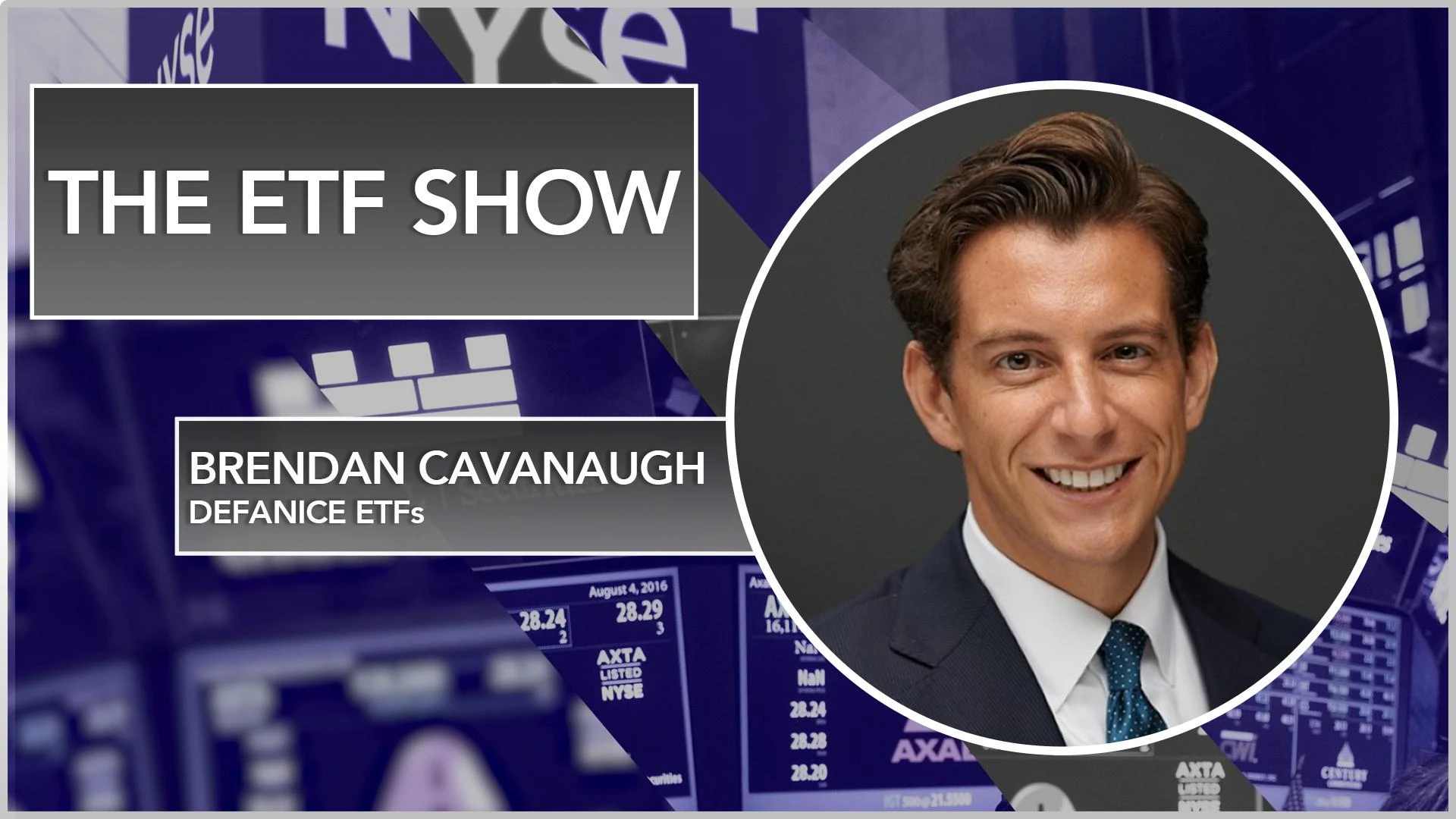
The ETF Show - New Autism-Impact ETF Launched
Defiance ETFs has launched the first ETF, $ASD, focused on the autism ecosystem, investing in companies that provide services, products, and research related to autism and neurodivergence.


ETF Trends
ETF Industry KPIs June 1, 2026
The ETF Industry saw 22 New Launches, 1 Ticker Change and 1 closure last week.

ETF Trends
ETF Industry KPIs May 20, 2026
The ETF Industry saw 44 New Launches, 3 Mutual Fund Conversions and 9 closures last week.
Asset TV
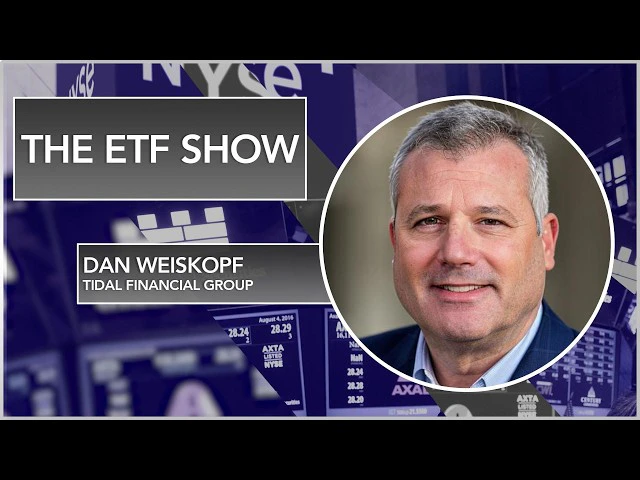
The ETF Show - Politics Becomes Investable Trade through ETFs
Dan Weiskopf, Senior Portfolio Manager at Tidal Financial Group spoke with the ETF Show about Subversive ETFs that help investors trade like politicians.
Browse all educational columns



The ETF Industry Is Evolving Fast
From AI infrastructure to active strategies, the ETF landscape is shifting. Share your perspective in the 7th Annual Global ETF Survey and get exclusive early access to the final report.