From idea to ETF portfolio in minutes. Build yours now →



How to Hedge Your Portfolio Against Geopolitical Risk with ETFs
These ETFs employ unique screeners to mitigate various types of geopolitical risk.


Keep up with what matters in ETFs
Get timely ETF insights, market trends, and top ideas straight to your inbox.
Your newsletter subscriptions with us are subject to ETF Central's Privacy Policy and Terms and Conditions.
For better or worse, geopolitical risk is becoming an increasingly significant consideration for investors—especially if your portfolio includes ETFs. Recent history offers no shortage of cautionary tales.
Numerous Russian equity ETFs were forced to liquidate following the 2022 invasion of Ukraine. Dry bulk shipping ETFs have seen intense volatility triggered by Houthi attacks in the Red Sea.
These are just a couple of examples illustrating how global events can impact your investments in surprising and dramatic ways.
What’s particularly interesting is how the ETF industry is beginning to address these challenges. A growing number of funds are attempting to minimize geopolitical risk while still pursuing long-term returns.
This is a relatively new concept in the world of ETFs, so bear with me as we explore two of the most notable examples addressing this emerging reality from Xtrackers and WisdomTree.
Like what you're reading?
Stay in the loop — get the latest ETF insights: trends, analysis, and expert picks.
Excluding state-owned enterprises
The type of capitalism many investors take for granted in the U.S. often doesn’t exist in certain parts of the world—especially in emerging markets like China.
In these regions, many companies are classified as “state-owned enterprises” (SOEs), where the government holds a significant stake.
SOEs operate differently than privately owned corporations. Rather than prioritizing shareholder value, their primary objective may align with the goals of the state.
For example, a government-owned oil company might prioritize stabilizing domestic fuel prices over profitability. For foreign investors, this introduces significant, uncompensated risk, as these firms might engage in decisions that negatively impact returns without any direct benefit to investors.
Some ETF providers have recognized this issue and developed solutions. One such example is the WisdomTree Emerging Markets ex-State-Owned Enterprises Fund
This fund explicitly excludes SOEs, defining them as companies with over 20% government ownership. Importantly, XSOE also limits sector deviations to within 3% of the benchmark, ensuring the portfolio doesn’t veer too far from market weights or make large macroeconomic bets.
This strategy has historically paid off. From its inception on December 10, 2014, through January 29, 2025, XSOE has delivered an annualized return of 4.03%.
While this isn’t extraordinary, it’s still an improvement over the 3.14% annualized return from the popular iShares MSCI Emerging Markets ETF
Security selection based on geostrategic risk rating
In geopolitics, a “strategic resource” refers to assets vital to a nation’s security, economy, or global influence. These resources are often essential for maintaining a country’s stability and competitive edge.
For instance, Canada’s oil and gas reserves are unquestionably strategic, providing energy security and export revenue. Similarly, Taiwan’s dominance in semiconductor manufacturing is a critical lifeline for global technology supply chains.
While strategic resources are a boon for their respective countries, they also pose significant risks for investors. Industries tied to such resources are highly vulnerable to geopolitical disruptions.
For example, Venezuela has eyed Guyana’s oil reserves with growing interest, raising concerns about potential conflicts. Similarly, mining operations in Africa are frequently subject to nationalization or seizures amid political instability, leaving investors exposed to losses.
To address these risks, the Xtrackers US National Critical Technologies ETF
From this pool, it selects companies operating in 14 critical technology sectors defined by the U.S. Department of Defense in its National Defense Science and Technology Strategy (NDSTS).
- Biotechnology
- Quantum science
- Future Generation Wireless Technology
- Advanced Materials
- Trusted AI and Autonomy
- Integrated Network Systems-of-Systems
- Microelectronics
- Space Technology
- Renewable Energy Generation and Storage
- Advanced Computing and Software
- Human-Machine Interfaces
- Directed Energy
- Hypersonics
- Integrated Sensing and Cyber
What sets this ETF apart is its use of a “geostrategic risk rating score.” This metric evaluates a company’s exposure to nations identified by the U.S. government as posing high geopolitical risks.
By prioritizing companies with minimal exposure to such nations, the ETF aims to mitigate the likelihood and severity of sanctions, regulatory crackdowns, or asset seizures that could harm investments.
The result is a diversified portfolio of 222 companies across value and growth styles, predominantly in technology but also spanning healthcare, industrials, communications, and energy sectors.
Please note this article is for information purposes only and does not in any way constitute investment advice. It is essential that you seek advice from a registered financial professional prior to making any investment decision.
Latest ETF News
See all ETF newsCould Water ETFs Be the Next AI Bottleneck Trade?

What is a Boomer Candy ETF?

ETF Comparison: NEOS Nasdaq-100 High Income ETF (QQQI) Versus Goldman Sachs Nasdaq-100 Premium Income ETF (GPIQ)





 Advantages of ETFs over Mutual Funds1/6
Lower Costs
In this guide, we'll explore the advantages of ETFs over mutual funds, giving you valuable insights into why ETFs have gained significant popularity among investors like yourself.
Leveraged ETFs: Unlocking the Potential for Amplified Returns1/6
Understanding Leveraged ETFs
Explore leveraged ETFs: potential for amplified returns & risks. 5 ETFs to consider across equities, commodities & fixed income.
What is a Leveraged ETF?1/6
Introducing Leveraged and Inverse ETFs
In this guide, we'll dive into the world of leveraged ETFs, exploring their definition, mechanics, potential risks, and rewards.
Recent educational content

ETF Trends
ETF Industry KPIs September 8, 2026
This week’s KPI data overview highlights key metrics and trends shaping the ETF landscape.

ETF Trends
ETF Industry KPIs August 31, 2026
This week’s KPI data overview highlights key metrics and trends shaping the ETF landscape.
ETF Trends
ETF Industry KPIs August 24, 2026
This week’s KPI data overview highlights key metrics and trends shaping the ETF landscape.
What’sTheFund
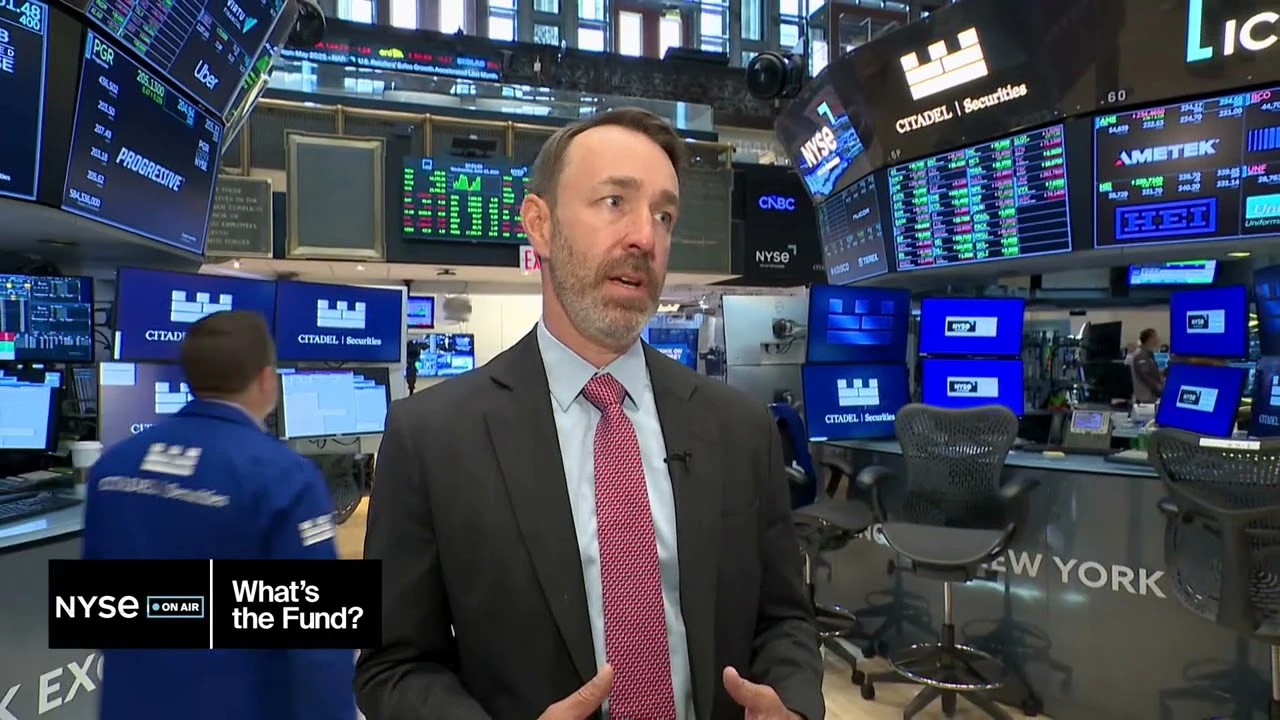
What's the Fund | Ocean Park Diversified Income ETF (DUKZ)
James St Aubin, Chief Investment Officer at Ocean Park Asset Management, discuss the DUKZ ETF, exposing investors to the whole spectrum of asset classes in the fixed income markets, through their rules-based process.

Browse all educational columns



Active Trader Report: Use of Leveraged & Inverse ETFs Way Up
Direxion partnered with Compound Insights and Vanda to explore what’s driving the evolution of active trading — and how active traders are using leveraged and inverse funds across equities, single stocks, commodities, and volatility.