Create, analyze, optimize your ETF portfolio. Start now →



How Correlated Are Gold and Silver Miner ETFs to Spot Gold and Silver Prices?
Gold and silver miner ETFs are a popular proxy for spot exposure, but are they actually effective?

Keep up with what matters in ETFs
Get timely ETF insights, market trends, and top ideas straight to your inbox.
Your newsletter subscriptions with us are subject to ETF Central's Privacy Policy and Terms and Conditions.
Both gold and silver ETFs have taken the spotlight this year and last, pulling in massive inflows and outperforming equities.
Behind the demand? A mix of renewed geopolitical conflicts, central bank reserve purchases, and investor concern about a tariff-driven resurgence in inflation.
But it's not just spot bullion ETFs (those that actually hold physical gold or silver in custody) that are gaining traction. There's also been significant money flowing into ETFs that hold gold and silver miner stocks instead.
So, how well do these miner ETFs actually track the prices of the underlying metals? Are they a good proxy for spot gold and silver exposure? Here's what the data says.
Like what you're reading?
Stay in the loop — get the latest ETF insights: trends, analysis, and expert picks.
Backtest results
The following backtest covering monthly returns from May 2020 to May 2025 shows that while gold and silver miner ETFs are reasonably correlated with their underlying bullion counterparts, they are far from perfect substitutes.

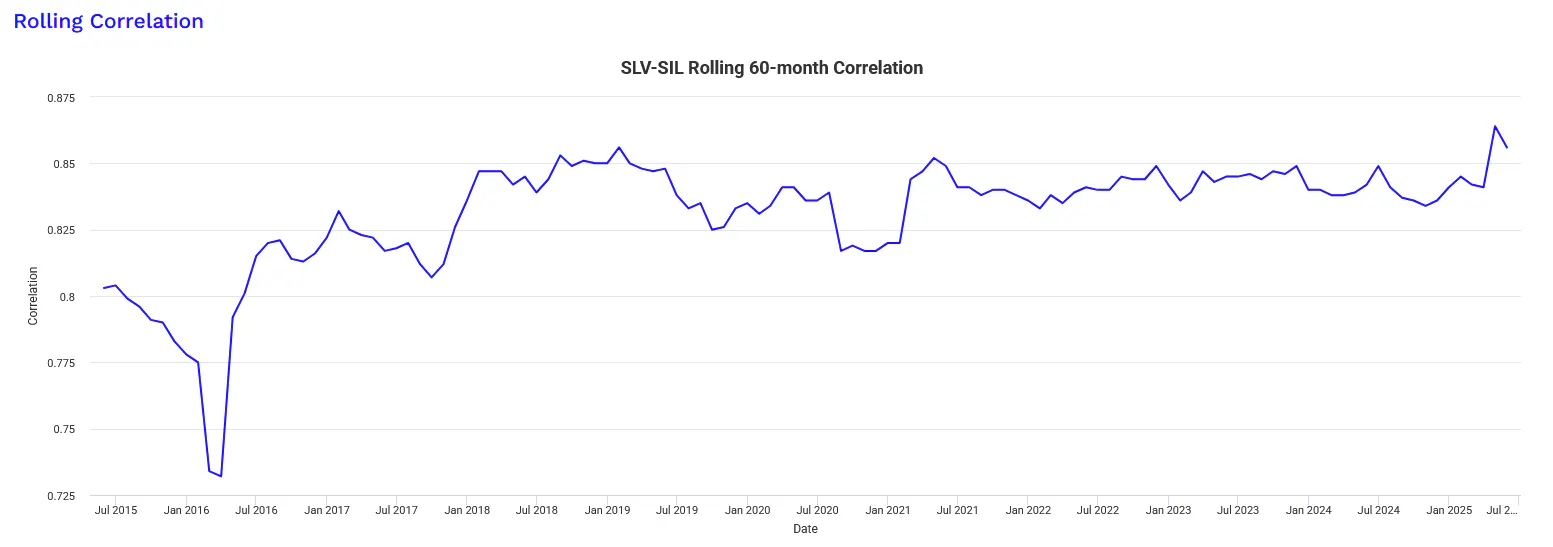
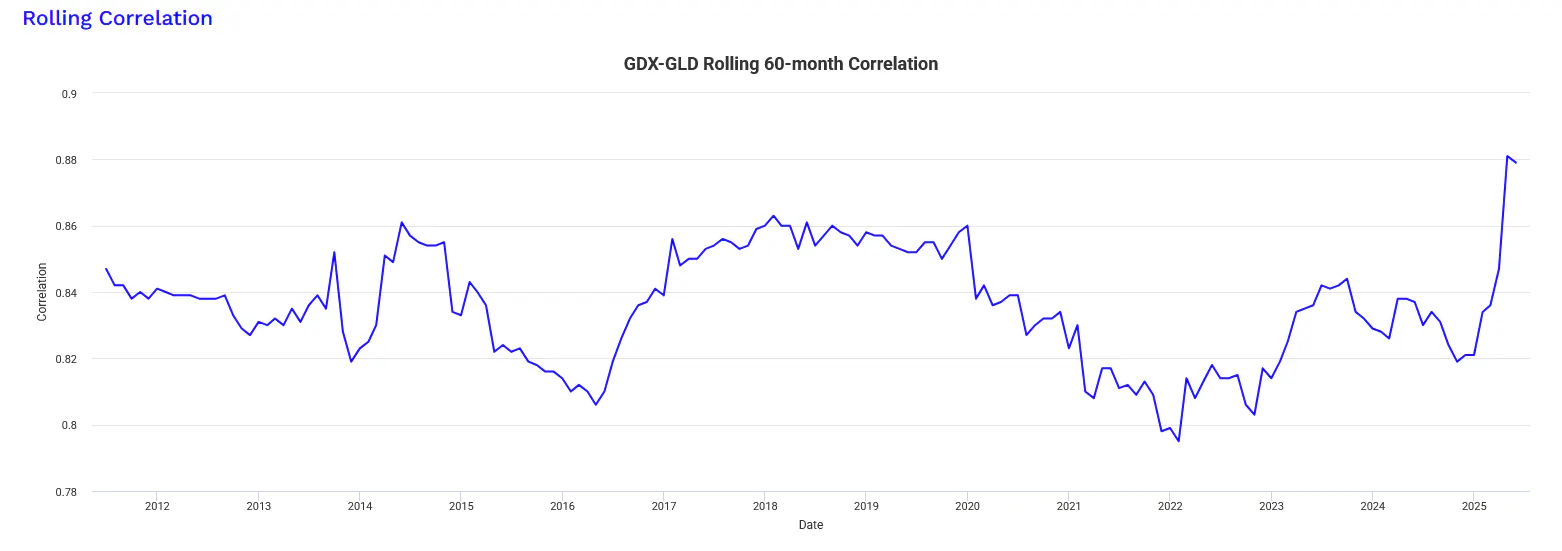
The Global X Silver Miners ETF
Where the difference really shows is in volatility and performance. SIL and GDX both exhibit annualized standard deviations over 34%, compared to just 15.76% for GLD and 30.55% for SLV.
That elevated volatility likely played a major role in dragging down their annualized returns—0.71% for SIL and 0.91% for GDX—versus 3.35% and 6.63% for SLV and GLD, respectively.
In short, if you’re buying miner ETFs expecting them to mirror the performance of spot metals, you might be taking on far more risk for less return.
What causes this discrepancy?
The discrepancy between miner ETFs and spot metal ETFs stems from fundamental differences in the underlying assets. While gold and silver miners are influenced by the prices of the metals they produce, they're also operating businesses—with all the complexity, costs, and risks that come with it.
Take a typical gold or silver mining company. The process starts with exploration, which is expensive and often fruitless. Then comes development: building out the mine, securing permits, arranging financing.
Once operational, the company has to extract ore, process it, and refine it. That ore needs to be transported, sometimes across borders, and sold into global markets.
Along the way, miners face risks like fuel costs, labour disputes, environmental regulations, weather disruptions, and fluctuating demand from industrial buyers.
All these layers introduce friction, which means mining stocks don't respond to precious metal spot prices in a clean 1-to-1 fashion.
Instead, what you get is embedded operating leverage: when metal prices rise, profit margins for miners can expand rapidly, but when prices fall, those same companies bleed even faster due to high fixed costs.
That leverage creates volatility, which is clearly visible in the much higher standard deviations seen in miner ETFs versus spot precious metal ETFs.
This volatility also hurts compounding. Thanks to the difference between the arithmetic mean (average return) and the geometric mean (compounded return), higher drawdowns reduce your long-term CAGR.
The more a stock or ETF swings up and down, the harder it is for gains to offset prior losses, so miner ETFs may underperform spot ETFs over long periods. And this is exactly what has happened over the precious decade.
The key takeaway
If your goal is long-term buy-and-hold exposure that closely tracks the price of gold or silver, your best bet is a physically backed bullion ETF like GLD or SLV.
These funds hold actual metal in custody and aim to reflect spot price movements with minimal tracking error, aside from expense ratios and bid-ask spreads.
For a short-term tactical bet on rising gold or silver prices, miner ETFs like GDX or SIL can offer amplified upside. They’re often easier to access than margin, futures, or leveraged products, and provide embedded leverage through their operating exposure to metal prices.
But the longer you hold them, the more likely their performance will diverge from spot prices due to volatility, operational risks, and drawdowns.
Both have use cases, but they aren’t perfectly interchangeable, despite what some might assume. So, if you're considering them as a tax-loss harvesting pair, just know that while they may pass the wash-sale rule, they could still be poor substitutes in practice.
Please note that this article reflects the author’s personal views and does not represent the opinions of the publication or its affiliates. It is for informational purposes only and does not constitute investment advice. It is essential to seek guidance from a registered financial professional before making any investment decisions.
Topics
See all
Mentioned ETFs
Further reading

Latest ETF News
See all ETF newsThese Public-Private ETFs Invest in Polymarket and Anduril

There's an ETF for That? Frontier Markets

10-Year Treasury Yield Hits 5%: Which Bond ETFs Offer the Most Direct Exposure?

ETF comparison: NEOS S&P 500 High Income ETF (SPYI) Versus Goldman Sachs S&P 500 Premium Income ETF (GPIX)




 Advantages of ETFs over Mutual Funds1/6
Lower Costs
In this guide, we'll explore the advantages of ETFs over mutual funds, giving you valuable insights into why ETFs have gained significant popularity among investors like yourself.
Leveraged ETFs: Unlocking the Potential for Amplified Returns1/6
Understanding Leveraged ETFs
Explore leveraged ETFs: potential for amplified returns & risks. 5 ETFs to consider across equities, commodities & fixed income.
What is a Leveraged ETF?1/6
Introducing Leveraged and Inverse ETFs
In this guide, we'll dive into the world of leveraged ETFs, exploring their definition, mechanics, potential risks, and rewards.
Recent educational content

ETF Trends
ETF Industry KPIs September 28, 2026
This week’s KPI data overview highlights key metrics and trends shaping the ETF landscape.

ETF Trends
ETF Industry KPIs September 22, 2026
This week’s KPI data overview highlights key metrics and trends shaping the ETF landscape.

First Look ETF
First Look ETF: Income, Corporate Arbitrage, and Growth and Value Investing
First Look ETF September 2026: iCapital, Mast Investments and North Square unpack new ETFs targeting monthly income, merger arbitrage and complementary growth and value exposure.

ETF Trends
ETF Industry KPIs September 14, 2026
This week’s KPI data overview highlights key metrics and trends shaping the ETF landscape.
Browse all educational columns



Have you tried our ETF Compare tool?
Compare ETFs like a pro. Analyze fees, performance, exposure & holdings side-by-side.