Explore professionally built ETF model portfolios. Discover now →



Here's How to Maximize Your Moneybox for Retirement Savings and Minimize Taxes
Planning for retirement? Find out how to structure your Moneybox to maximize savings and minimize taxes.


Keep up with what matters in ETFs
Get timely ETF insights, market trends, and top ideas straight to your inbox.
Your newsletter subscriptions with us are subject to ETF Central's Privacy Policy and Terms and Conditions.
Most of us are very familiar with the iconic “What’s in your wallet?” credit card ad campaign. A celebrity or comedic character gets into a skit with relatability to high credit card fees and ends with the tagline “What’s in your wallet?”. The question to the viewer is what are the best credit card options for you.
When planning for retirement, we can take a similar approach and ask “What’s in your Moneybox?”. Your moneybox is all your accounts and assets you will use to pay for retirement and enjoy the golden years. Like the iconic credit card ads, we ask ourselves what are the best ways to save for retirement.
Like what you're reading?
Stay in the loop — get the latest ETF insights: trends, analysis, and expert picks.
Asset Location
Your moneybox is made up of all the different accounts and assets. The types of accounts, referred to as asset location, can make a sizable difference in deferring taxes over a long period of time. It is important to maximize tax deferrals and employer contributions for retirement planning.
The moneybox has four main parts:
- Employer-sponsored accounts: pensions, 401k/503b
- Tax-deferred accounts: IRAs, annuities
- Taxable accounts: brokerage, bank accounts/CDs, real assets
- Social security/Medicare
Waterfall of Savings
Imagine your savings going down a waterfall and filling buckets in order. Which buckets come before others? The general approach should be to maximize savings with an employer contribution and/or tax advantage first. It is also prudent to pay off high interest personal loans before saving for taxable accounts.

Prepaying a home mortgage is a situation-dependent question and has tax implications. The interest on home mortgages is tax-deductible for many. This is difficult to generalize this situation without understanding the complete financial plan and personal preference. If you sleep better at night knowing there is 0 debt and assign less value to a tax-deduction, it is your decision.
Asset Selection
The assets inside your moneybox will change over time as you move to different phases in life. The two main investment phases are accumulation and withdrawal.
Accumulation is the working years where you are actively contributing and “accumulating” assets. The goals are to maximize contributions and after-tax compounding of assets. Investors should monitor long-term risk/reward, fees paid, and tax implications of the moneybox.
Withdrawal is the golden years of retirement where you are living off the portfolio and nest egg. The goals in this stage are reducing volatility, ensuring income for your lifestyle, and protecting against inflation. Investors should focus on minimizing portfolio volatility, potential for capital appreciation of income investments, and liquidity of investments to protect against unforeseen events.
The moneybox will change over time to reflect different phases and goals of life. It's important to construct the moneybox, allocate the assets properly, and rebalance the portfolio for market and life changes.
About the Authors
Yang is the CEO and co-founder of Arch Indices and Arch Indices Investment Advisors. Yang spent over a decade in macro solutions, structuring, and sales roles at Morgan Stanley, Citi, Deutsche Bank, and Credit Agricole CIB. In his most recent role as Head of Solutions Sales Americas, Yang built the solutions sales desk from scratch into one of the most productive and highest-grossing in the organization. Yang has worked with banks, insurers, and asset managers globally on solutions across asset classes for asset liability, yield enhancement, capital, and tactical opportunities.
Jacob is the CPO and co-founder of Arch Indices and Arch Indices Investment Advisors. Jacob spent over two decades at Citi and its predecessor Salomon Brothers in trading, structuring, and quantitative research/analytics. Jacob has deep expertise working with institutional and private bank clients in multi-asset derivative solutions, cash products, and structured notes. Jacob has extensive modeling and analytics knowledge from roles in research, modeling, and quantitative analysis in both cash products and derivatives.
Between his retirement from Citi and co-founding Arch, Jacob worked with his wife Rebecca in financial planning and advisory.
Disclaimer
Please note this article is for information purposes only and does not in any way constitute investment advice. It is essential that you seek advice from a registered financial professional prior to making any investment decision.

Latest ETF News
See all ETF newsLosers Of Q2 2026 REIT Earnings Season


Winners of Q2 2026 REIT Earnings Season


ETF Creation Windows Matter More Than You Think


Why the Time of Day Matters When Trading an ETF

The Leveraged ETF Question Nobody Is Asking


 Advantages of ETFs over Mutual Funds1/6
Lower Costs
In this guide, we'll explore the advantages of ETFs over mutual funds, giving you valuable insights into why ETFs have gained significant popularity among investors like yourself.
Leveraged ETFs: Unlocking the Potential for Amplified Returns1/6
Understanding Leveraged ETFs
Explore leveraged ETFs: potential for amplified returns & risks. 5 ETFs to consider across equities, commodities & fixed income.
What is a Leveraged ETF?1/6
Introducing Leveraged and Inverse ETFs
In this guide, we'll dive into the world of leveraged ETFs, exploring their definition, mechanics, potential risks, and rewards.
Recent educational content
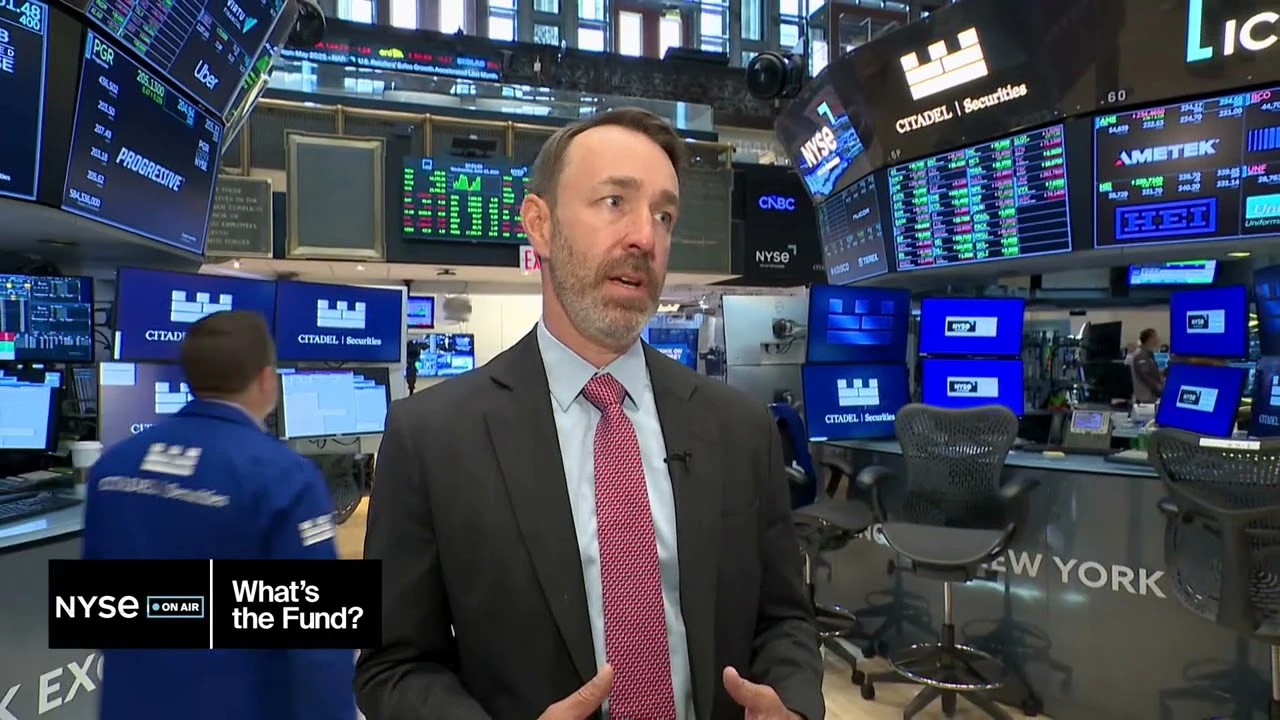
What’sTheFund
What's the Fund | Ocean Park Diversified Income ETF (DUKZ)
James St Aubin, Chief Investment Officer at Ocean Park Asset Management, discuss the DUKZ ETF, exposing investors to the whole spectrum of asset classes in the fixed income markets, through their rules-based process.

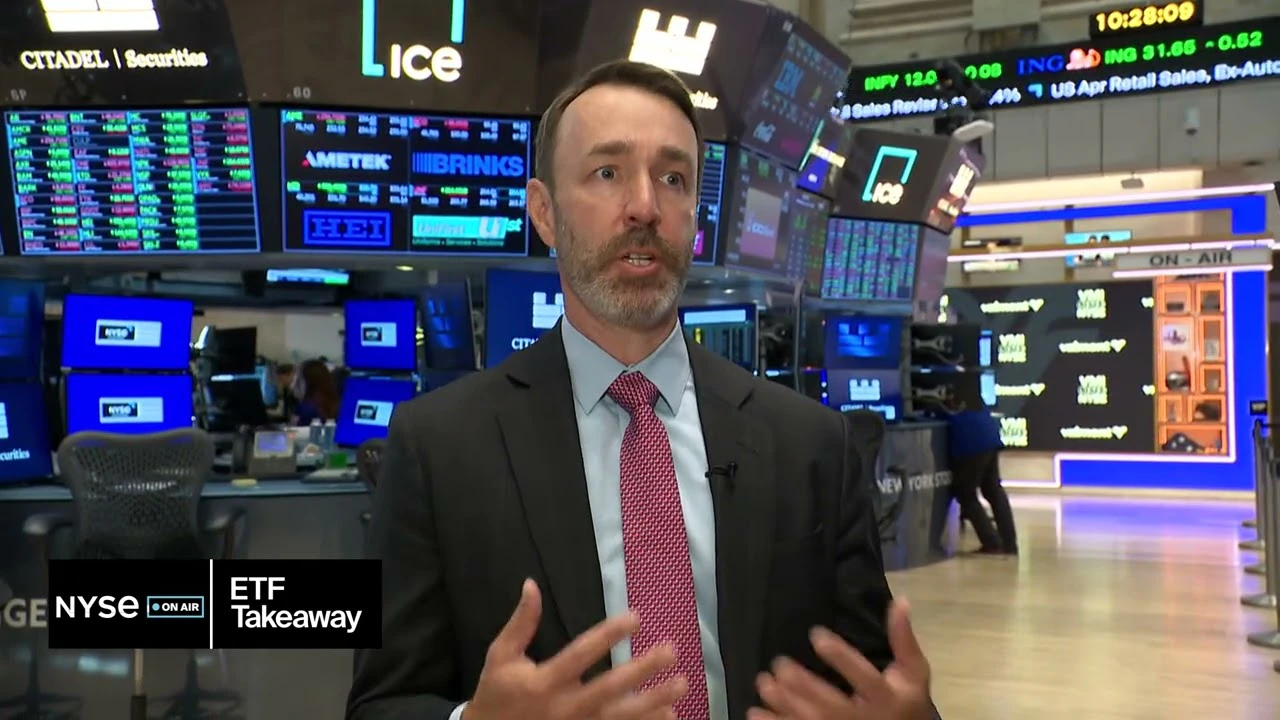
ETF Takeaway
ETF Takeaway: Ocean Park Diversified Income ETF (DUKZ)
James St Aubin, Chief Investment Officer at Ocean Park Asset Management discusses the state of fixed income markets and how their DUKZ ETF, through their rules-based process, tactically allocates to 11 sectors of fixed income through underlying ETFs.

ETF Trends
ETF Industry KPIs August 17, 2026
This week’s KPI data overview highlights key metrics and trends shaping the ETF landscape:


First Look ETF
First Look ETF: Cycle Aware Investing & Next-Gen Nicotine Shifts
In this season 6 episode of First Look ETF, Stephanie Stanton examines the latest ETF marketplace trends with NYSE and guests.

Browse all educational columns



Active Trader Report: Use of Leveraged & Inverse ETFs Way Up
Direxion partnered with Compound Insights and Vanda to explore what’s driving the evolution of active trading — and how active traders are using leveraged and inverse funds across equities, single stocks, commodities, and volatility.