ETF model portfolios designed for real investor needs. Discover →



Hedging Geopolitical Risk: Why This Unique Xtrackers ETF Can Help
Geopolitical risk is difficult to assess, hard to predict, and potentially devastating in terms of impact. Some ETFs may be better positioned to mitigate these potential exposures (or risks).


Keep up with what matters in ETFs
Get timely ETF insights, market trends, and top ideas straight to your inbox.
Your newsletter subscriptions with us are subject to ETF Central's Privacy Policy and Terms and Conditions.
Geopolitical risk is one of the few investment risks that defies neat categorization. Academics may define it in terms of cross-border conflict, sanctions, or diplomatic instability, but from a practical investing standpoint, it’s simpler than that.
Think of it as the risk that government decisions or regional tensions, outside the control of markets suddenly and significantly impact your portfolio. Unlike market risk, sector risk, or even country-specific risk, geopolitical risk is harder to see coming and even harder to price in.
If you’re worried about a market correction, you might rebalance into bonds or buy put options to hedge. If you’re worried about tech stocks, you might shift into consumer staples. If you're cautious about one country, you might diversify globally.
But what do you do when two nuclear powers trade threats? Or when a foreign government shuts down trading in their securities? Trying to sidestep these events entirely is almost impossible.
Instead, a more effective approach may be to build exposure to securities that tend to hold up better when the world gets messy. The problem is identifying these securities and weighting them in an optimal manner ahead of time.
Today’s piece highlights key moments when geopolitical risk blindsided U.S. investors and explores a unique ETF that may offer more resilience the next time things go sideways.
Like what you're reading?
Stay in the loop — get the latest ETF insights: trends, analysis, and expert picks.
Example #1: Liberation Day for apparel stocks
In April 2025, Donald Trump’s “Liberation Day” tariff rollout sent shockwaves through the market. Investors had braced for headline risk, but few expected the speed or severity of the policy.
The tariffs hit a wide range of U.S. trading partners, with especially steep rates on key sourcing countries for consumer discretionary goods. In particular, Vietnam, Cambodia, and China, three hubs critical to global apparel supply chains were slapped with tariffs of 46%, 49%, and 34% respectively.
Apparel and footwear sold in the U.S. are overwhelmingly imported, leaving brands with few short-term options for re-routing production or shielding customers from price hikes.
Companies like Nike and Lululemon, which rely heavily on outsourced manufacturing in these regions, were blindsided. Their stocks plunged as investors priced in higher input costs, supply chain bottlenecks, and the possibility of shrinking margins.
The market reaction revealed how deeply embedded these sourcing relationships are. Companies thought to be insulated from direct trade frictions because they sell to American consumers and report in U.S. dollars, were suddenly exposed to geopolitical risk through their global supply chains.
What caught many investors off guard wasn’t just the existence of tariffs, but the scope and speed of the escalation. Supply chain vulnerability, long viewed as a logistics or operations issue, instantly became an investment risk.
The Liberation Day shock showed how fast political decisions can ripple through equities, even when the companies involved don’t appear on the surface to be geopolitical players.
Example #2: Russian ETF delisting
While the threat of Chinese ADR delistings faded after cooler heads prevailed, the risk became reality in another case a few years ago. For investors in U.S.-listed Russian equity ETFs, geopolitical risk fully materialized, and the consequences were severe.
After Russia invaded Ukraine in February 2022, the U.S. and its allies imposed sweeping sanctions that restricted trading in Russian securities. They had immediate downstream effects on ETFs holding Russian stocks. Authorized Participants could no longer create or redeem ETF shares due to the inability to access or settle the underlying securities.
This broke a fundamental part of the ETF structure. Without the ability to create or redeem shares, the funds couldn’t keep prices in line with net asset value. The holdings themselves still had theoretical value, but the market froze. There was no liquidity. Investors couldn’t trade shares, and the funds couldn’t value their assets with any certainty.
As a result, major exchanges halted trading in these ETFs. Eventually, they were delisted entirely. That meant no secondary market was available. Investors couldn’t sell their shares and they couldn’t redeem them for the underlying securities either.
Purchases, subscriptions, redemptions, and valuations were all suspended. At the same time, index providers began removing Russian stocks from even broad-based benchmarks. But the worst effects landed on the country-specific Russia ETFs. Many were terminated outright.
It was a forced divestiture that left investors locked into funds with no way out. The liquidation process took months, and the proceeds were often a fraction of what investors had paid. In many cases, previously unrealized losses became permanent.
For U.S. investors who thought they were simply gaining exposure to an emerging market, the episode revealed how quickly geopolitical risk can erase both flexibility and capital.
How ETFs can help
Sticking close to home, geographically speaking, can help reduce some geopolitical risk. U.S. companies are generally subject to U.S. law, report under U.S. accounting standards, and are more insulated from the unpredictability of foreign regulators or sanctions. But there’s a more thoughtful way to approach this than simply leaning into home-country bias.
The Xtrackers U.S. National Critical Technologies ETF
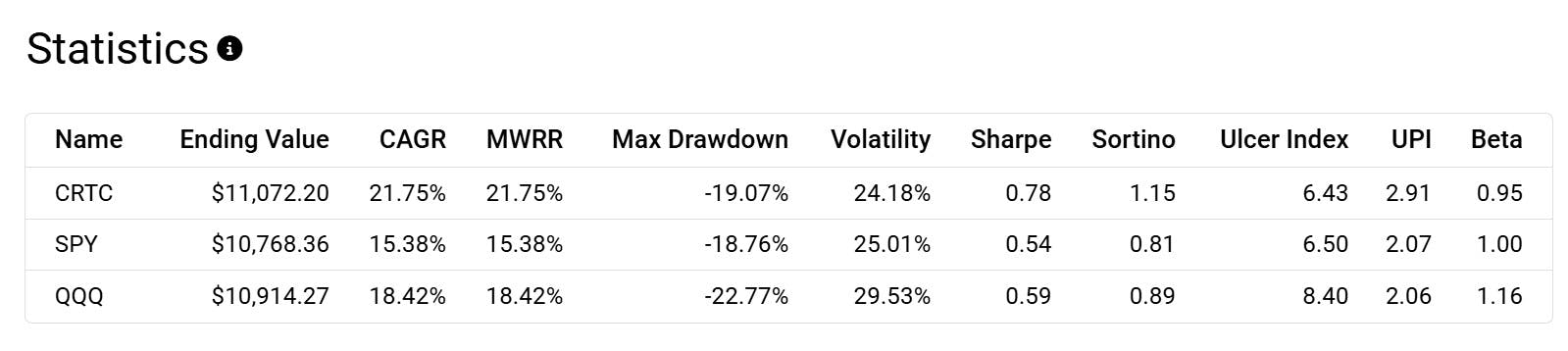
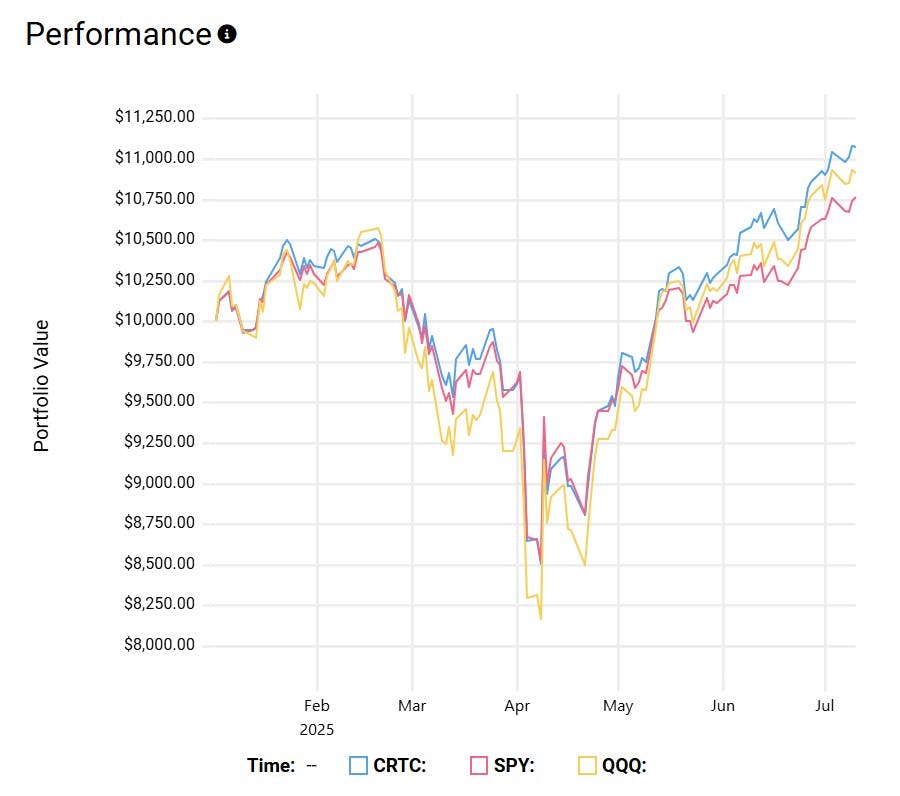
Year to date, CRTC has held up well through the tariff induced tantrum and outperformed ETFs tracking the S&P 500 and Nasdaq-100 indices.
The strategy is designed around the idea that some technologies are not only economically important, but also critical to national security, and that companies developing these technologies should be more resilient to geopolitical disruption.
To qualify for inclusion, a company must operate in one of 14 sectors labeled “vital for maintaining U.S. military and economic supremacy” by the U.S. Department of Defense in its National Defense Science and Technology Strategy (NDSTS).
These include: biotechnology, quantum science, future generation wireless technology (FutureG), advanced materials, trusted AI and autonomy, integrated network systems-of-systems, microelectronics, space technology, renewable energy generation and storage, advanced computing and software, human-machine interfaces, directed energy, hypersonics, and integrated sensing and cyber.
But CRTC
Consider an energy producer with operations in a country increasingly hostile to U.S. interests. Nationalization or seizure of assets is a real risk, something gold miners, for instance, have faced multiple times across Latin America and Africa. Or take a shipping company navigating waters where Houthi attacks have disrupted commercial routes.
CRTC’s screening process aims to identify these vulnerabilities ahead of time, limiting exposure to companies with significant geopolitical red flags.
This approach goes beyond simply “investing in America.” Instead, it focuses on U.S.-listed companies that have taken active steps to de-risk their operations and protect their earnings, people, and assets from hostile foreign actors.
How to incorporate CRTC into a portfolio
In terms of portfolio fit, CRTC
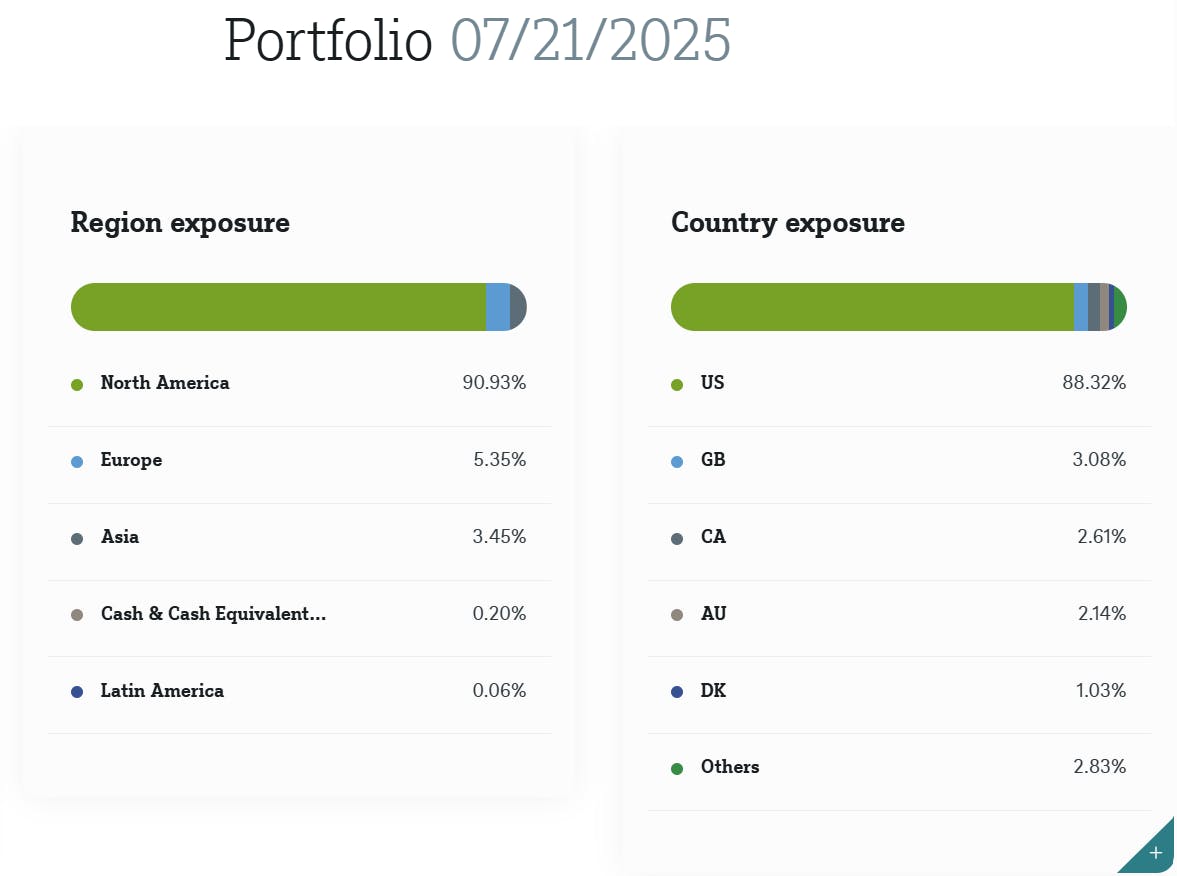
But for investors particularly concerned about geopolitical risk, CRTC could also serve as a partial replacement for core U.S. equity exposure. It still offers broad sector diversification, holds large and mid-cap names, and trades on U.S. exchanges. What sets it apart is the added layer of risk screening and its focus on industries deemed essential for national resilience.
Whether used tactically or strategically, CRTC brings something different to the table. It’s not about exiting global markets entirely. It focuses on positioning within U.S. equities, while including select non-U.S. exposure, in a way that recognizes the changing nature of global risk and the growing importance of being prepared for it.
Please note that this article reflects the author’s personal views and does not represent the opinions of the publication or its affiliates. It is for informational purposes only and does not constitute investment advice. It is essential to seek guidance from a registered financial professional before making any investment decisions.
Latest ETF News
See all ETF newsBeyond Big Tech: The Increasing Specialization of AI ETFs

There's an ETF for That? Humanoid Robotics and Physical AI

How Some ETF Issuers Use Their Own Funds for Cash Management

These Public-Private ETFs Invest in Polymarket and Anduril

There's an ETF for That? Frontier Markets



 Advantages of ETFs over Mutual Funds1/6
Lower Costs
In this guide, we'll explore the advantages of ETFs over mutual funds, giving you valuable insights into why ETFs have gained significant popularity among investors like yourself.
Leveraged ETFs: Unlocking the Potential for Amplified Returns1/6
Understanding Leveraged ETFs
Explore leveraged ETFs: potential for amplified returns & risks. 5 ETFs to consider across equities, commodities & fixed income.
What is a Leveraged ETF?1/6
Introducing Leveraged and Inverse ETFs
In this guide, we'll dive into the world of leveraged ETFs, exploring their definition, mechanics, potential risks, and rewards.
Recent educational content

First Look ETF
First Look ETF: Income, International, and Cash Flow ETFs
In this season 6 episode of First Look ETF, Stephanie Stanton @etfguide examines the latest ETF marketplace trends with NYSE and guests.


ETF Trends
ETF Industry KPIs October 5, 2026
This week’s KPI data overview highlights key metrics and trends shaping the ETF landscape.

ETF Trends
ETF Industry KPIs September 28, 2026
This week’s KPI data overview highlights key metrics and trends shaping the ETF landscape.
ETF Trends
ETF Industry KPIs September 22, 2026
This week’s KPI data overview highlights key metrics and trends shaping the ETF landscape.