NYSE CRTR Economy Event Watch the replay →



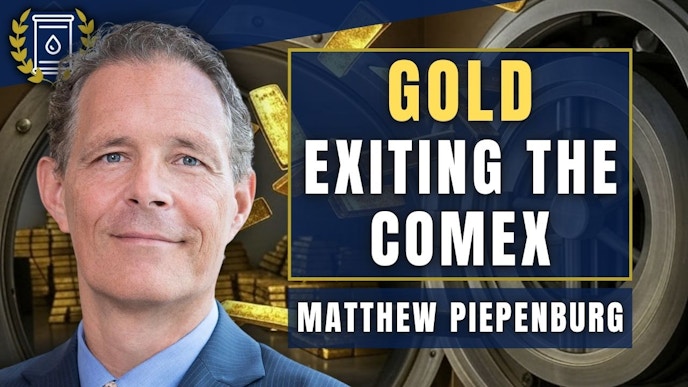
Gold, Geopolitics, and Market Madness: Matthew Piepenburg’s Take on the Global Economy
In this eye-opening discussion, Matthew Piepenburg unpacks the global economic shifts, gold's rising importance, and the geopolitical turmoil shaping markets.

Keep up with what matters in ETFs
Get timely ETF insights, market trends, and top ideas straight to your inbox.
Your newsletter subscriptions with us are subject to ETF Central's Privacy Policy and Terms and Conditions.
On this episode of Commodity Culture, host Jesse Day sits down with Matthew Piepenburg, author, former hedge fund manager, and partner at Von Greyerz, to dive deep into the shifting global financial landscape. The two explore gold revaluation, the fate of the U.S. dollar, the state of the markets, and the geopolitical tensions shaping economic policies worldwide.
Piepenburg, known for his sharp analysis and no-nonsense take on economic trends, doesn’t hold back. He outlines why gold is no longer just a hedge, but a necessity, how the world is slowly moving away from the U.S. dollar, and why investors should prepare for major market turbulence in the coming years.
Get data on 14,000+ ETFs
Access Trackinsight's reliable and comprehensive data with 500M+ points on 14,000+ ETFs.
The Rot in the Markets: A System in Decline
Piepenburg doesn’t mince words—he believes the U.S. and global economy are in a precarious state. The symptoms? Massive debt, a crumbling middle class, and markets running on speculation rather than value. He compares the system to an old tree, where the rot is hidden in the leaves—meaning, small indicators reveal a much bigger problem.
One major red flag? The Comex gold market, where an unprecedented $21 billion in gold left the system in one week. That’s four times the pace of gold outflows seen during COVID-19. Why? Because, according to Piepenburg, institutions and sovereigns no longer trust the U.S. dollar or Treasury bonds. Instead, they want physical gold in their own vaults—a sign of preparation for economic turmoil.
Gold Revaluation: A Band-Aid on a Bullet Wound
With the U.S. officially valuing its gold reserves at a laughable $42.22 per ounce, there’s been speculation about a potential gold revaluation to help offset the nation’s debt crisis. Piepenburg sees this as a desperate, but likely, move.
Would revaluing gold help? Sure, but only in a limited way. Even if the U.S. marked its gold to market value, it would generate around $800 billion to $1 trillion in liquidity—a drop in the bucket compared to the country's $34+ trillion in national debt.
And there’s another problem: China and Russia are sitting on far more gold than official figures suggest. If the U.S. revalues gold, other nations will follow, and the global balance of power could shift away from the U.S. dollar even faster.
Fort Knox: The Great Gold Mystery
Could an audit of U.S. gold reserves settle the debate? Piepenburg is skeptical. He compares it to a lawyer’s cross-examination—you don’t ask a question unless you know the answer. If an audit reveals less gold than claimed, it could shake confidence in the entire financial system.
That said, the mere discussion of auditing Fort Knox is putting gold back into the mainstream financial conversation. More investors are waking up to gold’s role as a true store of value, not just a relic of the past.
Silver: The Sleeper Asset Ready to Run
If gold is making headlines, why is silver still flying under the radar? Piepenburg sees silver as one of the most undervalued assets in the world.
- Silver's one-year return is approximately 35% to-date but remains well below its all-time highs.
- The gold-to-silver ratio is at 90:1—historically, when this ratio is high, silver tends to outperform gold in the next bull run.
- Global silver supply is constrained due to mining restrictions in Mexico and geopolitical instability in key production regions.
- China has been quietly stockpiling silver for decades, just as it has with gold.
Silver has always been volatile, but when it moves, it moves fast. As Rick Rule says, silver rewards infrequently but extravagantly.
Trump, Tariffs, and the Geopolitical Powder Keg
On the political front, Piepenburg warns that the world is shifting into a multipolar order—a direct challenge to U.S. economic and military dominance. He sees Trump’s aggressive trade tariffs on Canada, Mexico, and China as both a strategic move to reshore American manufacturing and a potential economic landmine.
History shows that tariffs can backfire badly—just look at the Smoot-Hawley Tariff Act of 1930, which worsened the Great Depression. Piepenburg notes that while Trump’s tariffs may pressure companies to bring jobs back to the U.S., they could also fuel inflation and accelerate the global shift away from the dollar.
Meanwhile, the Russia-Ukraine conflict continues to be a major economic disruptor. Piepenburg highlights how the West pushed Ukraine away from a peace deal in 2022, leading to further escalation. With over a million casualties and no clear path to victory, he believes the U.S. and NATO will eventually be forced into peace talks—something Trump has already hinted at.
Waiting for Blood in the Streets
Despite his bearish outlook, Piepenburg isn’t advocating a full retreat from markets. Instead, he’s patiently waiting for a major market correction.
- He sees the U.S. stock market as grossly overvalued, running on momentum rather than real earnings.
- He expects a massive mean reversion, where stocks could fall 50% or more from their highs.
- He’s sitting in cash, ready to buy when real value emerges.
For now, he believes the best strategy is to avoid speculation, hold physical gold and silver, and wait for opportunities once the bubble bursts.
Final Thoughts: The World is Changing—Are You Ready?
Piepenburg’s message is clear: history is happening right now. The global financial system is undergoing seismic shifts, and those who prepare will come out ahead. Whether it’s gold, silver, or simply understanding market cycles, investors need to think strategically, not emotionally.
With debt soaring, confidence in the dollar eroding, and geopolitical tensions escalating, it’s not a matter of if the financial landscape will change, but how fast. Those who see the writing on the wall and position themselves accordingly stand to benefit in the years ahead.
This article is for informational purposes only and does not in any way constitute investment advice. The author may express their own opinions, which may not represent the opinions of ETF Central or its affiliated partners. It is essential that you seek advice from a registered financial professional prior to making any investment decisions.
Mentioned ETFs
No specific ETFs were tagged
Further reading


Latest ETF News
See all ETF news

Why ETF Spreads Often Mislead Investors








 Advantages of ETFs over Mutual Funds1/6
Lower Costs
In this guide, we'll explore the advantages of ETFs over mutual funds, giving you valuable insights into why ETFs have gained significant popularity among investors like yourself.
Leveraged ETFs: Unlocking the Potential for Amplified Returns1/6
Understanding Leveraged ETFs
Explore leveraged ETFs: potential for amplified returns & risks. 5 ETFs to consider across equities, commodities & fixed income.
What is a Leveraged ETF?1/6
Introducing Leveraged and Inverse ETFs
In this guide, we'll dive into the world of leveraged ETFs, exploring their definition, mechanics, potential risks, and rewards.
Recent educational content
Asset TV
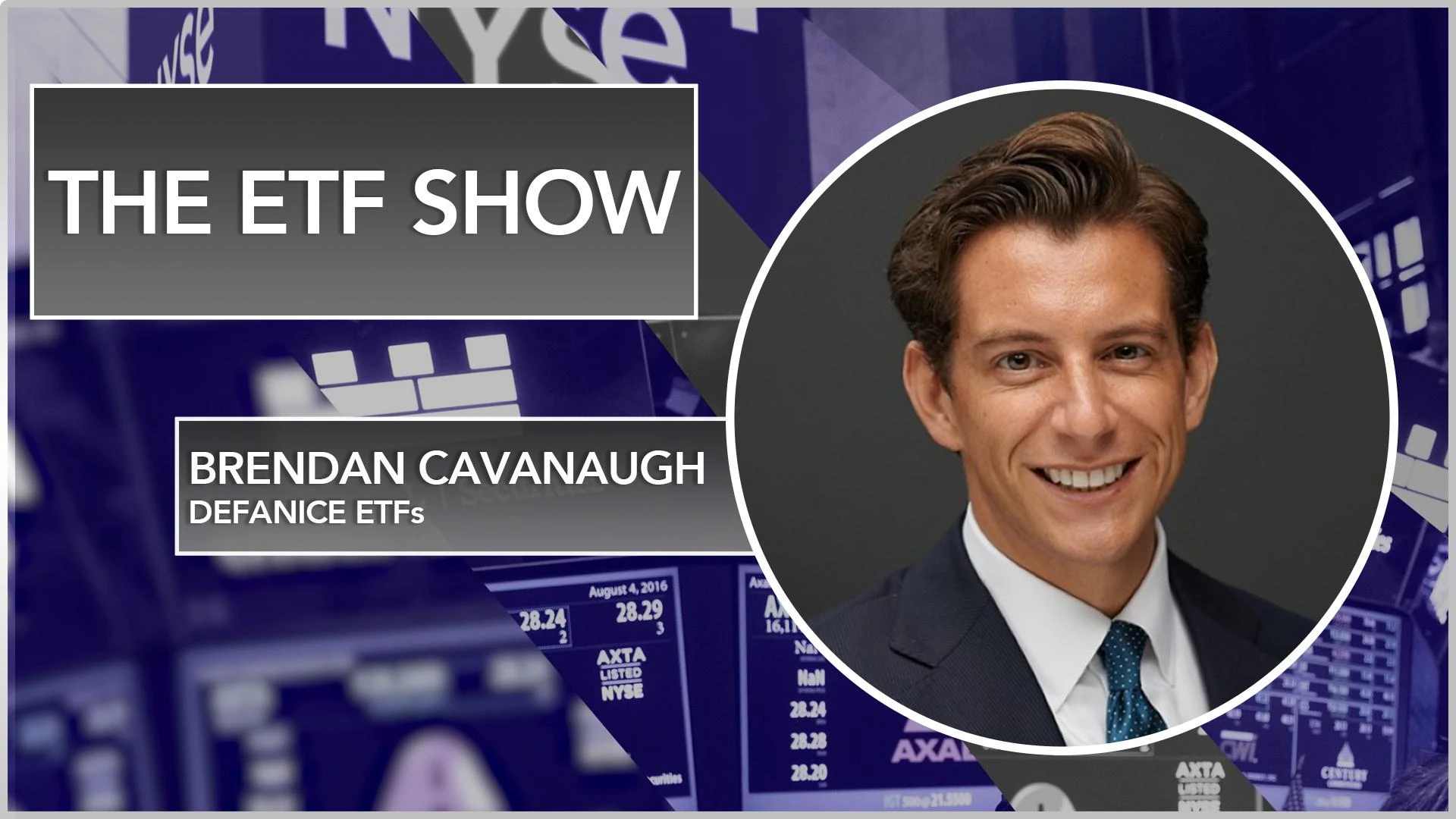
The ETF Show - New Autism-Impact ETF Launched
Defiance ETFs has launched the first ETF, $ASD, focused on the autism ecosystem, investing in companies that provide services, products, and research related to autism and neurodivergence.


ETF Trends
ETF Industry KPIs June 1, 2026
The ETF Industry saw 22 New Launches, 1 Ticker Change and 1 closure last week.

ETF Trends
ETF Industry KPIs May 20, 2026
The ETF Industry saw 44 New Launches, 3 Mutual Fund Conversions and 9 closures last week.
Asset TV
The ETF Show - Politics Becomes Investable Trade through ETFs
Dan Weiskopf, Senior Portfolio Manager at Tidal Financial Group spoke with the ETF Show about Subversive ETFs that help investors trade like politicians.
Browse all educational columns



Expert-Built ETF Portfolios, All in One Place
Don’t start from scratch. Discover ready-made ETF portfolios built by professionals to match different goals, timelines, and market views. Use them as inspiration or as a starting point for your own allocation.