Create, analyze, optimize your ETF portfolio. Start now →



Global X Launches New ETF Focused on Free Cash Flow
FLOW is the latest rules-based ETF on the market that screens for high free cash flow.


Keep up with what matters in ETFs
Get timely ETF insights, market trends, and top ideas straight to your inbox.
Your newsletter subscriptions with us are subject to ETF Central's Privacy Policy and Terms and Conditions.
Rules-based ETFs that skirt the continuum between passive indexing and active management are far from a novel concept. The market is flooded with a bevy of factor and smart beta ETFs employing screeners that select for various attributes, including value, size, momentum, low volatility, and quality.
However, an emerging trend among ETF providers has been the adoption of free cash flow as a crucial performance metric. This shift was catalyzed by the launch of the Pacer US Cash Cows 100 ETF (COWZ) back in December 2016, which saw significant success by basing its strategy on companies generating high free cash flow as I noted in an earlier analysis.
This increasingly popular approach to ETF strategy has led to the recent launch of a new product by Global X ETFs. On July 10th, 2023, the asset management firm introduced the Global X U.S. Cash Flow Kings 100 ETF (FLOW) to the market, expanding its lineup of thematic and income-focused ETFs.
Launched on NYSE ARCA, FLOW is designed to provide investors with exposure to a portfolio of U.S. companies that demonstrate strong profitability characteristics. As its name suggests, free cash flow (FCF) will be the dominant metric under consideration. Here's what investors need to know.
Get data on 14,000+ ETFs
Access Trackinsight's reliable and comprehensive data with 500M+ points on 14,000+ ETFs.
Breakdown of FLOW
FLOW tracks the Global X U.S. Cash Flow Kings 100 Index, which checks for robust FCF as its primary screen. The index is derived from the Mirae Asset U.S. 1000 Index, with financial services stocks excluded due to the difficulty of calculating FCF for that sector, but it does include REITs.
From there, FLOW's index selects the 100 top constituents based on FCF and weights them by their FCF yield. Sector and constituent weight caps of 25% and 2% respectively are implemented to limit concentration risk, with the index reconstituted quarterly to rebalance, add, and drop holdings.
Currently, FLOW has attracted around $2.64 million in AUM since launch and charges an expense ratio of 0.25%. This ETF also plans to make monthly distributions, unlike COWZ which pays on a quarterly basis.
What FLOW is trying to achieve
As per Global X, the primary objective of FLOW is to differentiate itself within the core of an equity portfolio by specifically targeting U.S.-domiciled companies with the highest FCF yields. But what does this focus on free cash flow mean for investors?
At a basic level, FCF is a key indicator of a company's financial health and corporate flexibility. It is a measure of a firm's profitability that reveals how much cash it truly generates after accounting for the capital expenditures required to maintain or expand its asset base.
Therefore, high FCF yields can signal strong corporate financial stability in a way that other metrics like balance sheet ratios or margins may fall short in. Companies with high free cash flow may therefore exhibit true, robust profitability that makes them potentially lucrative investments.
"These companies may be better positioned to add shareholder value through share buybacks, cash dividends, and potential debt market access for mitigating balance sheet expansions," says Rohan Reddy, Director of Research at Global X ETFs."
Furthermore, Global X asserts that strategies which prioritize investments in profitable companies based on their FCF yield could inadvertently expose investors to other positive investment factors such as quality and value, which have historically driven equity returns.
In other words, a focus on free cash flow might align an investment portfolio with other beneficial traits such as high-quality earnings, prudent capital allocation, or robust financial management, all of which play a role in ensuring exposure to desirable investment factors.
"Free cash flow yield can therefore be a multi-purpose tool for analytical insights, because companies that exhibit above average levels of free cash flow yields tend to exhibit characteristics of both quality and value factor orientations," Reddy says.
A new direction for Global X?
Global X ETFs, with its extensive roster of 108 U.S. listed products, primarily focus on two major categories: thematic equity and derivative income. Prominent examples of these strategies are seen in the Lithium & Battery Tech ETF (LIT) and the Nasdaq 100 Covered Call ETF (QYLD), which rank among the firm's most popular offerings in terms of AUM.
In light of this, the launch of FLOW could indicate a significant shift in Global X's product strategy. Rather than focusing exclusively on thematic equities or derivative income, the firm appears to be branching out into a new area of focus: rules-based ETFs that provide multifactor exposure.
This shift signifies an evolution in Global X's approach, showcasing the firm's commitment to exploring innovative strategies in response to changing market dynamics and investor preferences. The introduction of FLOW underscores the firm's adaptability and its efforts to provide investors with unique opportunities to enhance the core components of their equity portfolios.
In a rapidly changing investment landscape, the ability to identify and capitalize on such trends is a testament to both Global X's forward-thinking approach and the competitive nature of the ETF industry that has continually driven innovation.
Please note this article is for information purposes only and does not in any way constitute investment advice. It is essential that you seek advice from a registered financial professional prior to making any investment decision.

Latest ETF News
See all ETF newsCould Water ETFs Be the Next AI Bottleneck Trade?

What is a Boomer Candy ETF?

ETF Comparison: NEOS Nasdaq-100 High Income ETF (QQQI) Versus Goldman Sachs Nasdaq-100 Premium Income ETF (GPIQ)





 Advantages of ETFs over Mutual Funds1/6
Lower Costs
In this guide, we'll explore the advantages of ETFs over mutual funds, giving you valuable insights into why ETFs have gained significant popularity among investors like yourself.
Leveraged ETFs: Unlocking the Potential for Amplified Returns1/6
Understanding Leveraged ETFs
Explore leveraged ETFs: potential for amplified returns & risks. 5 ETFs to consider across equities, commodities & fixed income.
What is a Leveraged ETF?1/6
Introducing Leveraged and Inverse ETFs
In this guide, we'll dive into the world of leveraged ETFs, exploring their definition, mechanics, potential risks, and rewards.
Recent educational content

ETF Trends
ETF Industry KPIs September 8, 2026
This week’s KPI data overview highlights key metrics and trends shaping the ETF landscape.

ETF Trends
ETF Industry KPIs August 31, 2026
This week’s KPI data overview highlights key metrics and trends shaping the ETF landscape.
ETF Trends
ETF Industry KPIs August 24, 2026
This week’s KPI data overview highlights key metrics and trends shaping the ETF landscape.
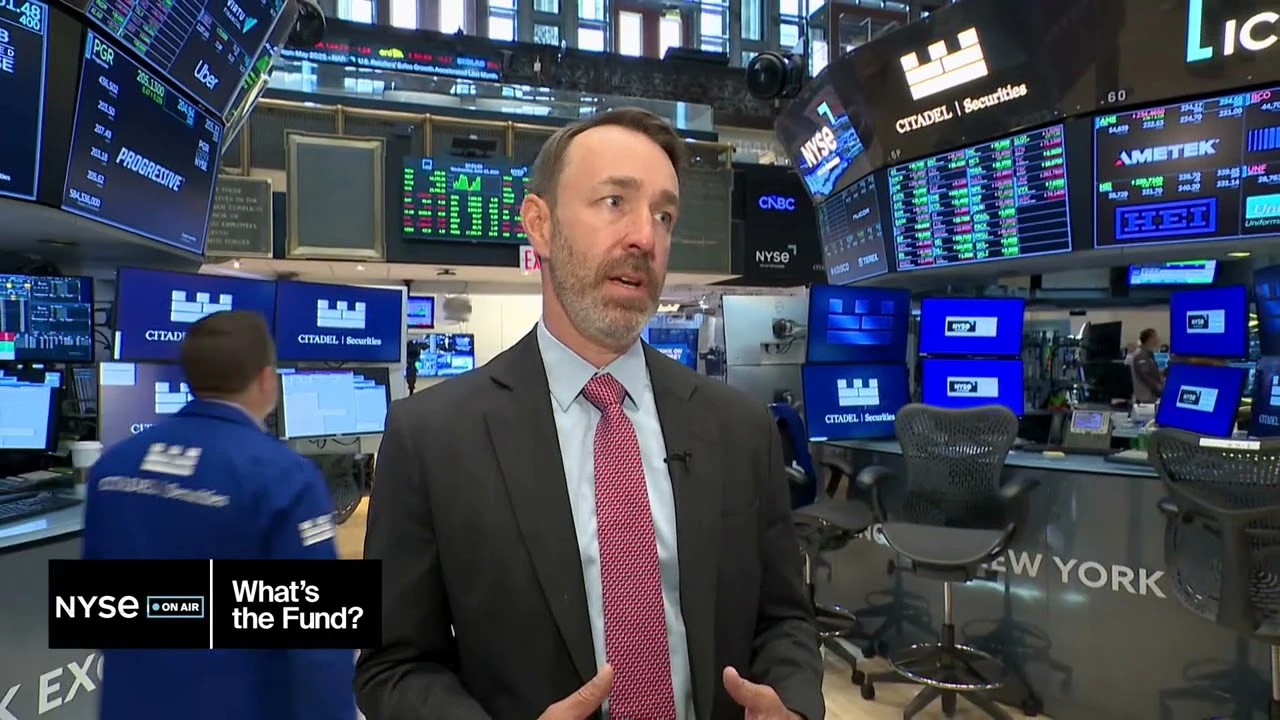
What’sTheFund
What's the Fund | Ocean Park Diversified Income ETF (DUKZ)
James St Aubin, Chief Investment Officer at Ocean Park Asset Management, discuss the DUKZ ETF, exposing investors to the whole spectrum of asset classes in the fixed income markets, through their rules-based process.

Browse all educational columns



Have you tried our ETF Compare tool?
Compare ETFs like a pro. Analyze fees, performance, exposure & holdings side-by-side.