Create, analyze, optimize your ETF portfolio. Start now →



Global Grain Instability: Agricultural ETFs to Watch
Teucrium's ETF lineup is one of the few to offer pure-play exposure to agricultural commodities.

Keep up with what matters in ETFs
Get timely ETF insights, market trends, and top ideas straight to your inbox.
Your newsletter subscriptions with us are subject to ETF Central's Privacy Policy and Terms and Conditions.
In a world marked by increasing geopolitical tensions and market volatility, the search for stable and potentially lucrative investment vehicles has never been more pressing.
The Russian invasion of Ukraine on February 24, 2022, sent shockwaves across various global markets, from the near obliteration of Russian equities to erratic price movements in natural gas.
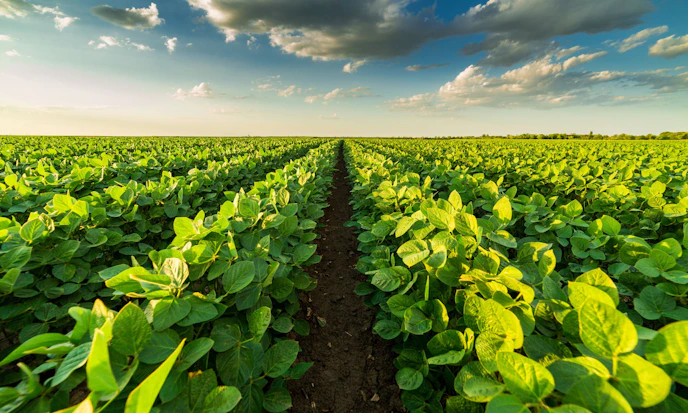
Yet, another critical, albeit less heralded, impact was the reverberations felt within the agricultural commodities sector, particularly in grains such as wheat and corn.
Ukraine, often dubbed the 'breadbasket of Europe,' is a major supplier of these essential crops, and the conflict disrupted supply chains, inflating prices and introducing a new layer of risk and uncertainty.
Here's all you need to know about what's going on in the global grain market as a result of the Russian-Ukraine war, and what ETFs could be affected.
Like what you're reading?
Stay in the loop — get the latest ETF insights: trends, analysis, and expert picks.
What's going on in the global grain market?
According to the BBC, when Russia first invaded Ukraine in February 2022, its naval blockade of Ukraine's Black Sea ports trapped 20 million tonnes of grain intended for export.
This led to soaring world food prices and shortages in Middle Eastern and African countries heavily dependent on Ukrainian food exports.
The grain deal between Russia and Ukraine, initially brokered in July 2022 by Turkey and the UN, has now undergone changes that have impacted global grain prices and food security.
The original agreement allowed Ukraine to export its grain through a corridor in the Black Sea, leading to a roughly 20% drop in world food prices.
During the period the grain deal was active, Ukraine was able to ship almost 33 million tonnes of grain. 57% of these exports went to developing countries, and 43% to developed countries, including major recipients like China, Spain, Turkey, and Italy.
However, Russia has pulled out of this deal, citing Ukraine's failure to export more grain to poorer countries as one of the reasons, which has led to a surge in world grain prices once again.
Since Russia's withdrawal from the deal, the country has also attacked Ukrainian ports, destroyed thousands of tonnes of grain, and declared all cargo ships in the Black Sea bound for Ukraine as potential military targets.
This situation has significantly deterred grain ships from traveling to Ukraine's ports. Ukraine has now resorted to alternative methods of exporting grain. While wheat exports have remained resilient, maize exports have dropped considerably.
What it means for ETF investors
For ETF investors seeking to hedge against the ongoing global grain instability or capitalize on its price volatility, understanding the nuances of agricultural ETFs is critical.
Many commodity-based ETFs offer exposure to a mix of asset classes, including precious metals, base metals, and energy, along with agricultural commodities.
However, for those specifically focused on the agricultural sector, Teucrium offers a more targeted approach through ETFs like the Teucrium Corn ETF (CORN) and the Teucrium Wheat ETF (WEAT), which charge expense ratios of 0.20% and 0.28% respectively.
These specialized ETFs hold a portfolio of futures contracts on their respective commodities—corn and wheat. These are financial instruments that obligate the buyer to purchase, and the seller to sell, the commodity at a predetermined price at a specified time in the future.
Periodically, these ETFs "roll" their futures contracts. Rolling involves selling expiring futures contracts and buying new ones that mature at a later date. This action is essential for maintaining exposure to the commodity without taking physical delivery.
However, the process of rolling can be affected by market conditions described by two key terms: contango and backwardation.
- Contango: In a contango market, future prices are higher than the current spot price. When an ETF rolls its futures in such a market, it sells the lower-priced, expiring contracts and buys higher-priced, longer-dated ones, effectively losing money in the process. This situation can erode returns over time.
- Backwardation: Conversely, in a backwardation market, future prices are lower than the current spot price. Rolling in this scenario allows the ETF to sell higher-priced, expiring contracts and buy lower-priced, future-dated ones, which can boost returns.
Given the current geopolitical scenario affecting grain supplies, these market conditions can fluctuate rapidly. Investors should be aware that the performance of agricultural ETFs like CORN and WEAT can be significantly influenced by these factors.
Please note this article is for information purposes only and does not in any way constitute investment advice. It is essential that you seek advice from a registered financial professional prior to making any investment decision.


Latest ETF News
See all ETF newsETF comparison: NEOS S&P 500 High Income ETF (SPYI) Versus Goldman Sachs S&P 500 Premium Income ETF (GPIX)

There’s an ETF for That? Investing Like University Endowments

Could Water ETFs Be the Next AI Bottleneck Trade?

What is a Boomer Candy ETF?



 Advantages of ETFs over Mutual Funds1/6
Lower Costs
In this guide, we'll explore the advantages of ETFs over mutual funds, giving you valuable insights into why ETFs have gained significant popularity among investors like yourself.
Leveraged ETFs: Unlocking the Potential for Amplified Returns1/6
Understanding Leveraged ETFs
Explore leveraged ETFs: potential for amplified returns & risks. 5 ETFs to consider across equities, commodities & fixed income.
What is a Leveraged ETF?1/6
Introducing Leveraged and Inverse ETFs
In this guide, we'll dive into the world of leveraged ETFs, exploring their definition, mechanics, potential risks, and rewards.
Recent educational content

ETF Trends
ETF Industry KPIs September 14, 2026
This week’s KPI data overview highlights key metrics and trends shaping the ETF landscape.

ETF Trends
ETF Industry KPIs September 8, 2026
This week’s KPI data overview highlights key metrics and trends shaping the ETF landscape.
ETF Trends
ETF Industry KPIs August 31, 2026
This week’s KPI data overview highlights key metrics and trends shaping the ETF landscape.
ETF Trends
ETF Industry KPIs August 24, 2026
This week’s KPI data overview highlights key metrics and trends shaping the ETF landscape.
Browse all educational columns



Build and Analyze Your ETF Portfolio Like a Pro
Create your own ETF portfolio in minutes and instantly see allocations, exposures, performance, and risk. Visualize diversification across asset classes, regions, and sectors. Stress-test ideas, compare benchmarks, and refine your strategy with professional-grade analytics.