Keep tabs on your favorite ETFs with a personalized weekly tracker. Create a Watchlist now →



Fundstrat Capital’s Tom Lee is Launching an Income-Focused JEPI Competitor
The Fundstrat Granny Shots US Large Cap & Income ETF combines his stock picking expertise with an active options overlay designed to produce yield.


Keep up with what matters in ETFs
Get timely ETF insights, market trends, and top ideas straight to your inbox.
Your newsletter subscriptions with us are subject to ETF Central's Privacy Policy and Terms and Conditions.
One of the most successful active ETF launches in recent memory has come from Fundstrat Capital and its co-founder, Tom Lee, a frequent presence on CNBC and Bloomberg known as one of Wall Street’s most outspoken bulls.
The firm’s flagship product, the Fundstrat Granny Shots U.S. Large Cap ETF
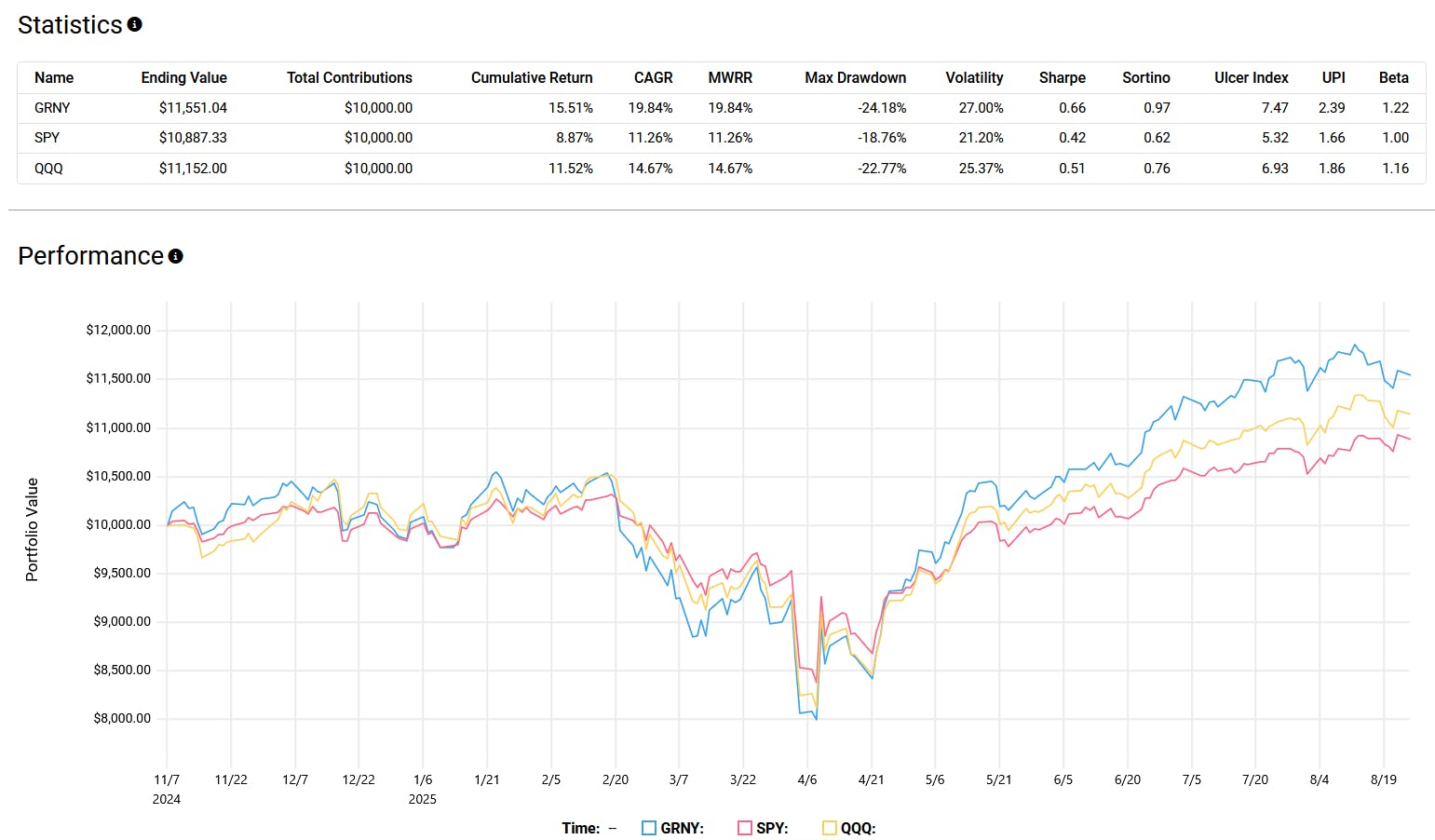
Now, Fundstrat and Lee are entering the fast-growing category of options-based ETFs, a segment that currently includes 694 funds as of August 26, according to ETF Central’s screener. The largest among them is the JPMorgan Equity Premium Income ETF
To compete, Fundstrat has filed preliminary prospectuses for the Fundstrat Granny Shots US Large Cap & Income ETF, a new product that aims to blend Lee’s high-conviction stock picks with an active options overlay to generate yield. Here’s what investors can expect.
Like what you're reading?
Stay in the loop — get the latest ETF insights: trends, analysis, and expert picks.
How the Fund Will Pick Its Stocks
The first part of the proposed ETF’s strategy is its stock selection process. This is an actively managed portfolio made up of 20 to 50 large-cap U.S. companies, meaning firms that rank in the top 85% of the U.S. stock market by size. The fund typically holds stocks tied to 5 to 10 broader market themes, which change over time based on Fundstrat’s research.
Like the original GRNY ETF, this fund uses what Tom Lee and Fundstrat call a “granny shots” strategy. In basketball, a granny shot is an old-school, underhand free throw that looks funny but works really well. It’s a nod to the idea that investing doesn’t have to be flashy to be effective.
The process starts with top-down research into the economy. Fundstrat’s team looks at areas like monetary policy, demographics, behavioral shifts, industry trends, and where we are in the business cycle. From there, they pick themes they believe will shape the market.
They also weigh how important a theme is, how likely it is to play out, whether other investors are already betting on it, and whether there are good stocks tied to it.
Once they land on a theme, they identify sectors and sub-sectors best positioned to benefit. This includes analyzing which companies are already showing revenue, spending, or stock price movement tied to the theme.
From here, Fundstrat runs a quantitative screen on a pool of candidate stocks tied to those themes. They look at metrics like free cash flow, leverage, valuation, asset turnover, and sentiment indicators. To make the final cut, a stock has to score well in at least two separate themes.
Each stock that qualifies is equally weighted in the final portfolio, and the fund is rebalanced back to equal weight every quarter, while also making sure it doesn’t get too concentrated in any one sector, but at the cost of higher turnover.
They also look at how companies talk about these themes in earnings calls and investor presentations, specifically using keyword analysis to see how frequently management brings them up. The end result is a concentrated portfolio of large-cap stocks that Fundstrat believes are positioned for long-term growth.
How the ETF Will Generate Income
While this new ETF builds on the success of GRNY, its income-generating strategy adds a tactical derivatives overlay. According to the prospectus, it won’t just sell covered calls like some of the older, more rules-based buy-write funds.
Instead, it uses a mix of options strategies “based on its market outlook.” That means alongside traditional covered calls, investors should expect the potential use of cash-secured puts or multi-leg combinations like bull call spreads or collar strategies. These allow for more flexibility, especially in markets where Fundstrat expects muted upside or wants downside protection.
In contrast to legacy ETFs that follow Cboe BuyWrite Indices and sell at-the-money calls every month on the entire portfolio, this ETF is likely to be nimbler. Fundstrat may vary strike prices, expiration dates, or even coverage ratios depending on the team’s outlook.
While they could sell calls on the individual stocks in the portfolio, there’s also reason to believe the fund may lean on cash-settled index options like SPX or NDX instead.
The prospectus notes that the ETF will hold cash or short-term Treasuries “to serve as collateral for the Fund’s derivatives transactions.” That’s a typical structure for funds writing index options, as it allows for capital efficiency and smoother execution.
This move mirrors trends across the growing income ETF category. More funds now use tools like FLEX options for custom exposures or, in JEPI’s case, equity-linked notes (ELNs). On that note, one area worth watching closely is tax treatment. JEPI’s use of ELNs has drawn criticism because much of its income is taxed as ordinary income.
On the other hand, some ETFs using index options or direct stock-based overlays are able to classify a larger portion of distributions as return of capital, effectively deferring taxes and improving after-tax returns. It remains to be seen how Fundstrat’s strategy will shake out on this front, but it will be a key detail for income-focused investors.
Please note that this article reflects the author’s personal views and does not represent the opinions of the publication or its affiliates. It is for informational purposes only and does not constitute investment advice. It is essential to seek guidance from a registered financial professional before making any investment decisions.

Latest ETF News
See all ETF newsCould Water ETFs Be the Next AI Bottleneck Trade?

What is a Boomer Candy ETF?

ETF Comparison: NEOS Nasdaq-100 High Income ETF (QQQI) Versus Goldman Sachs Nasdaq-100 Premium Income ETF (GPIQ)





 Advantages of ETFs over Mutual Funds1/6
Lower Costs
In this guide, we'll explore the advantages of ETFs over mutual funds, giving you valuable insights into why ETFs have gained significant popularity among investors like yourself.
Leveraged ETFs: Unlocking the Potential for Amplified Returns1/6
Understanding Leveraged ETFs
Explore leveraged ETFs: potential for amplified returns & risks. 5 ETFs to consider across equities, commodities & fixed income.
What is a Leveraged ETF?1/6
Introducing Leveraged and Inverse ETFs
In this guide, we'll dive into the world of leveraged ETFs, exploring their definition, mechanics, potential risks, and rewards.
Recent educational content

ETF Trends
ETF Industry KPIs September 8, 2026
This week’s KPI data overview highlights key metrics and trends shaping the ETF landscape.

ETF Trends
ETF Industry KPIs August 31, 2026
This week’s KPI data overview highlights key metrics and trends shaping the ETF landscape.
ETF Trends
ETF Industry KPIs August 24, 2026
This week’s KPI data overview highlights key metrics and trends shaping the ETF landscape.
What’sTheFund
What's the Fund | Ocean Park Diversified Income ETF (DUKZ)
James St Aubin, Chief Investment Officer at Ocean Park Asset Management, discuss the DUKZ ETF, exposing investors to the whole spectrum of asset classes in the fixed income markets, through their rules-based process.

Browse all educational columns



Active Trader Report: Use of Leveraged & Inverse ETFs Way Up
Direxion partnered with Compound Insights and Vanda to explore what’s driving the evolution of active trading — and how active traders are using leveraged and inverse funds across equities, single stocks, commodities, and volatility.