NYSE CRTR Economy Event Watch the replay →



Forget Diversification - The Latest ETF Industry Trend is Concentration
The latest breed of ETFs is getting increasingly top-heavy. Here's a look at some of the notable ones.


Keep up with what matters in ETFs
Get timely ETF insights, market trends, and top ideas straight to your inbox.
Your newsletter subscriptions with us are subject to ETF Central's Privacy Policy and Terms and Conditions.
I often highlight the Vanguard Total World Stock ETF
With an expense ratio of just 0.07%—or $7 annually per $10,000 invested—this ETF grants exposure to 9,891 stocks across all sizes (small, mid, and large-cap), all 11 sectors, and diverse geographical regions including the U.S., developed markets, and emerging markets.
Despite the clear advantages of such broad diversification, the current trend in the ETF industry is shifting towards greater concentration. Today's investors are increasingly seeking less diversification, and ETF issuers are responding by creating more focused products. This trend includes single-stock ETFs, mega-cap focused ETFs, and concentrated actively managed ETFs, which are not only proliferating but also attracting significant inflows.
In today's discussion, we'll explore some of the most concentrated ETFs currently on the market, excluding single-stock ETFs. I define these as equity ETFs with 50 or fewer holdings. Here's a closer look at some of the notable ETFs spearheading this trend.
Get data on 14,000+ ETFs
Access Trackinsight's reliable and comprehensive data with 500M+ points on 14,000+ ETFs.
Invesco S&P 500 Top 50 ETF XLG+0.96%
XLG has been a part of the financial landscape since 2005, but it has experienced a significant surge in popularity in recent years. According to the ETF Central screener, XLG has attracted $3.55 billion in inflows over the last three years.
To put this in perspective, the ETF currently has a total of $7.09 billion in assets under management, meaning that nearly half of its total assets have been accumulated from 2021 onwards.
The appeal of XLG lies in its simplicity and effectiveness. This ETF distills the broad S&P 500 index down to its 50 largest stocks by size, applying a market cap weighting approach. This method provides a clear, straightforward way to overweight mega-cap stocks.
Performance-wise, XLG has been a strong contender, particularly as mega-cap growth stocks, including the so-called "magnificent seven," have led the market over the last half-decade. These dominant stocks have propelled XLG to impressive heights, with its trailing five-year total returns standing at 19.14%, compared to the S&P 500's 15.82%.
However, potential investors should be aware of the concentration risks involved. Currently, heavyweights like Apple, Nvidia, and Microsoft collectively constitute about 34% of the ETF's portfolio.
Principal US Mega-Cap ETF USMC+1.37%
One under-the-radar concentrated active ETF to consider is USMC, managed by Principal Asset Management. What makes USMC particularly interesting is its distinctive investment strategy, which balances a significant active share with minimal turnover.
Active share indicates the degree to which the fund's holdings differ from its benchmark index. As of September 30, USMC maintained an active share of 55.52%. A higher active share suggests that the fund's holdings are quite distinct from those of its benchmark, pointing to more active management.
Turnover refers to how frequently assets within a fund are bought and sold by its managers. With a turnover rate of just 0.5%, USMC exhibits a patient investment strategy, which involves holding securities for longer periods, thus reducing transaction costs and potential tax consequences for investors.
Support for this approach can be found in a study from the Journal of Financial Economics (Volume 122, Issue 2, November 2016), titled "Patient capital outperformance: The investment skill of high active share managers who trade infrequently."
The study concluded that among portfolios with high active shares, those that adopted patient investment strategies—holding securities for over two years—tended to outperform by more than 2% per year. In contrast, funds with high turnover typically underperformed.
USMC's strategy involves not merely following an index but selecting stocks via a proprietary methodology. This method starts with the top 50% of the S&P 500 by market cap. From this subset, the top 10% is weighted by market cap, while the remaining 40% of the top half are weighted based on financial strength. The result is a current portfolio of just 25 companies, not excessively top-heavy.
Performance-wise, USMC has been a strong contender, earning a three-year five-star rating from Morningstar. Over the last five years, it has achieved a total return of 16.11%, slightly outperforming the S&P 500's return of 15.96%. Moreover, it is one of the most cost-effective actively managed equity ETFs available, with an expense ratio of just 0.12%.
iShares Top 20 U.S. Stocks ETF TOPT+1.42%
The newest addition to the concentrated ETF trend is TOPT, launched by iShares on October 23, 2024. In just six days post-launch, TOPT has already attracted $15.4 million in assets under management. This rapid accumulation highlights the strong investor interest in focused exposure to major U.S. companies.
TOPT is designed to track the S&P 500 Top 20 Select Index, which comprises the 20 largest U.S. companies by market capitalization within the S&P 500. This ETF offers investors a pure play on the biggest and, arguably, the most influential companies in the U.S. economy.
As expected, it includes all of the "magnificent seven" tech giants, ensuring a significant allocation to the technology sector, followed by consumer discretionary, communications, and healthcare.
Despite its relatively small AUM and initially lower trading volume, TOPT boasts impressive liquidity, as evidenced by a tight 0.04% 30-day bid-ask spread. It's important to remember that ETF liquidity is largely determined by the liquidity of its underlying holdings, and in this case, the mega-cap stocks that TOPT focuses on are some of the most heavily traded in the market.
TOPT charges a 0.2% expense ratio, identical to that of XLG. However, given the competitive landscape of ETFs focusing on mega-cap stocks, I wouldn't be surprised if iShares decided to implement a fee waiver to attract even more inflows in the near future.
Please note this article is for information purposes only and does not in any way constitute investment advice. It is essential that you seek advice from a registered financial professional prior to making any investment decision.
Latest ETF News
See all ETF newsThe Super El Niño Trade: Two Potential ETF Winners and Losers


The SpaceX (SPCX) IPO: Here's Which ETFs Already Own it




 Advantages of ETFs over Mutual Funds1/6
Lower Costs
In this guide, we'll explore the advantages of ETFs over mutual funds, giving you valuable insights into why ETFs have gained significant popularity among investors like yourself.
Leveraged ETFs: Unlocking the Potential for Amplified Returns1/6
Understanding Leveraged ETFs
Explore leveraged ETFs: potential for amplified returns & risks. 5 ETFs to consider across equities, commodities & fixed income.
What is a Leveraged ETF?1/6
Introducing Leveraged and Inverse ETFs
In this guide, we'll dive into the world of leveraged ETFs, exploring their definition, mechanics, potential risks, and rewards.
Recent educational content
Asset TV
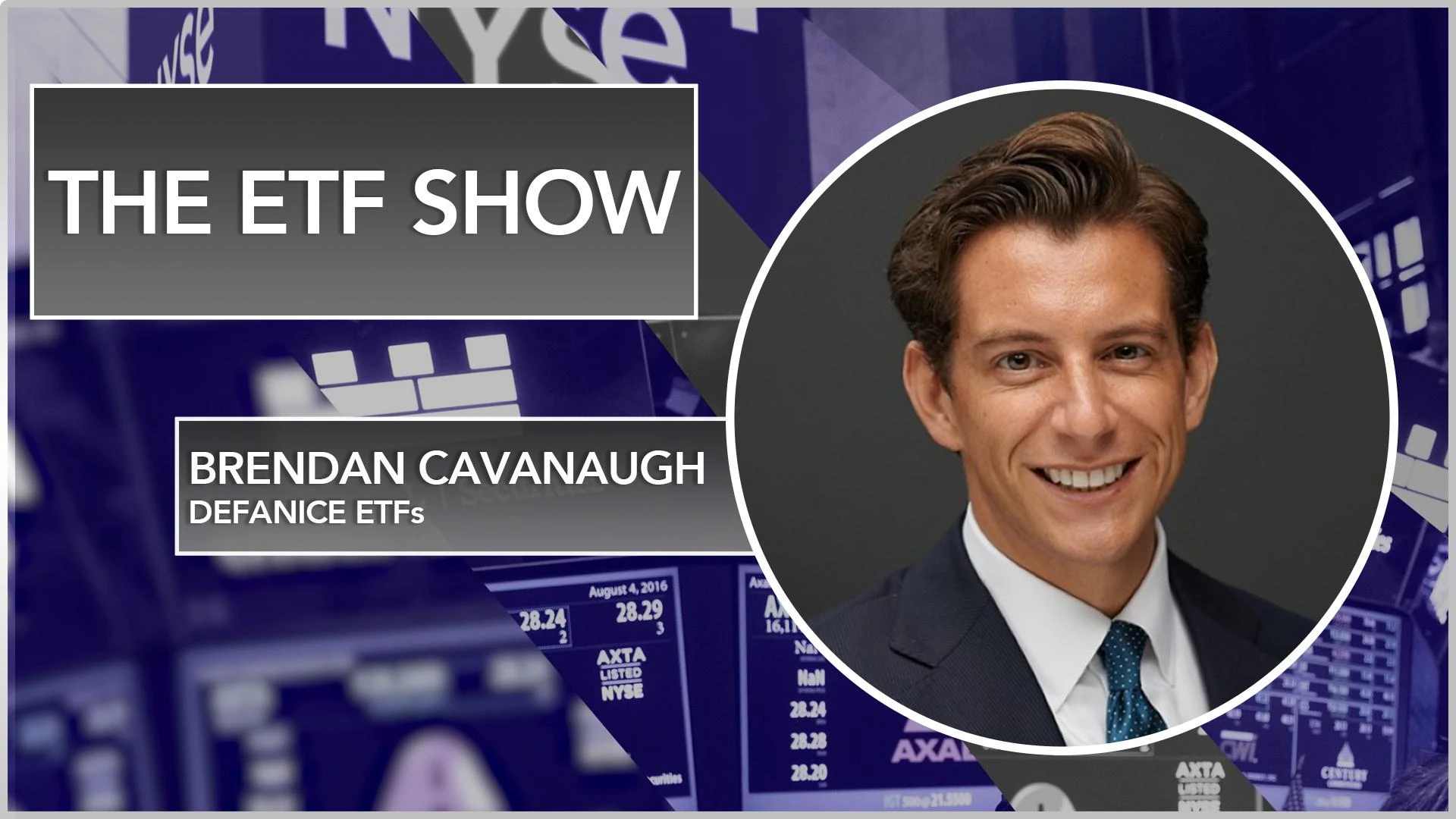
The ETF Show - New Autism-Impact ETF Launched
Defiance ETFs has launched the first ETF, $ASD, focused on the autism ecosystem, investing in companies that provide services, products, and research related to autism and neurodivergence.

ETF Trends
ETF Industry KPIs June 1, 2026
The ETF Industry saw 22 New Launches, 1 Ticker Change and 1 closure last week.

ETF Trends
ETF Industry KPIs May 20, 2026
The ETF Industry saw 44 New Launches, 3 Mutual Fund Conversions and 9 closures last week.

Asset TV
The ETF Show - Politics Becomes Investable Trade through ETFs
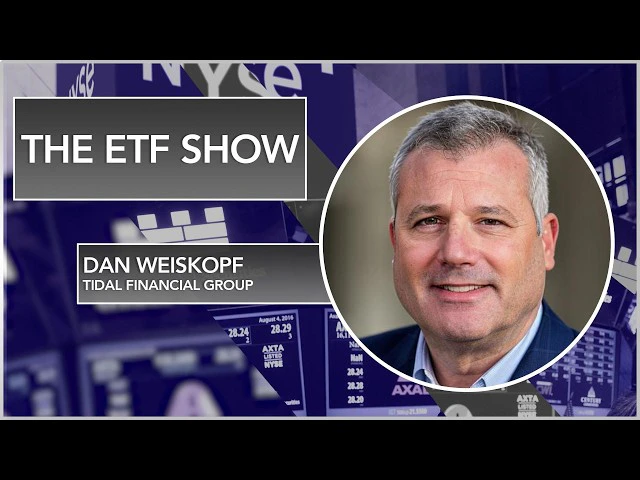
Dan Weiskopf, Senior Portfolio Manager at Tidal Financial Group spoke with the ETF Show about Subversive ETFs that help investors trade like politicians.
Browse all educational columns



The ETF Industry Is Evolving Fast
From AI infrastructure to active strategies, the ETF landscape is shifting. Share your perspective in the 7th Annual Global ETF Survey and get exclusive early access to the final report.