Create, analyze, optimize your ETF portfolio. Start now →



Fixed Income ETFs & Liquidity Shocks: How the Industry Has Evolved
Once doubted, bond ETFs have not only survived market crises—they’ve reshaped the fixed income landscape for good.


Keep up with what matters in ETFs
Get timely ETF insights, market trends, and top ideas straight to your inbox.
Your newsletter subscriptions with us are subject to ETF Central's Privacy Policy and Terms and Conditions.
Fixed income ETFs have transformed how investors access the bond market, providing liquidity, price discovery, and efficient trading. But their resilience was truly tested during market shocks like the 2008 financial crisis and the 2020 COVID-19 selloff.
These periods exposed structural inefficiencies, forcing the industry to adapt. Today, thanks to regulatory advancements, technological innovations, and increasing market participation, the bond ETF ecosystem is stronger, more transparent, and more liquid than ever.
Get data on 14,000+ ETFs
Access Trackinsight's reliable and comprehensive data with 500M+ points on 14,000+ ETFs.
The ETF Rule & The End of Fragmented Exemptive Relief
In the early days of ETFs, fixed income issuers operated under individualized exemptive relief from the SEC, meaning every bond ETF functioned slightly differently. This lack of standardization led to inefficiencies in trading, pricing, and liquidity provisioning.
The ETF Rule (6c-11), implemented in 2019, helped streamline the ETF ecosystem by:
- Standardizing the creation/redemption process, making it easier for Authorized Participants (APs) and market makers to manage liquidity.
- Allowing for smaller, custom baskets that fit the ETF’s liquidity profile rather than requiring a pro-rata slice of the index, which often resulted in small, illiquid bond positions.
- Facilitating larger round-lot bond trading, improving price discovery and reducing transaction costs.
These changes have made bond ETFs more structurally sound and easier to manage in both normal and stressed market conditions.
MarketAxess: Bringing Bonds Closer to an Exchange-Like System
Unlike equities, bonds do not trade on centralized exchanges. Historically, the bond market has been fragmented, relying on dealer networks for execution. However, the rise of MarketAxess, a leading electronic trading platform for fixed income securities, has significantly improved bond market transparency and liquidity.
- While not a certified bond exchange, MarketAxess is the closest equivalent, offering electronic trading that increases price discovery.
- ETF market makers actively use MarketAxess to source liquidity for bond ETFs, ensuring more efficient pricing and tighter spreads.
- As more bond ETFs use platforms like MarketAxess, Tradeweb, and Bloomberg’s fixed income networks, the ecosystem becomes more interconnected, further reducing liquidity shocks during periods of stress.
The Federal Reserve’s Recognition of ETFs as a Stabilizing Force
During the 2020 COVID-19 market turmoil, the Federal Reserve took unprecedented action by purchasing bond ETFs to restore confidence in fixed income markets. This move was a watershed moment, demonstrating that ETFs had become an integral part of financial stability rather than a source of systemic risk.
Rather than targeting specific corporate or Treasury bonds, the Fed used ETFs as a diversified, market-wide tool to shore up the economy. By investing in a basket of bonds rather than a few individual issuers, they instilled broad confidence across fixed income markets.
To execute this strategy, the Fed purchased a total of 16 bond ETFs, spanning investment-grade corporate debt, high-yield bonds, and Treasury securities:
Investment-Grade Corporate Bond ETFs:
- iShares iBoxx $ Investment Grade Corporate Bond ETF (LQD) – BlackRock
- iShares 0-5 Year Investment Grade Corporate Bond ETF (SLQD) – BlackRock
- iShares Intermediate-Term Corporate Bond ETF (IGIB) – BlackRock
- iShares Short-Term Corporate Bond ETF (IGSB) – BlackRock
- iShares Broad USD Investment Grade Corporate Bond ETF (USIG) – BlackRock
- Vanguard Short-Term Corporate Bond ETF (VCSH) – Vanguard
- Vanguard Intermediate-Term Corporate Bond ETF (VCIT) – Vanguard
- SPDR Portfolio Short Term Corporate Bond ETF (SPSB) – State Street
- SPDR Portfolio Intermediate Term Corporate Bond ETF (SPIB) – State Street
High-Yield & Fallen Angel Bond ETFs:
- iShares Broad USD High Yield Corporate Bond ETF (USHY) – BlackRock
- iShares iBoxx $ High Yield Corporate Bond ETF (HYG) – BlackRock
- iShares 0-5 Year High Yield Corporate Bond ETF (SHYG) – BlackRock
- SPDR Bloomberg High Yield Bond ETF (JNK) – State Street
- SPDR Bloomberg Short Term High Yield Bond ETF (SJNK) – State Street
- Xtrackers USD High Yield Corporate Bond ETF (HYLB) – Xtrackers by DWS
- VanEck Fallen Angel High Yield Bond ETF (ANGL) – VanEck
The Fed’s purchases helped stabilize spreads, improve price discovery, and inject liquidity into credit markets when bond trading had largely frozen. Instead of relying on direct bond purchases, the Fed leveraged ETFs to quickly and efficiently allocate capital across a diversified bond portfolio, reinforcing the idea that ETFs are now cornerstone financial instruments during crises.
Lead Market Makers (LMMs): The Backbone of Bond ETF Liquidity & Price Discovery
One of the most overlooked but essential players in the ETF ecosystem is the Lead Market Maker (LMM). These firms do more than just provide liquidity—they actively manage price discovery and ensure the continuous functioning of bond ETFs, even when the underlying market is frozen.
- LMMs operate as a real-time price discovery engine. Unlike the public, they have a full view of where bonds are trading, which bonds are available, and at what spreads.
- During market turmoil, ETFs continued trading, and LMMs had to constantly source quotes, bids, and offers across a diversified basket of bonds to keep prices aligned with reality.
- Without the ETF ecosystem, real-time price discovery in the bond market would not exist. Bond LMMs play a vital role in ensuring that investors get fair pricing, even when traditional bond trading has ground to a halt.
NAV Dislocations & ETF Price Discovery: A Strength, Not a Weakness
One of the biggest criticisms of bond ETFs during past crises was the dislocation between NAV (Net Asset Value) and ETF market price. However, this phenomenon was not a flaw—it was a reflection of the underlying bond market’s inefficiencies.
- Many bonds do not trade daily, making it difficult to update NAV in real time.
- Most bond funds rely on pricing agencies like IDC, Bloomberg, or other third-party valuation firms to mark their portfolios.
- During a major selloff, many bonds either do not trade or are not properly updated, creating a lag in NAV pricing.
- ETF LMMs and market makers actively quote and trade in real time, making ETF prices often more accurate than NAV during periods of stress.
In essence, ETF prices are a more reliable indicator of real-time bond market conditions than NAV, proving that ETFs serve as an essential price discovery tool.
Democratization of Bonds: The Growth of Fixed Income ETFs
One of the biggest shifts in the bond market has been the rapid expansion of bond ETFs, which have made fixed income investing more accessible to all types of investors.
- More ETFs = More Trading Volume = More Price Discovery The increase in bond ETFs has led to more frequent trading of underlying bonds. This added liquidity helps improve price discovery, making bond pricing more transparent and efficient.
- Retail & Institutional Adoption Investors who previously lacked direct bond market access can now trade diversified bond portfolios as easily as stocks. Institutional investors are increasingly using bond ETFs for liquidity management, tactical asset allocation, and hedging strategies.
- Stabilizing Liquidity During Market Stress During past crises, ETFs were criticized for trading at discounts to NAV, but today, bond ETFs are seen as a key price discovery mechanism when the underlying bond market becomes illiquid. Market makers and LMMs now actively use ETF trading activity to determine fair value pricing, reinforcing the ETF ecosystem as a stabilizing force rather than a source of volatility.
Final Thoughts: A Stronger, More Transparent Bond ETF Market
Fixed income ETFs have come a long way since their inception, learning from past liquidity crises to build a more resilient, efficient, and democratized bond market. The next time the bond market faces a crisis, ETF liquidity and transparency will likely play a stabilizing role rather than exacerbating dislocations. With continued evolution, the fixed income ETF ecosystem is stronger than ever.
Years ago, I told someone that one day there would be a bond exchange just like there is for stocks. They told me I was crazy.
But I still believe it—and the writing is on the wall. MarketAxess laid the groundwork, but a player like the NYSE has the opportunity to take that model, refine it, and revolutionize fixed income trading—bridging liquidity gaps and bringing greater transparency to the bond market.
Citations:
- SEC, Rule 6c-11 Fact Sheet: https://www.sec.gov/newsroom/press-releases/2019-190
- Federal Reserve, "SMCCF Purchase Details": https://www.federalreserve.gov/monetarypolicy/smccf.htm
- MarketAxess, "How MarketAxess is Transforming Bond Liquidity": https://www.marketaxess.com/
- CFA Institute, "ETF Discounts and Bond Market Liquidity": https://www.cfainstitute.org/
About the Author
Nicholas Phillips | President of ETF Capital Markets Advisors LLC
With over 25 years of experience in ETF market making and capital markets, Nicholas Phillips is recognized as a subject matter expert in the ETF industry. He started his career spending the first ten years as a lead market maker for SIG and Goldman Sachs.
At the helm of MCAP LLC's ETF Desk, Nicholas built and scaled the division, enhancing its operations through innovative pricing and risk models, and robust relationships with market makers and issuers. His tenure at Van Eck Associates as Director of ETF Capital Markets further solidified his expertise, managing critical facets of operations and deepening connections within the trading community.
Beyond market making, Nicholas is an avid content creator, sharing insights that demystify complex market dynamics. He is keen on exploring board member roles that benefit from his extensive background and forward-thinking approach to ETF strategies. His dual US/Ireland citizenship complements his global perspective, enriching his professional endeavors in diverse markets.
Disclaimer
Please note that this article reflects the author's personal views and does not represent the opinions of the publication or its affiliates. It is for informational purposes only and does not constitute investment advice. It is essential to seek guidance from a registered financial professional before making any investment decisions.
Topics
See all
Mentioned ETFs
No specific ETFs were tagged
Further reading

Latest ETF News
See all ETF news









 Advantages of ETFs over Mutual Funds1/6
Lower Costs
In this guide, we'll explore the advantages of ETFs over mutual funds, giving you valuable insights into why ETFs have gained significant popularity among investors like yourself.
Leveraged ETFs: Unlocking the Potential for Amplified Returns1/6
Understanding Leveraged ETFs
Explore leveraged ETFs: potential for amplified returns & risks. 5 ETFs to consider across equities, commodities & fixed income.
What is a Leveraged ETF?1/6
Introducing Leveraged and Inverse ETFs
In this guide, we'll dive into the world of leveraged ETFs, exploring their definition, mechanics, potential risks, and rewards.
Recent educational content
Asset TV
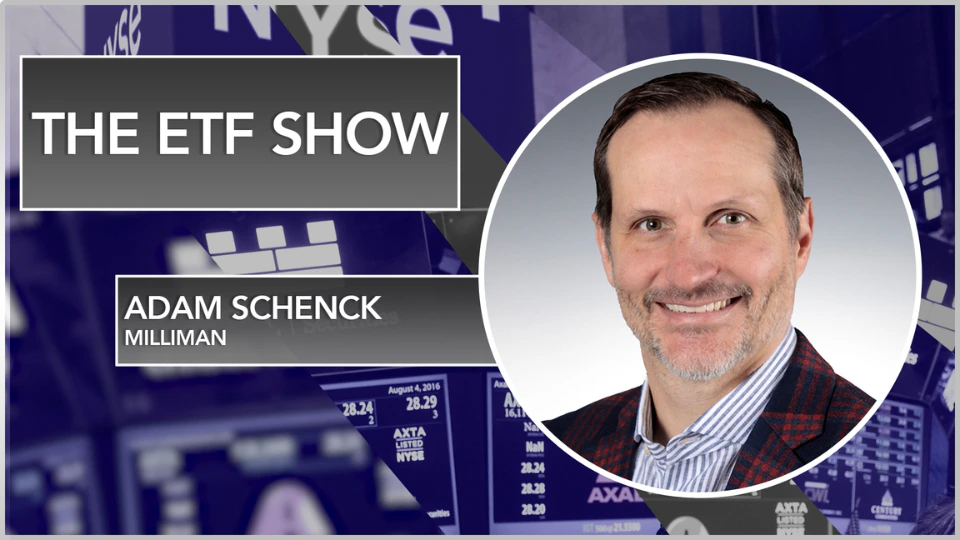
The ETF Show - Investors Can Fight Healthcare Inflation with Newly Launched ETFs
Adam Schenck, Principal and Managing Director of Fund Services at Milliman joined The ETF Show to discuss Milliman's first ETFs designed to hedge against rising healthcare inflation.


ETF Trends
ETF Industry KPIs April 20, 2026
The ETF Industry saw 14 New Launches, 1 Ticker Change and 16 closures last week.

Asset TV
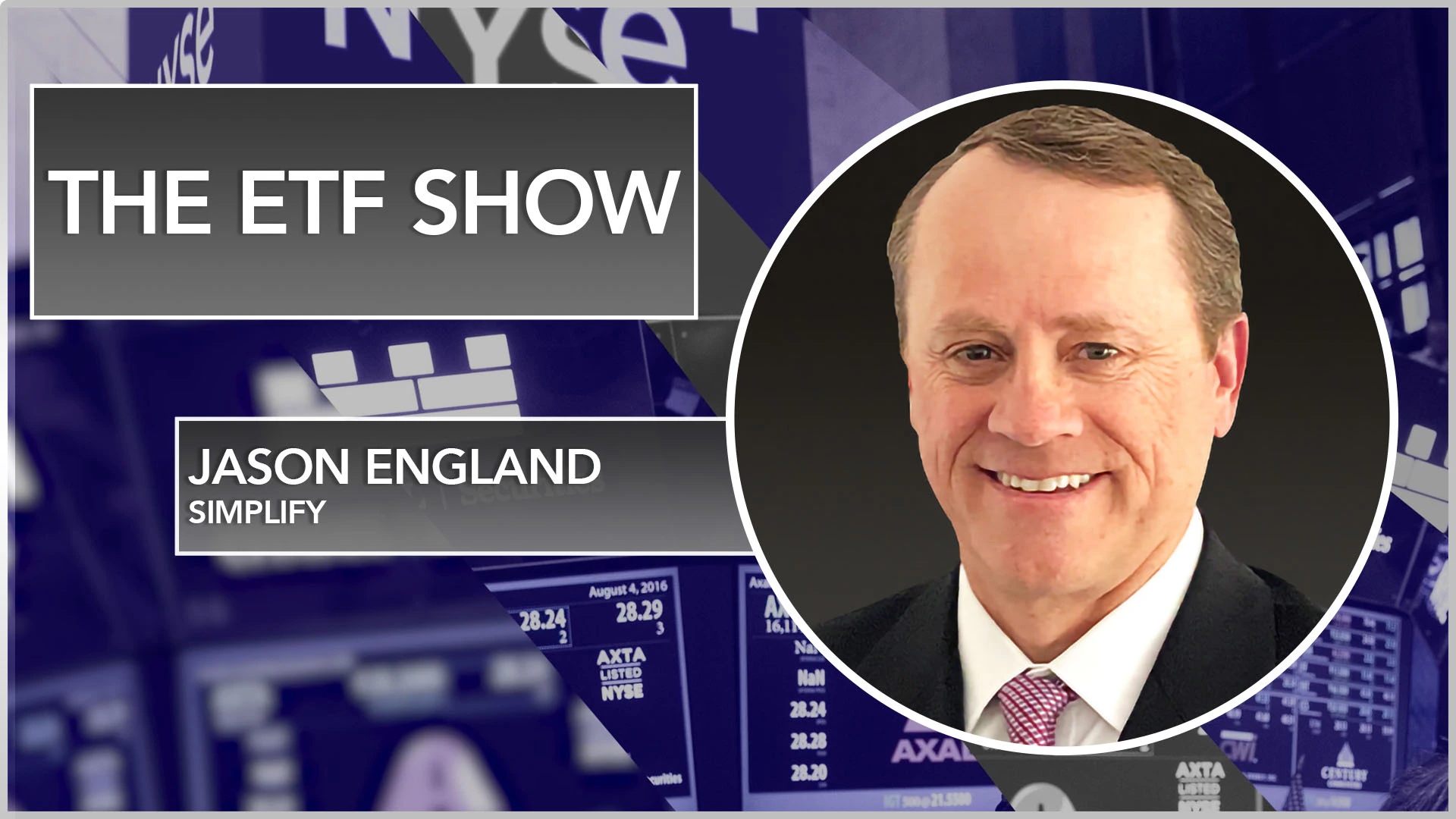
The ETF Show - Investors Run to Cash Alternatives as Markets Remain Volatile
Jason England, Portfolio Manager and Fixed Income Strategist from Simplify joined The ETF Show to discuss investor allocations to fixed income as markets continue on their rollercoaster ride.
ETF Trends
ETF Industry KPIs March 30, 2026
The ETF Industry saw 33 New Launches, 1 Ticker Change and 9 closures last week.
Browse all educational columns



Expert-Built ETF Portfolios, All in One Place
Don’t start from scratch. Discover ready-made ETF portfolios built by professionals to match different goals, timelines, and market views. Use them as inspiration or as a starting point for your own allocation.