Explore professionally built ETF model portfolios. Discover now →



Fidelity Continues Trend of Mutual Fund Conversions to ETFs
Here's what advisors, retail investors, and industry professionals need to know about this strategic move.


Keep up with what matters in ETFs
Get timely ETF insights, market trends, and top ideas straight to your inbox.
Your newsletter subscriptions with us are subject to ETF Central's Privacy Policy and Terms and Conditions.
Fidelity, one of the world's largest asset managers, is taking significant strides in expanding its ETF business, a move that positions it to better compete with industry giants like Vanguard, BlackRock iShares, Invesco, and State Street SPDRs.
In a notable strategic shift, Fidelity converted six of its mutual funds into actively managed ETFs on November 13th. These conversions include Fidelity Enhanced Large Cap Core ETF (FELC), Fidelity Enhanced Large Cap Growth ETF (FELG), Fidelity Enhanced Large Cap Value ETF (FELV), Fidelity Enhanced Mid Cap ETF (FMDE), Fidelity Enhanced Small Cap ETF (FESM), and Fidelity Enhanced International ETF (FENI).
Originally launched in 2007 as part of the actively managed Enhanced Index mutual fund suite, these funds have now transitioned to ETFs while retaining their original investment objectives.
Importantly, they will continue to be managed in the same manner as their mutual fund predecessors. Accompanying this transition is a notable reduction in fees, with the new ETFs charging approximately half the expense ratio of the original mutual funds.
Here's all you need to know about this development and how it could affect the broader ETF industry and you as an investor.
Like what you're reading?
Stay in the loop — get the latest ETF insights: trends, analysis, and expert picks.
Analyzing the Fidelity Conversion
This move by Fidelity follows its recent filing for exemptive relief to offer ETF share classes of their active mutual funds, reflecting a broader industry trend towards more flexible and tax-efficient investment vehicles.
The conversion of these funds into ETFs is a significant development, indicating Fidelity's commitment to adapting to changing market preferences and the growing demand for lower-cost active ETFs among investors, as highlighted by the 2023 Trackinsight ETF Survey.
Notably, how Fidelity's strategic shift will impact its position in the competitive ETF marketplace, and the potential benefits these converted ETFs might offer to investors in terms of cost, transparency, and efficiency.
Despite Fidelity's total ETF AUM trailing behind giants like Vanguard and BlackRock iShares, the firm's mutual fund lineup is substantial and well-regarded, boasting a strong historical track records and popularity among retail investors and advisors.
Fidelity's two-pronged approach of converting existing mutual funds to ETFs, along with its efforts to offer ETF share classes of active mutual funds, demonstrates a comprehensive strategy to gain a stronger foothold in the ETF market. This approach could effectively leverage the firm's existing strengths in mutual funds while expanding its presence in the burgeoning ETF space.
The benefits of these newly converted ETFs are significant for investors. One of the key advantages is the potential for lower capital gains taxes due to the ETF structure's unique creation/redemption process. This process can be more tax-efficient compared to traditional mutual funds.
Additionally, the converted ETFs boast much lower fees, ranging from 0.18% to 0.28%. These reduced costs make active management through ETFs increasingly affordable, potentially narrowing the long-standing performance gap between active and index funds.
This cost-efficiency could attract more investors seeking strategies to outperform the market, particularly in an environment where the pursuit of alpha remains a priority for many.
What the future holds
Speculating on the future of Fidelity's recent strategic moves in the ETF space, there are several potential developments that could unfold, especially if the recent conversions successfully attract inflows and if Fidelity’s application for exemptive relief is approved.
Firstly, we might see Fidelity turn its attention to converting or creating ETF share classes of their actively managed "Select" sector equity mutual funds. These funds are already well-capitalized and enjoy popularity among investors.
By transitioning them into the ETF format, Fidelity could position these funds as direct competitors to the passive index-based sector ETFs offered by Vanguard and State Street SPDR.
Another potential direction for Fidelity could involve target date funds. There’s an opportunity for Fidelity to convert these or offer them as ETF share classes, aiming to compete in a space that has seen new entrants like BlackRock iShares with its LifePath ETFs.
Target date funds in the ETF format are relatively unexplored territory, with few fund managers showing interest in this area. If Fidelity moves into this space, it could be a significant development, offering investors a new way to approach retirement planning with the potential tax efficiencies of ETFs.
All these possibilities hinge on the success of Fidelity’s current foray into converting mutual funds to ETFs and the approval of their exemptive relief application. If successful, these steps could mark the beginning of a more expansive and competitive role for Fidelity within the ETF marketplace.
Please note this article is for information purposes only and does not in any way constitute investment advice. It is essential that you seek advice from a registered financial professional prior to making any investment decision.

Latest ETF News
See all ETF newsMoneyShow Chart of the Day 9/4/26: Don't Just Watch Oil. Watch THESE.


Chart of the Day 8/14/26: The Great "Hot Money" Migration

MoneyShow Chart of the Day 7/29/26: Now, THAT's What I Call Market Rotation!

MoneyShow Chart of the Day 7/16/26: Good News/Bad News on Inflation (and the Fed)




 Advantages of ETFs over Mutual Funds1/6
Lower Costs
In this guide, we'll explore the advantages of ETFs over mutual funds, giving you valuable insights into why ETFs have gained significant popularity among investors like yourself.
Leveraged ETFs: Unlocking the Potential for Amplified Returns1/6
Understanding Leveraged ETFs
Explore leveraged ETFs: potential for amplified returns & risks. 5 ETFs to consider across equities, commodities & fixed income.
What is a Leveraged ETF?1/6
Introducing Leveraged and Inverse ETFs
In this guide, we'll dive into the world of leveraged ETFs, exploring their definition, mechanics, potential risks, and rewards.
Recent educational content

ETF Trends
ETF Industry KPIs September 8, 2026
This week’s KPI data overview highlights key metrics and trends shaping the ETF landscape.

ETF Trends
ETF Industry KPIs August 31, 2026
This week’s KPI data overview highlights key metrics and trends shaping the ETF landscape.
ETF Trends
ETF Industry KPIs August 24, 2026
This week’s KPI data overview highlights key metrics and trends shaping the ETF landscape.
What’sTheFund
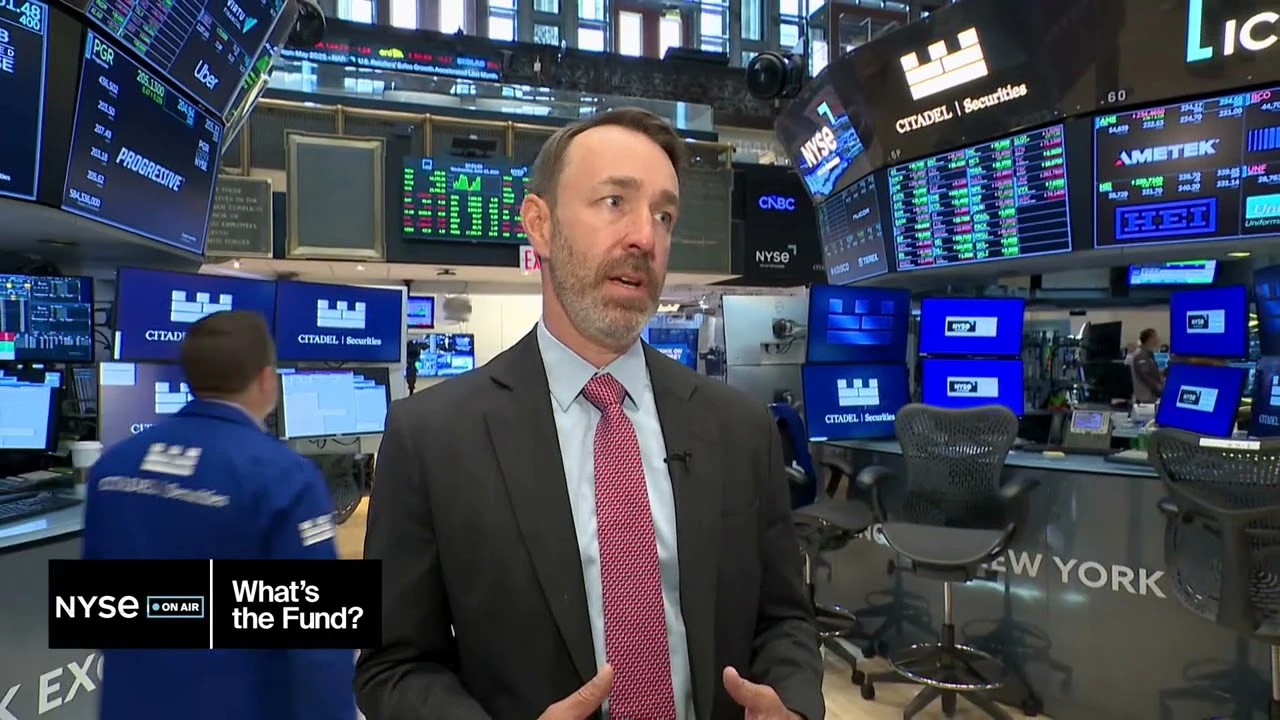
What's the Fund | Ocean Park Diversified Income ETF (DUKZ)
James St Aubin, Chief Investment Officer at Ocean Park Asset Management, discuss the DUKZ ETF, exposing investors to the whole spectrum of asset classes in the fixed income markets, through their rules-based process.

Browse all educational columns



Build and Analyze Your ETF Portfolio Like a Pro
Create your own ETF portfolio in minutes and instantly see allocations, exposures, performance, and risk. Visualize diversification across asset classes, regions, and sectors. Stress-test ideas, compare benchmarks, and refine your strategy with professional-grade analytics.