Turn ETF ideas into real portfolios. Try the builder now →



Ethereum ETFs 101: All You Need to Know About What's Going on Right Now
Interested in understanding the buzz around Ethereum ETFs? Here's a quick 10-minute guide on the essentials.


Keep up with what matters in ETFs
Get timely ETF insights, market trends, and top ideas straight to your inbox.
Your newsletter subscriptions with us are subject to ETF Central's Privacy Policy and Terms and Conditions.
Now that spot Bitcoin ETFs have been on the market since their approval by the SEC on January 10th, the spotlight is quickly shifting to the next potential blockbuster: the possibility of a spot Ethereum ETF.
There's a lot to digest here, particularly if you're new to ETFs and cryptocurrency, not to mention the merging of these two worlds, which is admittedly breaking new ground even for veteran investors!
To help navigate this complex and rapidly evolving landscape, I've put together a quick, three-part guide on the essentials. This guide will bring you up to speed on everything you need to know about the buzz surrounding Ethereum ETFs right now.
Get data on 14,000+ ETFs
Access Trackinsight's reliable and comprehensive data with 500M+ points on 14,000+ ETFs.
What is Ethereum?
Ethereum is like the silver medalist in the world of cryptocurrencies, sitting right behind Bitcoin in terms of market value. But it's much more than just a digital currency; think of Ethereum as a giant, global computer that everyone can use but no one owns.
This computer runs on "Ether" (ETH), which is the currency used to pay for operations on this network. Imagine you're playing a video game where you can create your own rules, assets, and even your own mini-games within it. Ethereum allows developers to do just that but in the real world.
They can build applications on Ethereum's platform using "smart contracts," which are like automatic agreements that execute when certain conditions are met, without needing a middleman.
This technology has practical uses in many areas, such as creating decentralized finance (DeFi) applications that let people lend or borrow money directly from each other, issuing and trading digital assets that can represent anything from artworks to real estate, and building decentralized autonomous organizations (DAOs) that operate based on the collective decisions of their members.
But beyond its use in applications, Ethereum is also seen as an investment. Its price can swing up and down more sharply than Bitcoin's, making it a more volatile option for investors. As of March 24th, Ethereum trades at $3,3392, marking a 44% increase year-to-date.
Is there an ETF for Ethereum?
The ETF structure is known for its flexibility, capable of holding a wide variety of assets, including cryptocurrencies like Bitcoin, as we've seen with its recent approval.
The move towards Ethereum ETFs has been gaining momentum, leading to the emergence of "quasi" Ethereum ETFs such as the ProShares Ether Strategy ETF (EETH)
I refer to these as "quasi" because, technically, they don't directly hold spot Ethereum. Instead, they invest in Ethereum futures, a type of derivative. Essentially, they're contracts to buy or sell Ethereum at a future date at a price agreed upon today.
What does this mean for investors? Essentially, it's a creative workaround to navigate the existing regulatory landscape, providing a way to gain exposure to Ethereum's price movements.
However, this approach is not without its drawbacks, including potentially higher fees and tracking errors compared to direct investments in Ethereum.
But for now, these Ethereum "Strategy" ETFs represent the closest option investors have to gain exposure to Ethereum through a regulated ETF framework.
Update on spot Ethereum ETFs filings
As of March 19, the SEC has postponed its decision on several applications for spot Ethereum ETFs, notably those from Hashdex and ARK 21Shares.
The final verdict on these applications is expected in May, with May 24 set as the decision date for ARK 21Shares and Hashdex's fate to be decided on or before May 30.
However, these two firms aren't the only ones eagerly awaiting the SEC's approval. Other financial giants such as BlackRock, Grayscale, Fidelity, Invesco Galaxy, VanEck, and Franklin Templeton have also thrown their hats into the ring with their own filings.
But despite the growing interest and the successful launch of Bitcoin ETFs, the chances of Ethereum ETFs getting the green light seem slim, as per industry analysts and predictions from decentralized betting platforms.
There's an interesting twist in some of the filings that investors should note. Fidelity, for instance, has amended its prospectus to include staking.
Staking involves holding funds in a cryptocurrency wallet to support the operations of a blockchain network. In return, stakers are rewarded with additional cryptocurrency, potentially boosting the returns for the ETF and maybe even resulting in some yield.
How to invest in Ethereum today
For investors seeking direct exposure to spot Ethereum without going through an exchange, the current options are somewhat limited. One possibility is the Grayscale Ethereum Trust (ETH), a closed-end fund that offers exposure to Ethereum's price movements.
Alternatively, U.S. investors can look into USD-denominated shares of Canadian-listed spot Ethereum ETFs like the CI Galaxy Ethereum ETF (ETHX.U), which have been available for some time.
These funds offer a way to invest in Ethereum through a traditional investment structure, even as the U.S. market awaits its own spot Ethereum ETFs.
Please note this article is for information purposes only and does not in any way constitute investment advice. It is essential that you seek advice from a registered financial professional prior to making any investment decision.


Latest ETF News
See all ETF newsMoneyShow Chart of the Day 9/4/26: Don't Just Watch Oil. Watch THESE.


Chart of the Day 8/14/26: The Great "Hot Money" Migration

MoneyShow Chart of the Day 7/29/26: Now, THAT's What I Call Market Rotation!

MoneyShow Chart of the Day 7/16/26: Good News/Bad News on Inflation (and the Fed)




 Advantages of ETFs over Mutual Funds1/6
Lower Costs
In this guide, we'll explore the advantages of ETFs over mutual funds, giving you valuable insights into why ETFs have gained significant popularity among investors like yourself.
Leveraged ETFs: Unlocking the Potential for Amplified Returns1/6
Understanding Leveraged ETFs
Explore leveraged ETFs: potential for amplified returns & risks. 5 ETFs to consider across equities, commodities & fixed income.
What is a Leveraged ETF?1/6
Introducing Leveraged and Inverse ETFs
In this guide, we'll dive into the world of leveraged ETFs, exploring their definition, mechanics, potential risks, and rewards.
Recent educational content

ETF Trends
ETF Industry KPIs September 8, 2026
This week’s KPI data overview highlights key metrics and trends shaping the ETF landscape.

ETF Trends
ETF Industry KPIs August 31, 2026
This week’s KPI data overview highlights key metrics and trends shaping the ETF landscape.
ETF Trends
ETF Industry KPIs August 24, 2026
This week’s KPI data overview highlights key metrics and trends shaping the ETF landscape.
What’sTheFund
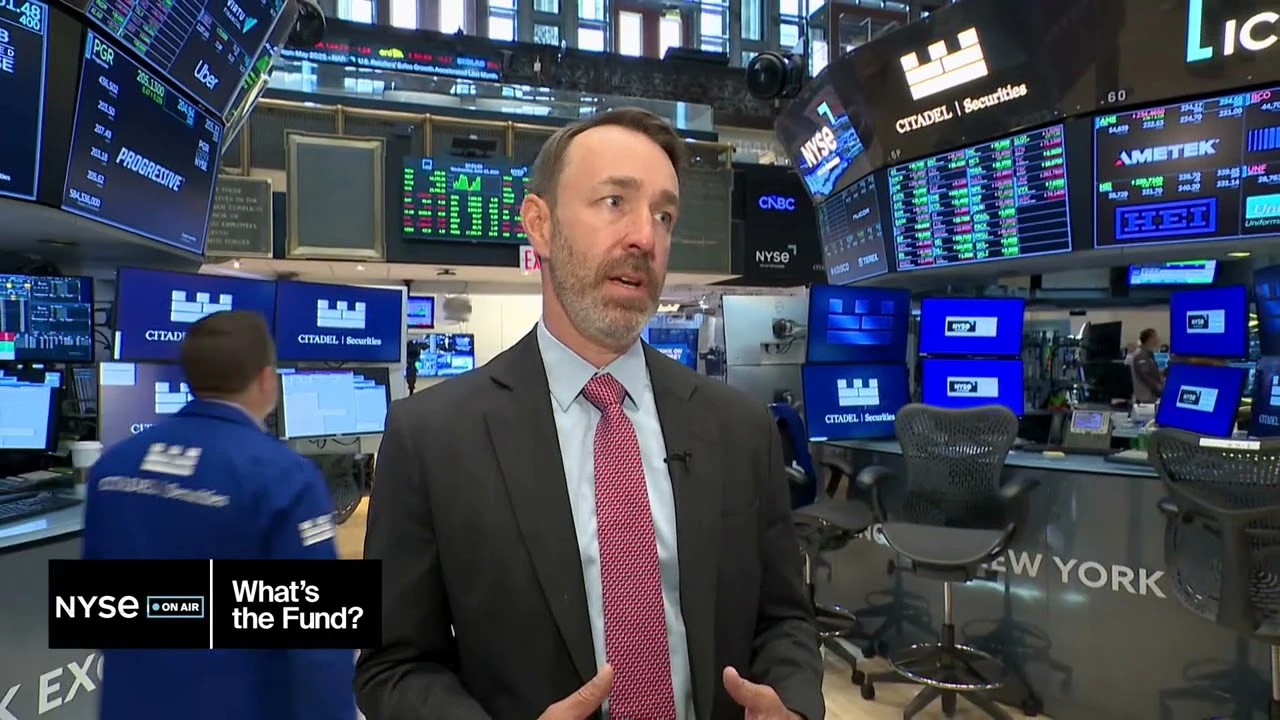
What's the Fund | Ocean Park Diversified Income ETF (DUKZ)
James St Aubin, Chief Investment Officer at Ocean Park Asset Management, discuss the DUKZ ETF, exposing investors to the whole spectrum of asset classes in the fixed income markets, through their rules-based process.

Browse all educational columns



Expert-Built ETF Portfolios, All in One Place
Don’t start from scratch. Discover ready-made ETF portfolios built by professionals to match different goals, timelines, and market views. Use them as inspiration or as a starting point for your own allocation.