Turn ETF ideas into real portfolios. Try the builder now →



ETFs for a "Higher for Longer" Interest Rate Environment
A Fed pivot is looking increasingly unlikely for the year. Here are three ETFs that may be more resilient under these conditions.


Keep up with what matters in ETFs
Get timely ETF insights, market trends, and top ideas straight to your inbox.
Your newsletter subscriptions with us are subject to ETF Central's Privacy Policy and Terms and Conditions.
As investors gear up for the upcoming Federal Open Market Committee (FOMC) meeting on May 1st, there's much to consider given recent economic developments.
The narrative around "transitory inflation" and hopes for a 2024 policy pivot have effectively been dismantled by the reality of persistent high inflation, as evidenced by the last three Consumer Price Index (CPI) prints.
Fixed income markets are now hinting at possible interest rate cuts in the FOMC's July or September meetings. However, Federal Reserve Chair Jerome Powell has maintained a cautious stance since the start of the year, suggesting that initial expectations for up to six rate cuts might be overly optimistic.
This backdrop sets the stage for a "higher for longer" interest rate environment, a situation likely to be reaffirmed on May 1st with the prevailing consensus that the Fed will maintain steady rates. In such a climate, the versatility and breadth of ETF offerings become invaluable tools for investors.
Specifically, certain fixed income ETFs are well-positioned to navigate and potentially benefit from this prolonged period of elevated rates. Here are three such ETFs that investors might consider in response to the current economic indicators.
Get data on 14,000+ ETFs
Access Trackinsight's reliable and comprehensive data with 500M+ points on 14,000+ ETFs.
WisdomTree Floating Rate Treasury Fund (USFR+0.08%)
USFR is an ETF that I believe investors should strongly consider holding. The fund offers a rare combination of low interest rate risk, high yield, and excellent credit quality, making it an all-around great tool for cash and liquidity management.
USFR holds U.S. government floating rate notes, which are designed to fluctuate with short-term rates and are priced at a spread over 3-month Treasury Bills. This design inherently reduces interest rate risk, as the payouts adjust with rate changes, providing a more stable investment compared to fixed-rate securities in a rising rate environment.
For a modest 0.15% expense ratio, you can forgo the hassle of buying individual notes and instead get them in a neat, exchange-traded vehicle. This comes with the convenience of monthly distributions, making it an excellent choice for those looking to manage their liquidity effectively.
Currently, USFR offers a yield to maturity of 5.48%, which is a measure of total return considering all expected income payments and the capital gain or loss that will be realized if the bond is held to maturity. For those focused on pure income potential, you can expect a 5.33% 30-day SEC yield, which is quite attractive in today's market.
Finally, USFR stands out as one of the largest and most liquid floating rate ETFs available, featuring a 0.02% 30-day median bid-ask spread and managing over $17.5 billion in AUM.
JPMorgan Ultra-Short Income ETF (JPST+0.02%)
If you're willing to move slightly down the credit rating spectrum to target higher yields, an actively managed fixed income ETF like JPST could be a suitable option.
Unlike some fixed income ETFs that follow a passive investment strategy, JPST is actively managed. This allows its portfolio management team the flexibility to manage credit and duration exposure on the fly, adapting to changing market conditions to optimize returns.
JPST primarily aims to maintain an average duration of less than a year. This strategic choice minimizes interest rate risk, which is particularly crucial in the current environment where rates are expected to remain higher for longer.
However, JPST doesn't limit its holdings to government treasuries; it also includes other credit instruments, which helps boost its expected returns. Currently, JPST offers a yield to maturity of 5.61% net and a 30-day SEC yield of 5.33%, making it an attractive option for those seeking higher income from their investments.
In addition to its strategy, JPST features the usual monthly distributions, which many investors find convenient for income planning. Notably, it charges just 0.18% in expense ratios, making it one of the most economical options among active fixed income ETFs available today.
Alpha Architect 1-3 Month Box ETF (BOXX+0.05%)
Here's a short-term fixed income substitute that you might not have heard about: BOXX. This ETF is favored by advisors for its tax efficiency but remains less known among retail investors.
In essence, BOXX aims to deliver a total return similar to, or better than, 1–3-month Treasury Bills, but it does so without the usual interest income distributions.
How does it achieve this? Interestingly, BOXX doesn't actually hold Treasury bills. Instead, it employs an advanced multi-leg options strategy known as a box spread using European options. Simply put, a box spread is a combination of buying a bull call spread and a bear put spread.
This strategy is designed to exploit differences in option prices for profit, effectively simulating the returns of short-term Treasury bills with potentially more favorable tax treatment, as the returns are primarily derived from capital gains reflected in the ETF's share price rather than interest income.
Currently, investors can expect an average yield to options expiration of 5.78%, which serves as the metric to gauge total returns from this strategy. While BOXX has a higher expense ratio of 0.39% compared to other ETFs, this is to be expected given the complexity of the strategy it employs.
Despite the higher cost, BOXX has been popular recently, drawing in $513 million of inflows over the last month as of April 26, indicating a growing interest in alternative fixed income strategies that offer both return potential and tax efficiency.
Please note this article is for information purposes only and does not in any way constitute investment advice. It is essential that you seek advice from a registered financial professional prior to making any investment decision.
Mentioned ETFs
Further reading

Latest ETF News
See all ETF newsCould Water ETFs Be the Next AI Bottleneck Trade?

What is a Boomer Candy ETF?

ETF Comparison: NEOS Nasdaq-100 High Income ETF (QQQI) Versus Goldman Sachs Nasdaq-100 Premium Income ETF (GPIQ)





 Advantages of ETFs over Mutual Funds1/6
Lower Costs
In this guide, we'll explore the advantages of ETFs over mutual funds, giving you valuable insights into why ETFs have gained significant popularity among investors like yourself.
Leveraged ETFs: Unlocking the Potential for Amplified Returns1/6
Understanding Leveraged ETFs
Explore leveraged ETFs: potential for amplified returns & risks. 5 ETFs to consider across equities, commodities & fixed income.
What is a Leveraged ETF?1/6
Introducing Leveraged and Inverse ETFs
In this guide, we'll dive into the world of leveraged ETFs, exploring their definition, mechanics, potential risks, and rewards.
Recent educational content

ETF Trends
ETF Industry KPIs September 8, 2026
This week’s KPI data overview highlights key metrics and trends shaping the ETF landscape.

ETF Trends
ETF Industry KPIs August 31, 2026
This week’s KPI data overview highlights key metrics and trends shaping the ETF landscape.
ETF Trends
ETF Industry KPIs August 24, 2026
This week’s KPI data overview highlights key metrics and trends shaping the ETF landscape.
What’sTheFund
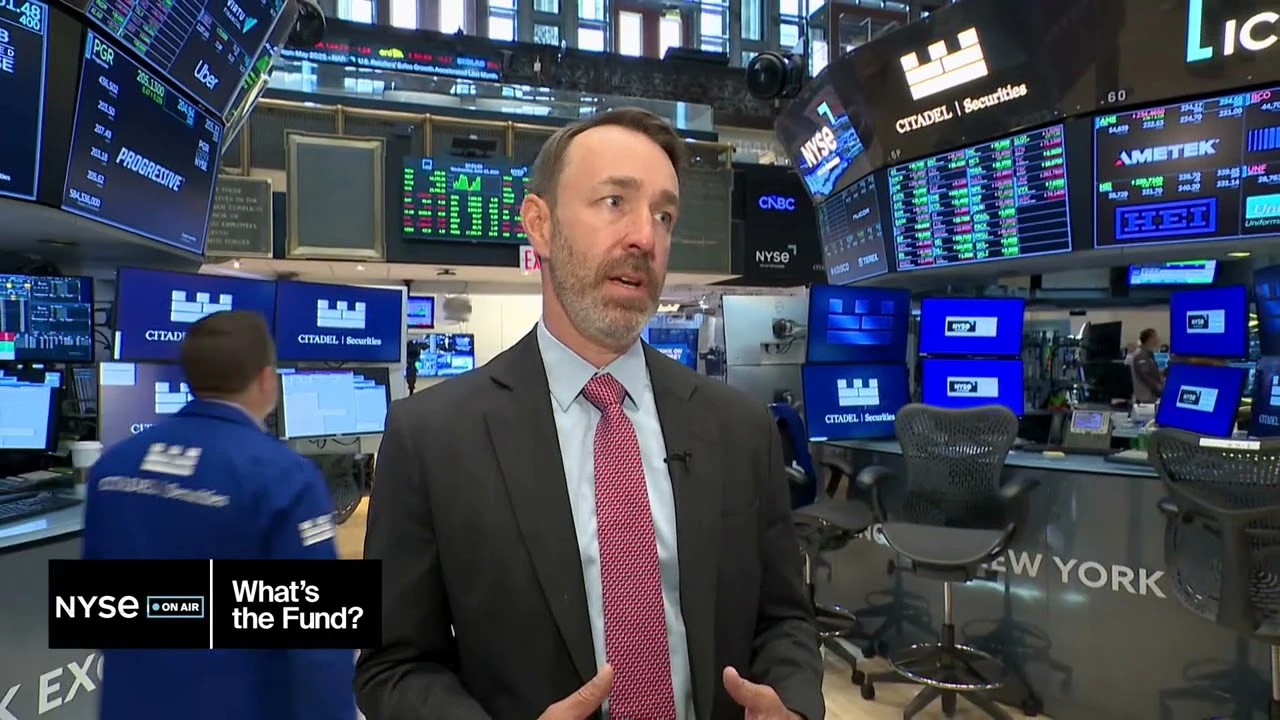
What's the Fund | Ocean Park Diversified Income ETF (DUKZ)
James St Aubin, Chief Investment Officer at Ocean Park Asset Management, discuss the DUKZ ETF, exposing investors to the whole spectrum of asset classes in the fixed income markets, through their rules-based process.

Browse all educational columns



Have you tried our ETF Compare tool?
Compare ETFs like a pro. Analyze fees, performance, exposure & holdings side-by-side.