Open Now: The Global ETF Survey Take the Survey →



ETF Winners and Losers from Last Week's Fed Decision
Fed monetary policy can move markets for better or worse. Here's how some notable ETFs fared in response to last week's decision.

Keep up with what matters in ETFs
Get timely ETF insights, market trends, and top ideas straight to your inbox.
Your newsletter subscriptions with us are subject to ETF Central's Privacy Policy and Terms and Conditions.
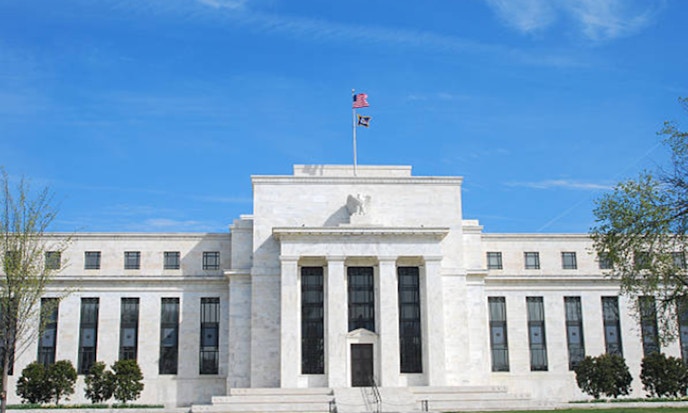
As traders and investors across the globe focus their attention on the U.S. Federal Reserve (Fed), the central bank's recent decision has made clear the immense impact its policies have on short-term market movements.
The latest November meeting painted a mixed picture of the current economic landscape. On the bright side, the economy has shown robust growth in the third quarter, with a sustained pace of job creation and a persistently low unemployment rate.
However, "sticky, un-transitory" inflation continues to hover above desired levels. In addition, there are growing concerns that tighter financial conditions could dampen economic vigor and affect long-term employment among other key indicators.
In line with their goal of fostering a stable job market and keeping inflation around 2 percent in the long run, the Fed ultimately chose to keep interest rates steady within a range of 5.25-5.5%.
In light of this decision, the vast universe of ETFs—amounting to 3,325 different funds according to the ETF Central screener —experienced a broad spectrum of effects. Some funds emerged as clear beneficiaries of the Fed's stance, while others faced setbacks.
Here's a look at which ETFs won and lost the most from the Fed's recent announcement.
The ETF Industry Is Evolving Fast
From AI infrastructure to active strategies, the ETF landscape is shifting. Share your perspective in the 7th Annual Global ETF Survey and get exclusive early access to the final report.
Winner: Long-term treasury ETFs
One of the most notable struggles in the ETF realm for both 2022 and 2023 has been witnessed in the long-term Treasury ETFs sector.
The iShares 20 Plus Year Treasury Bond ETF (TLT) and its thrice leveraged sibling, the Direxion Daily 20+ Year Treasury Bull 3X Shares ETF (TMF), have been likened to money incinerators given their significant declines. Despite this, investors have not shied away.
They have been continuously pouring money into TLT and TMF, a clear example of bottom fishing, hoping to capitalize on a turnaround that seemed hard to pinpoint amidst a relentless series of 11 consecutive Fed rate hikes before the November 1st meeting.
Case in point – according to the ETF Central screener, TLT currently ranks #3 in terms of one-month net inflows, attracting some $3.4 billion in investor capital over the training month.
That being said, attempting to outpace and predict the Fed's monetary policy has proven to be a formidable challenge, with the true market bottom for long-term Treasurys still out of reach.
As evidence of the enduring challenge, TLT has remained down nearly 13% year-to-date, while TMF has suffered even more, plummeting by 41%—a performance so severe that it has led to the announcement of a reverse split for the fund.
However, the latest pause in the Fed's interest rate hikes has provided a momentary sigh of relief. In the trailing five trading days leading up to November 7th, TLT saw a rally of nearly 5%, and TMF experienced a 15% surge.
This bounce could suggest that perhaps, at last, the bottom has been reached. But as with all things in the world of investing, only time will tell if this reprieve holds or if it's merely a brief interlude in a longer-term downtrend.
Losers: Volatility futures ETFs
Before the Federal Reserve's decision on interest rates, there was a palpable tension among investors and traders.
This tension was reflected in the rise of the VIX, commonly known as Wall Street's "Fear Gauge," which surged and stabilized above the 20 mark. Simultaneously, the yield on the 10-year Treasury note reached the 5% threshold.
These two indicators are traditionally viewed as signals of market stress; the heightened VIX suggests increased volatility and uncertainty among investors, while a rising 10-year yield indicates expectations of higher interest rates, which can dampen economic growth and put pressure on equities.
However, in the aftermath of the Fed's announcement to hold rates steady, both of these indicators receded.
The VIX's decline pointed towards a collective market sigh of relief, as the immediate uncertainty around policy decisions dissipated. Concurrently, the 10-year yield reduction eased concerns over soaring borrowing costs, which can lead to wider economic repercussions.
For investors holding ETFs that track VIX futures with a long bias, the subdued volatility post-Fed decision spelled losses. These ETFs are often used to hedge portfolios against downturns or to speculate on market turmoil.
As of November 7th, the popular ProShares VIX Short-Term Futures ETF (VIXY) is down roughly 12.5% over the last five trading days, while its 1.5x daily leveraged counterpart, the ProShares Ultra VIX Short Term Futures ETF (UVXY) is down around 18.4%.
Moreover, due to their structure, which includes daily resets and the decay associated with rolling futures contracts, these instruments are generally considered appropriate only for short-term tactical positions.
The reason is that over the long term, the costs associated with maintaining the position in a contango market—where future prices are higher than spot prices—can erode returns, making these ETFs less effective as a long-term hedge and more suited to short-term, speculative trades.
Please note this article is for information purposes only and does not in any way constitute investment advice. It is essential that you seek advice from a registered financial professional prior to making any investment decision.
Mentioned ETFs
Further reading
Latest ETF News
See all ETF newsMoneyShow Chart of the Day 7/16/26: Good News/Bad News on Inflation (and the Fed)


MoneyShow Chart of the Day 7/1/26: The H1 Scorecard – and What Comes Next

MoneyShow Chart of the Day 6/22/26: Are World Cup Videos Helping US Companies Clean Up?

MoneyShow Chart of the Day 6/3/26: AI. AI. AI. (And a Handful of Other Stocks, Too)




 Advantages of ETFs over Mutual Funds1/6
Lower Costs
In this guide, we'll explore the advantages of ETFs over mutual funds, giving you valuable insights into why ETFs have gained significant popularity among investors like yourself.
Leveraged ETFs: Unlocking the Potential for Amplified Returns1/6
Understanding Leveraged ETFs
Explore leveraged ETFs: potential for amplified returns & risks. 5 ETFs to consider across equities, commodities & fixed income.
What is a Leveraged ETF?1/6
Introducing Leveraged and Inverse ETFs
In this guide, we'll dive into the world of leveraged ETFs, exploring their definition, mechanics, potential risks, and rewards.
Recent educational content

ETF Trends
ETF Industry KPIs July 20, 2026
This week’s KPI data overview highlights key metrics and trends shaping the ETF landscape.

ETF Trends
ETF Industry KPIs July 13, 2026
This week’s KPI data overview highlights key metrics and trends shaping the ETF landscape.
First Look ETF
First Look ETF: Cash Deployment, Bond, and Hedged ETFs
In this season 6 episode of First Look ETF, Stephanie Stanton examines the latest ETF marketplace trends with NYSE and guests.

ETF Trends
ETF Industry KPIs July 6, 2026
This week’s KPI data overview highlights key metrics and trends shaping the ETF landscape.
Browse all educational columns



Expert-Built ETF Portfolios, All in One Place
Don’t start from scratch. Discover ready-made ETF portfolios built by professionals to match different goals, timelines, and market views. Use them as inspiration or as a starting point for your own allocation.