Ready-made ETF portfolios built for real investor needs. Explore now →



Understanding the ETF Rule and How it Transformed Fixed Income ETFs
By eliminating bureaucratic hurdles and empowering issuers with custom baskets, the ETF Rule (6c-11) reshaped the fixed income market.


Keep up with what matters in ETFs
Get timely ETF insights, market trends, and top ideas straight to your inbox.
Your newsletter subscriptions with us are subject to ETF Central's Privacy Policy and Terms and Conditions.
The introduction of the first exchange-traded fund (ETF) by the SEC in 1992 marked the beginning of a new era in investment opportunities. Since then, ETFs have grown exponentially in popularity due to their accessibility, low cost, and ability to offer diversified exposure to various asset classes. However, the path to bringing these innovative products to market was fraught with regulatory hurdles, primarily due to the Investment Company Act of 1940. The SEC's "ETF Rule," formally known as Rule 6c-11, was a game-changer that addressed these challenges, particularly in the realm of fixed-income ETFs.
Get data on 14,000+ ETFs
Access Trackinsight's reliable and comprehensive data with 500M+ points on 14,000+ ETFs.
The Necessity of the ETF Rule
Before the introduction of Rule 6c-11, ETFs required an exemptive order from the SEC to be approved. This was necessary because the Investment Company Act of 1940, which governs mutual funds and other investment companies, did not explicitly allow for the structure and operation of ETFs. Each fund had to file for an exemption, and the application process could take months or even years, significantly delaying the launch of new ETFs. This process was not only time-consuming but also costly for fund sponsors, creating a significant barrier to entry, particularly for smaller firms.
The Implementation of Rule 6c-11
In 2018, the SEC proposed the "ETF Rule," which was officially passed in September 2019 and went into effect 60 days after its publication in the Federal Register. Rule 6c-11 eliminated the need for exemptive orders by codifying the necessary exemptions within the rule itself. This allowed ETFs to be brought to market more quickly and efficiently, leveling the playing field for all issuers. SEC Commissioner Hester M. Peirce emphasized that this rule was crucial for fostering better competition, which ultimately benefits investors and the overall health of the financial markets.
Impact on Fixed Income ETFs
One of the most significant impacts of Rule 6c-11 has been on fixed-income ETFs. Prior to the rule, the complexities of managing bond portfolios within an ETF structure often required custom baskets to facilitate efficient creation and redemption processes. However, these custom baskets were not universally available, limiting the flexibility of fixed-income ETFs. Rule 6c-11 changed this by allowing all ETFs covered under the rule to utilize custom baskets. This was particularly beneficial for fixed-income ETFs, as it enabled more precise management of portfolio components and improved tax efficiency.
The Advantage of Large Issuers
While Rule 6c-11 has leveled the playing field to some extent, it’s important to note that larger ETF issuers initially benefited more from the previous regulatory environment. Before the ETF Rule, the SEC was cautious about allowing ETFs to proliferate without stringent oversight. This caution led to a piecemeal approach where only the largest and most established issuers could secure the necessary exemptions and launch products quickly. These large issuers enjoyed a competitive edge, with custom baskets and streamlined processes allowing for tighter market spreads, lower transaction costs, and a greater ability to closely track underlying indices.
This selective granting of exemptions created a landscape of winners and losers within the ETF space. Larger issuers could offer products with more attractive pricing and better liquidity, while smaller issuers faced significant barriers to entry, including higher costs and less efficient trading dynamics. By not having a universal rule, the SEC inadvertently allowed for disparities in the market, where only those with the resources to navigate the complex regulatory process could thrive.
Optimizers and Technology in Fixed Income ETFs
As the ETF landscape evolved, issuers began incorporating advanced technology, such as optimizers, into their portfolio management processes. These computer programs help portfolio managers select the bonds best suited to track an index while identifying those that need to be removed. Through continuous rebalancing and sophisticated portfolio trading strategies, bond ETFs now track their underlying indices more accurately than ever before. This technological advancement has been a significant boon for both large and small issuers, enhancing the performance and efficiency of their funds.
However, despite these improvements, the unevenness of earlier exemptive relief has left larger issuers with a competitive advantage in certain areas. Their ability to scale operations and engage in fee wars has kept them at the forefront of the ETF industry, making it challenging for smaller issuers to compete on pricing and liquidity. The benefits of technology and the ETF Rule are undeniable, but the legacy of earlier regulatory practices continues to influence the competitive dynamics of the industry.
Custom Baskets and Their Benefits
The ability to use custom creation/redemption baskets is one of the most transformative aspects of Rule 6c-11. Custom baskets allow ETF issuers to select specific securities for the creation or redemption process, rather than using a pro-rata slice of the entire portfolio. This flexibility is especially valuable for fixed-income ETFs, where liquidity and transaction costs can vary significantly across different bonds. By using custom baskets, issuers can reduce transaction costs, enhance liquidity management, and potentially deliver better after-tax returns to investors.
The Future of Fixed Income ETFs Under Rule 6c-11
The adoption of Rule 6c-11 has not only streamlined the process of bringing ETFs to market but has also paved the way for innovation in the fixed-income space. With the ability to use custom baskets and the elimination of the lengthy exemptive order process, issuers can now launch more sophisticated and tailored fixed-income products. This has led to the development of new strategies that cater to specific investor needs, such as targeted duration exposure, credit quality, and income generation.
Conclusion
The introduction of the ETF Rule, Rule 6c-11, has been a pivotal development in the evolution of the ETF industry. By eliminating the need for exemptive orders and allowing the use of custom baskets, the rule has made it easier and more cost-effective for issuers to launch ETFs, particularly in the fixed-income space. However, it also highlights how larger issuers initially had an advantage in the pre-rule environment, which shaped the competitive landscape. As the industry continues to evolve, Rule 6c-11 will undoubtedly play a key role in shaping the future of fixed-income ETFs and the broader ETF ecosystem, ensuring that all issuers, regardless of size, can compete on a more level playing field.
About the Author
Nicholas Phillips | President of ETF Capital Markets Advisors LLC
With over 25 years of experience in ETF market making and capital markets, Nicholas Phillips is recognized as a subject matter expert in the ETF industry. He started his career spending the first ten years as a lead market maker for SIG and Goldman Sachs. At the helm of MCAP LLC's ETF Desk, Nicholas built and scaled the division, enhancing its operations through innovative pricing and risk models, and robust relationships with market makers and issuers. His tenure at Van Eck Associates as Director of ETF Capital Markets further solidified his expertise, managing critical facets of operations and deepening connections within the trading community. Beyond market making, Nicholas is an avid content creator, sharing insights that demystify complex market dynamics. He is keen on exploring board member roles that benefit from his extensive background and forward-thinking approach to ETF strategies. His dual US/Ireland citizenship complements his global perspective, enriching his professional endeavors in diverse markets.
Disclaimer
Please note this article is for information purposes only and does not in any way constitute investment advice. It is essential that you seek advice from a registered financial professional prior to making any investment decision.
Topics
See all
Mentioned ETFs
No specific ETFs were tagged
Further reading
Latest ETF News
See all ETF newsForm 4 Has 20 Transaction Codes. None Say "Section 351 ETF Swap"


Who Really Owns a White-Label ETF?

What If a Futures-Based ETF Never Had to Roll Again?

How Do You Build a Winning ETF Business?

Losers Of Q2 2026 REIT Earnings Season


Winners of Q2 2026 REIT Earnings Season


 Advantages of ETFs over Mutual Funds1/6
Lower Costs
In this guide, we'll explore the advantages of ETFs over mutual funds, giving you valuable insights into why ETFs have gained significant popularity among investors like yourself.
Leveraged ETFs: Unlocking the Potential for Amplified Returns1/6
Understanding Leveraged ETFs
Explore leveraged ETFs: potential for amplified returns & risks. 5 ETFs to consider across equities, commodities & fixed income.
What is a Leveraged ETF?1/6
Introducing Leveraged and Inverse ETFs
In this guide, we'll dive into the world of leveraged ETFs, exploring their definition, mechanics, potential risks, and rewards.
Recent educational content

ETF Trends
ETF Industry KPIs September 8, 2026
This week’s KPI data overview highlights key metrics and trends shaping the ETF landscape.

ETF Trends
ETF Industry KPIs August 31, 2026
This week’s KPI data overview highlights key metrics and trends shaping the ETF landscape.
ETF Trends
ETF Industry KPIs August 24, 2026
This week’s KPI data overview highlights key metrics and trends shaping the ETF landscape.
What’sTheFund
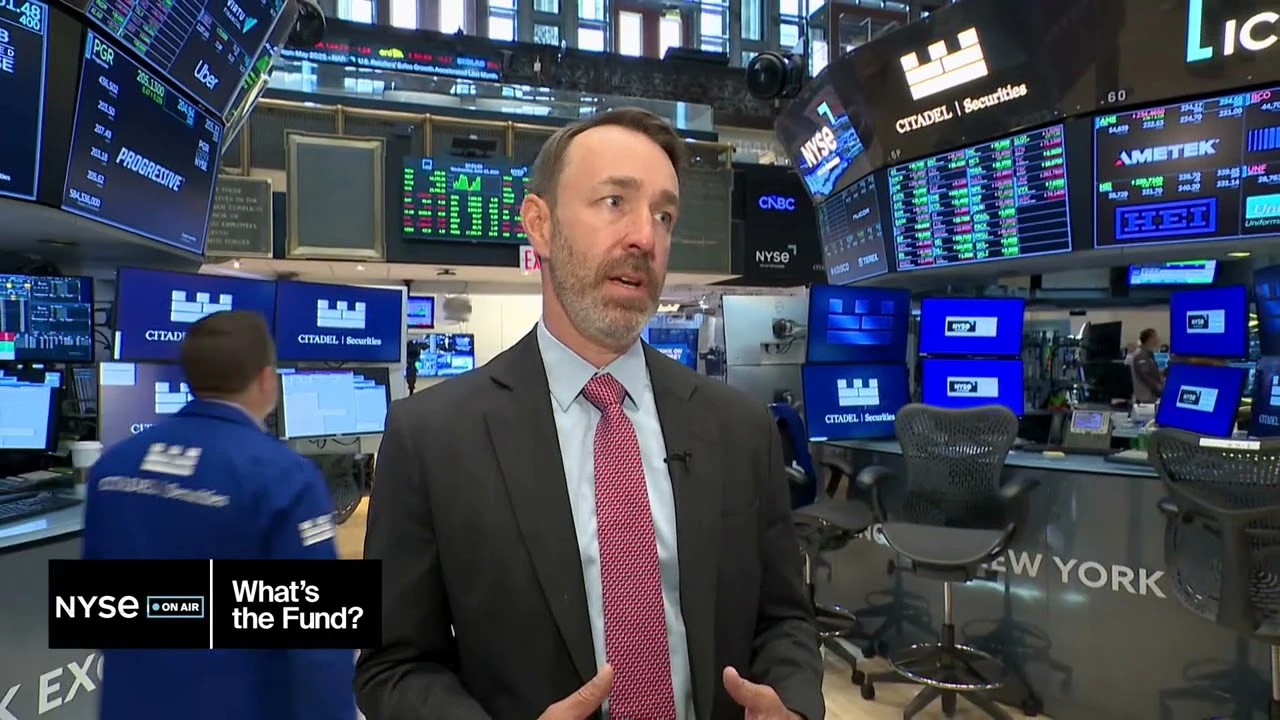
What's the Fund | Ocean Park Diversified Income ETF (DUKZ)
James St Aubin, Chief Investment Officer at Ocean Park Asset Management, discuss the DUKZ ETF, exposing investors to the whole spectrum of asset classes in the fixed income markets, through their rules-based process.

Browse all educational columns



Active Trader Report: Use of Leveraged & Inverse ETFs Way Up
Direxion partnered with Compound Insights and Vanda to explore what’s driving the evolution of active trading — and how active traders are using leveraged and inverse funds across equities, single stocks, commodities, and volatility.