NYSE CRTR Economy Event Watch the replay →



ETF Premiums & Discounts: When They Matter and When They Don’t
Most ETF premiums and discounts aren’t warning signs. They’re signals. The challenge is knowing which ones actually matter.


Keep up with what matters in ETFs
Get timely ETF insights, market trends, and top ideas straight to your inbox.
Your newsletter subscriptions with us are subject to ETF Central's Privacy Policy and Terms and Conditions.
I’m Nicholas Phillips, President of ETF Capital Markets Advisors LLC, with over 25 years of expertise in ETF trading and capital markets. As a contributor to ETF Central, my mission is to offer practical insights for both investors and issuers navigating the complexities of the ETF landscape.
In this piece, I explore how premiums and discounts evolved into a key ETF pricing signal and why they rarely indicate mispricing. Drawing on market experience, I explain what these deviations truly reveal about liquidity, structure, and execution.
The ETF Industry Is Evolving Fast
From AI infrastructure to active strategies, the ETF landscape is shifting. Share your perspective in the 7th Annual Global ETF Survey and get exclusive early access to the final report.
Premiums & Discounts: Then vs Now
Premiums and discounts are now a routine part of ETF analysis. They are displayed on fund pages, cited in research notes, and closely monitored by investors and advisers alike.
But this was not always the case.
In the early days of ETFs, investors primarily focused on a much simpler metric, the difference between an ETF’s market price and its end of day NAV.
That closing comparison was often the only readily available reference point for evaluating whether an ETF appeared cheap or rich.
Over time, market participants began to understand that closing NAV comparisons provided only a partial picture. The introduction of intraday indicative values, commonly referred to as iNAVs, gradually added another layer of insight.
However, this evolution took years.
Early iNAV calculations were not always timely, not always comprehensive, and not always reflective of real time market conditions.
As discussed in last week’s article, iNAV methodologies themselves required significant refinement before becoming a consistently useful reference tool.
A Different Market Environment
The ETF trading landscape of the early 2000s looked very different from today’s market structure.
Spreads were naturally wider, not only in ETFs, but across equities more broadly. Penny wide markets were far from universal, and sub penny execution was not yet part of everyday trading reality.
In that environment, natural buyers played a far more visible role in ETF pricing dynamics.
For Lead Market Makers and ETF market makers, pricing behavior often reflected a straightforward balance of risk, creation economics, and observed order flow.
Markets frequently bid near fair value and offered above creation cost, or bid at creation levels and offered modestly higher, depending on volatility, liquidity conditions, and demand.
Observed premiums were not necessarily signals of mispricing. They often reflected the practical realities of hedging costs, inventory risk, and underlying market spreads.
A Practitioner’s Perspective
Having traded international ETFs across a wide range of exposures, including emerging markets, Europe, Asia, South America, and frontier markets, I experienced firsthand many of the structural influences behind premiums and discounts.
Execution dynamics were very different in those years.
Hedging tools were less precise, creation and redemption processes were more operationally complex, and foreign exchange execution was not always efficient, particularly in less liquid currencies or markets with limited trading hour overlap.
In certain regions, sourcing underlying securities could be difficult, settlement cycles varied, and local market frictions introduced additional layers of cost and uncertainty.
Market makers priced these realities.
Spreads reflected not only valuation inputs, but also hedge slippage, FX risk, settlement considerations, and basket acquisition costs. Premiums and discounts frequently emerged as rational responses to these constraints rather than pricing anomalies.
As the ETF ecosystem expanded and trading volumes increased, market participants gained greater leverage to demand improved execution, tighter FX pricing, better liquidity access, and more reliable valuation inputs.
These improvements had visible effects.
Spreads tightened, hedging efficiency improved, and many persistent deviations naturally diminished.
How the Market Progressed
As the ETF ecosystem matured, so did the tools investors relied upon to interpret premiums and discounts.
For many domestic equity ETFs, early iNAVs were directionally useful yet often lagged real time market conditions. The delays were noticeable enough that experienced traders understood their limitations, while many investors treated them as precise pricing signals.
The challenges were even more pronounced in ETFs holding foreign securities.
Non overlapping trading hours, stale closing prices, and limited incorporation of FX movements frequently resulted in indicative values that diverged meaningfully from where ETFs traded. In many cases, the ETF price itself reflected a more accurate assessment of tradable value than the published reference values.
Fixed income ETFs presented an even greater hurdle.
Unlike equities, bonds do not trade on a centralized exchange. Valuation traditionally relied on dealer networks, evaluated pricing services, and model based assumptions.
Over time, broader market access became the closest functional equivalent to an exchange.
Market Structure Evolution and Price Discovery
The rise of electronic fixed income trading platforms played a critical role in this transformation.
Platforms such as MarketAxess fundamentally improved bond market transparency by aggregating liquidity, facilitating institutional workflows, and providing more observable pricing references across hundreds of securities.
While bonds still trade over the counter, electronic trading infrastructure has narrowed valuation gaps and strengthened price discovery.
Bond ETFs themselves contributed meaningfully to this evolution.
Continuous ETF trading and portfolio rebalancing created additional pricing signals for securities that previously relied heavily on evaluated marks.
In many respects, bond ETFs helped lift the fog surrounding valuations.
Transparency improved.
Price discovery strengthened.
Valuation gaps narrowed.
Why This Matters for Premiums & Discounts
This progression reshaped how premiums and discounts should be interpreted.
What once appeared as persistent deviations often reflected limitations in valuation methodologies rather than flaws in ETF pricing.
In many asset classes, particularly fixed income and international exposures, ETF prices increasingly serve as forward looking indicators of tradable value, while NAV remains an accounting reference.
A useful anchor remains, premiums and discounts are rarely pricing mistakes, they are pricing messages.
Understanding the Drivers of Premiums & Discounts
Premiums and discounts are often perceived as anomalies. In reality, they are typically the result of identifiable structural and market driven factors.
1. Creation and Redemption Economics
ETF pricing is inherently linked to the mechanics of the creation and redemption process.
Costs associated with assembling baskets, executing underlying securities, financing positions, and managing settlement obligations all influence where market makers are willing to quote.
Observed premiums frequently reflect these embedded frictions rather than valuation errors.
2. Underlying Market Liquidity
The liquidity profile of an ETF’s holdings plays a central role.
Highly liquid domestic equities tend to produce tight spreads and minimal deviations. Less liquid securities, international exposures, and emerging markets introduce wider trading ranges and greater variability.
Liquidity is not uniform across markets.
3. International Market Complexities
Foreign exposures introduce additional layers of friction:
• Stamp taxes and transaction levies
• Market access limitations
• Currency conversion costs
• Settlement timelines
• Execution slippage
Certain currencies require more time to transact, particularly for larger trades. Market makers must price potential slippage and timing risk.
What may appear as a premium often reflects real economic cost.
4. Valuation vs Tradable Reality
NAV is calculated using accounting methodologies that may rely on evaluated prices or fair value models.
ETF prices reflect real time hedgeable risk.
During periods of volatility or market stress, ETF prices may diverge from NAV while still representing fair tradable value.
5. Directional Flows and Hedging Constraints
Extreme buying or selling pressure can influence premiums and discounts.
When hedging instruments are imperfect or temporarily unavailable, market makers adjust spreads to reflect risk.
Price deviations often reflect inventory and hedge dynamics.
6. Market Closures and Disruptions
Market closures introduce some of the most misunderstood deviations.
Examples include:
- Extended holidays, such as China New Year
- Exchange shutdowns
- Trading halts
- Political disruptions, such as those seen during the Arab Spring
When underlying markets are closed, ETF prices frequently incorporate forward looking expectations based on correlated assets, futures markets, currency movements, and broader global risk indicators.
However, not all deviations observed during market closures are purely price discovery events.
Market dynamics can also play a meaningful role.
During the Arab Spring, the Egypt ETF provided a particularly instructive example. As political instability intensified, the ETF initially sold off sharply.
With the local exchange closed and creations constrained, secondary market trading became the primary venue for liquidity.
Over time, portions of the available float were accumulated by opportunistic participants, creating conditions that contributed to a prolonged premium.
Short sellers, in certain cases, faced borrow constraints while the underlying market remained inaccessible. With creations halted and the local exchange closed, the ability to arbitrage price deviations was impaired.
The resulting premium was therefore influenced as much by float dynamics and short positioning as by valuation expectations.
This distinction is critical.
Premiums observed during disruptions do not always represent pricing inefficiencies or forward looking valuation signals. They may instead reflect temporary imbalances in supply, borrow availability, and market access.
Fee-Driven Structural Discounts
Discounts between similar ETFs can emerge not from valuation discrepancies, but from economics, tax considerations, and investor behavior. A well-known example can be seen in emerging market equities with the legacy iShares MSCI Emerging Markets ETF, EEM, and its lower-cost counterpart, IEMG.
Both products provide broad emerging markets exposure, yet they carry materially different expense ratios.
Rather than lowering fees on the established fund, the issuer introduced a newer, lower-cost alternative designed to compete more effectively in an increasingly fee-sensitive landscape.
Long-term investors in the higher-fee vehicle are often reluctant to sell due to embedded capital gains and tax consequences. At the same time, new flows naturally gravitate toward the lower-cost fund.
Over time, this creates a predictable market dynamic, the higher-fee ETF tends to attract more natural sellers, while the lower-fee ETF attracts more natural buyers.
The resulting price differentials are therefore not anomalies. They are reflections of cost structures, tax friction, and capital flows.
When these spreads widen beyond expected transaction and hedging costs, they may occasionally attract interest from trading firms seeking relative value opportunities.
When Premiums & Discounts Reflect Execution Rather Than Market Structure
In modern ETF markets, sudden spikes in premiums or discounts often reflect execution dynamics rather than pricing failures.
Visible quote size does not always represent the full depth of liquidity.
An investor or broker observing a tight spread may assume substantial immediate liquidity. A large market order submitted under these conditions can sweep multiple price levels, resulting in executions that appear disconnected from recent trading ranges.
Importantly, this is not a market failure.
It is a function of order interaction and liquidity mechanics.
For this reason, investor and broker education remains critical.
In many cases, what appears to be a pricing problem is simply the result of execution choices.
Best execution principles remain just as important in ETFs as in any other asset class.
When Premiums & Discounts Truly Matter
Premiums and discounts become more informative when they are:
- Persistent
- Large relative to spreads
- Unexplained by market structure
- Linked to liquidity stress
- Associated with creation or redemption constraints
Short term deviations, particularly intraday, are often noise.
Bottom Line
Premiums and discounts are not flaws in ETF design.
They are a natural outcome of trading mechanics, valuation frameworks, market structure, and liquidity dynamics.
The key is distinguishing between deviations that carry information and those that simply reflect normal market function.
As with much of the ETF ecosystem, interpretation matters more than the statistic itself.
Disclaimer
Please note this article is for information purposes only and does not in any way constitute investment advice. It is essential that you seek advice from a registered financial professional prior to making any investment decision.


Latest ETF News
See all ETF news

Why ETF Spreads Often Mislead Investors







 Advantages of ETFs over Mutual Funds1/6
Lower Costs
In this guide, we'll explore the advantages of ETFs over mutual funds, giving you valuable insights into why ETFs have gained significant popularity among investors like yourself.
Leveraged ETFs: Unlocking the Potential for Amplified Returns1/6
Understanding Leveraged ETFs
Explore leveraged ETFs: potential for amplified returns & risks. 5 ETFs to consider across equities, commodities & fixed income.
What is a Leveraged ETF?1/6
Introducing Leveraged and Inverse ETFs
In this guide, we'll dive into the world of leveraged ETFs, exploring their definition, mechanics, potential risks, and rewards.
Recent educational content
Asset TV
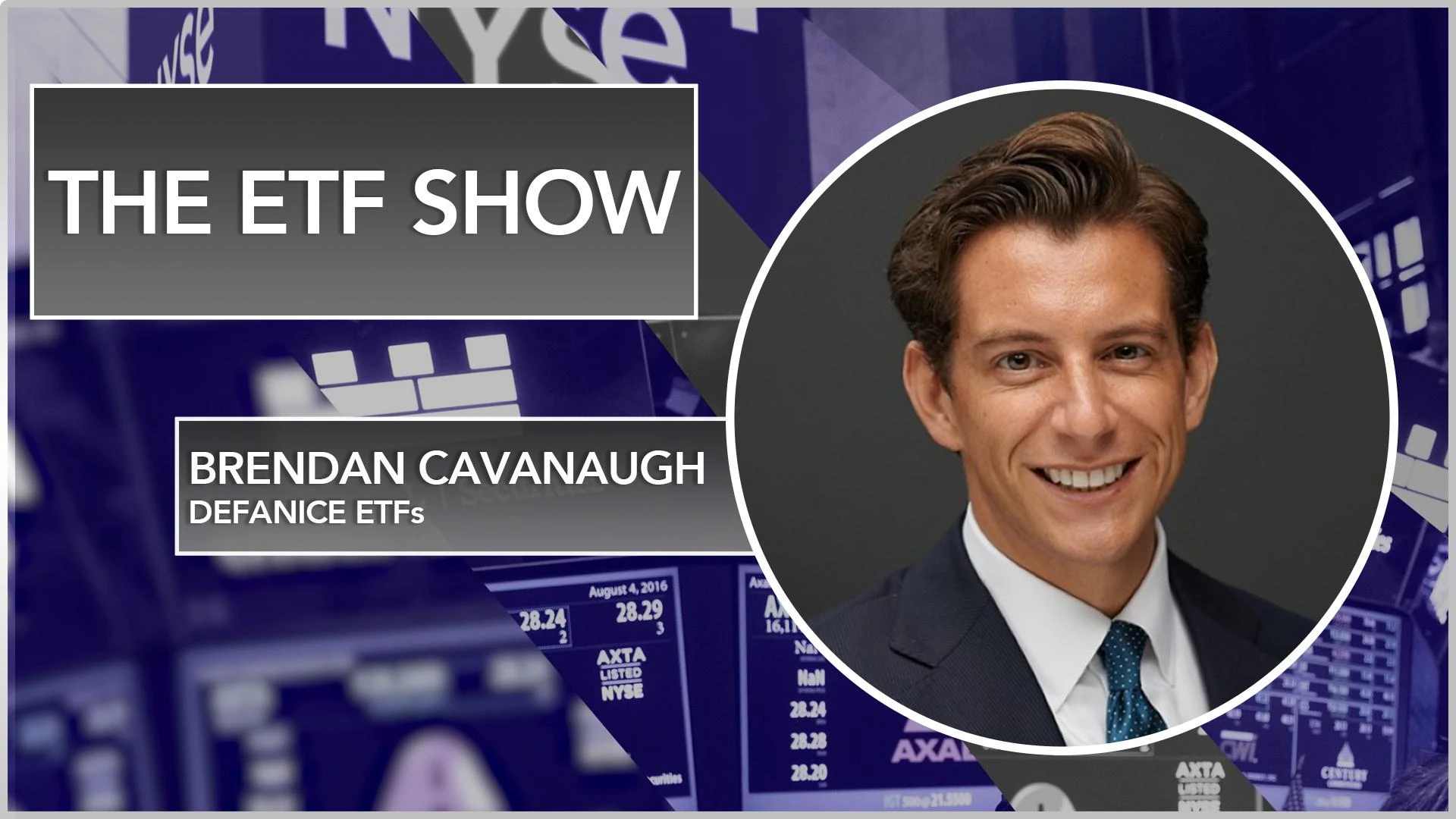
The ETF Show - New Autism-Impact ETF Launched
Defiance ETFs has launched the first ETF, $ASD, focused on the autism ecosystem, investing in companies that provide services, products, and research related to autism and neurodivergence.


ETF Trends
ETF Industry KPIs June 1, 2026
The ETF Industry saw 22 New Launches, 1 Ticker Change and 1 closure last week.

ETF Trends
ETF Industry KPIs May 20, 2026
The ETF Industry saw 44 New Launches, 3 Mutual Fund Conversions and 9 closures last week.
Asset TV
The ETF Show - Politics Becomes Investable Trade through ETFs
Dan Weiskopf, Senior Portfolio Manager at Tidal Financial Group spoke with the ETF Show about Subversive ETFs that help investors trade like politicians.
Browse all educational columns



Build and Analyze Your ETF Portfolio Like a Pro
Create your own ETF portfolio in minutes and instantly see allocations, exposures, performance, and risk. Visualize diversification across asset classes, regions, and sectors. Stress-test ideas, compare benchmarks, and refine your strategy with professional-grade analytics.