Turn ETF ideas into real portfolios. Try the builder now →



An ETF for penny stocks? 3 micro-cap ETFs available to investors
Investors interested in tracking the smallest capitalization stocks can use these ETFs.


Keep up with what matters in ETFs
Get timely ETF insights, market trends, and top ideas straight to your inbox.
Your newsletter subscriptions with us are subject to ETF Central's Privacy Policy and Terms and Conditions.
ETFs have benefitted retail investors immensely by opening up a variety of asset classes, market sectors, and thematic styles to the general public. They've largely eliminated many of the barriers to entry for new investors: time, effort, and knowledge.
For example, there's no need for me to research individual U.S. large-cap stocks when I can buy an index fund tracking the S&P 500 or have a professional fund manager handle it on my behalf. This greatly mitigates security-specific risk and helps with diversification.
This benefit even extends to micro-cap stocks, colloquially known as "penny stocks." As a speculative, highly volatile segment of the market, micro-cap investing is fraught with risk, due to lower amounts of regulation and information asymmetry between buyers and sellers.
In this case, using an ETF might help ameliorate some of these issues. Let's look at what micro-caps are and how ETFs can be used to access them in a safer, more transparent manner.
Like what you're reading?
Stay in the loop — get the latest ETF insights: trends, analysis, and expert picks.
What are micro-cap stocks?
Micro-caps represent the smallest segment of the stock market. These are companies with a market capitalization (share price x outstanding shares) of $50 million to $300 million. Think about them as the extreme opposite of mega-cap companies like Apple or Microsoft.
As an investment, microcaps are extremely speculative. They can occasionally be illiquid and have unaudited financials, especially if they're listed over the counter (OTC). Some are shell companies without assets or operations. Others are outright pump-and-dump scams or share-selling schemes.
Micro-caps are also very volatile. Because many of these companies often have suspect fundamentals, they can be much more sensitive to macroeconomic trends. It's not uncommon to see micro-caps strongly outperform when interest rates trend low and bull markets ensue, and fall harder when the opposite occurs, like what transpired year-to-date in 2022.
Investing in micro-cap ETFs
Investing in individual micro-caps is very risky and requires a great deal of time and knowledge. Investors must peruse financial statements, which may or may not be audited. They must develop an in-depth understanding of the company's strategy and be willing to tolerate huge fluctuations.
A more diversified alternative might be via an ETF that tracks an index or actively managed portfolio of micro-cap stocks. This approach has several benefits, namely:
- Better liquidity: micro-caps can have low trading volumes and wide bid-ask spreads. The creation-in-kind process of ETFs can mitigate this.
- Greater diversification: given their propensity to bankruptcy or delisting, investing in an ETF comprised of a portfolio of microcaps instead can lower security-specific risk.
- Strict criteria: micro-cap ETFs may impose screeners for trading volume, profitability, return-on-assets, return-on-equity, and other ratios that can improve fundamentals.
The following ETFs offer investors passive exposure to micro-cap stocks. Clicking on each link will take you to a page where you can view their expense ratios, strategy, and underlying holdings.
- iShares Micro-Cap ETF (IWC)
- First Trust Dow Jones Select MicroCap ETF (FDM)
- AdvisorShares Dorsey Wright Micro-Cap ETF (DWMC)
Please note this article is for information purposes only and does not constitute investment advice.
Latest ETF News
See all ETF newsCould Water ETFs Be the Next AI Bottleneck Trade?

What is a Boomer Candy ETF?

ETF Comparison: NEOS Nasdaq-100 High Income ETF (QQQI) Versus Goldman Sachs Nasdaq-100 Premium Income ETF (GPIQ)





 Advantages of ETFs over Mutual Funds1/6
Lower Costs
In this guide, we'll explore the advantages of ETFs over mutual funds, giving you valuable insights into why ETFs have gained significant popularity among investors like yourself.
Leveraged ETFs: Unlocking the Potential for Amplified Returns1/6
Understanding Leveraged ETFs
Explore leveraged ETFs: potential for amplified returns & risks. 5 ETFs to consider across equities, commodities & fixed income.
What is a Leveraged ETF?1/6
Introducing Leveraged and Inverse ETFs
In this guide, we'll dive into the world of leveraged ETFs, exploring their definition, mechanics, potential risks, and rewards.
Recent educational content

ETF Trends
ETF Industry KPIs September 8, 2026
This week’s KPI data overview highlights key metrics and trends shaping the ETF landscape.

ETF Trends
ETF Industry KPIs August 31, 2026
This week’s KPI data overview highlights key metrics and trends shaping the ETF landscape.
ETF Trends
ETF Industry KPIs August 24, 2026
This week’s KPI data overview highlights key metrics and trends shaping the ETF landscape.
What’sTheFund
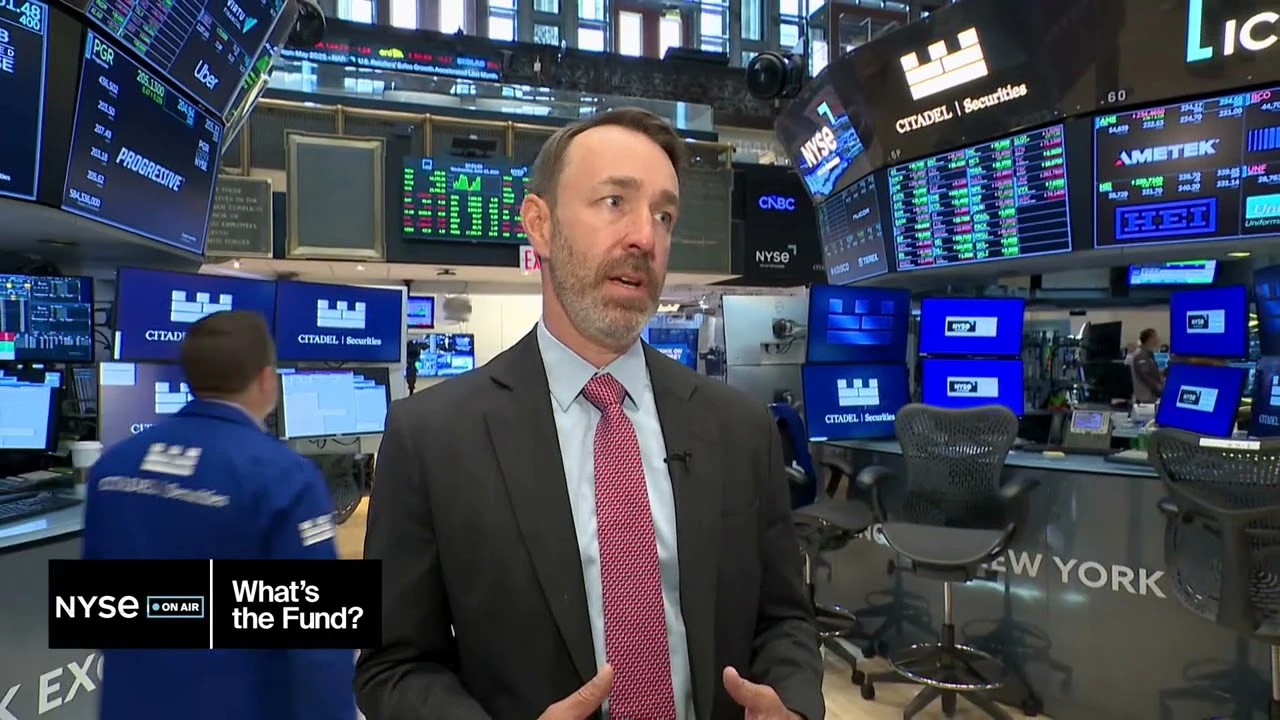
What's the Fund | Ocean Park Diversified Income ETF (DUKZ)
James St Aubin, Chief Investment Officer at Ocean Park Asset Management, discuss the DUKZ ETF, exposing investors to the whole spectrum of asset classes in the fixed income markets, through their rules-based process.

Browse all educational columns



Build and Analyze Your ETF Portfolio Like a Pro
Create your own ETF portfolio in minutes and instantly see allocations, exposures, performance, and risk. Visualize diversification across asset classes, regions, and sectors. Stress-test ideas, compare benchmarks, and refine your strategy with professional-grade analytics.