Open Now: The Global ETF Survey Take the Survey →



ETF News You Missed This Week - May 18 - May 22, 2026
Recapping the ETF action from week 21 of 2026.


Keep up with what matters in ETFs
Get timely ETF insights, market trends, and top ideas straight to your inbox.
Your newsletter subscriptions with us are subject to ETF Central's Privacy Policy and Terms and Conditions.
The 21st week of 2026 delivered a packed slate of ETF developments, from high-profile launches to an active pipeline of new filings.
Get data on 14,000+ ETFs
Access Trackinsight's reliable and comprehensive data with 500M+ points on 14,000+ ETFs.
ETF Launches
Active Managers Double Down on Equity Innovation
Several issuers introduced actively managed equity ETFs designed to combine fundamental research, quantitative models, and flexible portfolio management.
Humilis Investment Strategies launched the Humilis US Focused Opportunities ETF (HIS), an actively managed large-cap U.S. equity strategy centered on companies with durable earnings growth, resilient balance sheets, and improving profitability. The fund blends macroeconomic analysis with bottom-up stock selection and maintains flexibility to take concentrated sector positions when opportunities emerge.
Sophus Capital expanded its ETF lineup with two active emerging markets strategies. The Sophus Capital Emerging Markets ETF (EMEM) focuses on high-growth companies across emerging markets using a proprietary quantitative ranking model combined with fundamental analysis. Alongside it, the Sophus Capital Emerging Markets Small Cap ETF (EMSC) targets smaller emerging-market companies with improving earnings trends and attractive valuations while incorporating risk controls across countries and sectors.
PGIM also added to the active ETF landscape with the launch of the PGIM Jennison U.S. Core Equity ETF (PJUS). Managed by Jennison, the strategy combines bottom-up research with benchmark-aware portfolio construction and disciplined risk management while maintaining a competitive 0.19% net expense ratio.
Goldman Sachs entered the space with the Goldman Sachs Data Enhanced International Equity ETF (GIEQ), an actively managed international equity strategy investing across developed and emerging markets. The ETF combines quantitative analysis with qualitative oversight to identify opportunities tied to valuation, business quality, and macroeconomic trends.
Infrastructure and Industrial Themes Move Back Into Focus
Infrastructure and capital-intensive industries were another major focus of recent ETF launches.
Tuttle Capital introduced the Heavy Asset Low Obsolescence ETF (HALX), a passive strategy tracking companies tied to utilities, transportation, manufacturing, energy systems, and other physical-world industries. The ETF uses a proprietary “HALO Score” framework designed to identify businesses with durable assets, stable cash flows, and lower technological obsolescence risk.
The launch reflects growing investor interest in companies positioned to benefit from long-term infrastructure investment, industrial reshoring, and increased demand for essential real-world assets.
BlackRock Pushes Further Into Hedge Fund-Style ETF Structures
BlackRock launched the iShares Flexible Equity Active ETF (BFLX), a multi-asset strategy combining global equities with long-short positioning, derivatives, commodity exposure, and tactical asset allocation.
The actively managed ETF would maintain a net long equity profile while using options, futures, swaps, and currency contracts to manage risk and pursue returns across changing market environments. The structure resembles a hedge fund-style strategy delivered within an ETF wrapper, highlighting continued innovation within the active ETF space.
Principal Expands Its Reach Across Fixed Income Markets
Principal Asset Management launched multiple actively managed fixed income ETFs targeting different corners of the bond market.
The Principal Securitized Debt ETF (WDE) focuses on mortgage-backed securities, asset-backed securities, CLOs, and other securitized credit products, combining macroeconomic analysis with bottom-up security selection.
The firm also launched the Principal Long Duration ETF (DWWN), which primarily invests in long-duration Treasury STRIPS to provide extended duration exposure tied to the Bloomberg US STRIPS 20+ Year Index.
Alongside it, the Principal Inflation Protection ETF (RIZE) offers exposure to Treasury Inflation-Protected Securities with a flexible short-duration profile designed to help investors manage inflation and interest-rate risk more actively.
Principal additionally introduced the Principal CLO ETF (UUPP), a short-duration CLO strategy focused primarily on investment-grade senior tranches backed by diversified pools of corporate loans.
Leveraged Single-Stock ETFs Keep Expanding
The leveraged ETF segment also continued expanding as issuers rolled out new products tied to high-volatility technology and communications stocks.
Defiance ETFs launched the Defiance Daily Target 2X Long ASTS ETF (ASTY), designed to deliver twice the daily performance of AST SpaceMobile shares. The launch targets traders seeking amplified exposure to the satellite communications company and the broader space connectivity theme.
REX Shares and Tuttle Capital Management also introduced leveraged products tied to AST SpaceMobile and Lumentum Holdings through the T-REX 2X Long ASTS Daily Target ETF (ASUP) and the T-REX 2X Long LITE Daily Target ETF (AXTU). The launches expand the rapidly growing universe of single-stock leveraged ETFs tied to AI infrastructure, optical networking, and next-generation communications technology.
Structured Income ETFs Continue Pushing Into High-Volatility Names
GraniteShares continued building its structured income ETF lineup with the launch of the GraniteShares Autocallable PLTR ETF (PLA) and the GraniteShares Autocallable HOOD ETF (AHD).
The new ETFs use autocallable-style structures linked to the volatility and price performance of Palantir and Robinhood shares while targeting monthly income distributions. The launches follow similar GraniteShares products tied to Nvidia, Tesla, Coinbase, and other high-volatility growth stocks.
ETF Filings
AI Infrastructure Emerges as the Dominant ETF Theme
Artificial intelligence infrastructure remained the biggest theme across recent ETF filings, with issuers targeting everything from semiconductors and photonics to compute power and hyperscale data center demand.
Roundhill filed a series of AI-focused ETFs including the Roundhill Photonics & Optics ETF (LYTE), the Roundhill Neocloud ETF (NCLD), the Roundhill Quantum Computing ETF (QQ), and the Roundhill Compute ETF (GPUX). Together, the filings target optical networking, quantum computing, AI cloud infrastructure, and even derivatives linked to computational power used in AI workloads.
Defiance also significantly expanded its AI-related lineup with filings tied to Alphabet-backed venture companies, Nvidia-backed firms, AI inference chips, advanced packaging and testing, memory semiconductors, and photonics technologies. Several of the proposed ETFs concentrate heavily in semiconductors and AI infrastructure supply chains spanning the U.S. and Asia.
Harbor Capital joined the trend with a suite of “AI ecosystem” ETFs tied to major artificial intelligence platforms including OpenAI, Meta, Google DeepMind, Anthropic, and SpaceXAI. The actively managed strategies aim to identify companies economically linked to each AI ecosystem through proprietary analysis of filings, earnings calls, and market data.
Amplify and Samsung Asset Management also filed six concentrated thematic ETFs targeting areas such as quantum computing, semiconductors, robotics, space, defense technology, and nuclear energy.
Leveraged ETF Arms Race Continues Expanding
The single-stock leveraged ETF market continued growing rapidly as issuers filed dozens of new high-volatility trading products tied to AI infrastructure, semiconductor, and technology names.
GraniteShares filed leveraged products tied to Crusoe Energy Systems and Kioxia Holdings, while also proposing autocallable income ETFs linked to SpaceX and semiconductor memory themes.
Tradr filed 15 new leveraged ETFs tied to semiconductor, aerospace, and photonics companies, including exposure linked to the Dan Ives Wedbush AI Revolution ETF.
Direxion proposed 16 leveraged bullish and bearish ETFs tied to AI infrastructure, semiconductor memory, energy, and industrial technology stocks.
Leverage Shares filed for 30 new 2x leveraged ETFs spanning international and U.S. semiconductor, industrial, networking, solar, and energy-transition companies.
REX Shares expanded aggressively as well, filing leveraged ETFs tied to OpenAI, Quantinuum, Kioxia, AI compute power futures, and additional AI infrastructure and industrial technology companies.
ProShares and Defiance also joined the leveraged filing wave with products tied to upcoming AI and semiconductor IPOs as well as concentrated memory-chip strategies.
Active and Quantitative Equity Strategies Continue Growing
Beyond thematic and leveraged products, issuers also filed a wide range of active and quantitative equity strategies.
AllianceBernstein filed the AB US Research Advanced ETF, combining traditional fundamental research with quantitative factor modeling across quality, value, and momentum signals.
MarketDesk proposed an international momentum ETF using quantitative screening focused on price trends, balance-sheet strength, and liquidity metrics across developed and emerging markets.
Harbor Capital filed multiple quantitative “AlphaEdge” ETFs targeting small- and mid-cap core, value, and growth equities using systematic models built around momentum, valuation, quality, and market regime analysis.
Tuttle Capital also filed the Tuttle Capital Magnificent 10 ETF, a concentrated strategy built around mega-cap AI and technology leaders including NVIDIA, Microsoft, Apple, Amazon, Meta, Tesla, AMD, Broadcom, and Palantir.
Fixed Income Issuers Expand Into Specialized Credit Markets
ETF issuers also continued targeting niche areas of fixed income and securitized credit markets.
Hartford filed several actively managed funds including the Hartford High Yield ETF (HINC), the Hartford Alpha Capture International Value ETF (ACIV), and the Hartford Alpha Capture International Equity ETF (ACIN). The strategies combine macroeconomic analysis, bottom-up research, and quantitative portfolio construction across global credit and equity markets.
iShares proposed new municipal bond strategies focused on short-duration tax-exempt income and flexible national municipal bond exposure with the ability to allocate into higher-yielding debt segments.
T. Rowe Price filed multiple active fixed income and equity ETFs including securitized credit, emerging markets debt, multi-sector income, small-cap equity, and mid-cap research-driven strategies.
Cohen & Steers also entered the pipeline with a diversified real assets ETF focused on infrastructure, commodities, real estate, natural resources, and inflation-sensitive investments.
Other Updates
Global X Repositions KRMA Around Capital Allocation
Global X announced that the Global X Conscious Companies ETF (KRMA) will become the Global X Morningstar Capital Allocation Leaders ETF (CPTL) in July 2026. The overhaul replaces the fund’s ESG-focused “conscious companies” strategy with a new approach centered on balance sheet strength, investment efficiency, and shareholder capital allocation practices based on Morningstar research. The changes also include a lower 0.35% management fee.
KraneShares Expands Focus Across AI and Vietnam Strategies
KraneShares will rename its Artificial Intelligence and Technology ETF to the KraneShares Public-Private AI & Technology ETF, reflecting a broader emphasis on both public and private-market AI exposure.
The firm also updated its Vietnam ETF, renaming the KraneShares Dragon Capital Vietnam Growth Index ETF while expanding the strategy to include Vietnam-focused “Diamond ETFs” and additional access to companies constrained by foreign ownership limits.
Simplify Removes “PLUS Income” Branding From MAXI
Simplify renamed the Simplify Bitcoin Strategy PLUS Income ETF (MAXI) to the Simplify Bitcoin Strategy ETF effective May 22, 2026. The filing disclosed no broader strategy changes beyond the branding update.
Leveraged ETF Closures Continue Across the Industry
The leveraged ETF market continued seeing elevated turnover as issuers refined product lineups tied to high-volatility growth and AI-related stocks.
Themes ETFs announced plans to liquidate five Leverage Shares 2X Capped Accelerated Monthly ETFs tied to Coinbase, MicroStrategy, Nvidia, Palantir, and Tesla.
Tradr will close four leveraged and inverse ETFs in June, while REX Shares plans to liquidate seven Growth & Income ETFs linked to names including Robinhood, Eli Lilly, MicroStrategy, and Palantir.
GraniteShares also announced the shutdown of three leveraged ETFs after citing limited assets and weak growth prospects, while Guinness Atkinson will liquidate three sustainable energy and dividend-focused ETFs by July.
Tema’s NASA ETF Surpasses $1 Billion in Record Time
Tema ETFs announced that the actively managed Tema Space Innovators ETF (NASA) surpassed $1 billion in assets under management just 37 trading days after launch, making it one of the fastest-growing thematic and active equity ETFs in the industry.
The strategy has also become the world’s largest space-focused ETF, driven partly by investor demand for exposure tied to the commercial space economy and SpaceX-related themes.
Corgi’s EUV ETF Sees Rapid Early Growth
Corgi’s actively managed Lithography & Semiconductor Photonics ETF (EUV) surpassed $150 million in assets less than two weeks after launching in May.
The ETF focuses on semiconductor photonics, optical networking, EUV lithography, and AI infrastructure technologies, with holdings including TSMC, ASML, Lam Research, Applied Materials, and Corning.
State Street Reaches Major ETF Asset Milestones
State Street Investment Management announced that its U.S. ETF business surpassed $2 trillion in assets under management, reinforcing its position among the industry’s largest ETF providers.
Separately, the SPDR Commodity UCITS ETF (SCOM) exceeded $100 million in assets within its first month of trading, highlighting renewed investor demand for diversified commodity exposure and inflation-hedging strategies.
Please note this article is for information purposes only and does not in any way constitute investment advice. It is essential that you seek advice from a registered financial professional prior to making any investment decision.
Segments
See all
No specific market segments were tagged
Mentioned ETFs
No specific ETFs were tagged
Further reading
Latest ETF News
See all ETF news


The Weekly ETF Market Monitor (June 22-26, 2026)


 Advantages of ETFs over Mutual Funds1/6
Lower Costs
In this guide, we'll explore the advantages of ETFs over mutual funds, giving you valuable insights into why ETFs have gained significant popularity among investors like yourself.
Leveraged ETFs: Unlocking the Potential for Amplified Returns1/6
Understanding Leveraged ETFs
Explore leveraged ETFs: potential for amplified returns & risks. 5 ETFs to consider across equities, commodities & fixed income.
What is a Leveraged ETF?1/6
Introducing Leveraged and Inverse ETFs
In this guide, we'll dive into the world of leveraged ETFs, exploring their definition, mechanics, potential risks, and rewards.
Recent educational content

ETF Trends
ETF Industry KPIs July 13, 2026
This week’s KPI data overview highlights key metrics and trends shaping the ETF landscape.


First Look ETF
First Look ETF: Cash Deployment, Bond, and Hedged ETFs
In this season 6 episode of First Look ETF, Stephanie Stanton examines the latest ETF marketplace trends with NYSE and guests.

ETF Trends
ETF Industry KPIs July 6, 2026
This week’s KPI data overview highlights key metrics and trends shaping the ETF landscape.
Asset TV
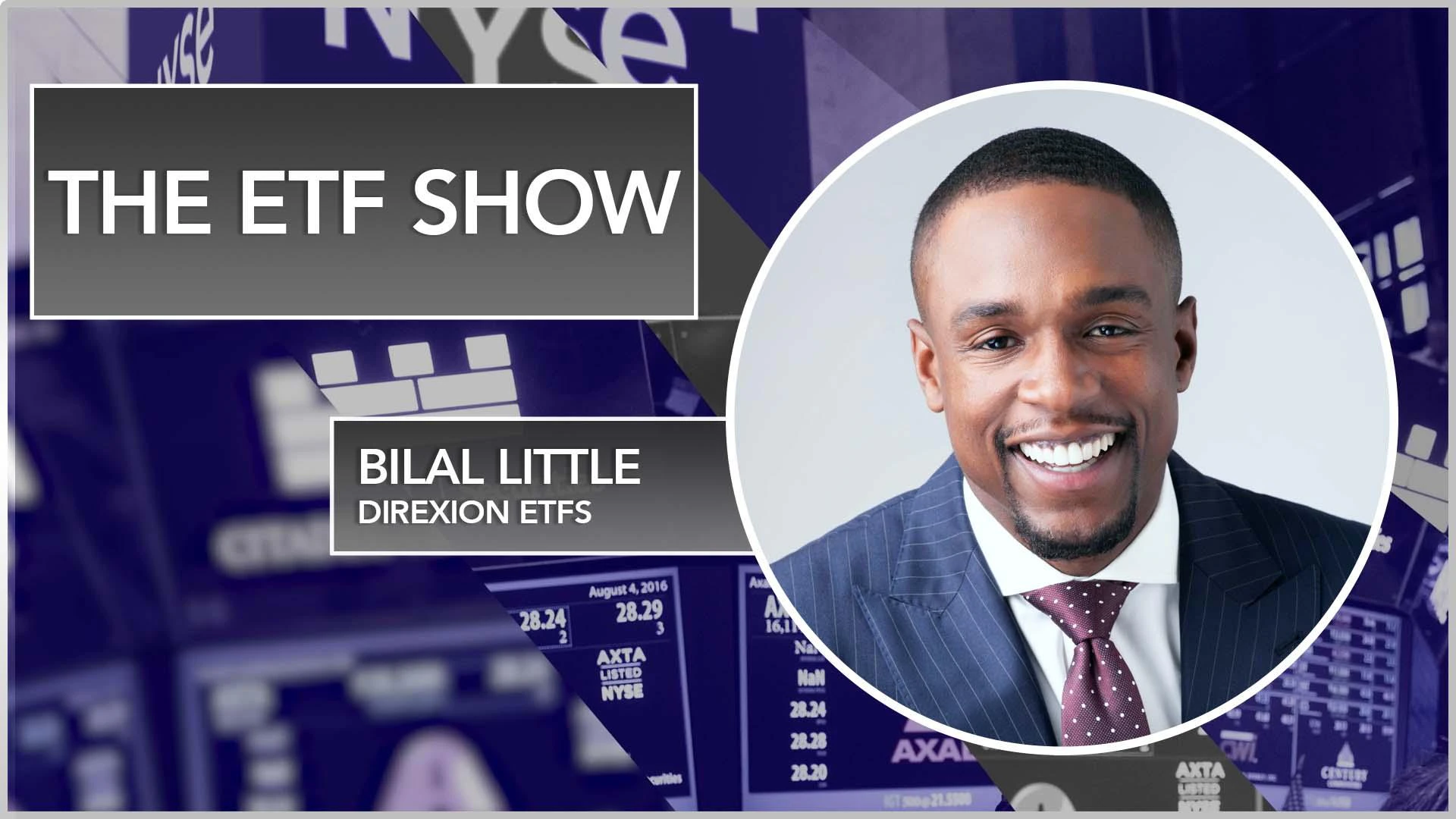
The ETF Show - The Evolution of Leveraged & Inverse ETFs
Leveraged and inverse ETFs have exploded in popularity over the past decade capturing more assets as retail traders seek to capture volatility.

Browse all educational columns



Build and Analyze Your ETF Portfolio Like a Pro
Create your own ETF portfolio in minutes and instantly see allocations, exposures, performance, and risk. Visualize diversification across asset classes, regions, and sectors. Stress-test ideas, compare benchmarks, and refine your strategy with professional-grade analytics.