Open Now: The Global ETF Survey Take the Survey →



ETF News You Missed This Week - Mar. 16 - Mar. 20, 2026
Recapping the ETF action from week 12 of 2026.


Keep up with what matters in ETFs
Get timely ETF insights, market trends, and top ideas straight to your inbox.
Your newsletter subscriptions with us are subject to ETF Central's Privacy Policy and Terms and Conditions.
The 12th week of 2026 delivered a packed slate of ETF developments, from high-profile launches to an active pipeline of new filings.
The ETF Industry Is Evolving Fast
From AI infrastructure to active strategies, the ETF landscape is shifting. Share your perspective in the 7th Annual Global ETF Survey and get exclusive early access to the final report.
ETF Launches
Active equity ETFs expand across styles, factors, and structures
Active equity innovation remained front and center, with issuers targeting everything from micro caps to global quality growth.
Dimensional Fund Advisors expanded its lineup with the Dimensional U.S. Micro Cap ETF (DFMC), bringing its research-driven, factor-based approach to the ETF wrapper. The strategy targets the smallest U.S. companies, emphasizing value, size, and profitability, while retaining flexibility through active trading and portfolio construction.
In large-cap growth, Columbia Threadneedle converted its mutual fund into the Columbia Large Cap Growth ETF (REGS), focusing on Russell 1000 Growth companies with strong earnings potential and improving momentum. Touchstone also entered the space with the Touchstone Large Company Growth ETF (TLG), applying a bottom-up approach to identify high-quality, predictable growth businesses.
Broader exposure strategies also emerged. Alpha Architect launched the Alpha Architect US Equity 3 ETF (AAUA), a multi-layered approach combining U.S. equities with tactical ETF allocations and dividend-timing overlays. Meanwhile, Sapient Capital introduced the Sapient Quality Select ETF (SQS), targeting global companies aligned with long-term themes such as AI and economic transformation.
For more concentrated exposure, Moonvest debuted the Moonvest ETF (MNVT), a high-conviction, contrarian strategy investing in 15–35 global equities, aiming to capitalize on undervalued and overlooked opportunities.
Rethinking index exposure and portfolio construction
Some launches focused on reshaping traditional beta rather than replacing it.
Invesco introduced the Invesco QQQ Equal Weight ETF (QEW), which tracks an equal-weighted version of the Nasdaq-100. By assigning roughly 1% to each constituent, the ETF reduces mega-cap concentration while maintaining exposure to the same innovation-driven companies.
At the same time, WisdomTree pushed capital efficiency further with the WisdomTree Efficient U.S. Plus International Equity Fund (NTSD). Using a 90/60 structure, the fund combines U.S. equities with additional developed international exposure via futures, allowing investors to increase diversification without reducing core allocations.
Income and options-based equity strategies continue to scale
Options overlays remain one of the fastest-growing segments in the ETF market.
JPMorgan expanded its income-focused lineup with two new funds. the JPMorgan Equity Premium Yield ETF (ROCY) and the JPMorgan Nasdaq Equity Premium Yield ETF (ROCQ). Both strategies combine equity portfolios with call spread options to generate income and reduce volatility, though with some upside trade-offs in strong markets.
On the tactical side, Faith Investor Services launched the FIS Tactical Equity ETF (ACTS), which dynamically adjusts equity exposure based on market conditions while applying biblically aligned screening. The strategy blends active risk management with values-based investing.
Fixed income ETFs evolve through structure, tax efficiency, and values
Fixed income launches highlighted a mix of traditional exposure and structural innovation.
Columbia Threadneedle converted its core bond strategy into the Columbia Core Bond ETF (CRUX), offering diversified exposure across investment-grade sectors, including government, corporate, and mortgage-backed securities, with flexibility to allocate to high yield and global bonds.
Roundhill introduced a more unconventional approach with the Roundhill Ultra Short Duration No Dividend Target ETF (XBOX). Instead of holding bonds, the ETF uses box spreads. an options-based strategy designed to replicate treasury-like returns while minimizing taxable distributions, positioning it as a tax-efficient alternative to cash.
Values-based investing also expanded into fixed income. Faith Investor Services launched two ETFs. the FIS Faith Income ETF (FTHB) and the FIS Bright Portfolios Core Bond ETF (BRIB). Both strategies target income and capital preservation while applying faith-based screening alongside traditional credit analysis.
Crypto exposure shifts toward risk-managed strategies
Crypto ETFs continue to evolve beyond pure directional exposure.
Nicholas Wealth launched the Bitcoin Tail ETF (BHDG), a derivatives-driven strategy designed to hedge against sharp declines in Bitcoin-linked assets. The fund uses put options for downside protection while selling calls to offset costs, offering a more controlled way to access crypto-related risk without directly holding Bitcoin.
ETF Filings
Structured outcomes and buffer strategies continue to evolve
Defined outcome ETFs remain one of the most engineered segments of the market, and First Trust is pushing the concept further with a laddered approach. The firm filed a suite of FT Vest Nasdaq-100 Dual Directional Buffer ETFs, each tied to a one-year outcome period with staggered quarterly start dates.
Using FLEX options on QQQ, the strategy introduces a more nuanced payoff profile. capped upside, the ability to generate gains in moderate market declines, and a defined downside buffer beyond that. The laddered structure aims to reduce timing risk by allowing investors to enter at different points throughout the year, though outcomes still depend on holding each fund for the full period.
Crypto filings move closer to mainstream adoption
One of the most notable developments came from Morgan Stanley, which amended its filing for the Morgan Stanley Bitcoin ETF (MSBT).
The update signals meaningful progress toward what could become the first spot Bitcoin ETF issued by a major U.S. bank. The fund is designed to track Bitcoin directly, with Coinbase Custody and BNY Mellon supporting custody and servicing. With a seeded basket already outlined, the filing suggests the product is moving closer to launch, highlighting how traditional financial institutions are increasingly stepping into the crypto ETF space.
Thematic ETFs expand into space, nuclear, and real assets
Kurv emerged as one of the most active filers of the week, submitting a suite of highly flexible, derivatives-driven thematic ETFs.
The Kurv Space Infrastructure ETF targets companies involved in satellites, launch systems, and space-enabled technologies, reflecting growing investor interest in the orbital economy. At the same time, the firm filed a nuclear-focused ETF, which combines equities with uranium-linked instruments and derivatives to capture the full nuclear value chain.
Kurv also extended its reach into broader real assets with the Kurv Energy Infrastructure ETF, blending equities, commodities, and derivatives across the energy ecosystem. Complementing this, the Kurv Silver & Mining Enhanced Income ETF and the Kurv Gold & Mining Enhanced Income ETF introduce options-based income overlays to commodity exposure, combining futures, options, and mining equities to balance yield and price participation.
Across all filings, a common theme emerges. complex, non-diversified structures designed to maximize flexibility, often using derivatives, Cayman subsidiaries, and income overlays to reshape traditional commodity exposure.
Active equity innovation continues with biotech and global strategies
On the equity side, filings highlight continued demand for high-conviction, thematic, and globally diversified strategies.
ARK Invest filed for the ARK Biotech ETF, an actively managed strategy targeting disruptive innovation across biotechnology, including therapeutics, diagnostics, and research platforms. The fund reflects ARK’s continued focus on concentrated, high-growth themes driven by technological change.
Meanwhile, VanEck is targeting the infrastructure behind AI with the VanEck Data Center Supply Chain ETF (RACK). The strategy spans semiconductors, cloud infrastructure, energy, and REITs tied to data centers, positioning itself at the intersection of AI demand and physical infrastructure buildout.
Global equity exposure also remains a priority. Harding Loevner filed for the International Developed Markets Select Equity ETF, focusing on high-quality companies across developed markets outside the U.S., with broad diversification across regions, sectors, and currencies.
Defined maturity and credit strategies dominate fixed income filings
Fixed income filings were led by Invesco, which continues to expand its BulletShares franchise.
The firm filed a new suite of defined-maturity Treasury ETFs spanning 2027 to 2031, extending its laddered approach to government bonds. Each fund is designed to hold bonds to maturity and return capital at a specified date, offering predictable duration exposure.
Invesco also pushed further along the curve with the Invesco BulletShares 2034 High Yield Corporate Bond ETF (BSJY) and the Invesco BulletShares 2036 Corporate Bond ETF (BSCA). These funds provide targeted exposure to high-yield and investment-grade corporate bonds with defined maturity profiles, reinforcing demand for precision duration management.
Active credit strategies are also expanding. Natixis Advisors and Loomis Sayles filed two ETFs. the Natixis Loomis Sayles Dynamic Core Plus ETF (LSCP) and a credit-focused strategy targeting issuer improvement and spread opportunities. Both emphasize flexibility across global bonds, structured products, and derivatives.
Similarly, TCW filed for an actively managed ETF focused on securitized credit, including MBS, ABS, and commercial real estate debt, highlighting growing investor interest in structured income markets.
Rounding out the space, Vanguard moved to add an ETF share class with the Vanguard U.S. High-Yield Corporate Bond Index ETF Shares (VCHY), bringing its low-cost approach to high-yield exposure within the ETF wrapper.
Commodities meet tokenization in next-gen ETF structures
One of the most innovative filings came from Teucrium and Trilitech, which teamed up on the Metals.io Uranium ETF.
The strategy introduces a novel structure. using blockchain-based tokens (xU3O8) representing physical uranium holdings. The ETF may combine tokenized assets with futures, swaps, and uranium trusts, creating a hybrid model that blends traditional commodities exposure with digital infrastructure.
This filing highlights a broader trend. tokenization is beginning to intersect with ETF structures, potentially reshaping how investors access physical assets.
Leveraged and single-stock ETFs expand into private markets and defense tech
The leveraged ETF space continues to push boundaries, with Defiance ETFs filing for a new wave of single-stock leveraged products.
The firm proposed ETFs offering 2x long and inverse exposure to Anthropic, an AI company yet to go public, signaling early demand for trading vehicles tied to private-market names. It also filed similar products targeting Anduril Industries, a defense technology company.
These filings reflect the continued expansion of leveraged ETFs beyond traditional large-cap stocks into emerging tech and private-market adjacencies, though they come with heightened risks tied to daily rebalancing, volatility, and potential capital loss.
Please note this article is for information purposes only and does not in any way constitute investment advice. It is essential that you seek advice from a registered financial professional prior to making any investment decision.
Segments
See all
No specific market segments were tagged
Mentioned ETFs
No specific ETFs were tagged
Further reading
Latest ETF News
See all ETF news


The Weekly ETF Market Monitor (June 22-26, 2026)


 Advantages of ETFs over Mutual Funds1/6
Lower Costs
In this guide, we'll explore the advantages of ETFs over mutual funds, giving you valuable insights into why ETFs have gained significant popularity among investors like yourself.
Leveraged ETFs: Unlocking the Potential for Amplified Returns1/6
Understanding Leveraged ETFs
Explore leveraged ETFs: potential for amplified returns & risks. 5 ETFs to consider across equities, commodities & fixed income.
What is a Leveraged ETF?1/6
Introducing Leveraged and Inverse ETFs
In this guide, we'll dive into the world of leveraged ETFs, exploring their definition, mechanics, potential risks, and rewards.
Recent educational content

ETF Trends
ETF Industry KPIs July 13, 2026
This week’s KPI data overview highlights key metrics and trends shaping the ETF landscape.


First Look ETF
First Look ETF: Cash Deployment, Bond, and Hedged ETFs
In this season 6 episode of First Look ETF, Stephanie Stanton examines the latest ETF marketplace trends with NYSE and guests.

ETF Trends
ETF Industry KPIs July 6, 2026
This week’s KPI data overview highlights key metrics and trends shaping the ETF landscape.
Asset TV
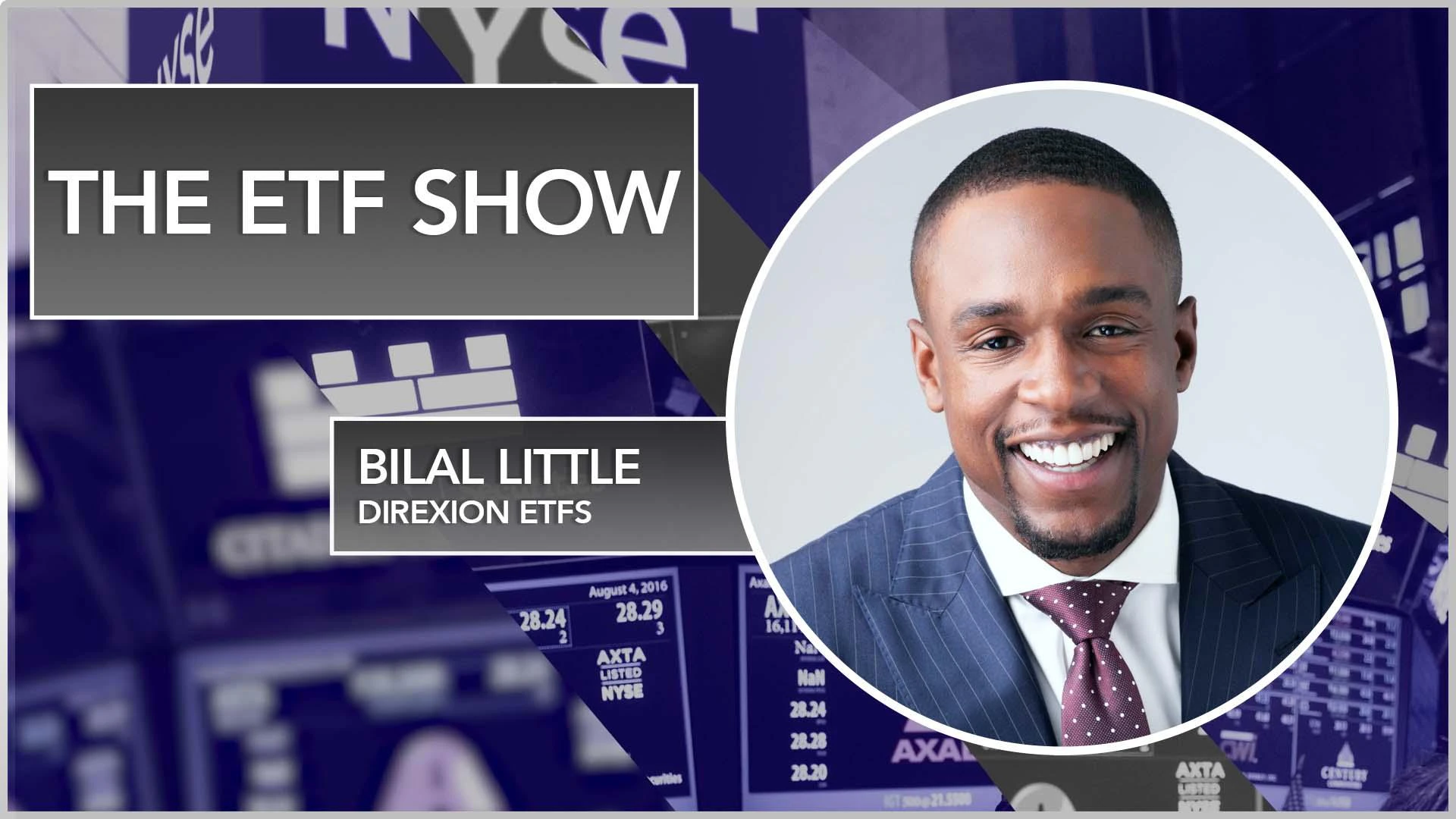
The ETF Show - The Evolution of Leveraged & Inverse ETFs
Leveraged and inverse ETFs have exploded in popularity over the past decade capturing more assets as retail traders seek to capture volatility.

Browse all educational columns



Expert-Built ETF Portfolios, All in One Place
Don’t start from scratch. Discover ready-made ETF portfolios built by professionals to match different goals, timelines, and market views. Use them as inspiration or as a starting point for your own allocation.