Open Now: The Global ETF Survey Take the Survey →



ETF News You Missed This Week - June 22 - June 26, 2026
Recapping the ETF action from week 26 of 2026.


Keep up with what matters in ETFs
Get timely ETF insights, market trends, and top ideas straight to your inbox.
Your newsletter subscriptions with us are subject to ETF Central's Privacy Policy and Terms and Conditions.
The 26th week of 2026 delivered a packed slate of ETF developments, from high-profile launches to an active pipeline of new filings.
The ETF Industry Is Evolving Fast
From AI infrastructure to active strategies, the ETF landscape is shifting. Share your perspective in the 7th Annual Global ETF Survey and get exclusive early access to the final report.
ETF Launches
Core Equity Exposure Expands With Active and Passive Solutions
Investors looking to build diversified equity portfolios gained several new choices this week.
State Street Investment Management launched the SPDR Portfolio Nasdaq 100 ETF (QNDX), a low-cost fund tracking the Nasdaq-100 Index with a competitive 0.10% expense ratio, providing broad exposure to 100 of the largest non-financial companies listed on Nasdaq.
Dimensional Fund Advisors expanded its ETF lineup with the Dimensional US Large Cap Core Equity Market ETF (DFAL), an actively managed strategy that combines broad U.S. large-cap exposure with tilts toward value, profitability, and other long-term return drivers identified through Dimensional's research.
International equity offerings also grew. Praxis Investment Management introduced the Praxis Impact International ETF (PRXI), an actively managed developed-market equity strategy that incorporates values-based stewardship screens, while Russell Investments launched the Russell Investments Global Real Estate ETF (CRIB), an actively managed global real estate portfolio using the firm's multi-manager investment approach to allocate across REITs and real estate companies worldwide.
AI and Semiconductor Investing Continues to Drive Product Innovation
Artificial intelligence and semiconductors remained among the hottest areas for ETF innovation.
Defiance ETFs introduced two differentiated Nasdaq-100 strategies. The Defiance US 100 Tech Ex Software ETF (XIGV) removes software companies from the Nasdaq-100 to emphasize semiconductor, hardware, and connectivity businesses, while the Defiance US 100 Tech AI Moat ETF (AIX) selects 30 Nasdaq-100 companies believed to possess durable competitive advantages from artificial intelligence.
VanEck expanded semiconductor offerings with the VanEck China Semiconductor ETF (SMHC), providing concentrated exposure to China's domestic semiconductor ecosystem through companies deriving at least half of their revenues from semiconductor-related activities.
The fast-growing memory semiconductor theme also attracted new leveraged products. Defiance launched the Defiance Daily Target 2X Long DRAM ETF (DRAL), while Roundhill Investments and T-REX introduced the Roundhill T-REX 2X Long DRAM Daily Target ETF (RAM). Both funds seek to deliver twice the daily performance of the Roundhill Memory ETF (DRAM), offering tactical investors leveraged exposure to companies benefiting from the AI infrastructure buildout.
Structured Income Strategies Become More Sophisticated
Issuers continued expanding beyond traditional covered-call ETFs with increasingly sophisticated income strategies.
First Trust launched the FT Vest Autocallable Barrier & High Income ETF (ACYQ), an actively managed ETF using synthetic autocallable contracts linked to individual large-cap stocks to generate high distributions while reducing downside risk.
Hohimer Wealth Management introduced the Alki Consolidated Income ETF (IINC), which combines actively selected equities with covered calls, cash-secured puts, and other options strategies to generate monthly income.
Thornburg Investment Management expanded its Income Builder franchise with the Thornburg Premium Income Builder ETF (THOR), an actively managed global equity income strategy combining dividend-paying stocks with a flexible options overlay.
Pacer also broadened the structured outcome category through the Pacer Swan SOS Laddered Moderate ETF (LADM), which invests across multiple Pacer Swan SOS Moderate ETFs with staggered reset dates to reduce timing risk associated with traditional buffer strategies.
Specialized Equity Strategies Continue to Broaden
Several issuers introduced niche equity strategies serving specialized investor needs.
Saturna Capital launched three actively managed Shariah-compliant ETFs: the Amana Equity Income ETF (AMEI), the Amana Growth ETF (AMGR), and the Amana Developing World ETF (AMEM). Together, the funds provide Islamic investment solutions spanning dividend-focused equities, global growth stocks, and developing markets.
Leveraged Single-Stock ETFs Continue Rapid Expansion
The leveraged ETF market remained one of the industry's fastest-growing product categories.
Leverage Shares expanded its lineup with the Leverage Shares 2X Long AEHR Daily ETF (AEHG), providing twice the daily performance of Aehr Test Systems, while simultaneously launching nine additional 2x leveraged ETFs covering companies across semiconductor manufacturing, networking, communications infrastructure, and enterprise technology.
Corgi significantly expanded its product lineup by introducing 31 new 2x daily leveraged single-stock ETFs, including funds linked to companies such as Amazon, Nvidia, Microsoft, Tesla, AMD, Alphabet, Coinbase, Palantir, TSMC, AppLovin, SanDisk, MicroStrategy, and numerous semiconductor equipment manufacturers.
Combined with the launches of DRAL and RAM, the week's activity illustrates how leveraged ETFs continue evolving beyond broad market indexes toward increasingly specialized themes and individual companies.
Active Fixed Income Momentum Remains Strong
Active bond ETFs continued to dominate new fixed-income launches.
Natixis Investment Managers introduced ETF versions of two long-established Loomis Sayles strategies through the Loomis Sayles Total Return Bond ETF (LSTB) and Loomis Sayles Dynamic Core Plus ETF (LSCP).
Russell Investments launched the Russell Investments Core Plus Bond ETF (BD), an actively managed multi-sector bond portfolio using the firm's multi-manager approach across investment-grade, high-yield, securitized, and global fixed-income markets.
Pacer ETFs and Barings introduced two institutional credit strategies. The Pacer Barings CLO Market Flex ETF (AAAP) focuses on investment-grade CLO debt, while the Pacer Barings Secured Credit Flex ETF (PBSC) invests across senior secured loans, corporate bonds, CLOs, and other structured credit assets.
Federated Hermes entered the ultrashort bond category with the Federated Hermes Ultrashort Bond ETF (FUSD), while American Beacon Advisors introduced the American Beacon Aberdeen Municipal High Income ETF (AMHI), an actively managed municipal bond strategy seeking federally tax-exempt income.
Smarter Credit Risk Management Enters High Yield
Global X rounded out the week's launches with one of the more differentiated fixed-income products.
The Global X Adaptive Risk Managed Yield ETF (RMHY) seeks to improve the traditional high-yield bond experience by dynamically rotating between high-yield corporate bonds and short-term U.S. Treasury bills based on quantitative risk signals. Rather than remaining fully invested throughout all market environments, the strategy systematically reduces credit exposure during periods of elevated market stress while maintaining income potential during more favorable conditions.
ETF Filings
Growth Equity Strategies Dominate New Equity Filings
Several issuers filed broad equity strategies spanning U.S., international, and emerging markets.
BNY Mellon filed for the BNY Mellon US Large Cap Equity Growth ETF (BKLG), a passive strategy tracking the Solactive GFS United States 500 Growth Style Index to provide rules-based exposure to large-cap U.S. growth companies.
John Hancock filed the John Hancock International Dynamic Growth Select ETF, an actively managed portfolio investing in growth companies across developed and emerging markets outside the United States using bottom-up stock selection and ESG integration.
MayTech also entered the market with the actively managed MayTech Global Growth ETF (MTGG), a concentrated global portfolio investing in 20 to 30 companies benefiting from long-term secular growth trends.
American Century filed the American Century Emerging Markets Insights ETF, an actively managed strategy focused on identifying emerging market companies with accelerating earnings and business fundamentals.
New York Life submitted plans for the NYLIM Fiera International Equity ETF, an actively managed global growth strategy managed by Fiera Capital that combines top-down secular themes with bottom-up stock selection.
Janus Henderson rounded out the international offerings with the Janus Henderson International Core Alpha ETF, an actively managed quantitative strategy seeking to outperform the MSCI EAFE Index while maintaining benchmark-like risk characteristics.
SoFi Expands Smart Beta Lineup
SoFi filed four new index-based ETFs targeting different market environments and regions.
The proposed lineup includes the SoFi Risk-On Equity ETF (RON), which emphasizes growth, momentum, and higher-volatility companies, the SoFi Risk-Off Equity ETF (ROFF), targeting quality and low-volatility stocks, the SoFi Emerging Markets Efficient Growth ETF (EMEG), focusing on productive, high-growth emerging market companies, and the SoFi International Efficient Growth ETF (IXE), applying a similar methodology across developed international markets.
Together, the four funds continue SoFi's expansion into factor-based equity investing through proprietary indexes.
Semiconductor and AI Infrastructure Themes Become Even More Specialized
Artificial intelligence infrastructure remained the dominant theme across this week's filings.
KraneShares filed the KraneShares Actuator ETF, an actively managed strategy investing across the robotic actuator supply chain, including motors, sensors, power semiconductors, bearings, and rare earth materials, with the flexibility to invest in private companies.
Global X proposed the Global X MLCC & Electronic Components ETF (MLCC), providing exposure to manufacturers of multilayer ceramic capacitors and electronic components through derivatives tied to the Akros MLCC & Electronic Components Index.
Roundhill filed the actively managed Roundhill Semicap ETF (SOXC), targeting companies involved in semiconductor manufacturing equipment, including lithography, wafer fabrication, testing, and packaging technologies.
Exchange Traded Concepts and Akros also filed the KICK Korea Semiconductor Index ETF (KCHP), providing concentrated exposure to South Korea's leading semiconductor companies.
Perhaps the most ambitious filings came from VegaShares, which submitted a suite of actively managed AI infrastructure ETFs targeting highly specialized segments including AI power infrastructure, multilayer ceramic capacitors, printed circuit boards, semiconductor testing equipment, Edge AI, semiconductor materials, and AI wafer technologies. The funds would actively manage exposure around BITA thematic indexes while maintaining flexibility to invest in private companies and synthetic instruments.
AI-Based Stock Selection Continues to Evolve
Artificial intelligence was also increasingly incorporated into portfolio construction itself.
Teucrium filed two AlphaDroid-powered ETFs using proprietary AI-driven market regime models.
The AlphaDroid Sweet 16 Giga Cap Stocks ETF combines momentum investing with an AI-based bull-bear indicator that rotates between concentrated large-cap portfolios and defensive ETFs based on market conditions.
Meanwhile, the AlphaDroid AI, Robotics, Hyperscaler Power ETF applies the same market regime framework to companies involved in artificial intelligence, semiconductors, robotics, hyperscale computing, and power infrastructure supporting data centers.
Index Innovation Targets Market Gaps
Several filings attempted to address perceived shortcomings in traditional benchmark construction.
Defiance filed the Defiance S&P Accelerator ETF, an actively managed strategy designed to capture companies that appear likely to enter the S&P 500 but remain excluded because they have not yet satisfied the index's seasoning requirements.
Advisors Asset Management filed the AAM Ubiquitous ETF (UBIQ), which tracks the Pence Ubiquitous Index to provide diversified exposure across the entire U.S. e-commerce ecosystem, including payments, logistics, internet infrastructure, digital advertising, and online retail.
Value Investing and ETF Conversions Continue
Traditional active management also remained well represented.
Lone Peak Global Investors filed two concentrated value ETFs: the Lone Peak SMID Value ETF (LPSV), investing in undervalued U.S. small- and mid-cap companies, and the Lone Peak International Value ETF (LPIV), applying the same investment philosophy to developed international markets.
Meanwhile, Carillon announced plans to convert the Carillon ClariVest Capital Appreciation Fund into the RJ ClariVest Capital Appreciation ETF (RJCA), continuing the industry's steady migration from mutual funds to ETFs.
Active Fixed Income Pipeline Keeps Growing
Active bond ETFs continued to account for a significant share of new filings.
VegaShares filed the VegaShares Fixed Rate Callable Bond ETF, focusing primarily on investment-grade callable bonds issued by financial institutions.
Hartford Funds submitted an actively managed Hybrid Capital Income ETF, managed by Wellington Management, investing across preferred securities, contingent convertible bonds, subordinated debt, bank loans, and corporate credit.
New York Life filed the NYLIM MacKay Muni High Income ETF, targeting high-yield municipal bonds through active credit research.
Nuveen proposed the Nuveen Impact Bond ETF, investing globally in bonds financing affordable housing, renewable energy, community development, and climate-related projects.
VanEck filed the VanEck EM Focus Inflation Bond ETF, tracking local-currency inflation-linked government bonds across emerging markets, while Invesco expanded its BulletShares lineup with the Invesco BulletShares Municipal Bond 2036 ETF, providing defined-maturity municipal bond exposure through 2036.
MANGOS Sparks a New Wave of AI ETF Filings
One of the week's most notable trends was the emergence of the MANGOS investment theme, representing Meta, Anthropic, NVIDIA, Alphabet, OpenAI, and SpaceX.
REX Shares filed an actively managed MANGOS AI Leaders ETF, seeking long-term exposure to both public and private AI leaders through equities and derivatives.
Leverage Shares proposed four MANGOS products, including the Leverage Shares MANGOS ETF, 2X Long MANGOS Daily ETF, 2X Short MANGOS Daily ETF, and 1X Short MANGOS Daily ETF, giving investors leveraged and inverse exposure to the basket.
Corgi also entered the space with the Corgi MANGOS 2x Daily ETF, seeking twice the daily performance of the underlying MANGOS portfolio while providing indirect exposure to private AI companies such as Anthropic and OpenAI.
Leveraged Single-Stock ETFs Continue to Expand
The leveraged ETF pipeline remained exceptionally active.
REX Shares filed five new products, including the T-REX 2X Long Agility Robotics Daily Target ETF, T-REX 2X Long Sunrun Daily Target ETF, T-REX 2X Long SolarEdge Daily Target ETF, T-REX 2X Inverse Marvell Daily Target ETF, and T-REX 2X Inverse SK Hynix Daily Target ETF.
GraniteShares also filed two leveraged products tied to Samsung Electronics: the GraniteShares 2x Long Samsung Electronics Daily ETF and the GraniteShares 2x Short Samsung Electronics Daily ETF, expanding the growing universe of tactical single-stock ETFs available to active traders.
Other Updates
ETF Updates & Changes
ETF issuers also announced a busy round of updates, including benchmark renames, ticker changes, fund splits, listing moves, conversions, and planned closures.
Wedbush updated the benchmark name for the Dan Ives Wedbush AI Revolution ETF (IVES), with the index renamed the Solactive Dan IVES Wedbush AI Revolution Index. The change appears administrative, with no stated shift in the fund’s strategy or methodology.
Precidian announced 10-for-1 stock splits for three ADRhedged ETFs: Arm Holdings PLC ADRhedged (ARMH), ASML Holding NV ADRhedged (ASMH), and STMicroelectronics NV ADRhedged (STHH). The splits will lower each fund’s per-share price without changing shareholder value.
Several funds also underwent branding or ticker changes. The EA Astoria Dynamic Core US Fixed Income ETF (AGGA) will become the EA Astoria Beacon Dynamic Core US Fixed Income ETF, while the Defiance Long Pure Quantum ETF (QTUP) will be renamed the Defiance Pure Quantum ETF. Defiance will also change the ticker for the Defiance Gold Enhanced Options Income ETF from GLDY to GOLI.
Other ticker updates included the Leverage Shares 2X Long FORM Daily ETF, changing from FOML to FOMG, and the Tema U.S. Manufacturing & Reshoring ETF, changing from RSHO to WELD. The TrueShares Technology, AI & Deep Learning ETF (LRNZ) is also expected to move its listing from NYSE Arca to Cboe BZX Exchange.
New York Life Investments announced a more substantive update for the NYLI CBRE Real Assets ETF (IQRA), which will become the NYLIM CBRE Real Estate & Infrastructure ETF (REIX). The fund’s 80% investment policy will also narrow from broader real assets exposure to real estate and infrastructure companies.
Defiance also reworked a previous filing into the Defiance MANGOS ETF (MNGO), an actively managed AI-focused strategy targeting Meta, Anthropic, Nvidia, Google, OpenAI, and SpaceX, with the ability to use options, swaps, and private-company exposure.
Dimensional announced plans to merge eight ETFs into ETF share classes of corresponding mutual funds while cutting fees across the combined lineup. The affected ETFs include DCOR, DFAC, DXUV, DUHP, DFAS, DFAT, DFSV, and DFAR.
Reverse splits were another key update. Direxion will implement 1-for-10 reverse splits for seven leveraged and inverse ETFs, including bearish small-cap, technology, semiconductor, oil and gas, AI, GOOGL, and AMD strategies.
ETF Liquidations
On the closure front, Qraft AI and Exchange Traded Concepts will liquidate the QRAFT AI-Enhanced U.S. Large Cap ETF (QRFT), with the fund expected to cease operations in late July.
iM Global Partner Funds will also liquidate three active ETFs: the Polen Capital Global Growth ETF, Polen Capital China Growth ETF, and Polen Capital International Growth ETF, with liquidation expected around the end of August.
Fidelity Investments Canada, meanwhile, reversed course on two planned fund closures, canceling the terminations of Fidelity Disruptors Class and Fidelity Disruptive Automation Class, while several other Fidelity ETF and mutual fund closures remain scheduled for July.
Please note this article is for information purposes only and does not in any way constitute investment advice. It is essential that you seek advice from a registered financial professional prior to making any investment decision.
Segments
See all
No specific market segments were tagged
Mentioned ETFs
No specific ETFs were tagged
Further reading
Latest ETF News
See all ETF newsThe Weekly ETF Market Monitor (June 15-19, 2026)

The Weekly ETF Market Monitor (June 8-12, 2026)

The Weekly ETF Market Monitor (June 1-5, 2026)


 Advantages of ETFs over Mutual Funds1/6
Lower Costs
In this guide, we'll explore the advantages of ETFs over mutual funds, giving you valuable insights into why ETFs have gained significant popularity among investors like yourself.
Leveraged ETFs: Unlocking the Potential for Amplified Returns1/6
Understanding Leveraged ETFs
Explore leveraged ETFs: potential for amplified returns & risks. 5 ETFs to consider across equities, commodities & fixed income.
What is a Leveraged ETF?1/6
Introducing Leveraged and Inverse ETFs
In this guide, we'll dive into the world of leveraged ETFs, exploring their definition, mechanics, potential risks, and rewards.
Recent educational content
ETF Trends
ETF Industry KPIs June 22, 2026
The ETF Industry saw 40 New Launches and 23 closures last week.

Asset TV
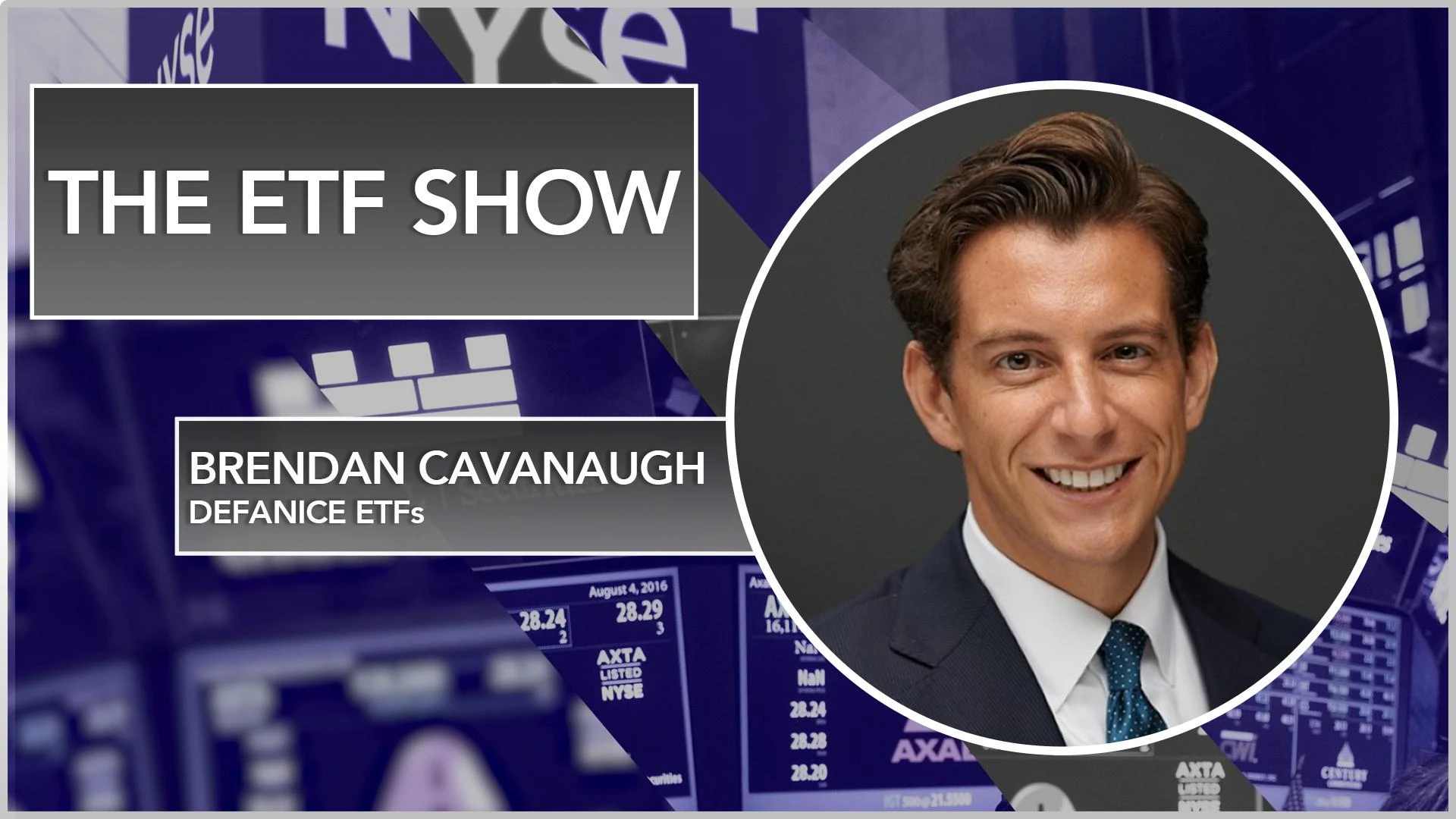
The ETF Show - New Autism-Impact ETF Launched
Defiance ETFs has launched the first ETF, $ASD, focused on the autism ecosystem, investing in companies that provide services, products, and research related to autism and neurodivergence.

ETF Trends
ETF Industry KPIs June 1, 2026
The ETF Industry saw 22 New Launches, 1 Ticker Change and 1 closure last week.
ETF Trends
ETF Industry KPIs May 20, 2026
The ETF Industry saw 44 New Launches, 3 Mutual Fund Conversions and 9 closures last week.
Browse all educational columns



The ETF Industry Is Evolving Fast
From AI infrastructure to active strategies, the ETF landscape is shifting. Share your perspective in the 7th Annual Global ETF Survey and get exclusive early access to the final report.