Open Now: The Global ETF Survey Take the Survey →



ETF News You Missed This Week - Dec. 15 - Dec. 19, 2025
Week #51 brought a surge of ETF activity as issuers raced to capture new corners of the market.


Keep up with what matters in ETFs
Get timely ETF insights, market trends, and top ideas straight to your inbox.
Your newsletter subscriptions with us are subject to ETF Central's Privacy Policy and Terms and Conditions.
It was another busy week 51 in the U.S. ETF industry, with a wave of new launches, conversions, filings, and milestones that reflected the growing depth and innovation of the market.
Get data on 14,000+ ETFs
Access Trackinsight's reliable and comprehensive data with 500M+ points on 14,000+ ETFs.
ETF launches
Crypto and Digital Asset Exposure Expands
Osprey converted the Osprey Bitcoin Trust into an exchange-traded fund, now trading on Nasdaq under the ticker OBTC. The ETF provides exposure to Bitcoin through the CME CF Bitcoin Reference Rate. New York Variant, and is backed by Bitcoin held in custody. OBTC operates using in-kind creation and redemption baskets, with fees covering trust-level expenses, aligning it structurally with other spot Bitcoin ETFs.
Crypto exposure also broadened beyond Bitcoin. Invesco and Galaxy Asset Management launched the Invesco Galaxy Solana ETF (QSOL), offering regulated exposure to Solana via the Cboe BZX Exchange. The product includes institutional-grade custody and incorporates staking rewards, expanding Invesco’s digital asset lineup alongside its existing Bitcoin and Ethereum offerings.
Leveraged and Tactical Strategies Gain Momentum
Leverage Shares by Themes launched seven new 2x daily leveraged single-stock ETFs, targeting Nio, Snap, Baidu, Centene, KLA Corp, Petrobras, and Vale. Each fund delivers 200 percent of the daily performance of its underlying stock and carries a 0.75 percent management fee. With these launches, the firm’s lineup now spans roughly 60 leveraged single-stock ETFs.
The issuer followed up with four additional leveraged products. IREG, BEG, GEVG, and SATG, delivering 2x daily exposure to Iris Energy, Bloom Energy, GE Vernova, and EchoStar. The expansion underscores sustained retail and tactical demand for single-stock leverage within the ETF wrapper.
Q3 Asset Management also entered the tactical space with the Q3 All-Season Tactical Advantage ETF (QTAC). This actively managed fund dynamically allocates across equity index futures, leveraged ETFs, and fixed income instruments. QTAC can take both long and short positions with notional exposure reaching plus or minus 150 percent, adjusting frequently based on proprietary signals.
Equity Innovation. From Equal-Weighting to Founder-Led Growth
Cambria launched the Cambria Equal Weight US Equity ETF (USEW), offering equal-weight exposure across U.S. equities to reduce concentration risk and improve diversification. The ETF debuted on Nasdaq with approximately $185.8 million in assets and charges a 0.25 percent expense ratio, expanding Cambria’s ETF platform to 20 funds.
Founder-driven investing also entered the ETF space with the Founders 100 ETF (FFF). The actively managed fund invests at least 90 percent of assets in U.S.-listed founder-led companies, focusing on the top 100 firms by market capitalization. Initial holdings lean toward technology and innovation-driven names, including Nvidia, Meta Platforms, and Tesla.
Deepwater Asset Management launched the Deepwater Beachfront Small Cap ETF (DBSC), targeting 50 to 100 U.S. small-cap stocks within the Russell 2000 universe. The actively managed strategy blends bottom-up fundamental research with proprietary quantitative and factor screens to identify quality growth opportunities.
AllianceBernstein added the AB US Equity ETF (XCHG), an actively managed U.S. equity fund developed in collaboration with Bernstein Private Wealth. XCHG emphasizes tax efficiency and long-term capital growth and joins AllianceBernstein’s expanding ETF platform.
Thematic ETFs. AI, Nuclear Energy, and Global Growth
Artificial intelligence remained a core theme with the launch of the Harbor AI Inflection Strategy ETF (EPAI). The fund invests in 30 to 50 global companies enabling or adopting AI, spanning infrastructure providers, platforms, end-users, and indirect beneficiaries. The portfolio is concentrated primarily in technology and industrials and follows a bottom-up, risk-aware selection process.
Tortoise Capital introduced the Tortoise Nuclear Renaissance ETF (TNUK), an actively managed fund providing exposure across the nuclear energy value chain. The strategy includes uranium miners, reactor operators, fuel services, and small modular reactor developers. TNUK is positioned as a broader nuclear ecosystem play, capturing demand driven by electrification, artificial intelligence, and reactor restarts.
Eventide Asset Management expanded internationally with the Eventide International ETF (ESIM), its first ex-U.S. equity ETF. Listed on NYSE Arca, ESIM applies Eventide’s Business 360® framework to global equities and fills a notable gap in the faith-based investing universe, where international ETF options remain limited.
Income, Options, and Risk-Managed Solutions Multiply
Income-focused innovation was a major theme this week. Hartford Funds launched the Hartford Equity Premium Income ETF (HEMI), its first options overlay ETF. Sub-advised by Wellington Management, HEMI combines a U.S. equity portfolio with out-of-the-money S&P 500 call writing to generate income while seeking tax efficiency and downside risk mitigation.
NEOS expanded its options-based lineup with the NEOS MLP and Energy Infrastructure Income ETF (MLPI). The actively managed fund targets income from master limited partnerships and energy infrastructure equities, using covered call strategies and MLP tax structures to enhance after-tax yield.
Kensington Asset Management launched two active ETFs. The Kensington Credit Opportunities ETF (KAMO) focuses on income generation and downside protection across fixed income sectors, while the Kensington Hedged Premium Income ETF (KHPI) combines S&P 500 exposure with options strategies designed to generate income and manage drawdowns.
GraniteShares introduced two fund-of-funds ETFs under its YieldBOOST™ platform. The GraniteShares YieldBOOST ETF (YBST) offers equal-weight exposure across its YieldBOOST single-stock ETFs, while the GraniteShares YieldBOOST High Income ETF (YBTY) concentrates on top-performing, high-premium option strategies.
Fixed Income and Municipal Bond Exposure Broadens
Transamerica launched two actively managed bond ETFs. The Transamerica Large Value Active ETF (TALV), sub-advised by Great Lakes Advisors, focuses on large-cap U.S. value equities, while the Transamerica Bond Active ETF (TABD), sub-advised by Aegon, targets total return through investment-grade bonds with selective high-yield exposure and ESG integration.
New York Life Investments added the NYLI MacKay Muni Allocation ETF (MMMA), an actively managed municipal bond ETF seeking tax-exempt income. Managed by MacKay Municipal Managers™, the fund targets long-duration municipal bonds across investment-grade and high-yield segments, positioning it for elevated yield environments.
Growth Managers Embrace the ETF Wrapper
Baron Capital made a significant push into ETFs with five actively managed launches. The Baron First Principles ETF (RONB), Baron Global Durable Advantage ETF (BCGD), Baron SMID Cap ETF (BCSM), Baron Financials ETF (BCFN), and Baron Technology ETF (BCTK) collectively bring Baron’s long-standing growth philosophy into a more tax-efficient, transparent vehicle.
ETF Filings
Adaptive Equity and Capital-Efficient Allocation
WisdomTree filed for multiple adaptive and capital-efficient strategies designed to dynamically respond to market conditions.
The WisdomTree International Adaptive Moving Average Fund will track the WisdomTree International Adaptive Moving Average Index, shifting between developed-market equities and U.S. Treasury bills based on moving-average signals and market breadth. The fund targets large-cap stocks across 22 developed markets, with rules-based rebalancing designed to dial risk up or down as trends evolve.
WisdomTree also filed for the WisdomTree U.S. Adaptive Moving Average Fund, which applies a similar framework to U.S. large-cap equities. The strategy reallocates daily between equities and Treasury bills using price trend crossovers and breadth indicators, aiming to reduce drawdowns during market stress while remaining invested during sustained uptrends.
In a more capital-efficient structure, WisdomTree proposed the WisdomTree Efficient U.S. Plus International Equity Fund, an actively managed ETF combining U.S. large-cap equities with index futures to gain international equity exposure. The strategy targets approximately 60 percent notional exposure to global markets while maintaining core U.S. equity holdings, with sector exposure expected to lean toward Industrials, Energy, and Utilities.
Metals, Commodities, and Real Asset Exposure
WisdomTree also filed for the WisdomTree Efficient Metals Plus Miners Fund, an actively managed strategy blending futures on strategic metals such as lithium, cobalt, and copper with global mining equities. The fund plans to allocate evenly between futures and stocks and may use a Cayman-based subsidiary to facilitate commodities exposure, reflecting a familiar structure in the real-assets ETF space.
Income Strategies and Options Innovation Accelerate
First Trust outlined plans for an expansive income-focused lineup, filing for 19 single-stock option income ETFs. Each proposed fund targets roughly 15 percent annual income before fees by combining equity exposure, synthetic replication, call writing, and U.S. Treasuries. The filings reference mega-cap names including NVIDIA, Apple, Microsoft, and Tesla, signaling continued demand for single-name yield strategies despite capped upside risk.
First Trust also filed for the FT Vest Laddered Autocallable Barrier and Resilient Income ETF (ACYS). The ETF would use swap agreements to replicate returns from laddered synthetic autocallable structures tied to major U.S. equity indices, with collateral invested in short-term Treasuries and box spreads. The goal is to generate resilient income while embedding structured downside protection features.
J.P. Morgan filed for two actively managed Equity Premium Yield ETFs, one linked to the S&P 500 and another to the Nasdaq-100. Both strategies would use call spread overlays on high-quality equity portfolios to deliver monthly income and tax-efficient return of capital. The filings note potential underperformance during strong bull markets due to capped upside, with stock selection guided by data science models and ESG considerations.
Tactical, Macro, and Risk-Managed Portfolios
Hedgeye entered the ETF filing arena with the Hedgeye Brightside Family Office ETF (HFAM). The fund proposes a three-sleeve allocation model. Offense for growth assets, Defense for Treasuries, volatility hedges, and gold, and Debasement for commodities and inflation-sensitive assets. Allocations would shift dynamically based on macroeconomic and risk signals.
Growth and International Equity Exposure
Vanguard filed for the Vanguard Developed Markets ex-US Growth Index ETF, designed to track the S&P Developed Ex-U.S. LargeMidCap Growth Index. The fund would invest at least 80 percent of assets in large- and mid-cap growth stocks from developed markets outside the United States, providing a straightforward complement to Vanguard’s existing international core lineup.
VanEck filed for the VanEck MSCI EAFE Analyst Sentiment ETF, which will track the MSCI EAFE Analyst Sentiment Select Index. The strategy focuses on international stocks with improving analyst outlooks and is expected to tilt toward Financials, Industrials, and Health Care.
Faith-Based and Values-Driven ETFs Expand Further
Faith-based ETF development remained active, with several new filings emphasizing both equity and fixed income strategies.
Faith Investor Services filed for the FIS Tactical Equity ETF (ACTS), an actively managed global equity strategy investing in 30 to 50 stocks across market caps while applying a Christian values screen. The fund may hold up to 10 percent in cash and uses a proprietary “Bright Score” framework.
Faith Investor Services, in partnership with Asterozoa Capital, also filed for the FIS Faith Income ETF (FTHB), an opportunistic credit strategy investing in corporate and securitized debt aligned with Christian values. Derivatives may be used for income enhancement, hedging, or tactical positioning.
Alongside them, Arimathea filed for the Arimathea Catholic Bond Index ETF (SHRD), which will track an index of investment-grade U.S. dollar bonds screened according to Catholic faith-based guidelines and rebalanced monthly.
Bright Portfolios and Faith Investor Services jointly filed for the FIS Bright Portfolios Core Bond ETF (BRIB), targeting income and capital preservation through an intermediate-duration bond ladder screened using Christian values criteria.
Sector, Thematic, and Structural Innovation
Global X filed for six new sector-focused ETFs under its “PureCap” framework, covering Financials, Health Care, Industrials, Materials, Utilities, and Real Estate. Each fund will track a free-float, market-cap-weighted MSCI USA sector index with no stock weight caps, completing coverage of all 11 GICS sectors once launched.
Global X also filed for the Global X NYSE 100 ETF, designed to track the NYSE 100 Index. The ETF targets 100 technology and tech-enabled growth companies using modified float-adjusted market-cap weighting, with individual positions capped at 20 percent.
Vega Capital proposed the VegaShares Buy Now, Pay Later ETF, an actively managed fund focused on financial companies involved in buy-now-pay-later lending models. The ETF will be concentrated in the financial sector, non-diversified, and turnover-heavy, targeting capital appreciation rather than income.
Crypto and AI Infrastructure Strategies Emerge
Kurv Investment Management filed for crypto-focused ETFs targeting Ether and XRP. The funds aim to outperform spot prices by using derivatives on crypto-linked ETPs and generating income through options strategies such as covered calls, with residual assets allocated to fixed income and preferred securities.
Wedbush filed for the Dan Ives Wedbush AI Power and Infrastructure ETF, which will track the Solactive Wedbush AI Power and Infrastructure Index. The passive strategy targets companies enabling artificial intelligence through energy generation, computing power, and data infrastructure, drawing directly on Wedbush research coverage.
Other Updates
Fund Rebrand and Strategy Refinement
Global X is sharpening the focus of its materials exposure. Effective March 1, 2026, the Global X Disruptive Materials ETF (DMAT) will be renamed the Global X Rare Earth and Critical Materials ETF (EART).
Alongside the name change, the underlying index and investment strategy will be updated to target companies deriving more than 50 percent of revenue from rare earth and critical materials. These materials play a central role in electric vehicles, electronics, energy storage, and defense technologies, reflecting a shift from broad materials disruption toward supply-chain-critical inputs.
ETF Closures and Liquidations
Defiance ETFs confirmed plans to liquidate three ETFs by year-end.
The Defiance Daily Target 2X Long JPM ETF (JPX), Defiance Daily Target 2X Long PM ETF (XPM), and Defiance Enhanced Long Vol ETF (VIXI) will cease trading on December 23, 2025, with final liquidation scheduled for December 31, 2025. Shareholders will receive cash distributions equal to the funds’ net asset values following liquidation.
The closures highlight the ongoing pressure on niche leveraged and volatility-linked products to maintain sufficient scale and investor demand.
SEC Clears Dual Share Class Structures
In a development with far-reaching implications, the U.S. Securities and Exchange Commission approved the use of dual share class structures, allowing asset managers to offer ETF and mutual fund share classes within a single portfolio.
Large firms such as BlackRock and Fidelity are now permitted to pair exchange-traded and traditional mutual fund share classes tied to the same underlying strategy. This structure enhances tax efficiency, expands investor choice, and allows access through multiple distribution channels without altering portfolio management.
The change represents a meaningful evolution in fund architecture and is expected to favor large-scale asset managers with the operational capacity to manage hybrid structures.
Please note this article is for information purposes only and does not in any way constitute investment advice. It is essential that you seek advice from a registered financial professional prior to making any investment decision.
Segments
See all
No specific market segments were tagged
Mentioned ETFs
No specific ETFs were tagged
Further reading
Latest ETF News
See all ETF news


The Weekly ETF Market Monitor (June 22-26, 2026)


 Advantages of ETFs over Mutual Funds1/6
Lower Costs
In this guide, we'll explore the advantages of ETFs over mutual funds, giving you valuable insights into why ETFs have gained significant popularity among investors like yourself.
Leveraged ETFs: Unlocking the Potential for Amplified Returns1/6
Understanding Leveraged ETFs
Explore leveraged ETFs: potential for amplified returns & risks. 5 ETFs to consider across equities, commodities & fixed income.
What is a Leveraged ETF?1/6
Introducing Leveraged and Inverse ETFs
In this guide, we'll dive into the world of leveraged ETFs, exploring their definition, mechanics, potential risks, and rewards.
Recent educational content

ETF Trends
ETF Industry KPIs July 13, 2026
This week’s KPI data overview highlights key metrics and trends shaping the ETF landscape.


First Look ETF
First Look ETF: Cash Deployment, Bond, and Hedged ETFs
In this season 6 episode of First Look ETF, Stephanie Stanton examines the latest ETF marketplace trends with NYSE and guests.

ETF Trends
ETF Industry KPIs July 6, 2026
This week’s KPI data overview highlights key metrics and trends shaping the ETF landscape.
Asset TV
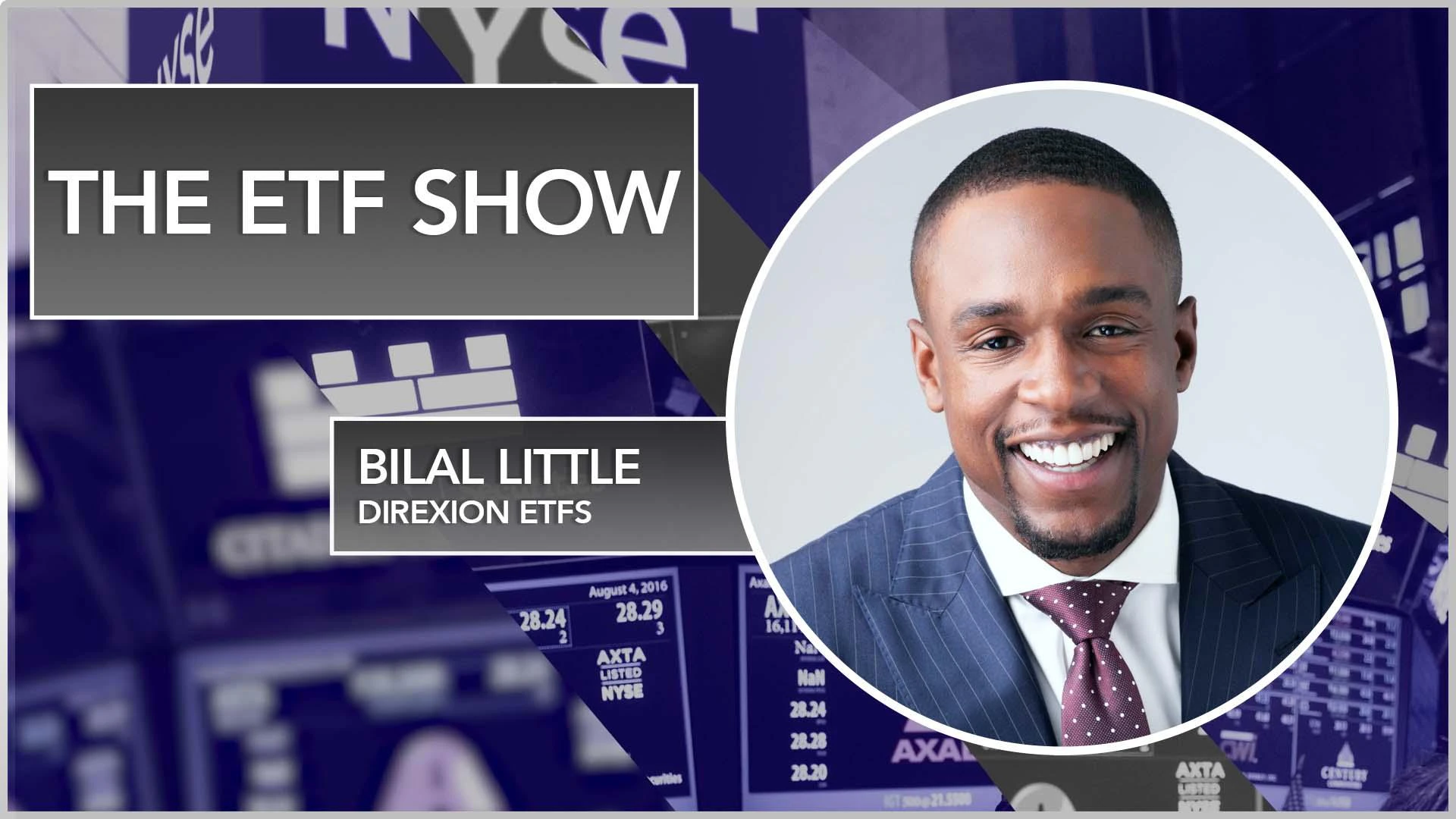
The ETF Show - The Evolution of Leveraged & Inverse ETFs
Leveraged and inverse ETFs have exploded in popularity over the past decade capturing more assets as retail traders seek to capture volatility.

Browse all educational columns



Expert-Built ETF Portfolios, All in One Place
Don’t start from scratch. Discover ready-made ETF portfolios built by professionals to match different goals, timelines, and market views. Use them as inspiration or as a starting point for your own allocation.