Open Now: The Global ETF Survey Take the Survey →



ETF News You Missed This Week - Dec. 1 - Dec. 5, 2025
Week #49 brought a surge of ETF activity as issuers raced to capture new corners of the market.

Keep up with what matters in ETFs
Get timely ETF insights, market trends, and top ideas straight to your inbox.
Your newsletter subscriptions with us are subject to ETF Central's Privacy Policy and Terms and Conditions.
It was another busy week 49 in the U.S. ETF industry, with a wave of new launches, conversions, filings, and milestones that reflected the growing depth and innovation of the market.
The ETF Industry Is Evolving Fast
From AI infrastructure to active strategies, the ETF landscape is shifting. Share your perspective in the 7th Annual Global ETF Survey and get exclusive early access to the final report.
ETF Launches
Dividend Assets Capital set the tone with DVGR, an actively managed strategy built around companies that have raised dividends by at least ten percent a year for a decade or more. The fund uses a proprietary 3D screen to blend fundamentals and qualitative assessment. Applied Finance followed with IVSS, a SMID-cap strategy rooted in intrinsic value work and designed to uncover high quality businesses under fifteen billion dollars in market cap.
Vanguard expanded its fixed income offering with BNDP, a low cost core-plus bond ETF tracking a broad Bloomberg benchmark.
Dana Investment Advisors introduced DANA, a limited volatility bond strategy focused on high grade government and corporate issuers with short duration.
Voya added VMSB, a multi-sector income strategy that moves across credit markets to capture yield and long-term appreciation.
Rareview entered the cash management segment with RMME, a government money market ETF designed for stability and liquidity.
21Shares launched TXXS, the first U.S. ETF offering two-times leveraged exposure to the Sui token. Franklin Templeton added SOEZ to give regulated access to Solana.
NEOS introduced NEHI, a high income strategy tied to Ether exposure through ETPs and an options overlay.
T-REX added leveraged Solana and XRP ETFs for traders seeking amplified daily returns. Grayscale listed GLNK on NYSE Arca, expanding access to Chainlink’s oracle technology.
International and thematic exposure grew as well. KraneShares partnered with Dragon Capital to launch KPHO, a Vietnam growth strategy targeting companies benefiting from exports, demographics, and rising foreign investment.
Horizon closed the year with three new active equity ETFs spanning international equities, U.S. SMID caps, and global risk-managed exposure.
Options income and leveraged equity tools continued their rapid expansion. Roundhill added UNHW to its WeeklyPay suite by focusing on UnitedHealth.
BlackRock introduced BALQ to blend Nasdaq exposure with call-writing income.
GraniteShares expanded both its leveraged products and its YieldBOOST income range, adding a two-times Alphabet ETF and new options-based income ETFs tied to high growth names.
Innovator launched new December series offering dual directional exposure and buffers that renew annually.
PGIM entered the same window with PMDE, a Max Buffer ETF designed to cap gains and protect against steep declines.
Tradr added SMQ, an inverse QQQ fund that resets monthly for tactical users.
Manager lineups also evolved. Fundsmith launched its first U.S. ETF, ETFT, providing access to its high quality equity approach inside a tax efficient wrapper.
ETF Filings
Regulators received a new wave of ETF filings spanning preferred income, nuclear energy, AI-driven stock selection, hybrid bonds, duration rotation, autocallable structures, and digital assets. The pipeline shows how quickly product design is expanding across both traditional and emerging segments.
Morgan Stanley set the tone with a filing for the Eaton Vance Preferred Securities and Income ETF. The fund will focus on preferred and hybrid income securities, including contingent convertibles. It will lean heavily toward financial issuers and blend investment grade and junk-rated positions. The strategy aims for income and total return through macro analysis and bottom-up research, with an optional ESG layer.
ALPS added a thematic twist with a proposed ETF tied to artificial intelligence and nuclear energy. The ALPS Nautilus SMR, Nuclear and Technology ETF will hold equities linked to advanced nuclear technologies and AI applications. It will also use options to reduce volatility and provide monthly income. The approach mixes long-term stock selection with active options trading.
Invesco filed a broad set of fixed income strategies. The Invesco U.S. Hybrid Bond ETF will track an ICE benchmark centered on hybrid corporate bonds that combine debt and equity characteristics. The index spans AAA to BB2 bonds, uses issuer caps, and focuses on U.S. dollar issues across developed markets. Invesco followed with the Flexible Income ETF, an active multi-sector portfolio with access to high yield, investment grade, government, and mortgage-backed markets. The strategy will use derivatives, currency tools, and dynamic risk management to pursue income and total return. A third filing introduced the Dynamic U.S. Treasury Maturity ETF, built to follow an MSCI index that rotates duration exposures between short, long, and broad treasuries as GDP and inflation conditions shift. The portfolio will use sampling and maintain at least eighty percent exposure to index components.
Pacer expanded its AI-driven lineup with two filings. The Pacer S&P 500 3AI Top 100 ETF will select one hundred S&P 500 companies with the highest expected alpha score generated by 3AI. The model uses machine learning and macro inputs to forecast expected outperformance over twelve months. The strategy will be passive and rebalance quarterly. Pacer also filed the S&P World 3AI Top 300 ETF, extending the same methodology to global equities. It will target large and mid-cap stocks in twenty-four developed markets with limits on country, sector, and individual name weights.
Alpha Architect filed AAUB, a broad-based U.S. equity ETF. The fund will be actively managed and invest through stocks and ETFs. It may use options and a proprietary dividend-timing approach to manage tax efficiency. It will focus on companies over one billion dollars in market cap and may trade frequently to stay aligned with its models.
Innovation continued in the structured and income-focused space. First Trust filed the FT Vest Laddered Autocallable Barrier and Review ETF. The strategy will use swaps to replicate synthetic autocallable notes tied to U.S. equity indices or ETFs. Laddered exposures aim to smooth entry points and generate income from call premiums while attempting to mitigate downside if maturity barriers are not breached. YieldMax added a filing for YTEN, a fund-of-funds ETF that invests in its top ten income-oriented ETFs. The design leans on synthetic covered call strategies to target weekly distributions. Selection will be based on income potential, volatility, and risk.
Digital assets remain a major theme. REX-Osprey filed the Canton Coin ETF to offer one-times exposure to Canton Coin, the native token of the institution-focused Canton Network. The fund may hold the asset directly or through a Cayman subsidiary and can allocate up to forty percent into related crypto ETFs and ETPs. The goal is to provide a regulated vehicle that mirrors the network’s institutional positioning.
Other ETF Industry News
Capital Group reached a milestone that underscores the acceleration of active ETFs. Its lineup surpassed one hundred billion dollars in assets less than four years after launch. The firm now offers twenty-five ETFs and eight model portfolios. The growth reflects rising demand for active management delivered through low cost, tax aware ETF structures and strong adoption among financial professionals.
Crypto access took a significant step forward. Vanguard began offering trading for crypto ETFs on its brokerage platform. Coverage includes Bitcoin, Ethereum, XRP and Solana. The move represents a major shift for the world’s second largest asset manager. It also follows strong inflows into similar products at BlackRock. The update signals an institutional turn in crypto adoption that could unlock larger and more persistent flows.
State Street reshaped its sector ETF franchise by taking full control of distribution for all eleven Select Sector SPDR ETFs. Advisory and distribution now sit under the same brand. Each ETF will be rebranded accordingly. The suite holds more than three hundred thirty billion dollars in assets. The change reinforces State Street’s dominance in sector investing and strengthens alignment across product, sales, and marketing.
Mergers and acquisitions remained active. Nomura purchased Macquarie’s public investments business in North America and Europe for two point eight billion Australian dollars. The deal adds two hundred fifty four billion dollars in assets to Nomura. Macquarie will now prioritize private markets with more than seven hundred billion dollars in assets. Both firms plan to develop new products together and expand their distribution footprint in the U.S. and Japan.
Goldman Sachs advanced its ETF ambitions with a major acquisition. The firm will buy Innovator Capital for two billion dollars. The transaction adds twenty-eight billion dollars in defined outcome ETF assets to Goldman’s platform and lifts total ETF AUM to roughly seventy-nine billion dollars. It also moves Goldman into the top tier of active ETF issuers. Innovator brings more than one hundred fifty ETFs built around buffer structures that seek downside protection with capped upside.
Please note this article is for information purposes only and does not in any way constitute investment advice. It is essential that you seek advice from a registered financial professional prior to making any investment decision.
Segments
See all
No specific market segments were tagged
Mentioned ETFs
No specific ETFs were tagged
Further reading
Latest ETF News
See all ETF news


The Weekly ETF Market Monitor (June 22-26, 2026)


 Advantages of ETFs over Mutual Funds1/6
Lower Costs
In this guide, we'll explore the advantages of ETFs over mutual funds, giving you valuable insights into why ETFs have gained significant popularity among investors like yourself.
Leveraged ETFs: Unlocking the Potential for Amplified Returns1/6
Understanding Leveraged ETFs
Explore leveraged ETFs: potential for amplified returns & risks. 5 ETFs to consider across equities, commodities & fixed income.
What is a Leveraged ETF?1/6
Introducing Leveraged and Inverse ETFs
In this guide, we'll dive into the world of leveraged ETFs, exploring their definition, mechanics, potential risks, and rewards.
Recent educational content

ETF Trends
ETF Industry KPIs July 13, 2026
This week’s KPI data overview highlights key metrics and trends shaping the ETF landscape.

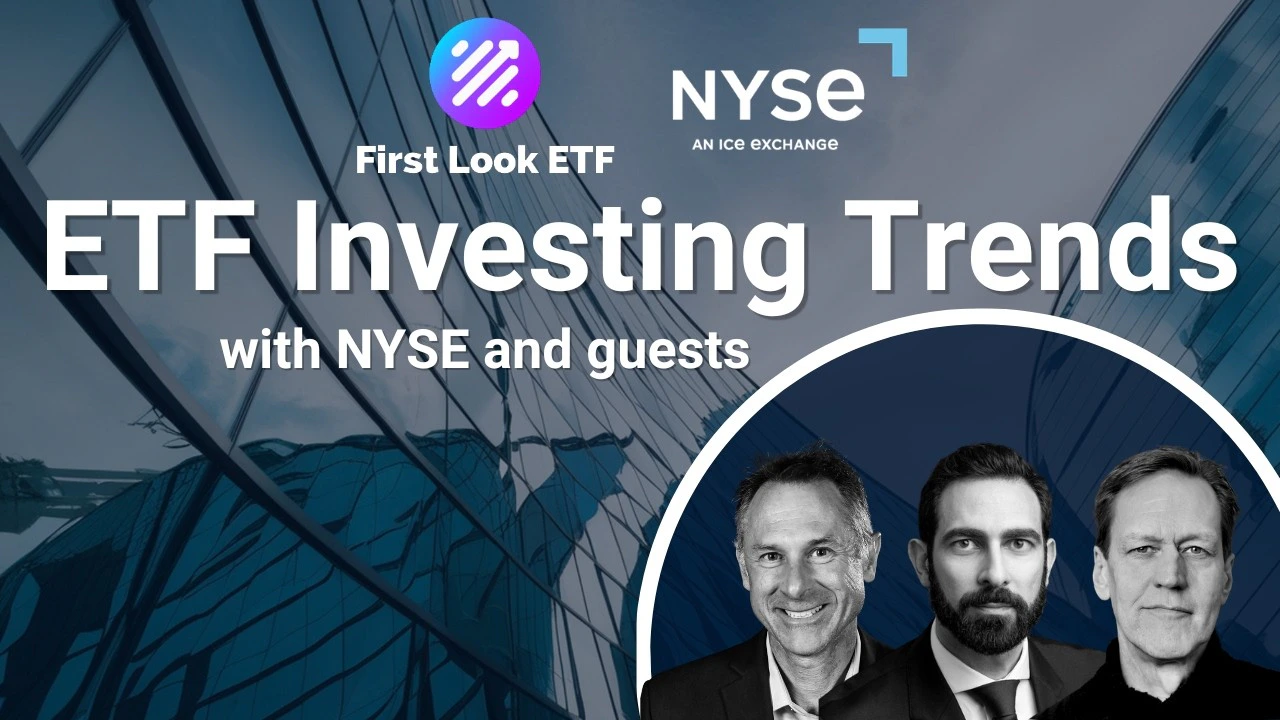
First Look ETF
First Look ETF: Cash Deployment, Bond, and Hedged ETFs
In this season 6 episode of First Look ETF, Stephanie Stanton examines the latest ETF marketplace trends with NYSE and guests.

ETF Trends
ETF Industry KPIs July 6, 2026
This week’s KPI data overview highlights key metrics and trends shaping the ETF landscape.
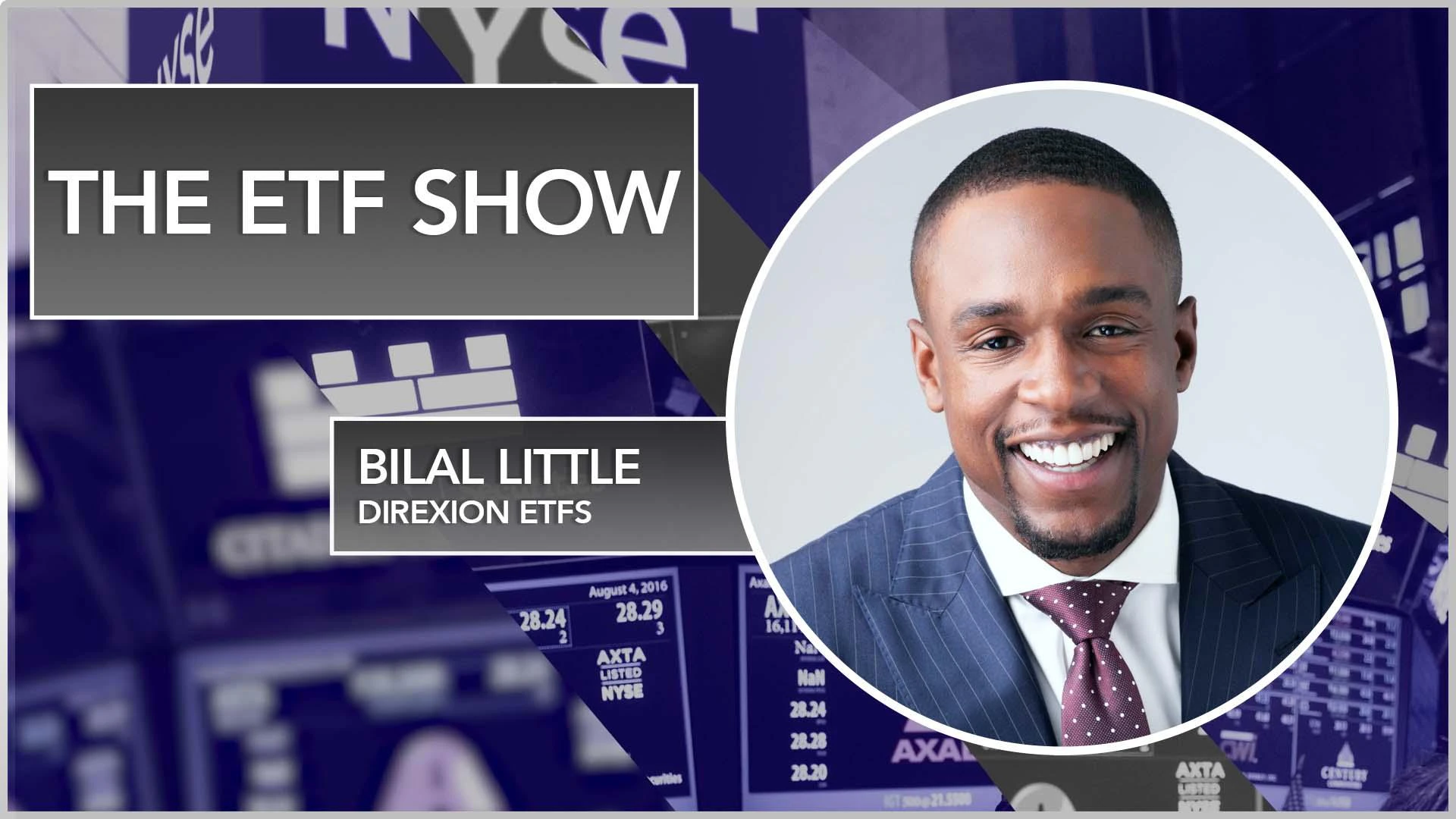
Asset TV
The ETF Show - The Evolution of Leveraged & Inverse ETFs
Leveraged and inverse ETFs have exploded in popularity over the past decade capturing more assets as retail traders seek to capture volatility.

Browse all educational columns



The ETF Industry Is Evolving Fast
From AI infrastructure to active strategies, the ETF landscape is shifting. Share your perspective in the 7th Annual Global ETF Survey and get exclusive early access to the final report.