Turn ETF ideas into real portfolios. Try the builder now →



ETF Growth vs. Headwinds: Can the Industry Keep Up?
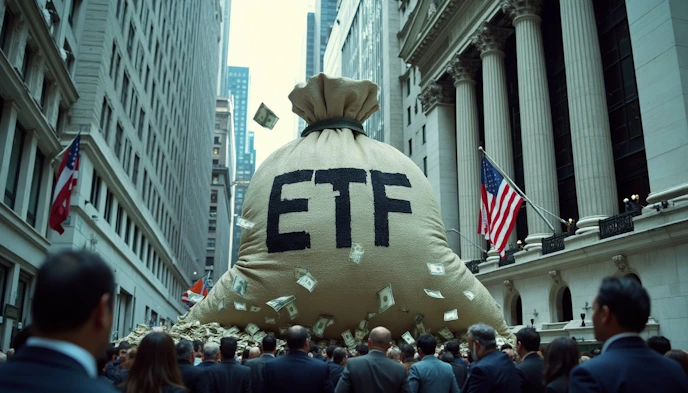
ETFs have skyrocketed into a $10 trillion market, but as the industry faces growing competition for talent, infrastructure strain, and liquidity risks, will it be able to sustain its rapid pace of growth?

Keep up with what matters in ETFs
Get timely ETF insights, market trends, and top ideas straight to your inbox.
Your newsletter subscriptions with us are subject to ETF Central's Privacy Policy and Terms and Conditions.
The ETF market has experienced extraordinary growth over the past decade, transforming into a massive ecosystem that continues to attract investors and issuers alike. With mutual fund conversions, the rapid expansion of bond funds, and the rise of actively managed ETFs, the industry is now a vital player in global finance. However, with this expansion comes a set of challenges that may serve as headwinds, threatening the pace of future growth.
Get data on 14,000+ ETFs
Access Trackinsight's reliable and comprehensive data with 500M+ points on 14,000+ ETFs.
The Rapid Rise of ETFs
In recent years, the ETF market has grown at a breakneck pace, surpassing $10 trillion in assets globally. A large factor driving this growth has been mutual fund conversions, as major asset managers have transitioned traditional mutual funds into ETFs. Additionally, the rise of actively managed ETFs has introduced new strategies, allowing portfolio managers greater flexibility in navigating market fluctuations. Fixed-income ETFs have also seen a surge in demand, as more investors turn to these funds to diversify portfolios with income-generating assets. These combined forces have helped fuel the industry’s remarkable expansion.
A Race for Resources and Human Capital
As the ETF industry continues its rapid expansion, competition for specialized resources—especially human capital—is intensifying. The complexities of ETF operations require professionals with expertise in portfolio management, capital markets, compliance, and trading. For example, capital markets teams play a critical role in managing relationships with market makers and APs, ensuring liquidity, and overseeing the primary and secondary markets.
As more ETFs enter the market, this specialized talent pool faces increasing strain. Firms are now competing fiercely to attract and retain these skilled professionals. Additionally, with the rapid increase in new ETF products, there comes a growing need for strong relationships with service providers, as these providers will experience a heightened workload. Maintaining smooth operations requires close collaboration and efficient coordination with service partners, who are essential in keeping the ETF ecosystem functioning seamlessly.
Without adequate expansion in both human and technological infrastructure, the ETF ecosystem risks slowing innovation and encountering challenges in launching and managing new products efficiently, particularly during periods of market stress.
Concentration of Market Makers and Potential Risks
Despite the rapid growth and diversity of the ETF market, liquidity provision within the ecosystem remains highly concentrated among a handful of large market-making firms. These giants control a significant portion of the market's liquidity, benefiting from economies of scale, relationships with exchanges, and issuers. Due to payment for order flow, these major players dominate the volume of ETF trading, keeping smaller market participants at a competitive disadvantage. However, this concentration can create risks.
During periods of market stress, such as the March 2020 pandemic-induced sell-off, liquidity in ETFs came under immense pressure. Large market makers struggled to meet liquidity demands as volatility surged and trading volumes skyrocketed. For instance, fixed-income ETFs faced particular challenges as the underlying bond markets dried up, forcing market makers to widen spreads or stop providing liquidity altogether. Some funds, especially those tied to less liquid assets, saw their prices diverge significantly from their net asset values (NAVs), amplifying investor anxiety and triggering sell-offs.
These scenarios highlight the fragility of a market overly reliant on a small group of liquidity providers. Should multiple ETFs face stress simultaneously, market makers may focus on the most liquid assets, leaving smaller or newer funds vulnerable to liquidity shortages and pricing inefficiencies.
Challenges in Expanding ETF Infrastructure
The rapid expansion of the ETF market also places strain on the underlying infrastructure, particularly in terms of capital usage by market participants like authorized participants (APs) and market makers. As more ETFs are launched, each new product requires additional capital for hedging and managing risk. Market makers face increasing pressure to balance their capital efficiently across a growing number of products, while also hedging against risks such as currency exposure or commodity price fluctuations.
As the market continues to expand, the ability of market makers and APs to provide liquidity and maintain orderly trading will depend on how well they can manage these capital constraints. Any failure to do so could result in reduced liquidity or higher volatility, impacting the performance of certain funds, particularly those that rely on less liquid underlying assets.
Possible Regulatory Headwinds
Another potential headwind for the ETF market is the regulatory landscape. The success of ETFs, particularly in terms of tax efficiency, has made them an attractive alternative to mutual funds. However, any changes to tax policy that reduce or eliminate the benefits of in-kind redemptions could dampen the appeal of ETFs. Similarly, shifts in regulations affecting the trading or structure of ETFs could create new obstacles for issuers and investors.
The Road Ahead
While the ETF market is poised for continued growth, the industry must overcome several key challenges to maintain its momentum. The concentration of market-making power, competition for talent and resources, and potential regulatory changes all pose risks that could disrupt the current trajectory. Furthermore, as more products enter the market, the capacity of APs, market makers, and liquidity providers will be stretched, necessitating new strategies and innovation to meet the evolving demands of investors.
The future of ETFs remains bright, but careful planning, risk management, and a robust expansion of the industry's infrastructure will be essential to navigating the challenges ahead.
About the Author
Nicholas Phillips | President of ETF Capital Markets Advisors LLC
With over 25 years of experience in ETF market making and capital markets, Nicholas Phillips is recognized as a subject matter expert in the ETF industry. He started his career spending the first ten years as a lead market maker for SIG and Goldman Sachs. At the helm of MCAP LLC's ETF Desk, Nicholas built and scaled the division, enhancing its operations through innovative pricing and risk models, and robust relationships with market makers and issuers. His tenure at Van Eck Associates as Director of ETF Capital Markets further solidified his expertise, managing critical facets of operations and deepening connections within the trading community. Beyond market making, Nicholas is an avid content creator, sharing insights that demystify complex market dynamics. He is keen on exploring board member roles that benefit from his extensive background and forward-thinking approach to ETF strategies. His dual US/Ireland citizenship complements his global perspective, enriching his professional endeavors in diverse markets.
Disclaimer
Please note this article is for information purposes only and does not in any way constitute investment advice. It is essential that you seek advice from a registered financial professional prior to making any investment decision.


Latest ETF News
See all ETF newsHow Much ETF Infrastructure Do You Really Need?

Are ETFs Getting Too Complicated? Not Necessarily, But Complexity Has a Cost

Form 4 Has 20 Transaction Codes. None Say "Section 351 ETF Swap"


Who Really Owns a White-Label ETF?

What If a Futures-Based ETF Never Had to Roll Again?

How Do You Build a Winning ETF Business?


 Advantages of ETFs over Mutual Funds1/6
Lower Costs
In this guide, we'll explore the advantages of ETFs over mutual funds, giving you valuable insights into why ETFs have gained significant popularity among investors like yourself.
Leveraged ETFs: Unlocking the Potential for Amplified Returns1/6
Understanding Leveraged ETFs
Explore leveraged ETFs: potential for amplified returns & risks. 5 ETFs to consider across equities, commodities & fixed income.
What is a Leveraged ETF?1/6
Introducing Leveraged and Inverse ETFs
In this guide, we'll dive into the world of leveraged ETFs, exploring their definition, mechanics, potential risks, and rewards.
Recent educational content

ETF Trends
ETF Industry KPIs October 5, 2026
This week’s KPI data overview highlights key metrics and trends shaping the ETF landscape.

ETF Trends
ETF Industry KPIs September 28, 2026
This week’s KPI data overview highlights key metrics and trends shaping the ETF landscape.
ETF Trends
ETF Industry KPIs September 22, 2026
This week’s KPI data overview highlights key metrics and trends shaping the ETF landscape.
First Look ETF
First Look ETF: Income, Corporate Arbitrage, and Growth and Value Investing
First Look ETF September 2026: iCapital, Mast Investments and North Square unpack new ETFs targeting monthly income, merger arbitrage and complementary growth and value exposure.

Browse all educational columns



Expert-Built ETF Portfolios, All in One Place
Don’t start from scratch. Discover ready-made ETF portfolios built by professionals to match different goals, timelines, and market views. Use them as inspiration or as a starting point for your own allocation.