From idea to ETF portfolio in minutes. Build yours now →



ETF Education Series: Exploring Options, Defined Outcomes, and Risk-Return Strategies with ETFs
Defined outcome ETFs provide structured investment strategies using options for risk management and upside potential.


Keep up with what matters in ETFs
Get timely ETF insights, market trends, and top ideas straight to your inbox.
Your newsletter subscriptions with us are subject to ETF Central's Privacy Policy and Terms and Conditions.
As market volatility and uncertainty persist, investors are increasingly turning to innovative financial instruments to manage risk while capturing potential upside. One such innovation is the rise of defined outcome ETFs, which leverage options-based strategies to create structured investment outcomes. In a recent webinar hosted by Chapman and Cutler LLP, experts from Innovator ETFs, Allianz, and Calamos discussed the evolution, benefits, and future of these ETFs.
Like what you're reading?
Stay in the loop — get the latest ETF insights: trends, analysis, and expert picks.
The Rise of Defined Outcome ETFs
Defined outcome ETFs first emerged in 2018, pioneered by Innovator ETFs. The concept was inspired by structured products traditionally available in institutional markets, now adapted for ETFs to provide retail and institutional investors with predictable return profiles. Since their inception, defined outcome ETFs have seen rapid growth, with hundreds of funds now available, covering multiple asset classes and strategies.
Matt Kaufman, head of ETFs at Calamos, highlighted that defined outcome ETFs fill a critical gap in portfolio construction. Traditionally, investors had to rely on bonds or structured notes for risk mitigation, but defined outcome ETFs now offer precisely defined buffers, floors, and capped upside potential—all within the tax-efficient and liquid ETF structure.
How Do Defined Outcome ETFs Work?
At their core, these ETFs utilize flexible exchange (FLEX) options to define a risk-return profile over a predetermined outcome period. For instance, a buffered ETF might protect against the first 15% of market losses while allowing for upside participation up to a cap.
Andrew Nelson of Innovator ETFs explained the mechanics:
- The ETF purchases a deep in-the-money call option to gain market exposure.
- It then sells a call option at a cap to help fund downside protection.
- It buys and sells put options to create a buffer, ensuring investors are protected against a specified level of losses.
This structure allows investors to have a transparent, rules-based approach to investing, mitigating downside risk while maintaining upside potential.
The Appeal of Defined Outcome Strategies
1. Risk Management: By using options to buffer downside risk or provide a protective floor, these ETFs are particularly attractive for retirees and conservative investors.
2. Tax Efficiency: Unlike bonds or structured products, defined outcome ETFs do not generate periodic taxable distributions. Gains are only realized upon selling, offering potential long-term tax advantages.
3. Market Flexibility: While originally designed for the S&P 500, these strategies now encompass Nasdaq, Russell 2000, international markets, and even cryptocurrencies. Kaufman noted that new Bitcoin-linked defined outcome ETFs are now entering the market.
4. Institutional Adoption: Historically used by retail investors, defined outcome ETFs are now gaining traction in institutional portfolios. The University of Connecticut's endowment recently allocated funds to a buffered ETF as an alternative to hedge funds.
Innovations in Defined Outcome ETFs
Beyond traditional buffered ETFs, firms are developing new structures:
- Accelerated ETFs: Providing 2x exposure up to a cap.
- Uncapped ETFs with floors: Allowing unlimited upside beyond a specified hurdle rate.
- Quarterly reset ETFs: Adjusting caps and buffers more frequently for better flexibility.
Charlie Champagne from Allianz emphasized the importance of continuous innovation, stating that future growth will be driven by expanded offerings, improved liquidity, and greater acceptance by financial advisors and institutions.
Challenges and Future Outlook
One major hurdle is the “complex product” designation assigned by regulators, which can create barriers to adoption. Despite this, industry leaders are focused on education and transparency to demystify these ETFs and highlight their role as risk-management tools rather than speculative instruments.
Looking ahead, the panelists were unanimous in their optimism. With increasing demand for structured investment solutions, defined outcome ETFs are poised for further growth, offering investors a compelling alternative to traditional portfolio construction strategies.
Please note this article is for information purposes only and does not in any way constitute investment advice. It is essential that you seek advice from a registered financial professional prior to making any investment decision.
Segments
See all
No specific market segments were tagged
Mentioned ETFs
No specific ETFs were tagged
Further reading

Latest ETF News
See all ETF news






 Advantages of ETFs over Mutual Funds1/6
Lower Costs
In this guide, we'll explore the advantages of ETFs over mutual funds, giving you valuable insights into why ETFs have gained significant popularity among investors like yourself.
Leveraged ETFs: Unlocking the Potential for Amplified Returns1/6
Understanding Leveraged ETFs
Explore leveraged ETFs: potential for amplified returns & risks. 5 ETFs to consider across equities, commodities & fixed income.
What is a Leveraged ETF?1/6
Introducing Leveraged and Inverse ETFs
In this guide, we'll dive into the world of leveraged ETFs, exploring their definition, mechanics, potential risks, and rewards.
Recent educational content

ETF Trends
ETF Industry KPIs September 8, 2026
This week’s KPI data overview highlights key metrics and trends shaping the ETF landscape.

ETF Trends
ETF Industry KPIs August 31, 2026
This week’s KPI data overview highlights key metrics and trends shaping the ETF landscape.
ETF Trends
ETF Industry KPIs August 24, 2026
This week’s KPI data overview highlights key metrics and trends shaping the ETF landscape.
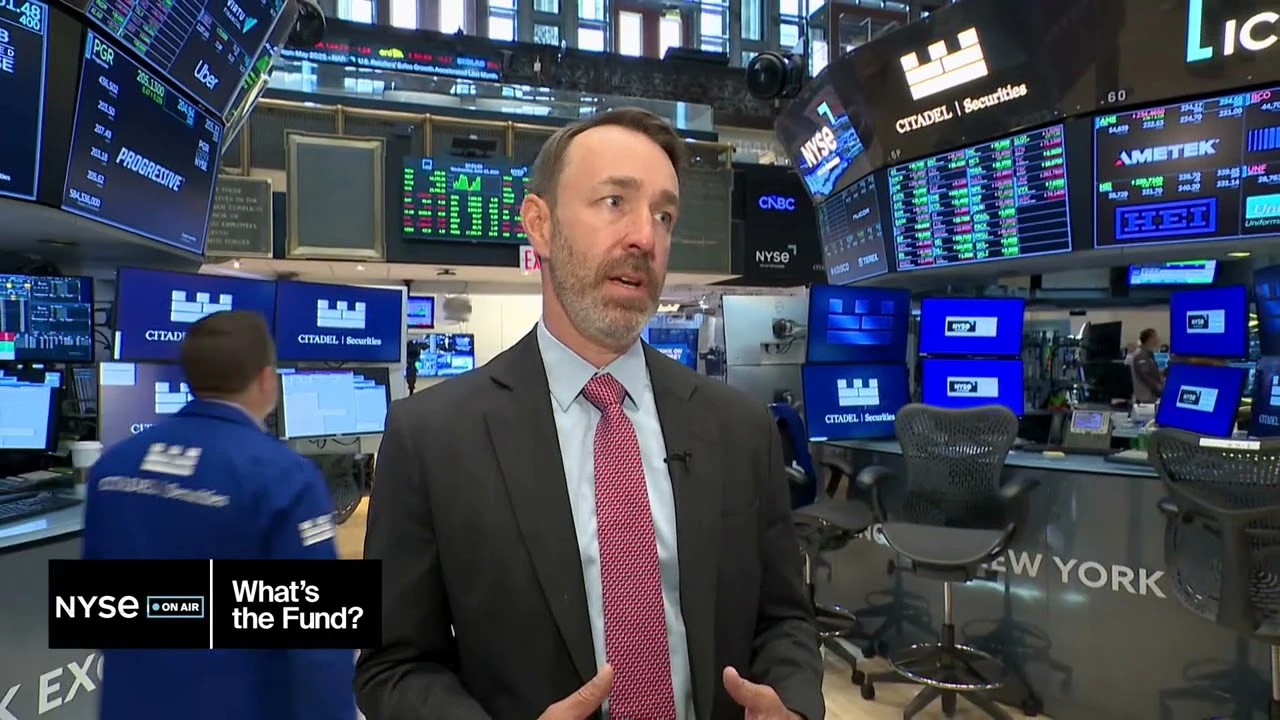
What’sTheFund
What's the Fund | Ocean Park Diversified Income ETF (DUKZ)
James St Aubin, Chief Investment Officer at Ocean Park Asset Management, discuss the DUKZ ETF, exposing investors to the whole spectrum of asset classes in the fixed income markets, through their rules-based process.

Browse all educational columns



Expert-Built ETF Portfolios, All in One Place
Don’t start from scratch. Discover ready-made ETF portfolios built by professionals to match different goals, timelines, and market views. Use them as inspiration or as a starting point for your own allocation.