Create, analyze, optimize your ETF portfolio. Start now →



ETF Comparison: Vanguard Total Stock Market ETF (VTI) Versus Vanguard S&P 500 ETF (VOO)
Here’s how this low-cost U.S. equity duo from Vanguard compare head-to-head.


Keep up with what matters in ETFs
Get timely ETF insights, market trends, and top ideas straight to your inbox.
Your newsletter subscriptions with us are subject to ETF Central's Privacy Policy and Terms and Conditions.
U.S. equity exposure is among the most affordable and tax-efficient for domestic investors when it comes to ETFs. Thus, it’s no surprise that this space is one of the most competitive in terms of options and fees.
Low-cost broad exposure to this segment is extremely easy to get, and Vanguard has some of the largest and most liquid ETF options out there.
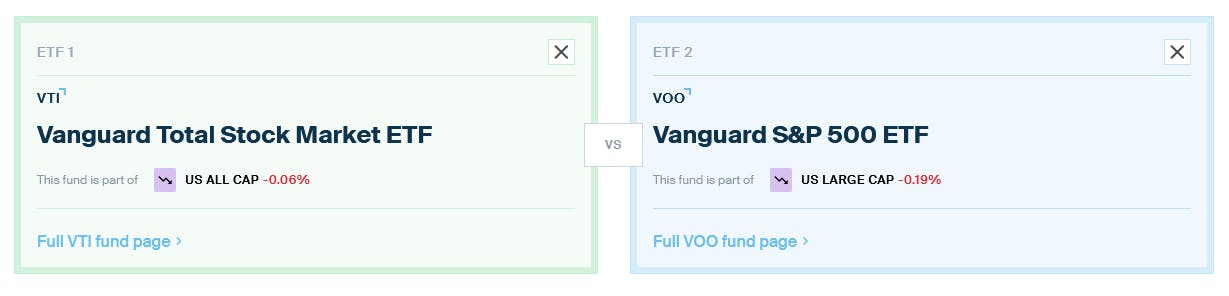
Today, we’ll analyze two of the best ones listed on the NYSE: the Vanguard Total Stock Market ETF (VTI) versus the Vanguard S&P 500 ETF (VOO). Here’s how they stack up, with data from ETF Central’s comparison tool.
Like what you're reading?
Stay in the loop — get the latest ETF insights: trends, analysis, and expert picks.
VTI vs VOO: Total cost of ownership
Both VTI and VOO are dirt-cheap, each with an expense ratio of 0.03%, or $3 annually for a $10,000 investment.

Their large assets under management (AUM), high volume, and liquid underlying holdings mean bid-ask spreads are very low as well—0.01% for VTI and 0.004% for VOO.
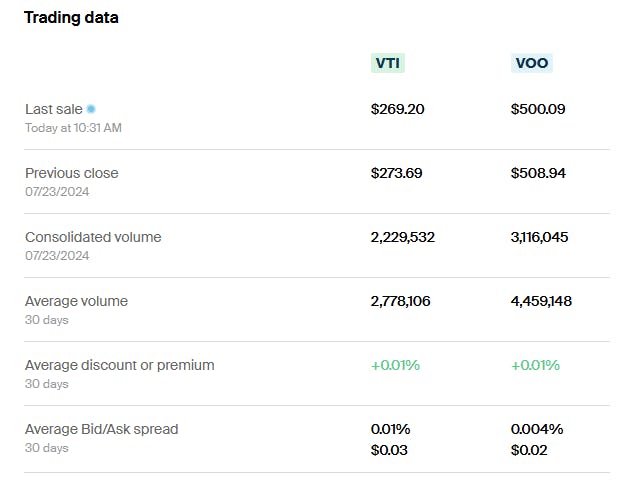
It’s a tie here—either way, you pay very little in terms of fees and implicit trading costs.
VTI vs VOO: Methodology and holdings
The index methodology is where the two ETFs begin to differ, albeit not markedly in terms of expected outcomes for investors.
VOO tracks the well-known S&P 500 index, comprising 500 large-cap U.S. stocks selected by an S&P committee. These stocks must meet certain criteria such as positive earnings, volume, available float, and sufficient market capitalization.
VTI, on the other hand, tracks the CRSP U.S. Total Market Index, a much broader benchmark with over 2,400 market-cap weighted holdings. This means that, unlike VOO, VTI includes mid-cap and small-cap exposure.

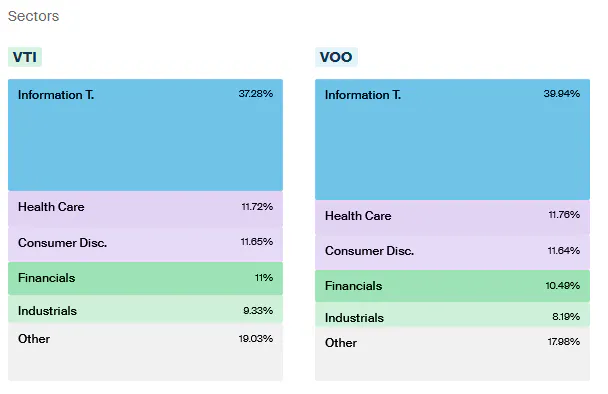
Practically, the sector compositions of VTI and VOO are more or less identical, though VOO has a slightly higher concentration in tech stocks, which tend to be large-caps.
Because both are market-cap weighted, VTI still has nearly identical top holdings as VOO but in lower weights, as some of the allocation is redistributed to mid and small caps.
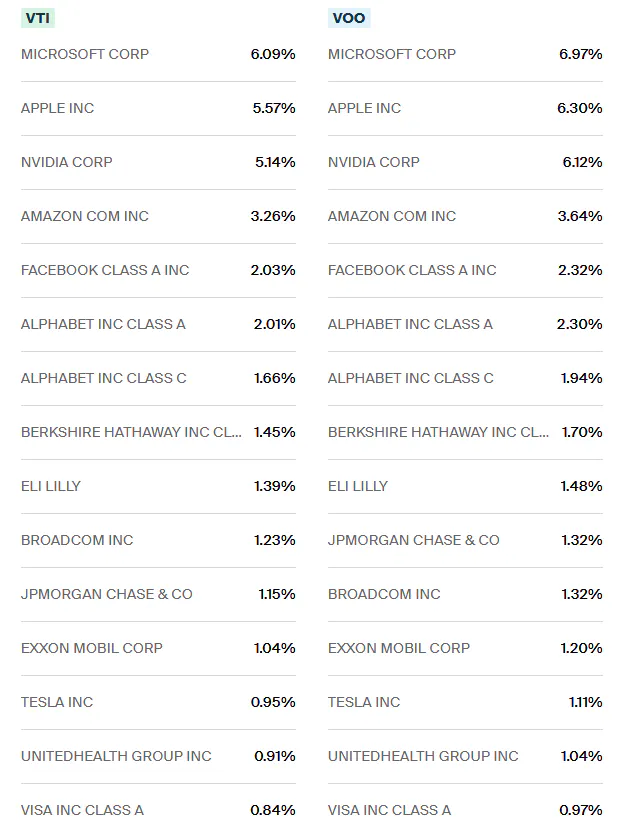
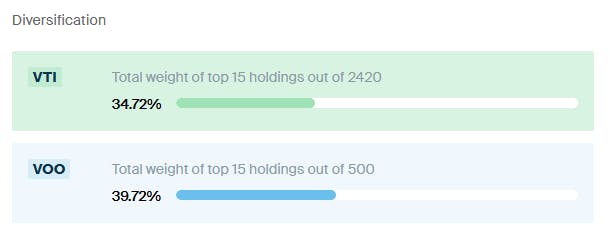
The end result is a slightly less top-heavy portfolio for VTI, with the top 15 holdings accounting for 34.72% of the portfolio versus 39.72% for VOO.
VTI vs VOO: Risk and return
Over the long term, we should expect VTI to outperform VOO due to the size effect, which posits that smaller companies (mid and small caps included in VTI) tend to offer higher returns compared to their larger counterparts due to their higher risk premium.
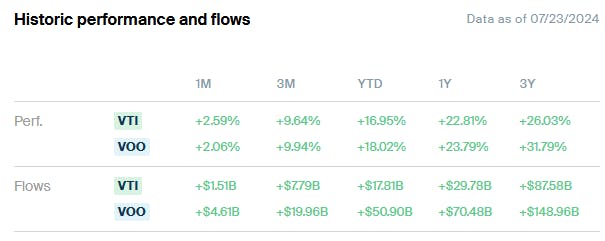
However, in recent years, the opposite has been true. Over the three-year, one-year, and year-to-date periods, VOO has outperformed VTI. This outperformance is attributed to the recent dominance of large-cap stocks, which have pulled ahead significantly.
Given that VOO holds a greater emphasis on these large-cap stocks, it has benefited more from this trend. Still, VTI’s performance remains commendable, and both ETFs continue to grow with steady inflows.
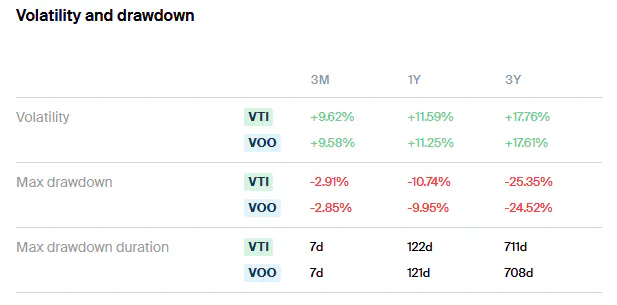
In terms of risk characteristics, both ETFs are virtually identical. Their volatility is very similar, and their maximum drawdown depth and duration are comparable, meaning both ETFs experience similar fluctuations and downturns.
Personally, I prefer VTI because the idea of “buying the haystack” for a mere 0.03% resonates with me, offering broad market exposure. However, VOO is equally commendable for investors focusing more on large-cap stocks.
Additionally, they serve as excellent tax loss harvesting partners due to their similar holdings and performance but different indexes. You can’t go wrong with either choice.
Please note this article is for information purposes only and does not in any way constitute investment advice. It is essential that you seek advice from a registered financial professional prior to making any investment decision.

Latest ETF News
See all ETF newsETF Comparison: State Street SPDR S&P 500 ETF Trust (SPY) Versus State Street SPDR Portfolio S&P 500 ETF (SPYM)

How Covered Call ETFs Evolved Through the Years

There's an ETF for That? Funds with a Social Impact

Can Gold Miner ETFs Be a Better Alternative to Leveraged Gold ETFs?



 Advantages of ETFs over Mutual Funds1/6
Lower Costs
In this guide, we'll explore the advantages of ETFs over mutual funds, giving you valuable insights into why ETFs have gained significant popularity among investors like yourself.
Leveraged ETFs: Unlocking the Potential for Amplified Returns1/6
Understanding Leveraged ETFs
Explore leveraged ETFs: potential for amplified returns & risks. 5 ETFs to consider across equities, commodities & fixed income.
What is a Leveraged ETF?1/6
Introducing Leveraged and Inverse ETFs
In this guide, we'll dive into the world of leveraged ETFs, exploring their definition, mechanics, potential risks, and rewards.
Recent educational content
What’sTheFund
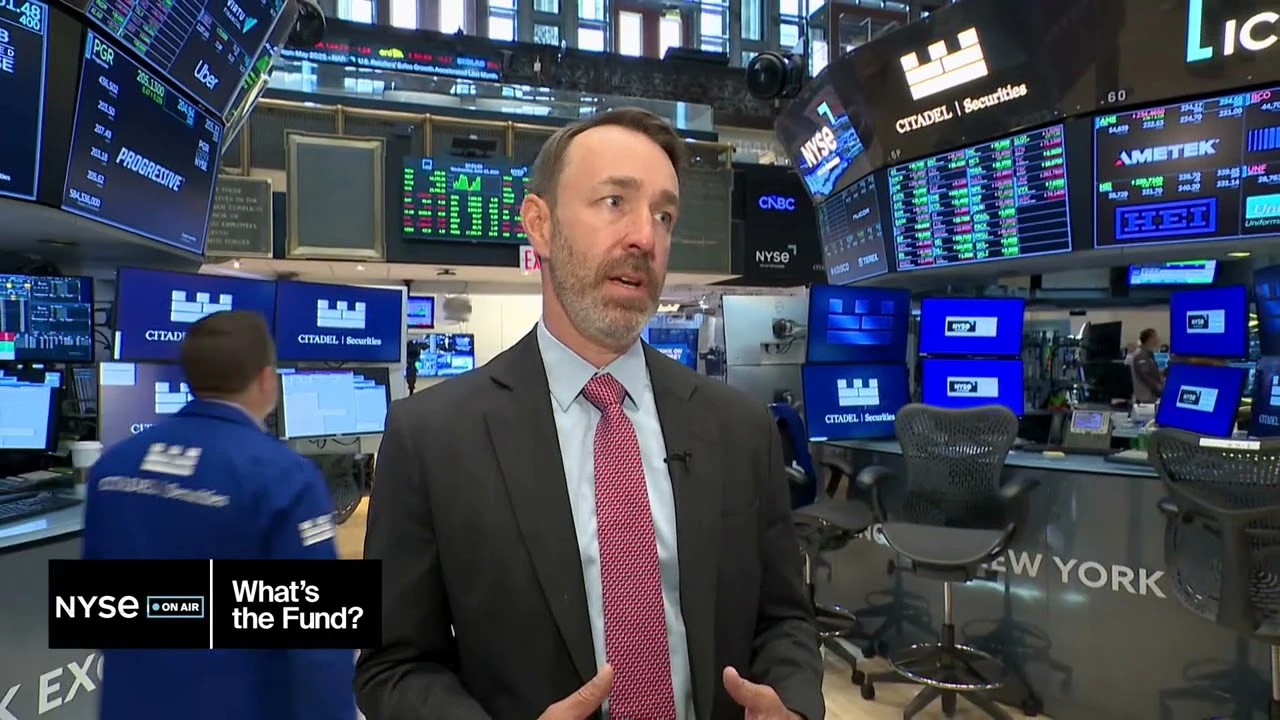
What's the Fund | Ocean Park Diversified Income ETF (DUKZ)
James St Aubin, Chief Investment Officer at Ocean Park Asset Management, discuss the DUKZ ETF, exposing investors to the whole spectrum of asset classes in the fixed income markets, through their rules-based process.

ETF Takeaway
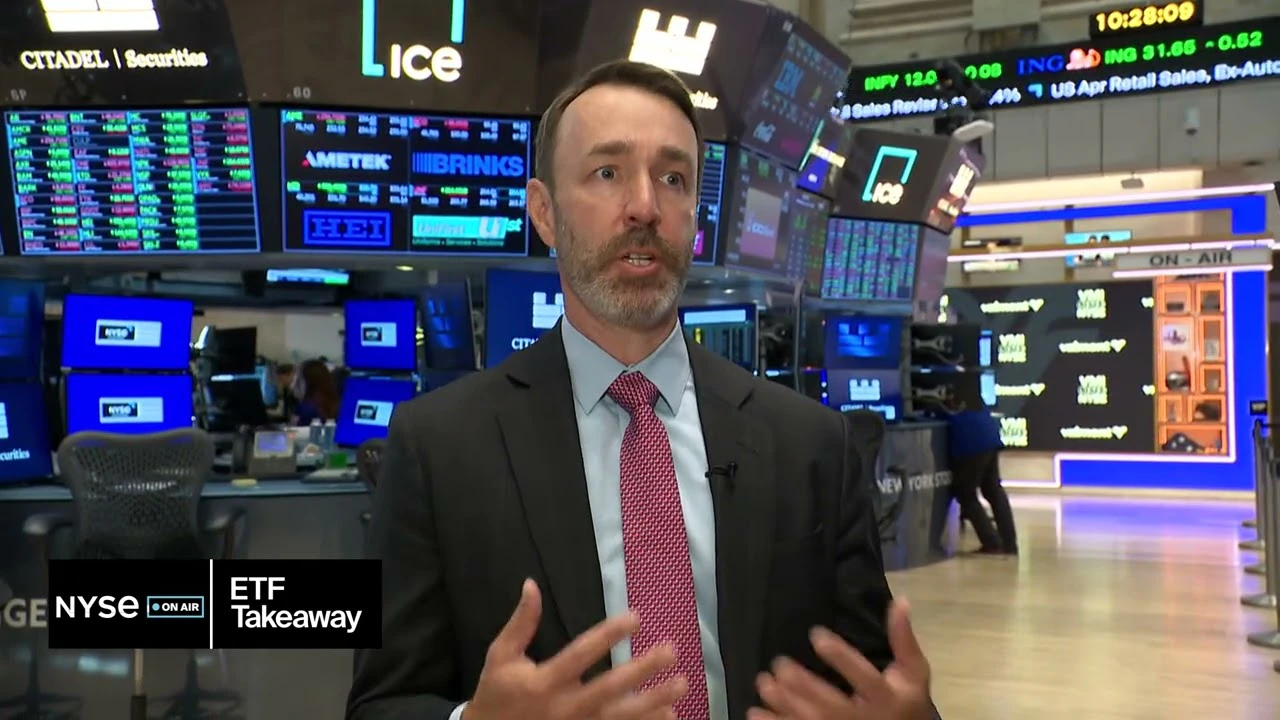
ETF Takeaway: Ocean Park Diversified Income ETF (DUKZ)
James St Aubin, Chief Investment Officer at Ocean Park Asset Management discusses the state of fixed income markets and how their DUKZ ETF, through their rules-based process, tactically allocates to 11 sectors of fixed income through underlying ETFs.

ETF Trends
ETF Industry KPIs August 17, 2026
This week’s KPI data overview highlights key metrics and trends shaping the ETF landscape:


First Look ETF
First Look ETF: Cycle Aware Investing & Next-Gen Nicotine Shifts
In this season 6 episode of First Look ETF, Stephanie Stanton examines the latest ETF marketplace trends with NYSE and guests.

Browse all educational columns



Build and Analyze Your ETF Portfolio Like a Pro
Create your own ETF portfolio in minutes and instantly see allocations, exposures, performance, and risk. Visualize diversification across asset classes, regions, and sectors. Stress-test ideas, compare benchmarks, and refine your strategy with professional-grade analytics.