From idea to ETF portfolio in minutes. Build yours now →



ETF Central Guide: All You Need to Know About Factor Investing
Here's a breakdown of the six major MSCI factors investors can target, plus ETFs to put each in play.


Keep up with what matters in ETFs
Get timely ETF insights, market trends, and top ideas straight to your inbox.
Your newsletter subscriptions with us are subject to ETF Central's Privacy Policy and Terms and Conditions.
The debate between passive and active ETFs often grabs the spotlight in investment discussions, but there's a third category that doesn't get as much attention: factor ETFs.
This segment offers a wide variety of options—there's no shortage of different factors that have been researched, proposed, and sometimes debunked.
Today, we're going to cover the six main MSCI factors, explaining what they are, how they work, and highlighting some ETFs that can help you capture their performance in affordable and liquid ways.
Like what you're reading?
Stay in the loop — get the latest ETF insights: trends, analysis, and expert picks.
What is a factor?
According to MSCI, a factor is defined as "any characteristic that helps explain the long-term risk and return performance of an asset."
These are not random or fleeting traits. They are systematic, observable, testable, and long-lasting attributes that help to explain why a stock performs the way it does over extended periods.
In fact, you likely already have exposure to one of the oldest and most well-known factors—the market factor. Also known as market risk or beta, this factor is fundamental in understanding the behavior of stocks. It explains why, over the long run, stocks should outperform bonds.
The market factor captures the additional risk (and potential return) of investing in stocks over safer assets like bonds, reflecting the general consensus that taking on more risk should, theoretically, be rewarded with higher returns.
The minimum volatility factor
This approach is distinct from a simple "low volatility" factor, which typically involves screening for stocks that have historically exhibited low beta. Beta measures a stock's volatility relative to the market; thus, a low volatility strategy based on beta involves selecting stocks that are less reactive to market swings.
In contrast, the minimum volatility factor considers how different stocks interact within a portfolio to achieve lower overall volatility, without heavily weighting any particular sector.
This ensures that the portfolio remains sector-neutral, avoiding heavy concentration in traditionally less volatile industries like utilities or consumer staples, which could skew performance or expose investors to sector-specific risks.
For those interested in applying this strategy, the iShares MSCI USA Min Vol Factor ETF
Explore all minimum volatility ETFs →
The dividend yield factor
This factor isn't solely on the current yield a company offers, but rather on the sustainability and growth potential of those dividends. The ability of a company to continue returning capital to shareholders and potentially increase those returns over time is a pivotal consideration.
This approach is important because dividends are a crucial component of total returns, especially in low-interest-rate environments. They also influence how companies manage their internal capital allocation strategies, balancing investment in growth with shareholder returns.
Stable and growing dividends can signal a company's financial health and a commitment to shareholder value, making it an attractive investment.
For investors interested in this factor, the Xtrackers MSCI EAFE High Dividend Yield Equity ETF
Explore all dividend yield factor ETFs →
The quality factor
The quality factor strategically targets high-quality stocks by focusing on key financial indicators that collectively provide a comprehensive view of a company's operational efficiency and financial health. MSCI quality indexes use three - debt‑to-equity, return-on-equity and earnings variability.
A lower debt-to-equity ratio suggests a company has managed its growth without overly relying on borrowing, indicating financial stability and potentially less risk during economic downturns.
High return-on-equity is often a sign of effective management and operational efficiency, showing that the company can generate substantial profits relative to the equity held by shareholders.
Lastly, low earnings variability indicates consistent and reliable earnings, which is especially valuable in times of market volatility, as it suggests the company can maintain its performance regardless of economic fluctuations.
By amalgamating these traits, the quality factor provides a robust framework for identifying stocks that are not only performing well but are also managed prudently and capable of sustaining their performance over the long term.
For those looking to implement this strategy, the iShares Edge MSCI Intl Quality Factor ETF
Explore all quality factor ETFs →
The momentum factor
Momentum in investing refers to the tendency of securities to continue performing in a similar manner as they have in the recent past. Essentially, if an asset has been increasing in value, it tends to keep rising, and if it's been falling, it often continues to decline.
This phenomenon can be systematically identified and harnessed through a rules-based approach known as the momentum factor. By following a structured methodology, investors can select securities that demonstrate strong past performance, adjusted for risk, with the expectation that the trend will persist.
However, the momentum strategy is not without its challenges. Sudden market reversals can quickly erode gains, and the nature of momentum investing often involves high turnover, which can increase transaction costs and tax implications.
For those interested in exploring this strategy, the iShares Edge MSCI Intl Momentum Factor ETF
Explore all momentum factor ETFs →
The value factor
The value factor in investing is a strategy that involves selecting stocks that appear to be undervalued compared to their intrinsic value, but there's significant variation here.
The MSCI's approach to the value factor uses a combination of three key financial metrics to assess stocks: Forward Price to Earnings (Fwd P/E), Enterprise Value over Operating Cash Flows (EV/CFO), and Price to Book Value (P/B). Each of these metrics provides a different perspective on what constitutes 'value' in a stock.
Forward Price to Earnings (Fwd P/E) measures a stock's current price relative to its expected earnings per share over the next 12 months. A lower Fwd P/E suggests that a stock may be undervalued compared to its future earnings potential.
Enterprise Value over Operating Cash Flows (EV/CFO) offers an assessment of a company's total valuation (factoring in debt and excluding cash) compared to the cash it generates from operations. This ratio highlights how efficiently a company is generating cash from its operational activities relative to its total value.
Price to Book Value (P/B) compares a stock's market value to its book value. A lower P/B ratio can indicate that a stock is undervalued, based on the assets the company holds on its balance sheet.
The value factor does not rely on a single metric but rather uses a composite of all three to identify undervalued stocks. This multifaceted approach helps in capturing a broader spectrum of value characteristics, aiming to select stocks that are most likely to provide superior returns relative to their current valuations.
For investors looking to implement this strategy, the iShares MSCI USA Value Factor ETF
Explore all value factor ETFs →
The size factor
The size factor in investing focuses on capitalizing on the performance differences between small-cap and large-cap stocks. According to MSCI, small-cap stocks are considered "pro-cyclical," meaning they tend to perform well during periods of economic expansion.
This relationship exists because small-cap companies are often nimbler and can grow much faster in favorable economic conditions compared to their larger counterparts.
However, with the potential for higher returns comes higher risk, and small caps are inherently riskier. This increased risk leads to what's known as the "small-cap premium," where investors expect higher returns as compensation for taking on greater volatility and uncertainty.
Historically, small caps have rewarded investors for this risk, typically outperforming large caps during strong economic cycles. Yet, the inherent volatility of small caps means they can also suffer more during economic downturns, making them a more pronounced cyclical investment choice.
For investors looking to exploit the size factor with a focus on minimizing currency risk, the iShares Currency Hedged MSCI EAFE Small-Cap ETF
Explore all size factor ETFs →
Please note this article is for information purposes only and does not in any way constitute investment advice. It is essential that you seek advice from a registered financial professional prior to making any investment decision.


Latest ETF News
See all ETF newsCould Water ETFs Be the Next AI Bottleneck Trade?

What is a Boomer Candy ETF?

ETF Comparison: NEOS Nasdaq-100 High Income ETF (QQQI) Versus Goldman Sachs Nasdaq-100 Premium Income ETF (GPIQ)





 Advantages of ETFs over Mutual Funds1/6
Lower Costs
In this guide, we'll explore the advantages of ETFs over mutual funds, giving you valuable insights into why ETFs have gained significant popularity among investors like yourself.
Leveraged ETFs: Unlocking the Potential for Amplified Returns1/6
Understanding Leveraged ETFs
Explore leveraged ETFs: potential for amplified returns & risks. 5 ETFs to consider across equities, commodities & fixed income.
What is a Leveraged ETF?1/6
Introducing Leveraged and Inverse ETFs
In this guide, we'll dive into the world of leveraged ETFs, exploring their definition, mechanics, potential risks, and rewards.
Recent educational content

ETF Trends
ETF Industry KPIs September 8, 2026
This week’s KPI data overview highlights key metrics and trends shaping the ETF landscape.

ETF Trends
ETF Industry KPIs August 31, 2026
This week’s KPI data overview highlights key metrics and trends shaping the ETF landscape.
ETF Trends
ETF Industry KPIs August 24, 2026
This week’s KPI data overview highlights key metrics and trends shaping the ETF landscape.
What’sTheFund
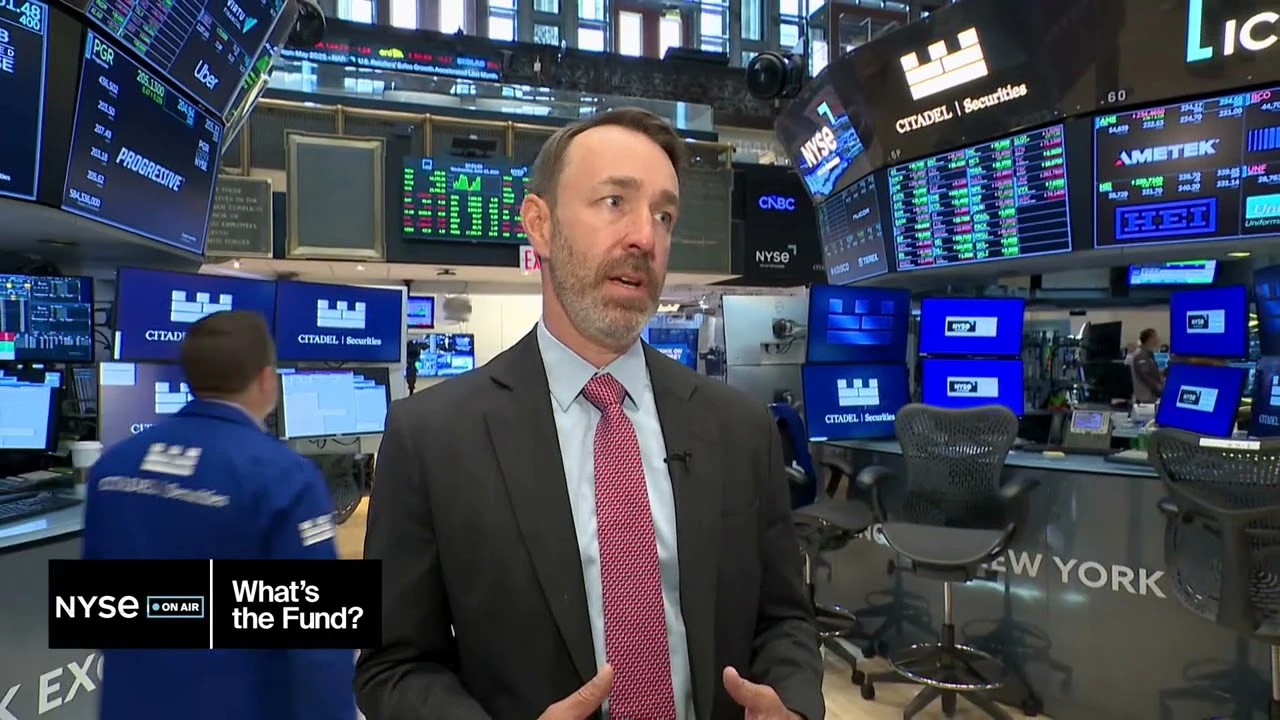
What's the Fund | Ocean Park Diversified Income ETF (DUKZ)
James St Aubin, Chief Investment Officer at Ocean Park Asset Management, discuss the DUKZ ETF, exposing investors to the whole spectrum of asset classes in the fixed income markets, through their rules-based process.

Browse all educational columns



Expert-Built ETF Portfolios, All in One Place
Don’t start from scratch. Discover ready-made ETF portfolios built by professionals to match different goals, timelines, and market views. Use them as inspiration or as a starting point for your own allocation.