Open Now: The Global ETF Survey Take the Survey →



ETF Arms Race Heats Up
Vanguard's ETF presence continues to grow aggressively. Here's a look at the current industry landscape.


Keep up with what matters in ETFs
Get timely ETF insights, market trends, and top ideas straight to your inbox.
Your newsletter subscriptions with us are subject to ETF Central's Privacy Policy and Terms and Conditions.
The two giants of the U.S. asset management industry, Vanguard and BlackRock continue to duke it out for market share in the increasingly crowded ETF space, as the former once again surpassed $2 trillion in assets under management, or AUM earlier this month.
Despite incursions by independent ETF start-ups aided by white-label services, expansions by boutique thematic providers, or even expansions from the asset management arms of bulge bracket banks, Vanguard and Blackrock continue to dominate the ETF industry.
The latter continues to lead the U.S. ETF industry at over $2 trillion in AUM spanning a total of 398 U.S. listed ETFs, ranging from index ETFs to specialty sector, industry, ESG, factor, and actively managed ETFs.
In contrast, Vanguard's lineup is smaller, with just 81 ETFs, the majority of which focus on low-cost, broad-market index exposure with a smattering of sector, factor, and fixed income funds.
Here's a high-level view of where the two titans stack up in the contemporary ETF landscape in terms of some notable ETFs each has to offer.
The ETF Industry Is Evolving Fast
From AI infrastructure to active strategies, the ETF landscape is shifting. Share your perspective in the 7th Annual Global ETF Survey and get exclusive early access to the final report.
Vanguard vs. BlackRock: Flagship Equity Funds
According to the ETF Central Screener, the top equity ETFs in Vanguard and BlackRock's lineup are the Vanguard Total Stock Market ETF (VTI) and the iShares Core S&P 500 ETF (IVV) respectively.
VTI is the ETF share class of Vanguard's existing total stock market mutual fund VTSAX. Investors who subscribe to Vanguard and John Bogle's passive indexing philosophy have poured a collective $271 billion into this fund thanks to its ability to deliver low-cost, broadly diversified U.S. market exposure.
On the other hand, IVV has the leg up in terms of AUM and inception date, currently sitting at $293 billion and having been around since May 2000. The ETF tracks none other than the S&P 500 index and has swelled thanks to its rock-bottom expense ratio of 0.03%.
While traders may still prefer the 30-year-old SPDR S&P 500 ETF (SPY) for its high liquidity and options chain, long-term investors continue to flock to IVV thanks to its low fee. With SPY charging a 0.09% expense ratio, IVV offers a competitive alternative at a third of that price.
Another bonus: Because IVV and VTI track different indexes, yet have a higher degree of overlapping holdings and very similar historical returns, investors can use them as tax-loss harvesting pairs.
Vanguard vs BlackRock: Flagship Fixed Income Funds
The two providers also duke it out on the fixed income side too, with a variety of passive and active funds spanning aggregate, corporate, municipal, mortgage-backed, TIPS, and Treasury bonds. Both Blackrock and Vanguard offer ETFs that provide exposure to varying maturities. However, the former's bond ETF lineup is larger with more exotic offerings like floating-rate, senior loan, and high-yield.
That being said, the flagship bond ETFs of both providers share a common thread: Both the Vanguard Total Bond Market ETF (BND) and the iShares Core U.S. Aggregate Bond ETF (AGG) track the same broad swathe of U.S. Treasury, agency, and investment-grade corporate bonds at a low cost.
Because both ETFs are benchmarked to the Bloomberg U.S. Aggregate Bond Index, their portfolio characteristics are similar: an average duration of around 6.3 years, an average yield-to-maturity of around 4.5%, and identical expense ratios of 0.03%. Both ETFs hold the majority of their portfolio in Treasury and government agency bonds, with the rest comprising investment-grade corporate bonds.
As such, both ETFs tend to be used as "goldilocks" bond holdings by retail investors trying to implement a passive indexing strategy – they're "just right" in terms of credit quality, duration, and yield for the average portfolio. For those requiring specialty exposure, like access to longer-duration Treasurys, TIPS, or short-term corporate bonds, both Vanguard and BlackRock have options to augment BND and AGG.
All data as of 10 March 2023.
Please note this article is for information purposes only and does not in any way constitute investment advice. It is essential that you seek advice from a registered financial professional prior to making any investment decision.
Mentioned ETFs
Further reading
Latest ETF News
See all ETF newsMoneyShow Chart of the Day 7/16/26: Good News/Bad News on Inflation (and the Fed)


MoneyShow Chart of the Day 7/1/26: The H1 Scorecard – and What Comes Next

MoneyShow Chart of the Day 6/22/26: Are World Cup Videos Helping US Companies Clean Up?

MoneyShow Chart of the Day 6/3/26: AI. AI. AI. (And a Handful of Other Stocks, Too)




 Advantages of ETFs over Mutual Funds1/6
Lower Costs
In this guide, we'll explore the advantages of ETFs over mutual funds, giving you valuable insights into why ETFs have gained significant popularity among investors like yourself.
Leveraged ETFs: Unlocking the Potential for Amplified Returns1/6
Understanding Leveraged ETFs
Explore leveraged ETFs: potential for amplified returns & risks. 5 ETFs to consider across equities, commodities & fixed income.
What is a Leveraged ETF?1/6
Introducing Leveraged and Inverse ETFs
In this guide, we'll dive into the world of leveraged ETFs, exploring their definition, mechanics, potential risks, and rewards.
Recent educational content

ETF Trends
ETF Industry KPIs July 13, 2026
This week’s KPI data overview highlights key metrics and trends shaping the ETF landscape.

First Look ETF
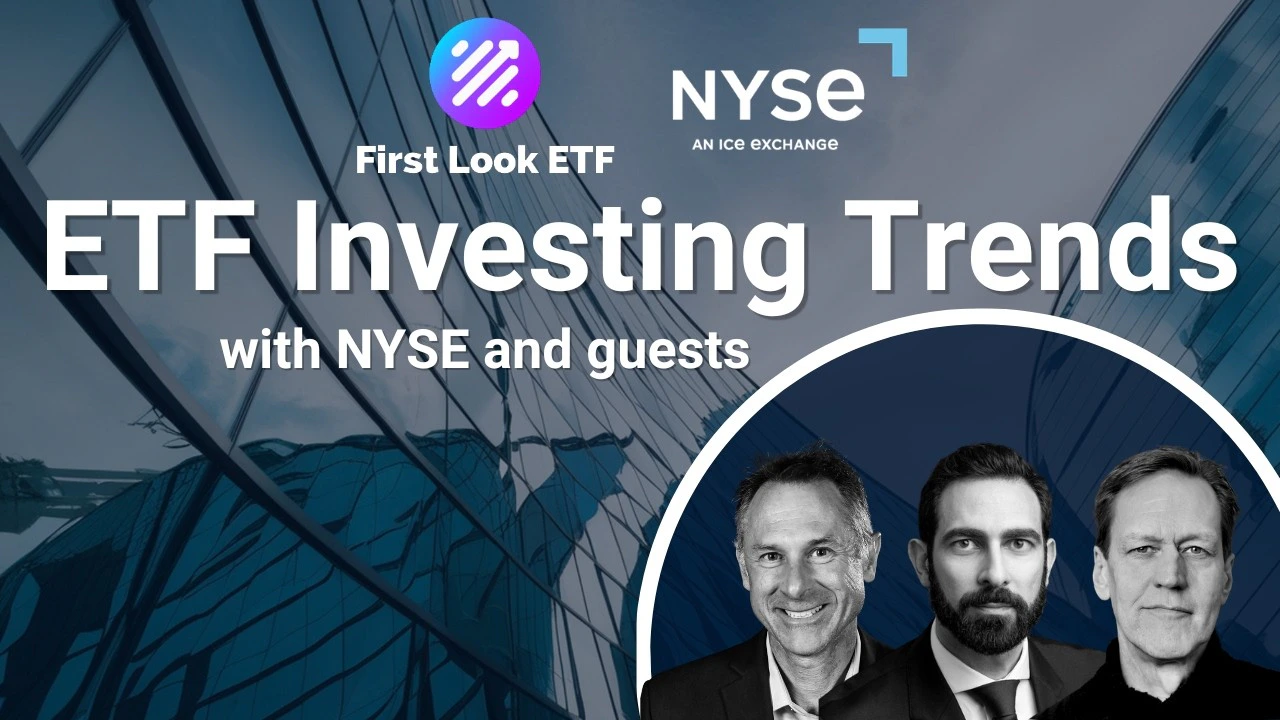
First Look ETF: Cash Deployment, Bond, and Hedged ETFs
In this season 6 episode of First Look ETF, Stephanie Stanton examines the latest ETF marketplace trends with NYSE and guests.

ETF Trends
ETF Industry KPIs July 6, 2026
This week’s KPI data overview highlights key metrics and trends shaping the ETF landscape.
Asset TV
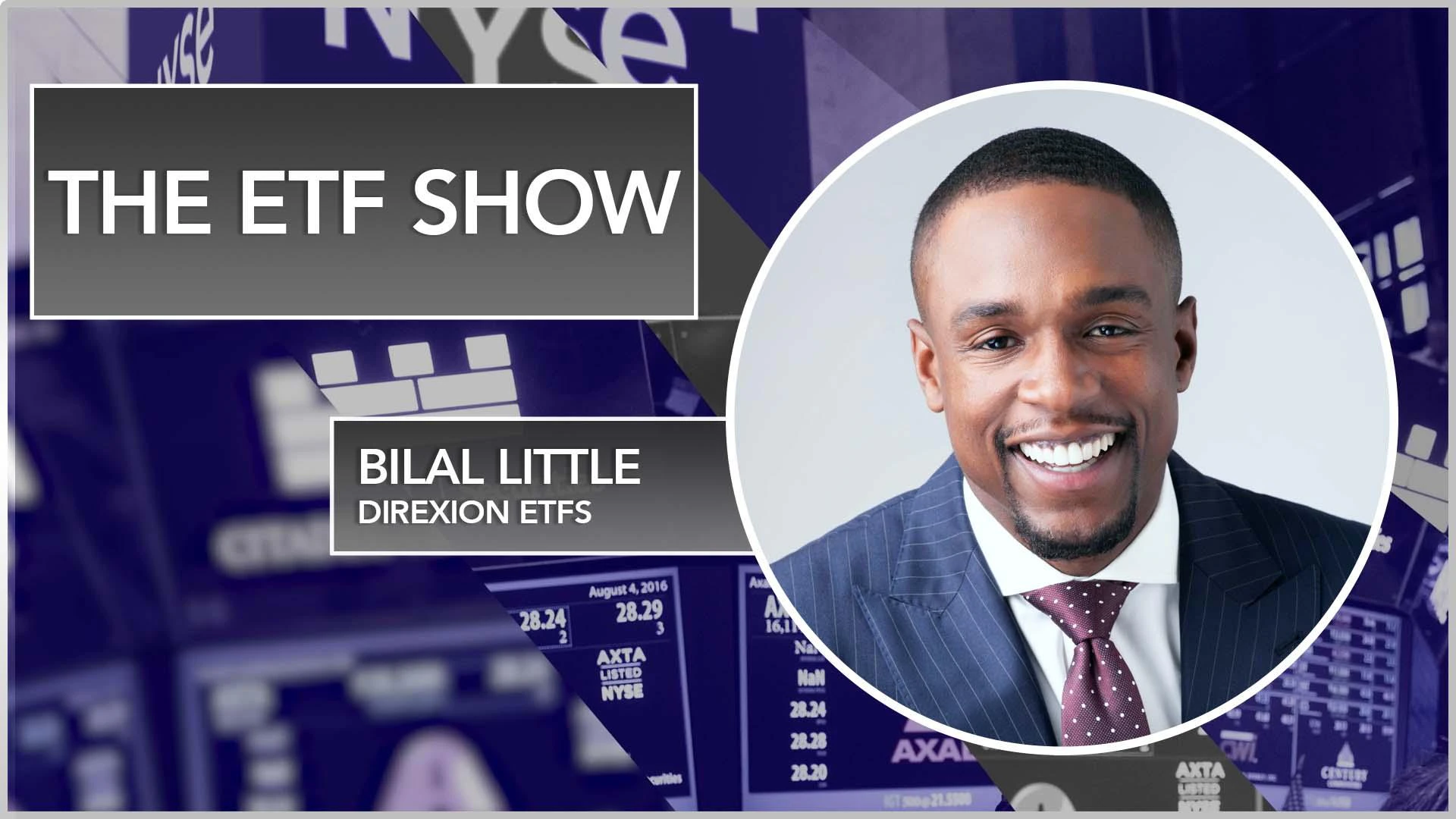
The ETF Show - The Evolution of Leveraged & Inverse ETFs
Leveraged and inverse ETFs have exploded in popularity over the past decade capturing more assets as retail traders seek to capture volatility.

Browse all educational columns



Expert-Built ETF Portfolios, All in One Place
Don’t start from scratch. Discover ready-made ETF portfolios built by professionals to match different goals, timelines, and market views. Use them as inspiration or as a starting point for your own allocation.