Turn ETF ideas into real portfolios. Try the builder now →



ESG ETFs – Investing in sustainability
In this article we discuss the growth of ESG ETFs, their benefits and some examples.


Keep up with what matters in ETFs
Get timely ETF insights, market trends, and top ideas straight to your inbox.
Your newsletter subscriptions with us are subject to ETF Central's Privacy Policy and Terms and Conditions.
2020 was a year of many changes, including the onset of the covid-19 pandemic and a historic market crash and liquidity crunch. However, 2020 was also an inflection point for ESG prominence. With ESG coming into greater focus, many ETF providers have capitalized on providing investors with the ability to invest in more sustainable companies easily through exchange-traded funds.
Like what you're reading?
Stay in the loop — get the latest ETF insights: trends, analysis, and expert picks.
What are ESG ETFs?
ESG stands for Environmental, Social, and Governance. These three pillars of ESG are the bedrock of a new investment consideration in which investors do not solely focus on shareholder returns when investing. They also invest in sustainable companies.
Environmental: climate change, pollution and waste, limiting environmental damage and overuse of natural resources
Social: human capital, community engagement, social opportunities and product liability
Governance: corporate governance, corporate diversity, behavior, transparency, and shareholder alignment
As mentioned, 2020 saw a greater focus on responsible investing and the start of more significant flows of capital from institutional investors toward sustainable investments. And for retail investors, one of the most effective ways to engage in responsible investing is through the use of ESG ETFs.
An ETF is a basket of securities (stocks, bonds, etc.) that trades on a financial exchange, providing a flexible and low-cost method of constructing a diversified portfolio. An ESG ETF focuses on holding securities that are more aligned with ESG principles by screening for various metrics, such as:
On the environmental side, investments can be monitored for GHG emissions, energy use, water use, etc.
On the social side, investments can be monitored for diversity, community engagement, etc.
On the governance side, board diversity and shareholder alignment can be measured
Why invest in ESG ETFs?
Historically, investors have focused on investing in securities that will generate the highest returns. One of the main benefits of adhering to ESG investments is that investors can invest in companies or securities that are involved with making the world a better and more sustainable place. ESG investors can choose to exclude tobacco companies or weapons manufacturers and focus on fossil-fuel-free and socially diverse companies instead.
Another benefit of ESG investing is the potential for improved returns over the longer term. With many forward-thinking companies already adapting their business models for sustainable growth, they are likely to be more resilient over time and able to capitalize on growing investor preferences for sustainable characteristics that are largely overlooked in traditional financial analysis.
Examples of ESG ETFs
ESG ETFs can provide a broad form of diversification since they are not anchored to a single sector or asset class.
Some examples of popular ESG ETFs include:
ESGU – iShares ESG Aware MSCI USA ETF
- AUM: $20.3B
- 1mo Performance: -10.4%
- 1mo Flows: +$29MM
ESGV – Vanguard ESG U.S. Stock ETF
- AUM: $5.4B
- 1mo Performance: -10.2%
- 1mo Flows: -$2MM
ICLN – iShares Global Clean Energy ETF
- AUM: $5B
- 1mo Performance: -13.1%
- 1mo Flows: +$22MM
Data for this article is as of September 28, 2022.
Please note this article is for information purposes only and does not constitute investment advice.
Mentioned ETFs
Further reading


Latest ETF News
See all ETF news

3 uranium ETFs to watch as demand for clean energy rises


Investing in hydrogen ETFs to combat climate change


 Advantages of ETFs over Mutual Funds1/6
Lower Costs
In this guide, we'll explore the advantages of ETFs over mutual funds, giving you valuable insights into why ETFs have gained significant popularity among investors like yourself.
Leveraged ETFs: Unlocking the Potential for Amplified Returns1/6
Understanding Leveraged ETFs
Explore leveraged ETFs: potential for amplified returns & risks. 5 ETFs to consider across equities, commodities & fixed income.
What is a Leveraged ETF?1/6
Introducing Leveraged and Inverse ETFs
In this guide, we'll dive into the world of leveraged ETFs, exploring their definition, mechanics, potential risks, and rewards.
Recent educational content

ETF Trends
ETF Industry KPIs September 8, 2026
This week’s KPI data overview highlights key metrics and trends shaping the ETF landscape.

ETF Trends
ETF Industry KPIs August 31, 2026
This week’s KPI data overview highlights key metrics and trends shaping the ETF landscape.
ETF Trends
ETF Industry KPIs August 24, 2026
This week’s KPI data overview highlights key metrics and trends shaping the ETF landscape.
What’sTheFund
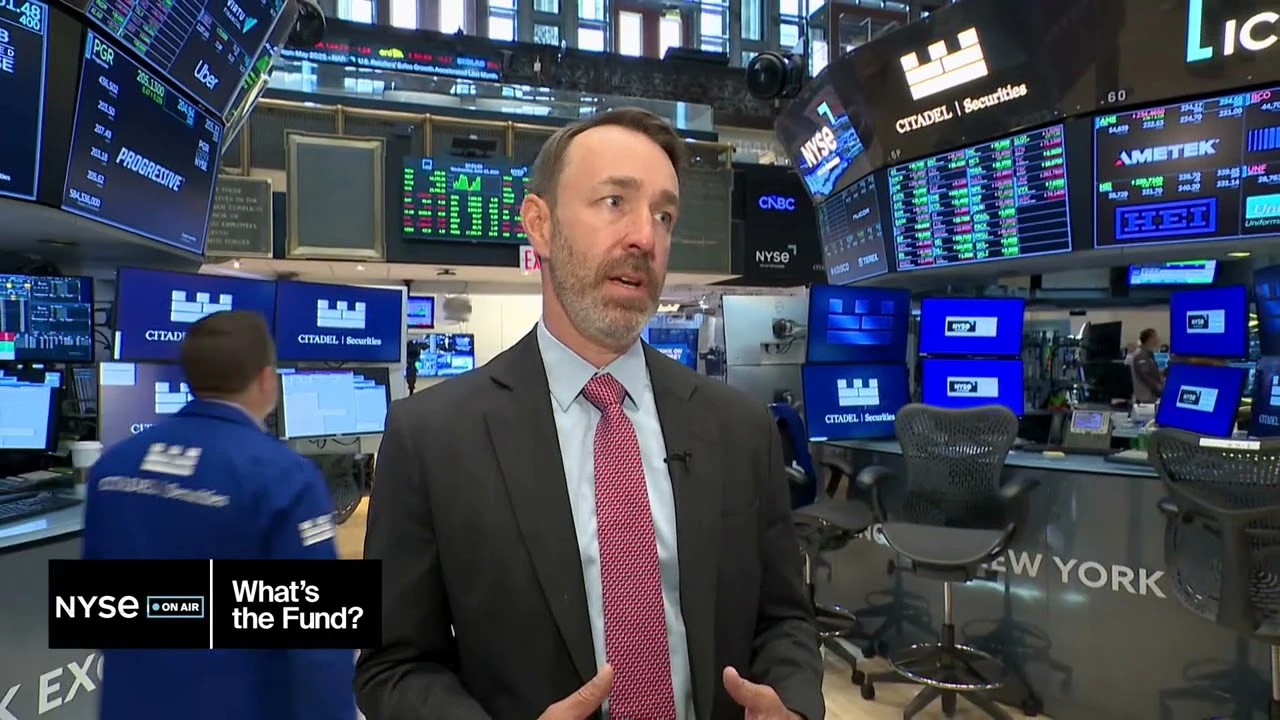
What's the Fund | Ocean Park Diversified Income ETF (DUKZ)
James St Aubin, Chief Investment Officer at Ocean Park Asset Management, discuss the DUKZ ETF, exposing investors to the whole spectrum of asset classes in the fixed income markets, through their rules-based process.

Browse all educational columns



Expert-Built ETF Portfolios, All in One Place
Don’t start from scratch. Discover ready-made ETF portfolios built by professionals to match different goals, timelines, and market views. Use them as inspiration or as a starting point for your own allocation.