Turn ETF ideas into real portfolios. Try the builder now →



Equity Investing 101: Understanding U.S. Large-Cap Growth ETFs
ETFs holding large-cap U.S. growth stocks can be a tax-efficient core holding for a risk-tolerant investor.


Keep up with what matters in ETFs
Get timely ETF insights, market trends, and top ideas straight to your inbox.
Your newsletter subscriptions with us are subject to ETF Central's Privacy Policy and Terms and Conditions.
"Apple, Microsoft, Alphabet, Tesla, Amazon" – these names are not only familiar from dominating market headlines and leading notable indexes like the S&P 500, but they also share a common characteristic: they are all large-cap growth stocks.
These stocks have been at the forefront of U.S. market outperformance over the past decade, capturing the attention of investors worldwide. Thanks to ETFs, accessing large-cap U.S. growth stocks has become more straightforward, affordable, and efficient than ever before.
This guide aims to provide a comprehensive understanding of U.S. large-cap growth ETFs. It will delve into the benefits these ETFs offer, such as diversification, scalability, and tax efficiency, making them a potentially attractive core holding for risk-tolerant investors.
However, it’s crucial to be aware of the inherent risks involved in investing in this segment, including market volatility and the potential for significant fluctuations in stock prices. Understanding these aspects is key to making informed investment decisions in the large-cap growth space.
Global ETF Survey 2026 is Live!
With 1,790 new products launched by July 2026, choosing is harder than ever. Our Global ETF Survey 2026, built on 620 professional investors and allocators, shows how active, fixed income, options-based and thematic ETFs are reshaping fund selection.
What is a U.S. large-cap growth ETF?
A U.S. large-cap growth ETF is an investment fund that pools together stocks of large-cap, domestic companies known for their growth characteristics. Understanding this requires a closer look at what constitutes a large-cap company and the traits of growth stocks.
Large-cap companies are those with a substantial market capitalization, typically in excess of $10 billion. Companies in this category are often well-established in their industries, commanding significant market presence and stability. They are regarded as less risky compared to smaller companies due to their size, established product lines, and often diversified revenue streams.
The 'growth' aspect of these ETFs focuses on companies that exhibit potential for higher-than-average growth in revenue and earnings. Growth stocks are often industry leaders driving innovation, capturing more market share, and increasing their earnings at a rate faster than the average for their sector.
These companies typically reinvest a substantial portion of their earnings back into the business, especially in research and development, to fuel future growth. This reinvestment strategy helps them maintain a competitive edge and continue expanding.
Additionally, growth companies often exhibit strong financial metrics such as high return on equity (ROE), which measures how effectively a company uses its capital to generate profit. High ROE is an indicator of financial health and efficiency.
Other important metrics for assessing growth stocks include profit margins, which indicate how much profit a company makes for each dollar of sales, and earnings per share growth, which reflects a company's profitability on a per-share basis.
A U.S. large-cap growth ETF, therefore, pools together stocks that fit these criteria. Such ETFs offer investors exposure to a portfolio of financially robust and rapidly growing companies. This exposure is ideal for investors who are seeking potentially higher returns and are comfortable with the associated risks of investing in growth-oriented stocks.
Like all ETFs, this category can come in both passive index and actively managed variants. An example of the former is the Vanguard Growth ETF (VUG), whereas an example of the latter would be the JPMorgan Active Growth ETF (JGRO).
Advantages of U.S. large-cap growth stocks
The biggest reason why investors may choose to focus on this segment of the U.S. market is the potential for strong outperformance. For example, the low-interest rate environment post-2008 financial crisis has led to a massive performance gap between U.S. large-cap growth stocks versus both their large-cap value peers and the overall U.S. equity market as a whole.
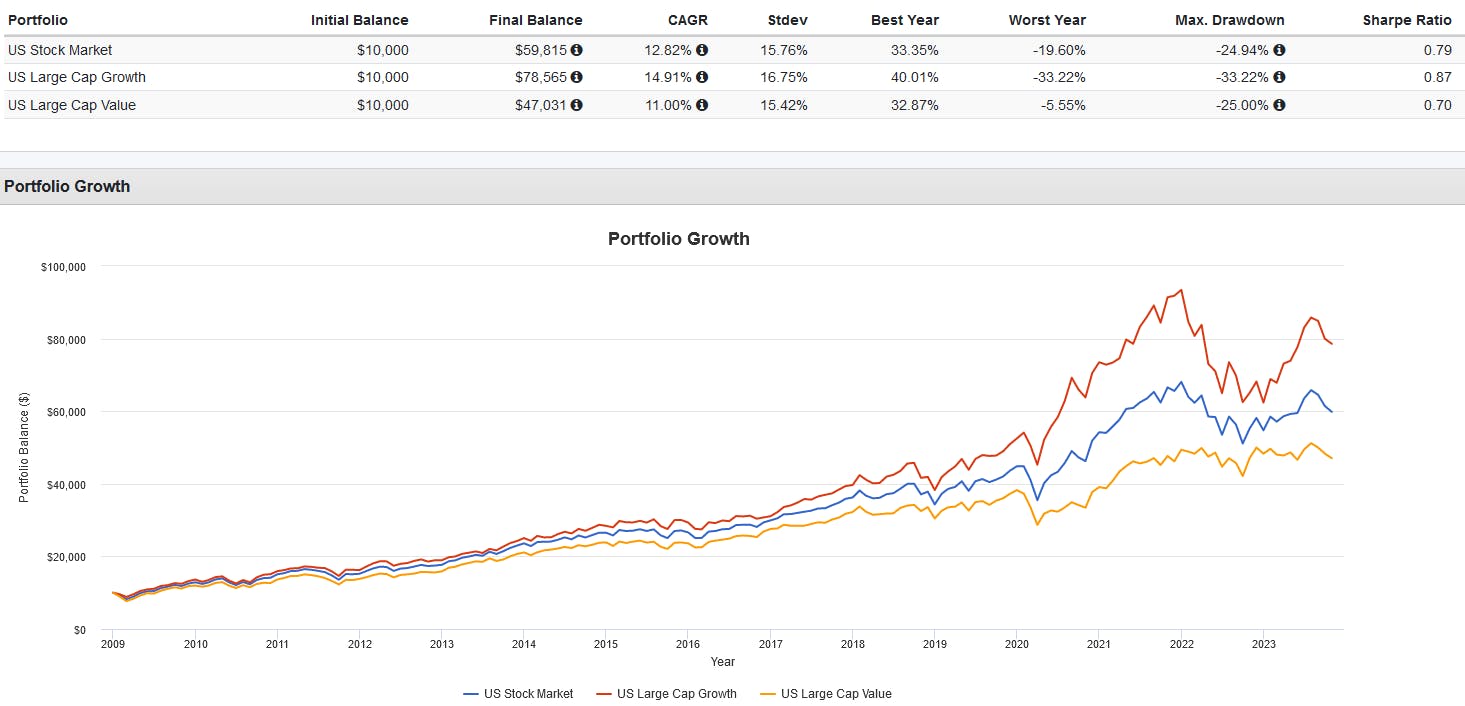
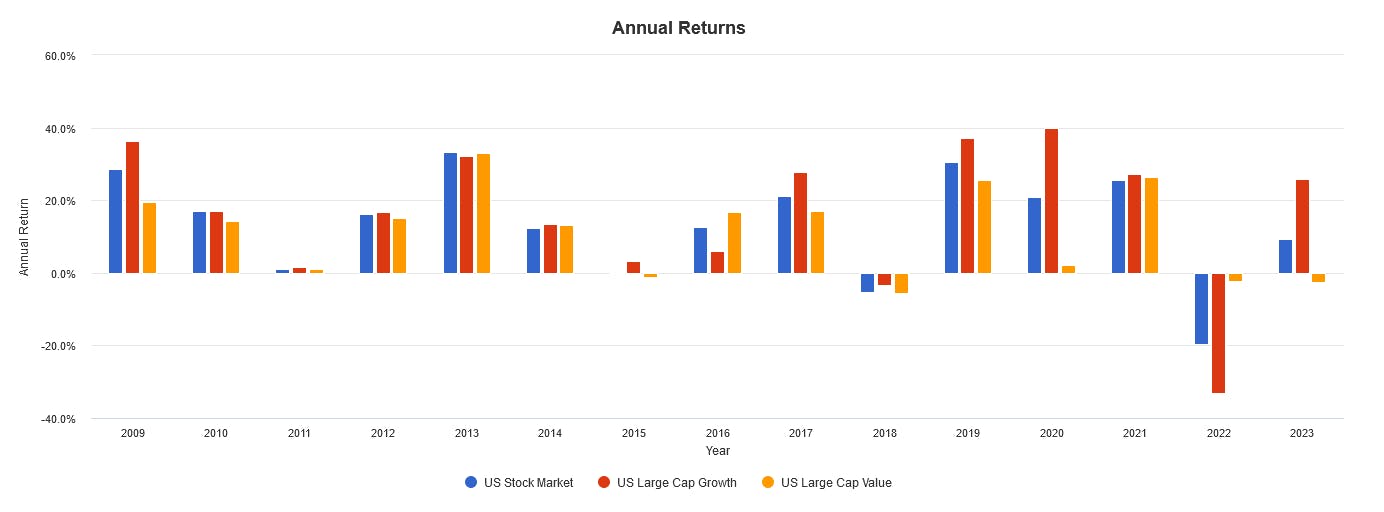
From 2009 to 2023, U.S. large-cap growth stocks returned an annualized 14.91%, compared to 11% for large-cap value and 12.82% for the overall U.S. equity market.
Another benefit of ETFs holding these stocks is great tax efficiency, as most of these companies tend to pay small, if any dividends at all. For example, JGRO currently has a minimal 12-month trailing yield of just 0.12%, which can greatly minimize drag in a taxable account.
Disadvantages of U.S. large-cap growth stocks
The allure of U.S. large-cap growth stocks, particularly in recent years, is undeniable, largely driven by their impressive returns. However, these strong returns are heavily time-dependent, and a longer-term perspective can reveal some critical nuances.
When the analysis is extended back to the year 2000, the picture changes significantly. Over this extended period, growth stocks have shown performance roughly on par with value stocks and the broader market.
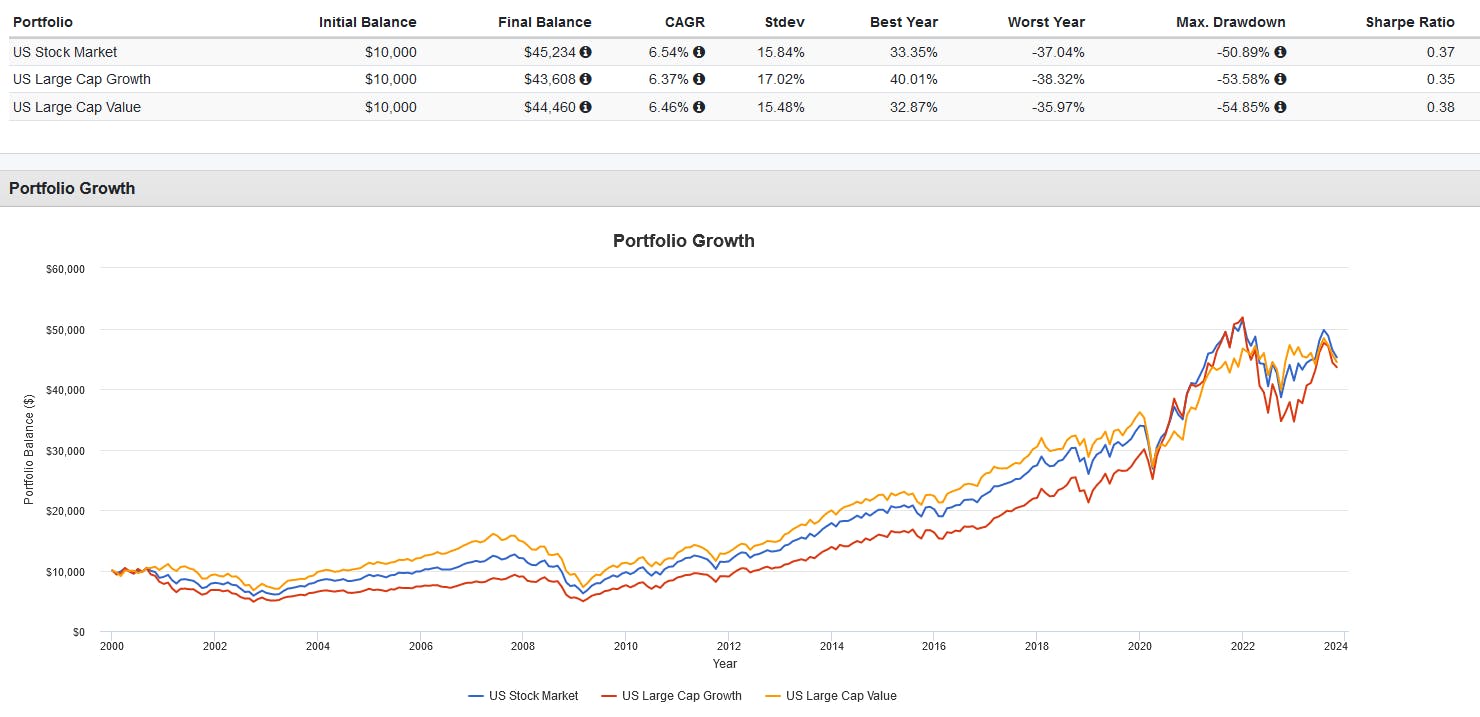
This parity was caused by deeper drawdowns experienced by growth stocks during periods like the dot-com bubble and the rising interest rate environment of 2022.
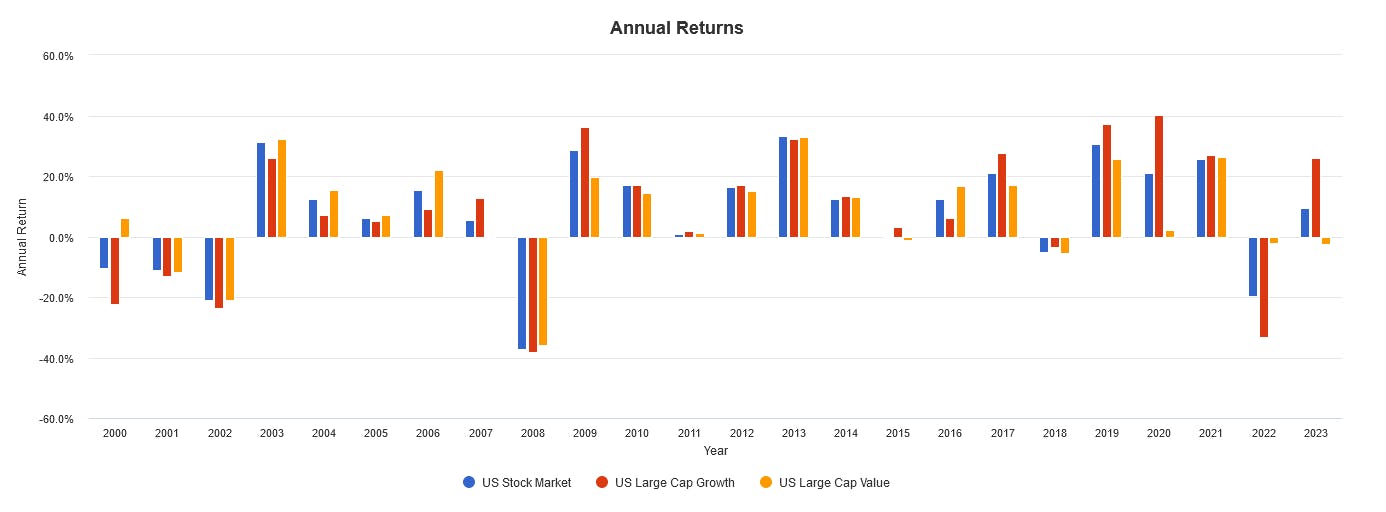
This historical data underscores two primary risks associated with large-cap growth stocks: sector concentration and sensitivity to macroeconomic conditions.
Many large-cap growth stocks are concentrated in specific sectors, such as technology, communications, and consumer discretionary. This concentration can lead to heightened vulnerability to sector-specific headwinds.
Additionally, these stocks often exhibit a marked sensitivity to broader macroeconomic shifts. Rising rates, for instance, can disproportionately impact growth stocks by making their future earnings less attractive when discounted back to the present.
Furthermore, the Fama-French five-factor model, a well-regarded asset pricing framework in finance, suggests that value stocks might outperform growth stocks over the long term.
Extending the analysis back to 1972 reinforces this perspective. Even considering the significant run-up in growth stocks over the past decade, a longer-term view reveals periods where value stocks have indeed outperformed, both in terms of total and risk-adjusted returns.
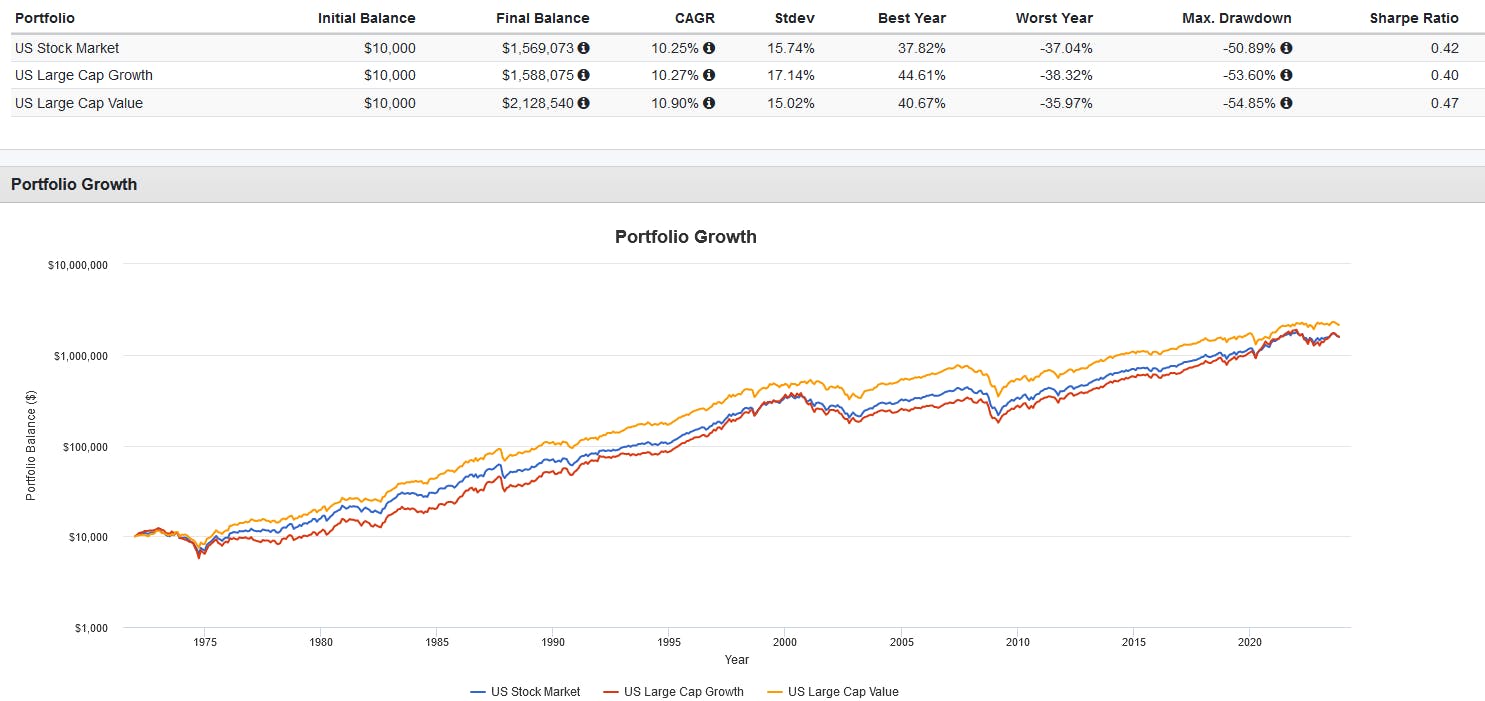
In summary, while U.S. large-cap growth stocks can offer substantial returns, their performance is time-sensitive and subject to specific risks. Investors should be mindful of these factors, including sector concentration, sensitivity to economic conditions, and the potential for value stocks to outperform over extended periods.
Please note this article is for information purposes only and does not in any way constitute investment advice. It is essential that you seek advice from a registered financial professional prior to making any investment decision.
Segments
See all
Mentioned ETFs
Further reading

Latest ETF News
See all ETF newsTony's ETF Buyer's Guide: Sector ETFs (Vanguard versus State Street SPDR)

Options Strategies in ETFs, Part 4: Put-Selling and Leverage

Options Strategies in ETFs, Part 3: Buffer ETFs

Options Strategies in ETFs, Part 2: Covered Call ETFs




 Advantages of ETFs over Mutual Funds1/6
Lower Costs
In this guide, we'll explore the advantages of ETFs over mutual funds, giving you valuable insights into why ETFs have gained significant popularity among investors like yourself.
Leveraged ETFs: Unlocking the Potential for Amplified Returns1/6
Understanding Leveraged ETFs
Explore leveraged ETFs: potential for amplified returns & risks. 5 ETFs to consider across equities, commodities & fixed income.
What is a Leveraged ETF?1/6
Introducing Leveraged and Inverse ETFs
In this guide, we'll dive into the world of leveraged ETFs, exploring their definition, mechanics, potential risks, and rewards.
Recent educational content

First Look ETF
First Look ETF: Income, International, and Cash Flow ETFs
In this season 6 episode of First Look ETF, Stephanie Stanton @etfguide examines the latest ETF marketplace trends with NYSE and guests.


ETF Trends
ETF Industry KPIs October 5, 2026
This week’s KPI data overview highlights key metrics and trends shaping the ETF landscape.

ETF Trends
ETF Industry KPIs September 28, 2026
This week’s KPI data overview highlights key metrics and trends shaping the ETF landscape.
ETF Trends
ETF Industry KPIs September 22, 2026
This week’s KPI data overview highlights key metrics and trends shaping the ETF landscape.