Keep tabs on your favorite ETFs with a personalized weekly tracker. Create a Watchlist now →



Episode 3: AB’s Noel Archard discusses the Ins and Outs of Launching an ETF Franchise
Noel Archard, Global Head of ETFs and Portfolio Solutions at AB, joins NYSE to discuss AB's ETF business launch and opportunities for advisors using ETFs in model portfolios.


In this episode, Douglas Yones, Head of Exchange Traded Products at the New York Stock Exchange, is joined by Noel Archard, the Global Head of ETFs and Portfolio Solutions, to discuss the launch of AB’s ETF business, and where opportunities can be found for advisors utilizing ETFs within their model portfolios.
Douglas and Noel discuss:
Like what you're reading?
Stay in the loop — get the latest ETF insights: trends, analysis, and expert picks.
- The growth of Active ETFs
- Top opportunity areas for ETF advisors
- Where the ETF industry is headed going forward
TRANSCRIPT
Douglas Yones:
Hello and welcome to ETF Central, the podcast where we bring the latest and greatest ETF industry perspectives directly to you through in-depth conversations with key thought leaders from across the ETF ecosystem. I'm your host Douglas Yones, the Head of Exchange Traded Products at the New York Stock Exchange, the Home of ETFs. Now today I'm joined by none other than Noel Archard. He is the Global Head of ETFs and Portfolio Solutions at Alliance Bernstein. Many of you also refer to Alliance Bernstein as AB. Maybe we'll ask Noel a little bit about that today. Noel, I just want to start out by saying thank you so much for being here to share some time with us.
Noel Archard:
I'm so happy to be here. Thanks, Doug.
Douglas Yones:
Maybe you can start at that beginning. I seemingly, at least personally go back and forth between referring to AB as AB, sometimes Alliance Bernstein. Is there a preferred way over at your firm?
Noel Archard:
I think when you look at our sort of larger branding, the rebranding, the AB becomes the prominent marker and that's certainly sometimes easier to say. But for clarity, we'll also throw in the Alliance Bernstein to make sure people know where we are. But for our ETF range, we don't want AB ETFs, but the brand name is Alliance Bernstein. So it really is, it's a little bit of a user preference there, but I think from a simplicity perspective we talk about AB a lot.
Douglas Yones:
Got it, got it. Okay. So there's no perfectly right or wrong way, but there's a preferred way. So we'll try and stick to that here today. Noel, you and I have known each other a long time. I really appreciate you coming on. You're a well-known figurehead veteran of the ETF industry. Could you start though, for anyone who maybe isn't as familiar with your role, would you mind telling us a little bit about what you're doing? How do you spend your time where, where's your team focused?
Noel Archard:
Yeah, sure. Happy to. And it's, I again, very much appreciate you having me on, Doug. We go back a long way, so it, it's good that you haven't gotten sick of me yet. I would say for my role, I joined a bit over a year ago to head up this global ETF program and portfolio solutions, which really just looks at how do we incorporate ETFs broadly across the firm. And I think that's something that's pretty important in this day and age where ETFs have become such a common vehicle in some ways or commonly used vehicle, that firms really think about how it ties into their strategies broadly and how they make it more accessible to clients. And so that's how I spend a lot of my time with my team. We have a core team that wakes up every day thinking about the AB ETFs; what are we doing with the ones that we've already launched?
Where do we think we want to go with that? How do the services we have at AB fit against the ETF program? And really just how do we integrate it broadly? So we spend a lot of time across the firm and outside of the firm. So what amazes me is that after all the 30 years of ETFs in the US marketplace, and they still have 101 conversations because while 7 trillion is such a big number, it's still pretty small in the context of overall market cap and product utility. So we spend a lot of time on education. We spend a lot of time thinking about the product set, who we're building it for, how they're going to use it, how they use other products, and how we can fit into that. The marketing aspects. How do you pop up in a crowded space, and make yourself feel present? How do we work with the press? How do we work internally from an operational perspective? You've got something that in some ways fits the infrastructure that you already have, but in other ways is very unique and we needed to put together some new pipes and plumbing to make everything work. So really every day I feel like I bounce from the very strategic to the very tactical, and that's what makes the job super interesting.
Douglas Yones:
Yeah, and I think that you sort of bring up a topic in the world of ETFs, a lot of us that we've known each other for a long time, people coming in, it's like a happier place of finance. And I've always sort of tried to put my finger on the pulse of that. Why are people just generally happier jobs? And you talk a lot about that. You get to wear a lot of hats and ETFs, you get to touch a lot of things and see a lot of things. And you're certainly doing that. And I was hoping, so you're doing that today, but it all sort of stems beautifully together. When you look backward, a little bit about you, your career, you and I got to know each other. Oh my gosh, maybe 1999. Does that sound about right? Or 1998, if we were at Vanguard together, we worked together in brokerage services. But if you take even a step back and you go through your bio, you actually graduated college with a BS in journalism, which I think also sort of blends into all this. And for our younger listeners that do talk and think a lot about career development and we sort of say, open up all the doors you can because you never know where it's going to take you could maybe take us through the, how did career starting out in journalism take you to where you are in ETFs?
Noel Archard:
Yeah, yeah. Sometimes I feel like the Forest Gump of the ETF industry, like a bad panic it just keeps showing up at all the right places. I'm very fortunate. I think journalism decree to me still was so foundational to so much of how I think about life. And when I got a journalism degree, literally when I showed up for my freshman year, some of the classrooms still had electric typewriters in them and were slowly, computer labs were showing up. So that's how dated I feel sometimes. The whole thing about the journalism degree was fostering that sense of inquisitiveness and where you can go to figure things out. And it wasn't sort of there at your fingertips. Google was still many, many miles away. We had search functions again and you had to go to the computer lab to try and pull down old articles to learn about.
And so, to me that aspect of a journalism degree, the really fun part of it was that you never knew what you were going to get assigned. So our curriculum sort of forced you to say, okay, go take an econ class, go take a physics class, go take a macro and a micro class, go take literature, go look at all these different aspects of the world and then take complex ideas and make them simple. Boil it down so that you understand it and you can explain it to somebody. And I think from a career perspective, that's always been a big benefit because that's my frame of reference. How often is which, how do I understand this thing that might be less approachable and then how do I make it understandable to others? So for me, journalism was something I thought I wanted to do.
As I got out of school, the market was not particularly great. I was doing part-time work at a bank and that led to a position at an RIA firm where I was like, I will pay the bills until I find something in journalism or I write the Great American novel. And it just sort of went from there. But when I showed up at this RIA firm, it just fascinated me to see, and go in depth into something that I'd only scratched the surface of in school. And it was a billion-dollar advisor and half the folks were CFAs and the other half of the teams were just doing their thing to support the advice that was being given and managed the client portfolios. And they wanted to get into wrap accounts at the time and needed someone series seven license. And I raised my hand cause I was like, great, I'd love to get my series seven and figure out another part of the business that capital markets, a little bit more of the capital markets under the business.
So it was trading ended up eventually at Vanguard and continued to take on roles there. This is again really dated myself, but the time that Schwab one source was coming to be, was one of the triggers that got me to Vanguard. Cause I was like, oh, I really don't understand mutual funds. There's a good-sized mutual fund provider. We're in my backyard here in Philly where I was living at the time. I think Vanguard had 400 billion in assets at that point. So a little bit smaller. Ended up there, worked in several roles for a number of years and to me had a pretty big inflection point. When I got put on a strategy team, a cross-functional strategy team that Vanguard was looking at, one of the questions was what did they think about ETFs? Where did they want to go with it? At the time, I think they had launched two products.
They had VTI and VXF I think already out very early days for that. And it had filed a bunch more that no one was really doing much with them at the time they were on file, obviously going different time periods. You couldn't just file and 90 days later have a product ready for market. This was during the early days of the exemptive review process. So I think that the thinking was to get someone into the seat that was really focused on progressing, that they had a product manager that was focusing a bit more and more on sales. Again, this was when Vanguard had maybe three people allocated to ETFs. This was a long time ago.
Douglas Yones:
Hard to, so really if you take a step back, it's hard to imagine. And providers today sort of forget that these, these massive ETFs are all built from something quite small.
Noel Archard:
Yeah, very much. Yeah. Everything's an overnight success. It takes 20 years to get there. So there was a lot of work and I did a strategy team and because I knew trading was given the part of it, okay, look at these ETFs and help craft up some of the bits on that and you're the one that's going to be presenting on it. And I wasn't aware at the time that while I was standing there kind of pounding the table saying, wow, these things are really engaging and we should be thinking about them even more clearly. Vanguard senior leadership was much farther down the road in that thinking. And I was like, yeah, guess what? You're now going to volunteer to be the product champion for this thing across the complex. So that was the first big pivot for me to focus on ETFs.
And it hasn't been the only thing that I've focused on in my career. I've been really fortunate to go in a lot of different directions, but I keep coming back to ETFs because of their, they're sort of enduring quality. I mean, they really are a product that has created such great access to exposures that a lot of people didn't use to have access to. And that to me is just fascinating. And the flexibility of the vehicle has just gotten better and better over the years. So lots of twists and turns. But that was the first inflection point.
Douglas Yones:
And you brought up a couple of really important points that as people are listening in and saying, Hey, how does my career take me places? Or how do I get ahead? Or where do I go? You mentioned multiple times you sort of raised your hand and multiple times you were just, we always say this phrase intellectually curious, but then you take it down a level you said, well I just don't understand this. So I wanted to go learn about it. And that's so key to growth. And you hear that time and time again of individuals who've sort of been entrepreneurs of their own career. And a lot of it comes from their willingness to just say, I, I'm going to go learn about this and I'm going to go figure it out. You're probably one of those few individuals, and you might be the only one I'm friends with anyway, that is actually built an ETF career across all three of the big ETF franchises. You've spent time first at Vanguard, you spent time at BlackRock, you spent time at State Street. Has that changed you in some way?
Noel Archard:
I think, yeah. I mean, sure. You know, take so much out of each of the places that you work and those were all remarkable and are remarkable firms to have worked for. I think with all of them, the underlying current at each of those firms. As I said, I spent a good chunk of my time at each of those firms working on ETFs. And I think at different cycles, even at BlackRock, I left Vanguard to join iShares / BGI, which got acquired by BlackRock. So even at different flavors going from sort of the BGI world into the BlackRock world, when those firms came together and with all of them, the thing you realize, especially with ETFs is how much it's a team sport. As much as you think you can show up, you're like; I'm going to change everything. It is a product, especially in the ETFs where oddly the greatest hallmark of ETFs is their transparency.
And often, they are the least transparent when it comes to who owns them, and how they're initially being used. You have to figure that out as you go along. And the dat is getting more and more accessible. But you know, need to really understand what do the clients want. How does sales come to the table? How does marketing come to the table? How does the servicing aspect get more integrated? And how do you do that when you're doing that at a large firm where there are lots of other successful vehicles and constraints? It's always funny to me when I talk to people, the big firm, small firm folks that might be at a smaller firm, I've often had said to me like, I wish I had the resources that you know, had. And I laugh and I just say, oh, I wish I could go and hire someone tomorrow to just create a microsite for me and throw this thing up in a week.
Because that's not going to happen, right? At a larger firm, you've got budgeting processes and you've got very tight controls obviously on IT spend and who you can spend it with. And partners that have to go through a vetting process. Not that doesn't happen at smaller firms. It just happens at a much different tempo and pace and you're not competing with 12 other business lines that are also trying to get a limited number of budget dollars and IT resources and marketing attention and everything else. So really at the larger firms, you have to constantly be thinking about how you are making sure that everyone feels engaged in the product, can see the future potential for the product and how it can impact the clients of the firm and the people that have to work with you to make it succeed. So I think that idea of really the interconnections across the company was something that I took away from my experiences at all three firms.
Douglas Yones:
One thing that's pretty interesting, so Noel, you and I have known each other a long time. If I were to categorize in a pie chart all the time we spend together, and what we talk about, I think ETFs are probably one of the smallest slices. We tend to talk about varying books. I think you introduced me a, oh geez, a million years ago to Dorothy Dunit and her series of books. You've been an athlete and a career athlete to some extent. How many Ironmans have you completed?
Noel Archard:
I have completed four. I would never call myself an athlete or a career athlete. I would say I am good for four
Douglas Yones:
For those that have completed less than four Ironmans, then we can call you a career athlete in between. So you've made these big career moves, career decisions because, for those who surrounded you at each of the firms, including me at one point, those were pretty big life-changing decisions. You know, you've always made very close friends with the people you've worked with, people who work with you always say the same things, you're there for them, you get to know them on a personal level. You build these unbelievable bonds. So when you make career decisions like that, it's hard because effectively you slice bonds. And then in particular, I think about your time between BlackRock and SSGA, where you literally just took time off. And I remember harassing you at one point during that time off and saying, what are you going to do next? And you said, I don't know, I might build a boat. Would you mind sharing with us a bit about how you made either that decision or some of the other really big decisions, and when you were in that gap year for all intents and purposes, or your walkabout, I guess, what did you do at your time? Yeah,
Noel Archard:
So great questions. I think I'll say first I don't view it; part of why I love the ETF industry is that the bonds are actually enduring. And it's not just specific to the ETFs, but I think it's like anything, the financial industry for as big as it is, is still a small community. And we all continue to learn from each other and grow together. And I think that's the beauty of having a long career within this space. So to me, it was always sad to leave where I was, but it was exciting to go and create some new relationships and new firms. And again, thank you for those very kind words. I'm sure some people have not enjoyed working with me, I have no doubt. But some of them have told me to my face. But overall, I've gotten to work with such amazing teams, and it's just tremendous.
And those are folks that I continue to keep in touch with. You're a great example. As you said, Doug, when we get together often the last thing we want to talk about is just the industry. Cause there are so many other interesting things going on. For me, when I took that gap year, my pray love year, as I was in the process at the time I was living up in Canada, I had moved up there to run the BlackRock business up in Canada and was in a transition mode, needed to get back to the US at some point. Not that it's far of a trip, but you still have to go through the fun and games of an international move and all that entails from tax and everything else perspective. But very simply, I'd spent 20 years on an airplane. It felt like just running around and investing a whole lot into my career and all the good that came out of that.
But also felt like I had not spent a lot of time or as much time investing in friends, family experiences as I wanted to. And it just was one of those chances to step off the carousel for a little bit and think about, take either recharge or do something new or whatever it might be. So for me it was a year of just reconnections, again with friends and family, doing a bunch of travel, seeing places that I'd put off seeing for a while other than running in for a conference or a client meeting and then running back out. I mean the number of really cool cities where I've spent 12 hours and seen nothing but the airport in a meeting room in the airport. Again, it's almost a shame. So it was really a chance to indulge in what I've always loved, to cook.
Took culinary classes for six months just again, because I wanted to understand a little bit more about the science behind cooking, not just reading the recipe and following that. So it was a phenomenal year have, it was almost hard for somebody to say, yeah, you know what, it's probably time I should get serious and start looking again and get back into something. But it's also, again, we have a heck of a lot of fun at what we do in our jobs. And so that there was a draw there once the batteries had recharged a bit to get back in.
Douglas Yones:
Highlight and a lowlight story from your trips
Noel Archard:
Highlight and a lowlight. Wow. I would say no one particular highlight. I mean, it was all great. I, I spent six weeks in Australia and that was actually the advice. One of my colleagues at BlackRock who had said to me, what are you doing? You're just kind of walking away. And I said, yeah. He said, oh, I did that once. He goes, actually, I did it twice. And he said, I did it right the first time. I booked a bunch of things I couldn't get out of because when you first leave, you just walk away from your job. At first, it's this amazing feeling of liberation, then mild terror. And then this question of, whoa, who am I? Actually, I've defined myself by what I've done forever. And he was like, F, find some stuff to fill your time that you can't walk away from because when people find out you're available, you might get sucked into something sooner than you think, which is what happened in the second go round.
And now he got pulled into a pretty senior role at BlackRock and I was like, wow, that's great advice. So I booked a six week trip around Australia shortly after I left BlackRock just to go and explore. And it was phenomenal cause I was just moving, traveling on my own schedule, going where I wanted to go, had never been to Australia before. So that was absolutely a highlight just for the sheer number of things to see and do. What I discovered is I am not really good at traveling by myself for two or for six weeks that long because I was missing people back In other parts of the world, you're really out of time zone sync and everything else. I want to share this amazing experience. And so you're like, oh wow. So I had a great time meeting people along the way on the trip, but I was, by the end of the six weeks, I was like, I am ready to get back to North America and hit some of the travel spots with friends and family that I wanted to spend some time with. So it was really great. But at the end of it I was like, okay, I know myself a little bit better after this part of the journey.
Douglas Yones:
And by the way, me personally, I've gotten lots of little tips and tricks from Noel over the years. One of the ones that I've borrowed, leveraged, and I'll share with all of you was how you always made time to do these sort of one-on-one trips, speaking of sharing a place with another person, with each of your kids. And I found that even for me, my family, we travel a lot, we tend to travel together. Having an opportunity to do that one-on-one just sort of creates new bonds. So I'll share that with the group, here you are now you're a very much household name in investing, but you sort of get this opportunity to build the ETFs kind of from scratch. I guess going back to your cooking, you get to build your own recipe. How's that compare with your previous experiences?
Noel Archard:
In some ways, there are a lot of similarities in that you know you are working within an established brand. So you're trying to take interesting concepts that the firm might have and make them accessible either in different ways to an existing audience or find new audiences that might not have had access to the brand before. And so that was, again, because of the time that I was in this, that's the way it was at Vanguard in some ways. BGI, which was a very institutional quan shop, was a reaching brand, really extending its reach with the iShares at the point when I joined there. Same thing with BlackRock. She was an active shop acquiring a firm that had a big index and quant footprint. So it's always interesting to think about how you are additive to the brand with what you're doing and how can the product set amplify what the brand already does really well, what the firm already does well from an investing perspective.
So I think that's the one part that's similar. Now, when I think about joining my years at SSGA the product of the marketing team's operations, I mean, that's a machine at that point. This is the phone that's been doing it at the time for 25 years. And so you're coming into a much different environment there as you think about how to put some new plans into action or to gain market share or whatever it might be, whatever the goal is with there's, there was just some foundational work that had to happen. Again, on some levels in ETF there are so many characteristics that are similar to what you have in your mutual fund business, but where it's different, it's very different. And where you end up having to put a lot of focus on how do you take these great strategies and then make them come to life in another vehicle and get that buildup that you want to see.
Douglas Yones:
So in some respects, you're at a startup, you've got this big firm that's very well known, but you're starting up the ETF business. Are there things that you look at now with your career, having spent time at the big guys and dig a little deeper for me, but what's different? What's different from day to day for you?
Noel Archard:
I think what's different is a little bit of that sense of how do you take, well, first off, I mean obviously the active story is a component of it, and I think that's not an alien story. But when you think about clearly Vanguard, BlackRock, and State Street all have active businesses. Some of 'em quite obviously quite large and a big part of what they do. But the indexing aspect of it is equally there for the retail side of a's business, it's, it's basically an active footprint. The indexing does exist for some of the institutional clients. So it's not like it's an alien concept or anything like that, but the brand is really focused on how we take our active strategies and activate them across the ETF spectrum. So one thing that's different, and for my core team that's working on this, a lot of us have come in with different experience sets across the ETF universe.
Part of what we have to think about is from day one, we're saying, well, we're not going to launch 150 AB ETFs of every flavor out there. So it's like whatever the client's looking for, we've got an ETF for you. That doesn't really resonate relative to our research process, the way that we build products, or anything like that. So we have to be very thoughtful about how we are going to introduce products that either complement what we already do. So take something that is already robust a, and make it a little bit better for our existing clients, or think very hard about how are clients that already have an affinity towards ETF using other people's products and marry our products next to them. So we think about, all right, we know that there's a lot of clients out there with very low cost exposure to large blend products that they hold for a long time in their portfolios as part of their buy and hold portfolios.
So what makes sense for us to bring into the mix as an active shop, and a lot of the one area that we spent a lot of time thinking about was income generation mean. That's an evergreen topic. Most advisors are always trying to figure out how to increase income generation for their clients. Well, if you have a big portion of your portfolio in a low cost beta exposure, what kind of income products are going to work best for you? So we can sit down and say like, look, it's not about you having something wrong in your portfolio. It's like we understand what you're actually using and we have active strategies that will actually enhance the income picture for your client. And how do we marry those products together? So it's variations of the theme. I don't want to say it's different from what I've done at other firms, but it's really taking that lens of we're going to have a very select group of products that we want to get out there in the marketplace. Now, given the breadth of AB's investment skill in equity, fixed income, and multi-asset alternatives, I think we're still going to end up with a fairly robust lineup of products, but it's going to cap off at some point because we want to make sure we're constantly bringing forward the best thinking that our research can come to.
Douglas Yones:
And I want to talk, as you mentioned, about the idea of supplementing with, for those that are not subscribed, by the way to our free newsletter, you can get it at homeofetfs.com. The New York Stock Exchange produces a fortnightly newsletter all about the active ETF market. In the first quarter of this year, 30% of cash flow went into active ETFs. So active ETFs are clearly growing at pretty robust levels. Here you are. Tell us a little bit about your first ETFs into the business.
Noel Archard:
So we launched two fixed income products in September of last year, which was interesting. I think if I had my choice, I might not have started with fixed income, just this was me coming in fresh and thinking, all right, well, we should just ease into this and come along. But really the strategies that made the most sense to us, and for those of you who might not be familiar with building ETFs, it's a little more involved to build a fixed income ETF process than equity. Just because the nature of the create redeem process again and today doing it today is infinitely easier than it was 10, 15, 20 years ago. So that's the advantage of coming to market today. You have a lot of partners and systems that are pretty streamlined at this point. But as far as just getting up the curve, we wanted to focus on products that A, we thought made sense for the market, which as we headed into, we had to make decisions around what to launch in fall of 22 and spring of 22.
So we're like, all right, probably going to be some rate increases this year. Probably a little more market volatility. We had no idea how intense that was going to get, but we wanted to focus on some short-term fixed income products in two areas where the firm had a lot of depth, so from a taxable income perspective, and then a non-taxable muni footprint looking at variations of strategies that the firm already ran. But there were gaps in the lineup. So we launched a taxa aware short duration muni product and then an ultra short income product. And again, that really just was to harness the fact that sales knew these PM teams quite well, and the strategies were just variations of what we already did to great effect across the complex and our trading stack, our traders, everything was just so geared around lots of depth of knowledge there. So to us, it felt a comfortable place to enter both from client utility and from a firm understanding of the products that we were actually starting in the marketplace. So that was the first foray. And then we followed that with an equity launch in March of this year in the high dividend low vol and innovation space, thematic innovation.
Douglas Yones:
So you've come out hitting the ground running, you've got three ETFs. What's next for AB
Noel Archard:
Yeah, so we've got five now in market. We've got another one that's going to launch in May. We're going to bring out a high-yield product, that'll be our first conversion, mutual fund conversion to an ETF and then plenty more on the drawing board through as we look at the end of this year, and as we stretch into next year. So we want to put out a few more suites of fixed income. We're very focused on continuing our expansion in the thematic arena, really to take some of the views that AB has around drivers in the macro economy as we look forward, 3, 5, 10 years, sort of where the changes are coming, how do you put products in motion that allow investors to capture that? And certainly in the alternative space alternatives are kind of a big tent, but you know, think about that around risk control products we think it is a pretty interesting space. So it really is just taking what we think we're good in that area active arena, and then putting out products that regardless of market cycle, we'll have something that fits in decline portfolios. So
Douglas Yones:
I look across your lineup. We've got the AB disruptors, ETF, FWD, and you've got the AB Ultra Short Income ETF - YEAR, HIDV - AB US High Dividend, LOWV, AB Low Volatility. And then of course, as you mentioned early on in your first launch group was the AB Tax Aware Short Duration Municipal ETF, TAFI. By the way, easy to find all these at etfcentral.com. That's the website where you can look at all US-listed ETFs. You could just type in AB, it'll give you the whole list of their ETFs in the screener. When you look out at the markets, you've got the lineup, you've got some ETFs coming. I liked your statement of, “hey, when we were launching, maybe we were thinking about different things”. What are you thinking about now? Where are the opportunities in today's market?
Noel Archard:
Yeah, I mean, it's a tough period. I think we're all looking at data. As I said, this is, it's a pretty amazing time to be an investor right there. You've never had more information at your fingertips. I guess it's an amazing time to be alive. You can take the investor's statement out of it. We've never collectively as a society had more information at our fingertips. But sometimes it becomes information overload and you have to discern the good from the bad. I think obviously we are looking very hard at where we think the market direction is. There are a lot of questions. If you narrow this down to a US view, where will rates go? What's the Fed going to do relative to inflation? We continue to get mixed signals from the economy. I loved some of the articles over the weekend. It's like, all right, are we heading for stagflation?
Is Europe heading for greed, which I thought was fascinating, lots of different views of what's happening. What's the appropriate inflation metric? So what we're trying to think about is for our lineup is like, okay, look, the next year or so might be a mixed bag. You're going to have some people that think rates are still going to go up. The fed might increase a little bit more. Others think it might start to soften the increase. And I think there's a cadre of people out there hoping that rates will go down, but that is really going to have to be a reflection of inflation and then what's happening with growth rates. So the market, I think, still is hoping for a different outcome than maybe the economic signals are showing. But you go out a couple of years and that growth pro profile seems to assert itself.
So we're just trying to think about where again, do we think the market's growing? One of the realities of when you're bringing products to market, they don't just get picked up day one. You've got to sort of prove that the strategy works. You need a track record for the ETFs. You're also waiting for various platforms to turn them on, which means that they've hit a certain time in market and a certain u m threshold. So a lot of what we think about today is not so much what does the market need today, but all right, if we're in a growth rally two years from now and rates are in this type of a bracket, what's the investor utility? What are people going to want to engage in at that point? What's going to be a more important growth or income or downside protection? And if those are products that we don't have in the suite today, well, we probably want to be launching them today so that they're ready and seasoned a couple years out to be there for investors. So we spend a lot of time, I won't say crystal ball gazing because it's not that fuzzy, but it's really thinking about the different market scenarios from a choose your own adventure path and then what types of products we want to have in play of years down the road so that we're well positioned.
Douglas Yones:
And by the way, if you're too young to know what a choose your own adventure book is, please go Google what you're missing out. And I apologize, you missed out in your teen years on such a great lineup of books, Noel you've been involved in, or at least personally launched, boy, a lot of ETFs. I'll maybe leave it at there unless you've counted. Do you look back and have maybe a favorite ETF that you launched? And I'm going to add a tack on question to this that I've been doing all through this interview that you're not aware of. One of the things that's been fascinating about ETFs is for many, many years, I feel like the first maybe 10 or 20 years of ETFs, people had trinkets, right? There was little left behind; gifts that came with the launch of ETFs and trinkets have seemingly gone the way of history, which is a shame. But along the lines of, do you have a favorite ETF that you've launched? Do you have a favorite trinket that maybe you came up with or were involved in the way and they don't of course have to match?
Noel Archard:
Yeah, it's funny, I wasn't aware of how many, and then someone asked me this a couple of months back and I was like, I don't know. I'd have to look at the years that I was in different groups, either leading product teams or member of product teams. And I think in the US it was like over 140 products and it's like a trillion plus in AUM sitting in those products, which again, some of them were people sitting around a table and being like, really launch that. Does that make sense to bring out? Yeah, it's hard to say. I've got a favorite. I love all my children equally, and there's probably some recency bias on the ones I've been working on recently. But what I would say is there's a type of product that I love, and TAFI is an example of this type of product, TAFI is the short duration Taxware Muni.
And what I love about products like TAFI is it takes a strategy that might not have been accessible to part of the market and is just dialed up the accessibility in such a remarkable way. If you think about emerging markets, early in our career, if you wanted to be in emerging markets, it would be in a mutual fund with probably a very high minimum investment, and very high redemption fees if you wanted to get out at any point in under one year, three year time period, and very expensive an asset management fee. And suddenly in today's world, emerging markets are a very easy plug into a diversified portfolio. Fixed income products. When some of the early muni products were worked on, even, I mean the ag thinking about taking that thousands of bonds and being like, okay, we can put this into a product that has intraday liquidity and ease of use and accessibility.
Just the access that ETFs have brought to the marketplace, the tax efficiency, the lowering of the costs, and the portfolio allocation capability, both strategic and tactical. That's what gets me excited. And again, I go back to Taffy. This was a strategy we used in our separately managed accounts. The tax aware component is 80% of the fund's always going to be in Munis, but if the after tax yield of treasuries surpasses a comparable muni, so if the two year treasury on assume the highest tax rate is yielding better than the two year muni, great put some of that into the portfolio because on an after-tax basis, you're going to end up with a better yield. So it's, it's something you can quantify. It marries fundamental research in the muni market so that you've got that core portfolio, but you're being very thoughtful about how to dial up the overall performance of the returns to the client over time.
And I just think that's the type of product that I get really excited about because it intuitively works in a portfolio, and it is not something that if you were an individual investor, even you own an advisor, just the amount of time that it takes to build your own muni portfolio, the costs involved in that, the rebalancing, it doesn't make sense relative to how you can spend other portions of your day versus putting that in the hand of an asset manager that's focused on this all the time and then put in a wrapper that just gives you incredible flexibility. So again, it's, when I think about that impact across major asset classes that used to be much more of an institutional play or an ultra high net worth play, and we've brought it down now to the level of basic building blocks that can be utilized in both passive and active. I think it's a pretty cool development,
Douglas Yones:
And dare I say, a real opportunity for you to make little pieces of salt saltwater taffy for your trinket. You tried to escape the trinket question. I'm holding you to it. Do you have a favorite trinket along the way?
Noel Archard:
It's funny. We actually thought about taffy's for TAFI, and we just thought we were going to end up having to up the dental bill across the industry. We do that. It's probably, we went with water bottles, which are a little more safe. One of the trinkets that it's mind boggling today when I think about it. And it wasn't allowed post more stringent airline controls in America, and I think this was when we were there. At the same time though, we used to have the little mini, it was the Viper at the time, the Vanguard back before it rebranded just to Vanguard ETFs, the Vanguard bikers. We had the little baseball bats, the little mini baseball bats, which, in hindsight, probably not a great thing to hand off at a conference for people just to walk around with little bats. And I remember one particular conference where someone was annoyed with someone and picked up one of the bats and just swept all the collateral off the table to emphasize their displeasure with the particular product set. So yeah, that was probably a fun little, but maybe not the best thing to put out there in the world, but different times
Douglas Yones:
For those in the ETF industry and have been around as long as we have. I proposed this challenge. Feel free to email me, call me if you think of something better. But I proposed one of the most interesting trinket ever was the claim or sword that was passed around the industry for quite some time where people had full on swords in their offices as a result of the claim or ETFs. But again, I throw down the gauntlet
Noel Archard:
In the danger quo. I had another thing that I thought was just, it was one, I still feel very young at heart. You've mentioned multiple times in this podcast how old I am, which I appreciate that is the reality. I've been around for a while, but what drove home to me is like, wow, we are growing up as an industry. I went to an event a year or two back, I think it was just, well, probably a year I guess, post, I'm trying to think that one of the first ones posted the lockdowns and one of the providers had readers with their brand on the arms of the reading glasses, and they were gone in, I mean, it was like one of the fastest sort of runs on a table that I've seen in quite some time. I was like, yeah, we are collectively getting a bit old when the reading glasses are the top tchotchke giveaway at one of the industry conferences. So again, and I think times change.
Douglas Yones:
We knock on wood if my eye doctor is listening and I'm still okay, but I'll see you this year for my annual checkup. Noel, before we close out for investors, for advisors who maybe know the AB Alliance Bernstein name maybe weren't aware or now they are aware about some of the ETFs, how do they best engage with you? How do they best engage with your team? Yeah,
Noel Archard:
So I think I've mentioned a few times. I mean, we really look to be integrated across the AB complex for someone coming to the firm, now going to ab funds.com/etfs. We'll get you onto our primary website where you can either focus on the ETFs or obviously it branches off into our separately managed accounts models, mutual funds that the full range with ways to contact the particular subject matter expert that you would need on that front. So that is our main gateway. Obviously ETF Central. I would be remiss if I didn't point out that information is available there, as well as Bloomberg, Morningstar, all the other data providers. We try and ensure that the AB ETFs are accessible where we're in cam, but the best conduit is to show up at abfunds.com and get access to the full team there.
Douglas Yones:
Yeah, agreed. And for those listening in, if you haven't been to etfcentral.com, I invite you to go there. It's a fantastic website, very easy to maneuver. I'm looking at it right now. You can look through all the ETFs, you can go into the featured resources tab or ETFs in the news. You can find out a lot about their ETFs to the team and engage directly with them as well. Now that is a wrap on this edition of ETF Centrals the podcast. As a reminder, you can find this episode as well as many other episodes, and as well as we said, spend time utilizing the free ETF screener. All in all on our website, etf central.com. Thanks again, Noel. I really appreciate you being here, sharing your insights, sharing your time, sharing a bit of your personal stories. Stay tuned for upcoming episodes featuring thought leaders from across the ETF ecosystem. I'm Douglas Yones, Head of Exchange Traded Funds at the New York Stock Exchange, the home of ETFs.
Latest ETF News
See all ETF newsThis is How Calamos Turned Wall Street’s $100 Billion Secret Into an ETF
AAM’s Chandler Nichols on Making ETFs Work for Advisors and Investors


From Dot-Com to ETFs: How One Entrepreneur Helped Spark an Investment Revolution
How Blossom Social Is Revolutionizing Retail Investing and ETF Marketing
Is 2025 the Year for Financing Food Fast?


 Advantages of ETFs over Mutual Funds1/6
Lower Costs
In this guide, we'll explore the advantages of ETFs over mutual funds, giving you valuable insights into why ETFs have gained significant popularity among investors like yourself.
Leveraged ETFs: Unlocking the Potential for Amplified Returns1/6
Understanding Leveraged ETFs
Explore leveraged ETFs: potential for amplified returns & risks. 5 ETFs to consider across equities, commodities & fixed income.
What is a Leveraged ETF?1/6
Introducing Leveraged and Inverse ETFs
In this guide, we'll dive into the world of leveraged ETFs, exploring their definition, mechanics, potential risks, and rewards.
Recent educational content
Asset TV
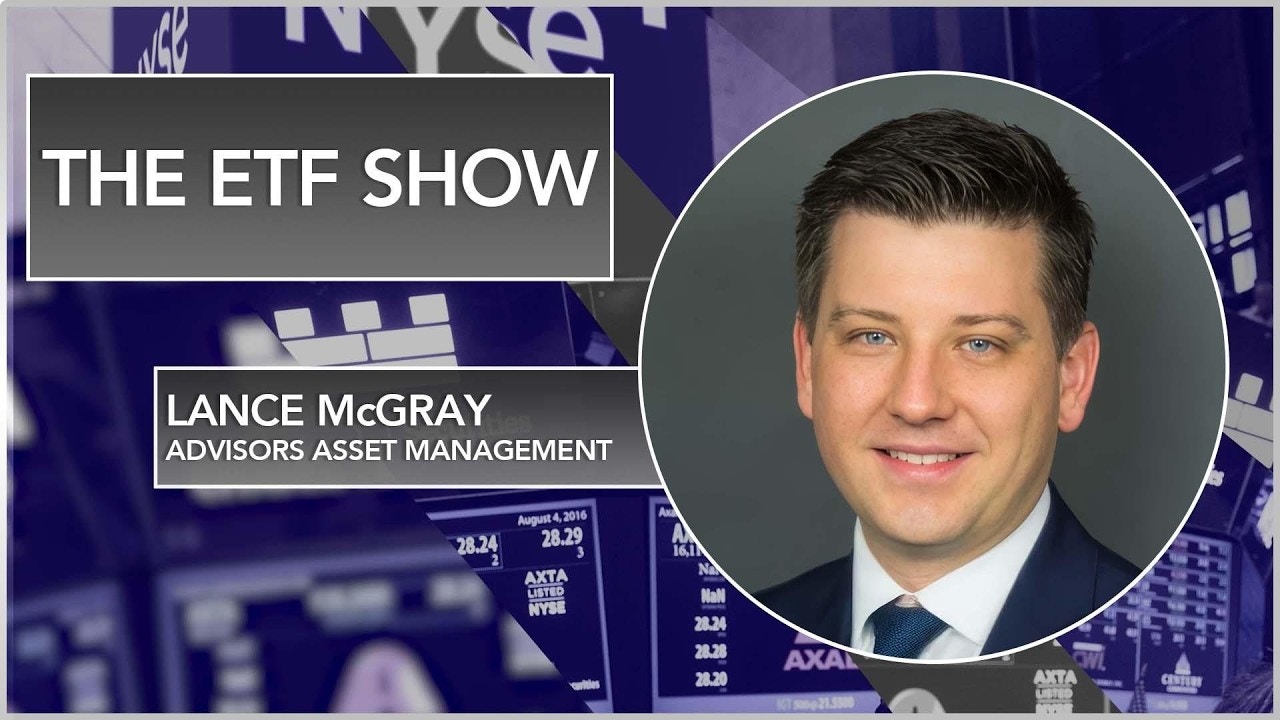
The ETF Show - US-Iran Conflict Sends Oil ETFs Soaring
Lance McGray, Managing Director and Head of ETF Product at Advisors Asset Management joins The ETF Show.

What’sTheFund
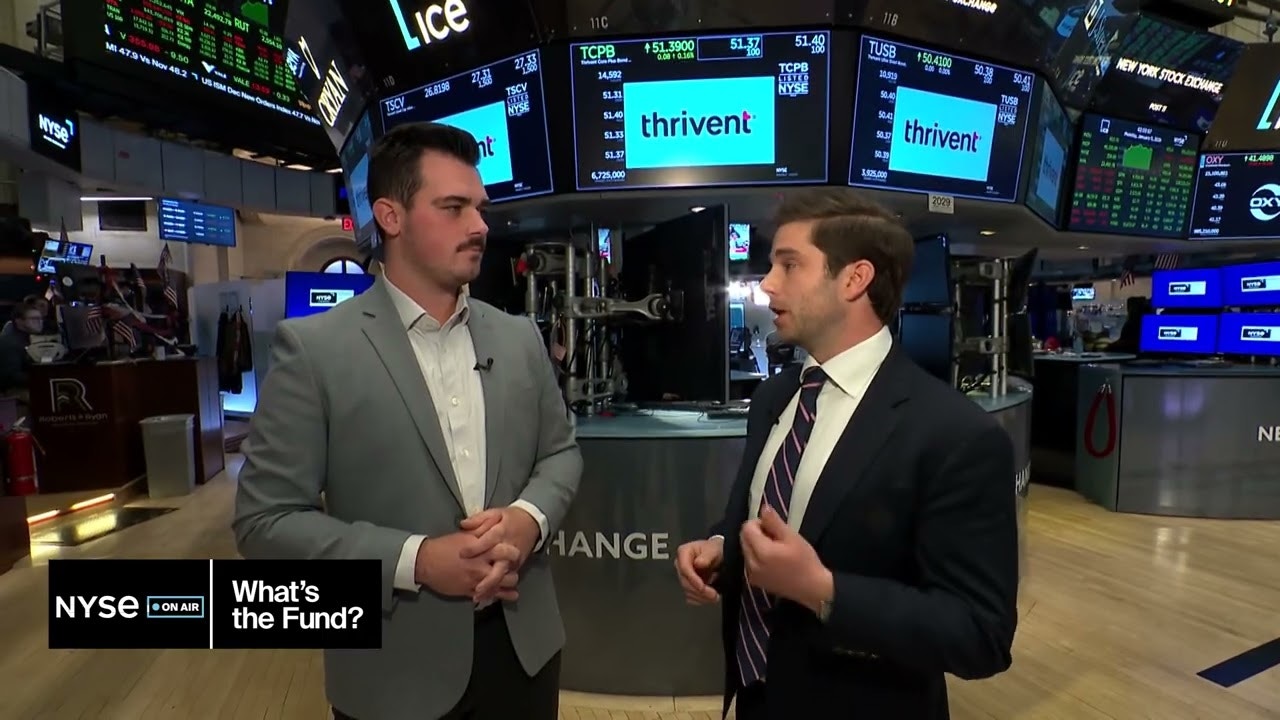
What's the Fund | Thrivent Small Cap Value ETF (Ticker: TSCV)
Kyle Detullio, ETF Capital Markets Specialist at Thrivent Asset Management, joins Ethan Hertzfeld on the NYSE trading floor to discuss the Thrivent Small Cap Value ETF (TSCV).

What’sTheFund
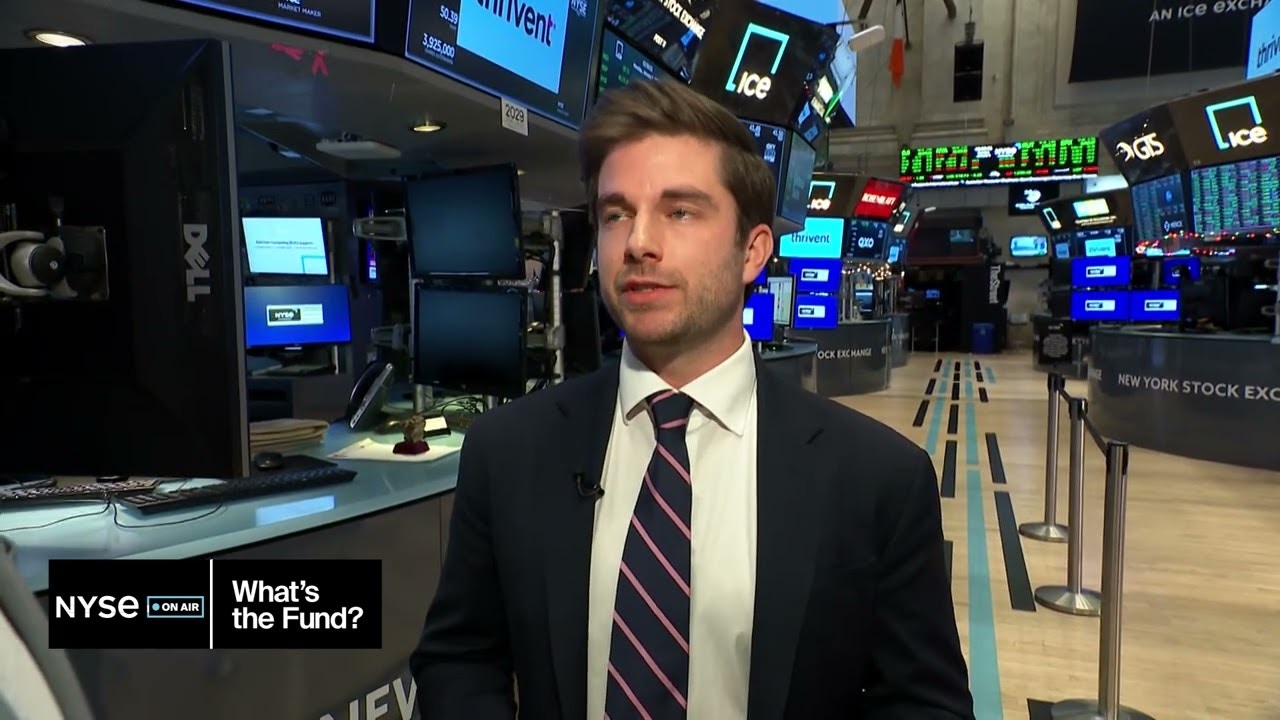
What's the Fund | Thrivent Small-Mid Cap Equity ETF (Ticker: TSME)
Kyle Detullio, ETF Capital Markets Specialist at Thrivent Asset Management, joins Ethan Hertzfeld on the NYSE trading floor to discuss the Thrivent Small-Mid Cap Equity ETF (TSME).
What’sTheFund
What's the Fund | Thrivent Mid Cap Value ETF (Ticker: TMVE)
Kyle Detullio, ETF Capital Markets Specialist at Thrivent Asset Management, joins Ethan Hertzfeld on the NYSE trading floor to discuss the Thrivent Mid Cap Value ETF (TMVE).
Browse all educational columns



Calamos Investments Powers the Next Phase of the Autocallable Revolution
Join J.P. Morgan’s Bram Kaplan, Head of Americas Equity Derivatives Strategy and Matt Kaufman from Calamos Investments as they dive into the growing global opportunity in autocallable income—an increasingly dominant strategy within structured products, now available through ETFs.
Accepted for 1 CE Credit