Global ETF Survey Is Live! 600+ ETF Professionals Weigh In. See Results →



Episode 22: Brendan McCarthy, Goldman Sachs Asset Management
Brendan McCarthy, Global Head of Exchange Traded Distribution at Goldman Sachs Asset Management, joins ETF Central's The Podcast to discuss the GSAM lineup of ETFs alongside a market review for the ETF industry.

Keep up with what matters in ETFs
Get timely ETF insights, market trends, and top ideas straight to your inbox.
Your newsletter subscriptions with us are subject to ETF Central's Privacy Policy and Terms and Conditions.
In this episode, Douglas Yones, Head of Exchange Traded Products at the New York Stock Exchange, is joined by Brendan McCarthy, Global Head of Exchange Traded Distribution at Goldman Sachs Asset Management, as they discuss the GSAM lineup of ETFs alongside a market review for the ETF industry throughout 2024.
Douglas and Brendan discuss:
- The lineup of GSAM ETFs and where they fit in an investment portfolio
- Best practices for building successful ETFs
- An outlook for the ETF industry in 2024
Like what you're reading?
Stay in the loop — get the latest ETF insights: trends, analysis, and expert picks.
Transcript
Douglas Yones:
Hello and welcome to ETF Central, the podcast where we bring the latest and greatest ETF industry perspectives directly to you through in-depth conversations with key thought leaders from across the ETF ecosystem. I'm your host, Douglas Yones, the head of Exchange Traded Products at the New York Stock Exchange, the home of ETFs.
Now today I'm joined by my friend Brendan McCarthy. Brendan is the Global Head of Exchange Traded Fund Distribution at Goldman Sachs Asset Management. Brendan first joined Goldman Sachs in 2001 in New York as an Equity Portfolio Sales Trader in the Securities Division. He then relocated to Tokyo in 2006, later to Hong Kong, where we met one another for many years. And in Hong Kong he helped build and manage the Asia Pacific Portfolio Sales trading team before he returned back to New York City in 2013. He then joined BlackRock as a Managing Director in ETFs and Index Investment Management business, specifically responsible for the iShares Client Engagement team, returning back to Goldman in 2022 to assume his current role. Brendan, thank you so much for being here.
Brendan McCarthy:
Doug, no, thank you. Thanks for having me. And it's funny listening to say all that, it partly makes me feel old and been around a block. And then I look at you and yes, we met many, many moons ago, but you certainly haven't changed a bit. So either I'm aging and you're staying the same or something's going wrong here.
Douglas Yones:
No, it's Zoom. We're recording this over Zoom and I've used the filter. I'm not a cat, but I do look young. I don't even know where to begin. I want to talk first, before we go through some of the career progression and spending time across Asia, I want to talk a little bit about your role now. So sort of catch us up. For those that maybe follow Goldman Sachs Asset Management or don't, I'm sure everyone is aware, Goldman has a series of ETFs. For the GSAM team, where do you guys spend your time? What tends to be your day-to-day focus?
Brendan McCarthy:
Yeah, I think first and foremost it's important to remember that our GSAM ETF franchise is part of a much bigger organization. And that may sound commonsensical and logical, but I think it's important to remind folks that we're part of a $2.8 trillion business when you think about assets under supervision. But that's for the broader asset management group here at Goldman Sachs. When you think about that platform and our business in particular, it does get pretty exciting because being part of that broader asset management platform here at Goldman, that means access to all of the investment teams, investors, active management, process, et cetera, et cetera. So really just being part of that large franchise is important.
Our ETF team, we're integrated into that, right? We're integrated across three different pillars. Certainly the product in terms of product development. We're integrated into our portfolio management business. And then of course we're integrated into distribution. And I mentioned that in part because when you think about a large asset manager, an ETF team can be standalone and operating independently or to be integrated in to the rest of the firm, which is the direction we're really going in because we want to get the most out of our broad investment teams. We want to get the most out of our broad distribution teams so that we can bring the best of Goldman to the ETF wrapper and get it out the door to all of our clients.
So where do we spend a lot of time? Candidly, I spend a lot of time doing exactly that, really integrating our business into the rest of the firm to achieve what I just explained. So that means a lot of collaboration in product development, a lot of understanding in terms of the investment process to make sure that we have best in class operational logistical process to manage the funds, to working with our risk teams, and then of course distribution across our retail and wealth business, across institutional, et cetera, et cetera. So off assets of product development, risk management, and then distribution from an ETF perspective and really integrating that into the rest of the firm.
Douglas Yones:
And obviously you guys are tapping into all the different resources within the firm, but it sure seems like you wear a lot of hats. I want to go deeper there, but before we do, let's back up a step. So when you and I first met each other, I mean you weren't an ETF guy, if that's a phrase. I own many buttons that say, "I Heart ETFs." I don't know how many buttons you had back then, but take us to the beginning. I mean, you come out of school, did you always want to be in finance or trading or where did it all begin?
Brendan McCarthy:
Yeah, it's funny because I've moved around a lot, but I've always been in sort of a fairly consistent lane. My first job out of college was in foreign exchange trading, and that was simply because I just needed to be on, quote, unquote, "Wall Street" and I took whatever job would have me that would allow me to work on a trading desk. Unbeknownst to me, it was an incredible experience being thrown into a Spot FX trading desk right out of school, learning in real time and understanding risk transfer, understanding how to react to news and events, et cetera, et cetera. But I learned after doing that for a couple of years, I was probably more inclined to be a salesperson than a trader, Doug. So after a couple of years of FX trading, I actually moved to Goldman, so that would've been around 2001, to join their Equity Portfolio Trading team, specifically focused on international equity. So it allowed me to leverage that little experience I had an FX into a global equities business.
And was I thinking or were we thinking about ETFs in 2001? I mean they were there, sure, on the trading floor and in the background and certainly happening. And our ETF trading team sat with our portfolio trading business, we worked very closely together. And it's really interesting to think about those sell side firms trading floors back in 2000, 2001 versus today. But if you do think back, and I do reflect on it quite often, what was happening then really was the foundation for what we see today. When you think about how the portfolio trading business was working side by side with the ETFs, the ETF team, right? An ETF trader making a market, the portfolio team helping them hedge in real time. Underneath the hood, what was happening with electronic trading and changes in market structure, all of that was happening.
And sorry to go on a tangent, but I was sitting there watching, observing, being a part of it, not realizing that this industry was being formed all around us and you probably had similar experiences. But that seat was great because it exposed me to global equities, a multitude of clients from pension funds, large asset managers, hedge funds, and my job was really to help people implement global index strategies around the world. And that presents a lot of logistical challenges that you can imagine.
So again, backing it up, I wasn't thinking about or doing ETFs, but when you're trying to implement a several hundred million dollar global equity portfolio, you are thinking about not just the execution in all those markets, but the operations to it, the settlements, making sure that everything goes right for that client from start to finish. Again, that's pretty instrumental in ETF logistics as well. So again, I wasn't in the ETF lane, but I was kind of playing in that field. and as you pointed out, it took me to Asia to do similar type of work. Again in the background, concurrent was this ETF thing was bubbling up even when I was working in Tokyo and then Hong Kong and just kept getting more prominent and prominent in everything that we were doing-
Douglas Yones:
I'm going to cut you off. I want to ask you a question.
Brendan McCarthy:
Yeah.
Douglas Yones:
And I know you actually mentor a lot of young people. You're involved in a series of charities and charitable endeavors where you do spend a lot of time helping young people get the opportunities that they need to be successful. One of the questions I feel like probably comes up for you, I know it comes up for me when I talk to younger people, it's sort of like, "How do you know?" Especially for your career, I think we could point you to say we've simplified it a lot, Brendan, but the reality is you've had a lot of different roles. Yes, within the same company, which is even more impressive, you've been able to take the knowledge and move to the next role within Goldman, take the next leap, take the leap, next shoot over to Tokyo, go to Hong Kong.
What sort of woke you up to say, "Hey, that's the next thing I need to go do, or that's the next thing I need to be a part of"? Because you're right, it was happening around us. I think a lot of us who are sort of veterans in the ETF industry now look back and say, "Oh, well this happened and this happened." But at the time, it's not like any of us thought, "Oh, this is going to be the thing." Right? I mean, it was just one more thing we were working on. Are there signals, are there signs? Are there flags you look for? What drives you to say, "Okay, that's the next thing I need to go work on"?
Brendan McCarthy:
Yeah, it's funny, I think about was there any one thing or was it several things? It's easy looking back to say there might've been several things. But look, first and foremost, being young at the time, at the time, not now, and going to Tokyo, that was around 2006, I didn't ask to go, actually. I was told to go. And it's funny to think about that. I was told to go for quote, unquote, "a couple of years", which is often what you're asked to do.
Douglas Yones:
Yeah, I like the phrase voluntold.
Brendan McCarthy:
Voluntold, exactly. But to me, it was such an exciting, both personal and professional opportunity. And so when that came up, I ran towards it and embraced what candidly turned out to be one of the best moves of not just my career but my life as well. Learning to work across different cultures with different people, understanding how to navigate what was a very different environment. But I think it just made me much more aware as a professional in terms of how to operate and work with people and collaborate, et cetera, et cetera. I also think it's important, especially this day and age in our business, having that global perspective because money's 24 hours, as you well know, our business is 24 hours and our clients are thinking globally. So in hindsight, being told to go to Asia back in 2006 was fantastic.
But as it relates, Doug, to ETF specifically, I don't know if there was one specific aha, but I can give you a couple of examples where it was more like mm-hmm. Being in Hong Kong and helping Asian based clients, asset managers, et cetera, grade US listed ETFs back in 2010, '11, '12, that was interesting to me that some of these large institutions were looking at US listed products, both equities and fixed income and starting to implement them in meaningful size. That really made me think for a second, "The fact that these institutions are embracing this wrapper, something's going on there."
Similarly, at the same time, sitting in Hong Kong, taking phone calls from US-based hedge funds who were looking to trade ETFs in the middle of the night made me go, "Mm-hmm, on one hand I'm seeing a large Asian based institution. On another hand I'm seeing a hedge fund. And again, this is 2010, '11, so it's a big industry by then, of course not what it is now. But the fact that different client types were really embracing the wrapper for very different reasons. The big institution was making a big allocation. The hedge fund was just hedging something. But using the ETF, that also made me go, "Mm-hmm, something's really going on here."
Then I think the last thing that I think pushed me over the edge though, in terms of "I need to go and do this fully" was when I moved back to the US. I've been working at Goldman in Asia for seven years on sales and trading, went back to New York, and it was just stark how much the trading floor had changed. It was incredible how prominent ETF this would've been now 2013, '14, '15-ish, how prominent ETF were in the flow of funds and information, seeing the variety of client types, yes, the hedge funds and pension funds, but the big wealth community using them as well. So it was just so obvious to me, yes, there was all the market structure changes, but how much ETFs were dominating flows and conversations and implementation. And that's I think what put me over the edge to say, "I've been so close and working alongside this industry my entire career. I'm going to go and do this full time." And that's when I moved to the issuer side and I went to BlackRock. So long-winded way of saying, not one moment, but a few.
Douglas Yones:
Yeah, no, it is always interesting and I think your points are very valid. I remember you and I sort of spending time together in Hong Kong. And we had crossover, as you mentioned, there was pieces of your business in ETFs and there was crossover of my business because I was buy-side building ETFs, but trying to learn and understand the trading world and figuring out how do we tap into those institutions, how do we get in front of them? And there was so much crossover, but you've made a number of different big leaps. And probably for you, they were all just natural and you were voluntold.
But ultimately for people who are sort of following you in your footsteps or want to follow you in your footsteps, you've been able to really, I don't know how to define this, but execute almost perfectly on when you've made these big career leap decisions of, "Hey, I like FX, but this isn't for me, so I'm going to go figure out the next thing. And hey, ETFs start to become something, I'll keep an eye on them and keep learning even though I don't need to. And then, hey, I'll be voluntold to Tokyo." But you probably could have gone home. Instead, you chose to continue on to Hong Kong and then, hey, you probably could have continued to build your career in Hong Kong, but you decided to come back.
So you're making these sort of key decisions and you're executing them flawlessly. And so I think it's just fascinating to see. Are there flags in your mind when you look forward now in the industry to say, "Okay, you are ETF full-time." Are there things happening today that you're starting to go, I guess for you, "mm-hmm", are there things out there that are trends that you're just sort of really watching? Maybe they're just not big enough yet, but you're just keeping an eye on them?
Brendan McCarthy:
Yeah, I think the commonality of all those leaps and everything in terms of what might be next as well though, but the commonality I think for me in the career was I was always kind of adding on to a familiar skillset and leveraging a familiar skillset and kind of keeping the career trajectory aligned to that. When I think about what's happening now and where we go next, we talk about the innovation that ETFs have brought to the marketplace, and I think everyone likes to think it's done. It's done. I mean, just what we've seen in the last few weeks in terms of what's been launched on Bitcoin, et cetera, et cetera, it is clearly not done. And so things I'm looking at is where else will the ETF wrapper continue to be adopted and help innovate globally? I think there's still a lot of work to be done there.
And again, I'll tie that back to my own career, because I spent time overseas, I'm keenly interested in what's happening in the fund space, ETF space in Europe, in Asia, where I think there's plenty of opportunity for not just innovation, but still adoption. It's still early days globally, I think. I made comments before about early days, this concept of people, money being 24 hours. I like to think ETFs are an interesting problem solve for money transfer and risk transfer around the world in real time 24 hours a day. How does that evolve? I'm sure you think about those things all the time. But I think that there's opportunity in the global nature.
Then clearly product development, we've always talked about is it ETFs and something else? ETFs or something else? I firmly believe that it's ETFs and, ETFs inside, that alignment. And I think that will continue whether you're talking about new asset classes, there's still pockets that have not been fully integrated into the ETF wrapper if you think about alternatives. So there's still a lot of room to run on that innovation front, and I strongly believe there's significant room to run globally. So those are things that I'm really working on.
Douglas Yones:
Yeah, I couldn't agree more. And I mean some trends we're tracking on our side, in addition, I agree with what Brendan's looking at, active management right now. I mean, someone told me yesterday in a meeting that cashflow, I haven't looked at it so I can't validate this, but net cashflow is roughly just under half of the cashflow is split between active management. So it's about, I don't know, something like 45-55 active passive. That's interesting to me. We're continuing to track that here. And by the way, if you want any of the data, it will come out formally through our newsletter. It's free. You can sign up homeofetfs.com, click on the active ETF newsletter that comes out monthly, has all the data for the entire industry. It's free. The other trend we're watching is this idea of multi-share class ETFs. We won't get into it here. If you're interested in multi-share class, the most recent filer was First Trust. That's public. You can watch a webcast that we put together to learn all about multi-share class ETFs and the filings coming forward. That's also available at eftcentral.com.
Brendan, let's come back to Goldman Sachs Asset Management. For those listening in, we say GSAM, that's what that means. So apologies if we do that, but talk a little bit about the lineup of ETFs and how they do fit into, I guess, the Goldman view of investment portfolios.
Brendan McCarthy:
Yeah, and so we're trying to deliver a broad and balanced product suite, and part of that is because as a large asset manager, we want to make sure we're providing those portfolio solutions. So our suite currently, our ETF suite is 39 products, roughly 32 billion or so. And it really started with the smart beta on the equity and fixed income side. And so our active beta is our equity multifactor suite, really is the flagship and where it all started. And the reason for that was we wanted to find and bring to market more unique portfolio building blocks. And so we have them across large cap, small-cap international, et cetera. And what we find clients are using them as a core building block, either aligned to or in replacing your maybe traditional market cap. But that smart beta tilt is something we started with. Fixed income as well with our fixed income access product, which is just another form of building blocks.
And part of it was when we came to market originally was the biggest and most prominent use case of ETFs are building blocks, plenty of players in the traditional space there. We wanted to have those quote, unquote, "smarter" building blocks to offer in equities and fixed income, and again, very much core building blocks used across wealth and institutional investors. The product range then has evolved, and you were just talking about active, where we've spent time the last few years, and really where we're spending time going forward is exactly that. So we do have a lineup of active equity products across thematic derivative income, most recently small-cap. And that's very purposeful, right? That's purposeful where we want to bring the best of the Goldman active investor to the ETF wrapper. Some of these like the small-cap can be viewed as a core position, the thematics perhaps more satellite positions. And the derivative income, which is a new and growing category, a significant category, can be viewed both as a core replacement or a core enhancer, if you will.
But all of these, the first question is how is somebody going to use this in a portfolio, right? Strategically, how is somebody going to use this? And that sort of is the driving force around how we thought about bringing products to market and how we think going forward. But to the point you made, Doug, around trends and everything else, and everyone is reading about it, is really active management. And I think the time really is now for that because let's face it, for years, clients have adopted the ETF wrapper originally in index form, but have gotten very comfortable with the benefits of the ETF wrapper. I think the expectation now is they're not going back.
So performance will always drive the need in wanting this for active management, of course. But if I'm going to get that active management, I also want the benefits of the ETF wrapper that I've become so accustomed to. I think there's a real realization in the marketplace from issuers right now that that just is the reality. And yes, active can survive and thrive, the performance is there, but the investors have become so comfortable and have accepted and want the benefits of the ETF wrapper, the tax efficiency and everything else you know and love in that active form. So that's where we're spending our time today across equities, fixed income, some non-traditional exposures as well, but really working with our active teams.
Douglas Yones:
Yeah, it was exciting. Earlier this week, your portfolio manager for your new ETF GSC, the Goldman small equity fund active manager. But it was just such a unique experience to have the portfolio manager on the floor of the exchange and chatting, talking about their process and their philosophy and how the team gets together and all the analysts. And by the way, that interview, we will publish that. It's not live yet, but it will be available at etfcentral.com. It's a new level for ETFs. I think if we go back in time for you and me spending our time a decade ago, we didn't think like that in ETFs. It was, "Let's find an index. Let's try and backtest the heck out of this thing. Now let's try and do the best we can to forward test in different market conditions." And now we're getting the best of the best.
I mean, you said it's tapping into the Goldman Sachs portfolio manager that historically maybe you had to be an institution to be able to get that, and now you're able to wrap that in an ETF and have it available in everyone's brokerage account. It's another reason to be excited about ETFs for the next 10 or 20 years. Obviously, we talked about GSC, but in general, you started to get into this, is there a starting point or how do you think about product development when you forward look and say, "There's spots in our lineup we want to fill"? Could you talk us a little bit through that process?
Brendan McCarthy:
Yeah, yeah, absolutely. And look, again, it starts with the wantingness to have a balanced product suite for the needs and issues today and tomorrow. Product development definitely informed by the trends that you're talking about here. For sure, that influences us. But mostly it's, "What are we hearing from our clients? What are they asking for?" And then we try to balance that with, "Where's our edge, where can we deliver that active investor?" But I would think about product development in three buckets is the investment trends, just big pools of assets, where are they? Where are they going? Whether that be the global ag, municipals, et cetera, just, "Where are the big pools of assets that our clients are playing in? We need to provide a solution."
Secondly, I would call it around just the wrapper efficiency, where's just the wrapper a better solution? We can see that through flow of funds, by client sentiment, where behaviors are changing, they want the ETF wrapper in that space. And then the third is just opportunistic. Where's the ball going to bounce next? Where's the puck going to go? I don't know any other sports analogies there. But really thinking about what we were talking a little bit about before, Doug, where hasn't the ETF wrapper gone? And that's really where we are spending most of our forward time and trying to plan for that by talking to clients, asking about their portfolio needs and then bringing the best of Goldman to that.
So yeah, the broad investment trends, wrapper efficiency, and then just being opportunistic and can we shape that into something that we can sit in front of a CIO, whether it's wealth or institutional, and say, "What are the issues you're facing? How can our suite help you?" We don't want to pitch that one product. We want to ask in still case a suite that can help solve portfolio problems today and tomorrow. So look, there's a little bit of anticipation there, trying to guess, but be very thoughtful in how you do that. But a lot of it is also listening to clients.
Douglas Yones:
And of course, you can run through the entire lineup of Goldman ETFs on their website or make it easy, go to ETF Central. You can just type in Goldman, you'll find the entire suite of Goldman Sachs Asset Management ETFs.
Brendan, when you look at 2024, I mean, wow, what an interesting market. I don't know where to begin. We've got geopolitical tension, we've got inflation, potential for interest rates to drop, although today's jobs reports as we're recording this maybe shake things differently. Insert problem here. And yet, markets are rallying in a pretty big way. You and the team, do you see opportunities in 2024? And when you are talking to advisors, how are you, I don't know, suggesting positions for the fact that we're in all these different scenarios plus an election cycle?
Brendan McCarthy:
Yeah, look, our house view is sort of expect more of the same trend level, GDP growth, limited recession risk. So this is where we're at. But I think our discussions are around let's talk about where we were the past couple of years from situational to what's in front of us. And so where were we? Obviously the abnormalities of the pandemic, lower rates, little cross asset competition, inverted yield, a lot of concentration. That's kind of what we were, what folks were dealing with. And so level setting on that. And then, okay, well, what's ahead of us? To your question, 2024, what's ahead, potentially more normalized investment environment, higher but stable rates perhaps. We believe broader asset class opportunities, a steepening yield curve. And with all of that top on the elections and volatility, what we're talking about is the need to have that balanced portfolio. And so working with clients to talk about what are the opportunities across asset class and then within asset class.
So that's sort of the approach and the layering of the conversations we're happening because we want to lead with understanding what's top of mind for them. We don't want to lead with, "Here's the one solve for you today." I wish I had that silver bullet. So it's more about what are the opportunities across and within asset class. And then our recommendation in how we're talking about things is while looking at that holistic picture, taking more of a bottoms up micro approach to within the asset class. And I think from there, you do see plenty of opportunities.
Spending a lot of time, Doug, you brought up the GSC, the Goldman Sachs small-cap, actually spending a lot of time on that. And part of that is just given this micro approach, macro tailwinds around small-cap, et cetera, et cetera. But that would be an example of taking our conversation from holistic down to that micro approach and a potential solution to your core. But I think striking balance this year amidst what is going on in anticipation of election cycles, there's going to be several national elections around the world, not just here, so really taking a balanced approach. And as an ETF issuer, ourselves or anyone else, it really does lend itself for interesting and fruitful conversations around the entire portfolio.
Douglas Yones:
So I'll put you on the spot a little bit, but I'm curious, when you look at your lineup, do you have a favorite ETF right now?
Brendan McCarthy:
So when my kids ask me that, the answer is, "I don't have a favorite child." So we can't have a favorite ETF. I'll give you two answers. The first one I'll stick to you mentioned our PM came to visit you on the floor, Rob Crystal, I'm going to mention that again because we're really excited. Rob Crystal and Greg Tuorto are the co-PMs for our most recent launch, which is listed with you of course, GSC, the small-cap core. The reason I'm so excited is not just because of where we think there's opportunity in small-cap, but specifically because of the PMs and the team we're working with. It really is our first foray into active small-cap in the ETF wrapper. Also, there's not that many in the space. But you're talking about a robust fundamental equity active management team, a high conviction growth in value small-cap portfolio, roughly 100 names in the underlying.
This is the story we want to talk to clients about around the Goldman Active investor and making that accessible to really everyone via the ETF wrapper. So really excited about that one. And it was just launched in Q4. Right now, I think we're also pretty excited about something that you might argue is pretty boring and stable, but just equal weight. And a lot of that is just based on it's a utility today as people are talking about concentration risks and magnificent seven and et cetera, et cetera, so GSEW is our equal weight fund, and that's just very timely and topical in real time. So again, no favorites here, but those tend to be coming up in conversations in real time.
Douglas Yones:
Yeah, and interestingly enough, just yesterday, Steve Poser from the New York Stock Exchange published an article showing some of the valuation and performance differences across equal weight versus market cap weight. So there's some great New York Stock Exchange research out there for free all on our website.
Brendan, I walk away from that interview with, having access, I don't think people realize having access to a Goldman Sachs portfolio management team for you and me as retail to be able to buy an ETF, how impactful that is. And that interview is fantastic. It will be coming. Please do not miss it. It'll be on all of our threads, etfcentral.com. We'll probably have that published here, and by the time this podcast goes live, it'll be there. So just go to etfcentral.com and learn about GSC, it is so informative. For those that are out there. Let's say there's advisors out there, Brendan, and maybe they're not having a conversation today with the Goldman Sachs Asset Management team, but they really should be, they want to learn more about the lineup, they want to figure out how they can get access to your house view, are there best practices? How do they get to your teams?
Brendan McCarthy:
Yeah, and thanks for asking that, Doug. Look, the beauty of working with the GSAM ETF business is it, candidly, can just be an easy way to become a partner of ours and a client of ours and really open up access to other things we can offer, whether that just be research or investment ideas, et cetera, et cetera. So it's connecting with your Goldman Sachs Asset Management sales representative, ETF specialist. And if you're not sure where that is or how to do that, it's simply gsam.com/etfs. You'll find all that information there.
But we do want folks to view our ETF business because it is an extension of everything else Goldman Sachs Asset Management has to offer. As I started with at the beginning, we're a small part of a much bigger franchise, but working with us on the ETF side behind us is that big franchise, and we really do want to welcome investors and clients into that and really make sure we're offering the best of what's inside the building here. So yeah, I would say www.gsam.com/etfs is the most simple way to start if you don't already have access to your broader Goldman sales rep.
Douglas Yones:
Yeah, so you can put the power of Goldman Sachs Asset Management in your pocket via ETFs. Of course, you can follow Brendan on LinkedIn and every other social media site. Brendan and I talked a lot about education today, both our personal education, but also education of the industry trends. One of the ways that you can make sure that happens for your personal growth and frankly your personal career, is you can become a certified ETF advisor. It is a FINRA designation. It's available now. Go to ETF Central, click on ETF Institute at the top. It'll take you through. And by the way, within the last 30 days, we just dropped the most recent module all about cryptocurrencies, digital assets. So the information in there is continuing to grow and flex alongside the ETF industry. Do not miss it. Become a CETF just like me.
That is a wrap on today's edition of ETF Central the podcast. As a reminder, you can find this episode as well as many other episodes and spend time utilizing that free ETF screener all at etfcentral.com. Thank you to Brendan. Thank you for being here to share your insights, your story, and a lot of knowledge about where we're headed in the marketplace. Stay tuned for upcoming episodes featuring thought leaders from across the ETF ecosystem. I'm Douglas Yones, head of Exchange Traded Funds at the New York Stock Exchange, the home of ETFs.

Latest ETF News
See all ETF newsThis is How Calamos Turned Wall Street’s $100 Billion Secret Into an ETF


From Dot-Com to ETFs: How One Entrepreneur Helped Spark an Investment Revolution
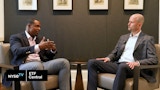
How Blossom Social Is Revolutionizing Retail Investing and ETF Marketing
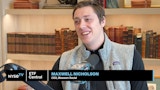
Is 2025 the Year for Financing Food Fast?


 Advantages of ETFs over Mutual Funds1/6
Lower Costs
In this guide, we'll explore the advantages of ETFs over mutual funds, giving you valuable insights into why ETFs have gained significant popularity among investors like yourself.
Leveraged ETFs: Unlocking the Potential for Amplified Returns1/6
Understanding Leveraged ETFs
Explore leveraged ETFs: potential for amplified returns & risks. 5 ETFs to consider across equities, commodities & fixed income.
What is a Leveraged ETF?1/6
Introducing Leveraged and Inverse ETFs
In this guide, we'll dive into the world of leveraged ETFs, exploring their definition, mechanics, potential risks, and rewards.
Recent educational content
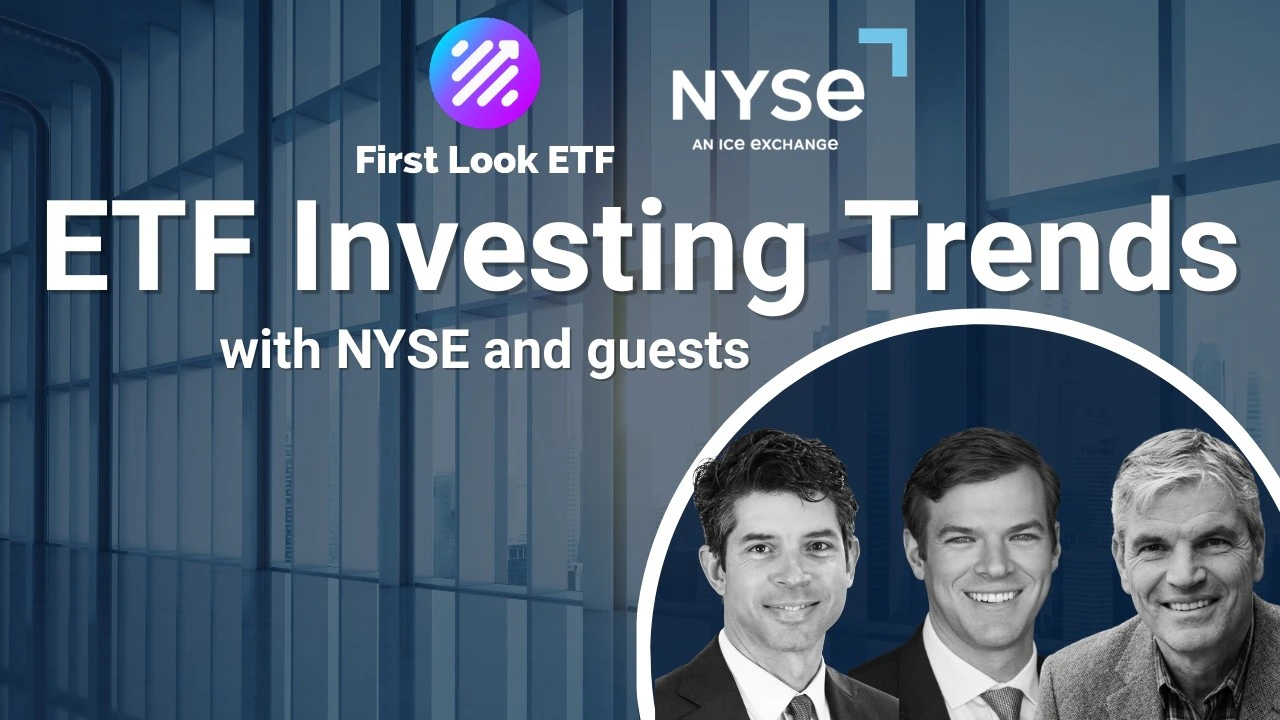
First Look ETF
First Look ETF: Income, International, and Cash Flow ETFs
In this season 6 episode of First Look ETF, Stephanie Stanton @etfguide examines the latest ETF marketplace trends with NYSE and guests.


ETF Trends
ETF Industry KPIs October 5, 2026
This week’s KPI data overview highlights key metrics and trends shaping the ETF landscape.

ETF Trends
ETF Industry KPIs September 28, 2026
This week’s KPI data overview highlights key metrics and trends shaping the ETF landscape.
ETF Trends
ETF Industry KPIs September 22, 2026
This week’s KPI data overview highlights key metrics and trends shaping the ETF landscape.