Keep tabs on your favorite ETFs with a personalized weekly tracker. Create a Watchlist now →



Episode 18: Katie Stockton, Founder and Managing Partner at Fairlead Strategies
Katie Stockton, Founder and Managing Partner of Fairlead Strategies, joins ETF Central’s The Podcast to discuss the current state of the markets and best practices for utilizing technical analysis in an investment portfolio.

In this episode, Douglas Yones, Head of Exchange Traded Products at the New York Stock Exchange, is joined by Katie Stockton, Founder and Managing Partner of Fairlead Strategies to discuss the current state of the markets and best practices for utilizing technical analysis in an investment portfolio.
Douglas and Katie discuss:
Get data on 14,000+ ETFs
Access Trackinsight's reliable and comprehensive data with 500M+ points on 14,000+ ETFs.
- Technical analysis and its use for risk management
- A deep dive on her first ETF, $TACK
- Best practices for building a successful career on Wall Street
Transcript
Douglas Yones:
Hello and welcome to ETF Central, the podcast where we bring the latest and greatest ETF industry perspectives directly to you through in-depth conversations with key thought leaders from across the ETF ecosystem. I'm your host, Douglas Yones, the head of exchange traded products at the New York Stock Exchange, the home of ETFs. Today I am joined by Katie Stockton. If you don't know Katie, you should. Katie is the founder and managing partner of Fairlead Strategies, an independent research firm and investment advisor focused on technical analysis. She's also the portfolio manager for the Fairlead Tactical Sector ETF, that's Tack T-A-C-K. I'm sure we'll talk about that today. She sits on the board of directors for Cary Street Partners. Boy, I see Katie, I feel like on CNBC every day. You probably do too. And by the way, prior to forming Fairlead Strategies, she spent more than 20 years here on Wall Street providing technical research and advice to institutional investors. Most recently, she served as chief technical strategist for BTIG and Chief Market Technician at MKM Partners. Katie, thank you so much for taking the time. Thank you for being here today.
Katie Stockton:
Of course, Douglas, glad to join you.
Douglas Yones:
I know we're going to take it in a bunch of different directions. I know you have a lot to share, but let's start a little bit with where we are today, right? Could you take us to Fairlead strategies? How did this all come about? What do you focus on? Where are you spending your time?
Katie Stockton:
Yeah, it's somewhat unique to be just wholly focused on technical analysis, but indeed that's what we do. It's all technical is all the time for us. And it started that way for me, in fact. I got into technical analysis in college. I had an internship and picked up a part-time job at Dorsey Wright and Associates, which is a well-known independent research provider as well of technical analysis. So we're doing something similar here now at Fairlead Strategy. So I spent most of my career on Wall Street, as you mentioned, publishing technical strategy research, and ultimately in 2018 launched Fairlead Strategies to produce that research and give it a broader reach. So not just for the institutional clients that I was servicing on Wall Street, but then also to open it up to Main Street, if you will. And I felt like there was a real appetite on Main Street for technical analysis.
It's a really accessible discipline, meaning that you don't have to spend hundreds of hours to try to understand something. It's all price-based and also volume and listen with price trends, I think it's such a visual science or art that you can almost start from day one. You don't need to go read all of the textbooks before you get started with technical analysis. So that's why I think it really had some uptake on Main Street. It was a big departure from early in my career when I felt like I had to advocate for technical analysis to institutional clients. They weren't believers maybe way back when, but I think if that all really changed for the most part in 2008. And it's when technical analysts got a good name because they helped folks manage risk through that major downdraft. And that's where indeed we see the value in part in technical analysis is in managing risk.
So we're not trying to predict things all the time, but what we're trying to do is understand probabilities and also to have defined risk reward metrics. And that gives us an edge in the markets we feel. So it's what we focus on here. We are essentially an independent research provider and we produce, we have a subscription service where we produce multiple research reports per week and including a daily note talking about primarily US equities, but we cover all asset classes and of course they're all interrelated anyway, so we spend a lot of time on things like treasury yields and crude oil.
And then we'll do in addition to all that top-down work, we'll do a lot of bottom-up work or our version of that, which is looking at individual stock charts to try to find opportunities and look for themes and things to take advantage of. And then as you mentioned, in 2022, we launched our ETF, so it's our first investable product. It's called the Fairlead Tactical Sector ETF. And really it was a natural byproduct of what we were already doing. So for several years at Fairlead, we'd been producing research and we took our methodology and essentially created a series of rules around it and created a product that people could express a view using.
Douglas Yones:
Which is a really fascinating leap, because here you are, you're producing research, I guess for other people to then take the next step. And then you're saying, "Okay, well obviously you have a lot of followers. Obviously you've got the people who are accessing your research." And then maybe saying, "Hey, could you make it easier for us?" And hence the ETF solution. We always talk about the benefits of ETFs more around tax, and in this case it's probably more around accessibility and ease. But before we talk about the ETF, I'd love to back up a bit.
You mentioned this phrase just now, Katie, you said you don't have to read all the books, but I'm sort of guessing, just having known you for the last few years, you probably did read all the books. Take me back in time, right? I mean, we say these things like, "You 20 years on Wall Street" but did you sort of start out, were you in school and you're like, "Hey, I got to be on Wall Street." Or did you read the Random Walk on Wall Street and say, "Well, this is nothing but fodder for my campfire. I got to go in another direction." Where does it all begin?
Katie Stockton:
It is funny because I was already in the undergraduate business school at my university, and my university, believe it or not, actually had coursework in technical analysis. It was one of very few universities at the time that had that. So I had exposure to the coursework at the 400 level at my university. And then also I had these internships that gave me the exposure that I said, well, gosh, I really understand this. I get it. I felt like it appealed to me in terms of the outcome and taking out some of the subjectivity. I felt like some of the other stuff I was learning was a little bit fluffy. You had to use a lot of interpretive sort of work to understand something, and you almost had to use so many different projections that if one thing went the wrong way, then the whole model would be broken.
I felt like there was a simplicity to the charts that appealed to me. And it was funny because way back then it really wasn't accepted as part of a finance track. But then gradually over time, it really has that uptake, not just from Main Street as mentioned, but also from universities. I think more and more they're seeing it in their curriculum and it's in even the CFA Society's curriculum as well. So it's manifested itself now in other areas. It's not just a standalone discipline as I felt like it was then. So it did appeal to me. I was always sort of a math student, if you will. And so I liked the numbers and I think that's why the appeal was there. But also I think every student worries about having just a boring desk job. And to me, what that was resolved by was the markets being so dynamic and I felt like the charts were a great way to understand them and to do so with less subjectivity.
It's either an uptrend or a downtrend. It's either got momentum or not. So there's a lot of binary takeaways that we can get from the charts and from the indicators that we use. So that was the appeal to me. And then I really was fortunate in having that coursework and the internships, and it was that internship at Dorsey Wright that helped land me in my first job out of school, which was actually doing point and figure charting for a buy-side hedge fund. And it was really a great perspective to have straight out of school working as an analyst. And so I felt very fortunate to have those opportunities arise. We also have, just like the CFA Society, we have our own designation.
It's a CMT or Chartered Market Technician in order to receive that, which I would recommend anyone who's really genuinely interested in technical analysis goes ahead and pursues it to receive that you have a three level exam process to get through over the course of years, not months. And I graduated from college with a level one of that by doing the coursework that I had there. And so I was really kind of set on that path very early on, and I received my CMT designation in 2001. So I think I was the youngest female at the time to do that, which I was pretty proud of, and ultimately became the vice president of the CMT Association. And what a great organization. I mean, they've created my network, they've educated me and helped expand my reach.
Douglas Yones:
Yeah, talk a little bit about that. So, how did you traverse internship to first role as an analyst? What takes you to that next role? Obviously, the being a part of the CMT group and that's going to open up networks. What did the next step look like? I think most of us and some of the younger listeners, they sort of get the, I'm going to work hard and I'll come out of college and I'll get the first level, but then they're there for a year or two and they're like, well, now what do I do? How do I get to the next? What did that look like for you?
Katie Stockton:
Well, I always think that your first job is maybe not going to be your last job, but listen, if it is your last job, fantastic. So if you find exactly that sweet spot for your career early on, I mean, that's incredible. For me. It was really a sweet spot, but I wasn't ready for it. So I felt like I wasn't learning enough in my position. I was kind of trusted with all of this work, and I didn't have enough of a scope of the industry I felt, so I needed to go from what was a smaller firm and somewhat insulated in terms of access to others and technology to a larger firm. And so I ended up being a sales assistant helping a group at DLJ, which I'm sure you've heard of, do technical analysis and incorporate it for their clients. So even though my career has taken some turns, especially once we had the bubble burst, and I was in San Francisco at that time, so we really felt it there.
It's taken some turns, but I've always had that technical analysis kind of woven throughout my career. And that's why I think it's been great, not only to have the network through the local organization we had, it was a San Francisco based Society of Technicians. So they've been a great help over the years to me. And then of course, the national organization, but also to have a specialty to follow your passion if you have one, and to specialize in something early on in your career if you have that opportunity, because that's what's allowed me to differentiate myself in my career and also given me some, I guess, appeal to otherwise opportunities that might not have given me the time of day.
Douglas Yones:
So then at some point you decide, "Hey, I'm making the big leap and I'm going out. I'm going to do this on my own." How big of a decision was that for you? Did you go back and talk to the family and say, "Hey, this is a big deal?" Tell us a little bit about that.
Katie Stockton:
I mean, it definitely was a big deal, and it is scary. I'm still scared to this day. I feel like we're still a startup, but now five years in, we have office space, we have five people at Fairlead Strategies, which I'm really proud of, a great team, and making that leap, it felt timely. I think that was the key for me, is that it felt like the right time for the industry where we had that uptake on Main Street for technical analysis, in my opinion. And we had what was, I'd say, fee compression happening on the sell side. So, the broker dealers were all seeing the commission pool sort of shrink, and that was to no fault of anyone.
It was actually probably primarily because of technology and maybe some regulatory changes. So we felt that the product that we were producing would almost be better as a standalone subscription-based product as opposed to something that was being grouped with fundamental research. Not to say that they're not complimentary, because they certainly are that, but any kind of top-down analysis really can act as a standalone. So we felt like we had the ability to move out on our own. We also felt like we had a broader market that we wanted to reach, and we wanted to address the, I guess, commoditization of research prices such that we now offer our research at what we consider to be a very low price for the quality of the product.
Douglas Yones:
So, you're out on your own. You've got your own firm, you're producing research, you've got your subscriptions, you've got your clients, I presume both buy and sell-side clients, and then at some point you're like, "I need an ETF." Tell us a little bit about that transition, because that's a pretty big leap as well to turn around and say, "I'm doing all this work in technical analysis, but I really think I need to build my own investment vehicle."
Katie Stockton:
We didn't start the company and I say we, because I actually work with my sister for one, she's one of my partner's. We didn't intend on going into the ETF business, nor really to have an investable product. It really did come somewhat organically the idea to pursue that. And I think some of the best ideas or best projects do come without much planning because that means it's a natural fit for what you're already doing. So it sort of originated working with some clients on project work with them, we have all sorts of clients. Mind you, we have individuals, we have huge asset managers, we have buy-side, we have sell-side institutions that it really runs the gamut. But we had a couple of quantitatively oriented clients at the time who actually are not our primary client base. Our primary client base is investment advisors. But these quantitatively oriented clients had seen some potential in the methodology that we adhere to, our methodology developed over the years as I worked for various mentors throughout the course of my career and picked up different tools from them.
And I'm so grateful to them, to my mentors for having taught me what they've taught me. And I basically took the pieces of what they do that developed my own comprehensive methodology around that. And I really love the indicators. And as you can imagine, indicators being mathematically based, lend themselves really well to quantitative types of strategies. So we worked with some of these quantitatively oriented clients to help develop some rules around our own methodology. And in doing so, we felt we had something that could be, sort of morphed into a systematic technical strategy of our own. So, we had great support from our own clients, and we were able to create some rules around our methodology and through our back testing, found that over the long term, as we would expect, and certainly hope that technicals add value, especially in terms of risk management, and not just to find upside opportunities, but also to protect when the markets aren't firing on all cylinders.
So, we felt like there was an opportunity to develop a product that did exactly that. And so we, over the course of probably about two years in development, we created something, found a great partner amongst our clients who is Cary Street partners, of which they've been a fantastic partner of ours and operate as the fund's advisor, whereas we are technically the sub advisor as the portfolio manager, TACK. So we found partners who had more resources than we do here at Fairlead in terms of all the back end and trading and compliance and what have you, to make it possible, which has been great.
Douglas Yones:
So you've launched TACK. I think we started with the ticker symbol. For those that are listening along, you want to go do some research. It's T-A-C-K. Easy to remember. It's the Fairlead tactical sector ETF. Could you tell us a little bit about it? How does that transform, I think the work you're doing on a daily basis at fairlead? How does that end up in the ETF?
Katie Stockton:
Yeah, so it was a systematic approach that we took, and we really believe in a systematic approach in general. What we found, a lot of this came from our client base and seeing what they were doing and what they were succeeding in and failing in. And we found that for one, a lot of them were doing a sector rotation strategy. And we felt like we were somewhat of, well, we fancy ourselves, at least sector experts. We've always done relative straight work around sectors because we believe it's the best way to source upside leadership and outperformance in the major indices. For us, it's the S&P 500. And so we feel like there was a lot of that going on, and we also felt like it was going on, but with limited success that the sector rotation strategies are best done systematically, where you're not making discretionary decisions because I think you can get swayed by the news, you can get swayed by earnings season, you can have confirmation bias by subscribing to too many research providers.
So I think there is a real value in having a systematic approach where we found that the advisors that we were talking to often subscribe to too many services, so they could say, receive maybe five different reports in the morning and focus on the one that affirmed what they thought. Whereas, the indicators in approaching things more systematically, it just keeps you honest, right? It tells you what's happening, not what you think should happen. And so we took our methodology and we decided on taking a really long-term approach here because we believe in a long-term approach in investing, it also tests the best. When you go and look at a model over history, based on our methodology, it really is the best timeframe over which to invest. We're talking about years, not months, and it also allows you to reduce the noise or not get too caught up in it.
So we took the monthly indicators that we use, so it's our methodology, but sort of zoomed out the monthly bar charts. And we use a combination of indicators that are designed to measure momentum over bought, over sold indications with a quantitative overlay for just when we have a lot of these sectors to choose from, which of course has not really been the case since early 2022. And we take that and we first apply that discipline to this sector ETFs that we're trading in our own ETFs. So think of our ETF TACK as a fund of funds or an ETF of ETFs. Our investable universe are the State Street spiders. So the sector ETFs representing 11 major economic sectors of the market very actively traded, very liquid. And we found that our clients were really comfortable with those ETFs already and using them themselves. And so our goal was to identify the best sectors and invest in those to try to take advantage of upside.
But importantly, we wanted to focus on that risk management piece where we could limit the drawdowns and major drawdowns. And of course, 2022 was exactly that. A major drawdown that we launched in. The way we managed that risk is by moving our sector positions into a combination of asset classes, also via ETFs, in fact, from State Street that tend to outperform, do better collectively than the S&P 500 in weaker environments. So maybe sideways to lower markets. For the S&P, you tend to see the combination of short-term treasuries, long-term treasuries and gold that we're expressing via ETFs, outperform, or do better. Of course, the long-term treasury bear market cycle has been a challenge, but when you diversify that exposure to short-term treasuries in gold, then that was mitigated for us in our strategy.
So that was a welcome thing to have that diversification and it tests well over time. So we feel that we have a strategy that's designed to leverage the upside when we have upside in the markets by being in the best sectors, but then also has the ability to move into alternative asset classes when the market is not firing on all cylinders. So that's overall the strategy. And then of course, as you sort of alluded to earlier, the ETF creates a nice tax wrapper around that kind of strategy, a sector rotation strategy, which could end up yielding a lot of taxable events if you're doing it yourself.
Douglas Yones:
So you're here, you're in the for good or bad, you're here in the ETF industry. I'm curious, are there surprises, good or bad? Is it what you expected? Tell us a little bit about the experience of coming into the buy-side.
Katie Stockton:
It's funny, I joke about how once we listed on the NYC and you guys have been great in terms of supporting us, I felt like then my work should have been done. And you laugh, of course. It really just was beginning. So there's a lot of mechanics in terms of distribution that honestly I really wasn't aware of. And so we've had to learn as we go. And if anything, I think the support that I've gotten, not only from you all at the NYC, but just from our partners and friends in the business, and given our experience over the years, it's been awesome.
I mean, we've really been so grateful to have the support that we've had. And because of that, I would say our expectations were exceeded, if anything, I don't know if I knew exactly what our potential was, but we're really happy to see the fund having gotten good uptake and having done so without paying a whole lot for marketing. We're really doing this all very much ourselves because we believe in the strategy. We also believe it's a good sort of core long-term holding something that we hope people can kind of, you know the old phrase, set it and forget it if they could apply that to TACK. We wanted to design something that they didn't have to worry about, is sort of the message there. So we think it's a long-term strategy, and we're in it for the long-term here at Fairlead in terms of supporting the ETF and ideally letting it be leveraged into other strategies.
Douglas Yones:
Yeah, for sure. And we always liken it to training for a marathon is launching an ETF because there's so much work to launch an ETF day in day out, big project teams, small project teams, days, nights, kind of blood, sweat and tears, and then it launches. And really now you're at the starting line. Now you have to go run the marathon. And it is, it's a long slow grind. But I know here your partners, we're all excited. We're glad to be partnered with you and hopefully even this podcast, if you're listening in, please tell your friends and neighbors to go do some research on Katie, Fairlead and the ETF, T-A-C-K, TACK. Katie, when you look at the market, I see you on CNBC. Could you tell us, maybe share, what do you see as some of the opportunities out there? I mean, this is to some extent a very strange market and in many ways a market that most of us have never seen in our investing lifetimes. Are there opportunities out there for advisors, for investors?
Katie Stockton:
Absolutely. I mean, there really are always opportunities, especially from a technical perspective, the world is our oyster. We can find opportunities from more of a global macro perspective, but ideally we have opportunities here in the US and the equity market. That to us is the sweet spot. And that's where we really are excited to see TACK shine too, when we have a bull market cycle that's much broader than what we have had this year. So it is an unusual year that we've had here in 2023 because of the narrowness. So everybody talks about the lack of breadth and the narrowness of this uptrend that you can see in the likes of the S&P 500 because it really has been driven by the mega cap stocks and it's been driven home by many, many strategists. But it is true, and it is why a lot of investors are probably looking at their portfolios here as we come into year-end and looking at them with some disappointment because they just haven't done what these major indices have done.
Where we feel like that will change for the better is when that breadth does expand and we think that's essential for the market to continue to forge higher from here, meaning that the breadth or the participation on the upside goes from more than just the likes of say Microsoft to now okay, well, financials for one, the financial sector which we're trading via XLF, the healthcare sector, which has really been a source of underperformance when looking at the sector, spider XLV, if those two sectors which have really big footprints in the S&P 500 kick in a way that they really haven't yet, we think that would be a great contributor to the sustainability of the uptrend.
What could trigger that is potentially a breakout by the S&P 500, which as we speak, is effectively testing our key resistance levels. So we're really very close to what could look like a breakout and could happen fairly quickly. And for us, that would occur decisively above 4,600, which if you look over the past year or year and a half or so, that's where the S&P 500 had topped out a few times. So it's a strong level. Above that we think that sentiment, which is already improved in the month of November, would improve further and draw folks' attention to more than just these mega caps and more than just the technology sector and help them find value in other sectors.
Douglas Yones:
I want to talk a little bit about year-end planning with you. First, I'm going to do the fun part, which is for any of your family members listening in, your sister at work when they listen to this podcast, Katie, have you ever heard of Stoxart, S-T-O-X-A-R-T? Do you know this?
Katie Stockton:
No.
Douglas Yones:
This is now for your family member that don't know what to get you for Christmas. That's the website. It's Stox, S-T-O-X-A-R-T, if you're listening in. It's a woman, she's an artist who's been doing this for years. She picks, I think a lot of times her own stock symbols and does a technical analysis chart and turns them into unbelievable artwork. I think you can make special requests as well.
Katie Stockton:
That's really cool. Well, I have a good ticker for her at least, and we're all about supporting well run businesses.
Douglas Yones:
This is now your family member need to look when they think about year-end for you, they need to think about Stoxart, but for us, I was hoping you could do a little year-end planning look into that crystal ball. Are there ways that you think advisors should be positioning themselves as they get ready to close out on this year and then also look at 2024?
Katie Stockton:
And we make weekly recommendations to that end. And we can't tell you where the S&P 500 will be on a certain date. We don't have that crystal ball unfortunately, nor does anyone. But we can put probabilities in our favor, and right now we're saying stay the course, hold onto your existing long exposure with the goal of holding it through year-end because the momentum is still there. So we still have short-term upside momentum from a top down and bottom up perspective for the most part. And we've even seen shifts in our intermediate term gauges. So we're still somewhat noncommittal. Our bias has been bullish short term since the very end of September, and we're staying that way. Our bias, long-term is still neutral. That would change above that 4,600 level where we think we'll get some more longevity out of this move. So for now, we're committed to our existing positions and we feel that we're just not seeing a lot of cell signals.
And we do have, of course, positive seasonal influences in the month of December, not just November. So we feel that there's potential for even a breakout to unfold as early as this month. And with that in mind, we want to be there with some good exposure. We have sort of, if you will, pulled back to use a technical term and new editions and new ads and sort of what we're recommending. But we have said still that folks should consider adding exposure when they see positive technical catalysts. For us, that means breakouts or things like mac device signals.
So using the indicators to understand when there's momentum shifts, those are still very actionable. But as you of course see these very steep up moves as we have done over the past few weeks, the risk reward profile does get less attractive, and then it dictates more attention to risk management. So we would certainly have in mind a level below which we're uncomfortable and want to reduce exposure. There was a couple of weeks ago, some gaps up on the chart. So I think just as a general rule of thumb, I wouldn't want to see the market come back into those gaps. So if folks are trying to get really more specific here as we get into year-end, I'd like to see the major indices and individual stocks generally hold up above those gaps.
Douglas Yones:
You had brought up early different ways advisors take in research. A lot of us that sort of sit in this side of the industry, I mean, geez, I probably look at five or six different morning notes myself. Is there sort of a best practice in your mind on how advisors or money managers should be incorporating technical analysis into their practice? How do you sort of help and guide them?
Katie Stockton:
Yeah, and I think it's important to have that systematic approach. That doesn't mean you have to have a system like the basis for TACK, although of course TACK as an investment for those advisors makes a lot of sense because then they have their technical piece, but also a core exposure through that that has the risk management element to it. So that's obviously going to be one of our recommendations. But I think it's a matter of honing in on a process or even people that their methodology resonates with the way you think about the world and also about, or with timeframe, your typical sort of investment time horizon. Some folks lean very short term, they're very willing to capture the swings others are trying to position for the next three years. So I think we all of course want to generally have long-term trends on our side.
So that's sort of a shared goal. But some are much more willing to take advantage of short-term swings. So once you find as an advisor, find a couple of research providers or a methodology yourself that really suits your investment style and time horizon, I think you don't need to get much more complex than that to really hone in on the ones that are helping you the most knowing that no service and no methodology will be perfect all the time, but you can even get information in the nuances.
And when things aren't making sense, you'll really get to know where the indicators help the most. And I think coming back to the same tools or the same people is key because you get to know it. And that's in a way a systematic approach to technical analysis. But for those who do want to develop their own methodology, I do think the CMT program is certainly a great place to start because if you're going to be doing the research, academic research, you may as well start with a study guide that will put you in a good position to ultimately get that level one and maybe a credential down the road. Because I know advisors tend to derive value from having credentials. It gives them credibility with their clients so that CMT is not only a credential, it's a differentiating factor for advisors that are trying to grow their business.
Douglas Yones:
Especially as you brought up, utilizing the CMT towards risk management. I mean, it's very timely. I was watching some of Jamie Diamond's conversation today live at an event, and this was exactly what he was talking about, is risk management and the way in which they sort of bring some of these different probability tables in-house. And it's very much spot on. Is what you're talking about is a service, is that something advisors come to you and say, "Hey, can you help us with this?" Or I guess help us understand how should advisors be coming and working with you and your team at Fairlead?
Katie Stockton:
There's sort of two ways to do it. Some prefer really to do it themselves, but they want the input that's consistent and somewhat episodic that they can get through our research. So, we do have research subscribers who we have very little interaction with, but we do consulting. And consulting can look like something where somebody's sending us an email about Tesla, as a common ticker that we get asked about, or it can be something that's really very bespoke and very high touch where we're actually taking a watch list and we're helping monitor that watch list for support and resistance levels, or we're even helping develop a strategy that enhances what they're doing on their end, but is specific to them and confidential to them as well. So there's so many ways to apply technical analysis, and we don't find that there's one sort of boilerplate solution for everyone.
But one thing we do see a lot of good traction from is by talking to people that are managing their own portfolios on a regular basis, usually monthly and going through one by one 20 or so tickers. And those tickers can be stocks, it can be gold. It really doesn't matter what they are as long as they have a price and just that sort of unbiased view that we can impart to them. And at the same time with our Zoom, we can show them the charts and help them understand how to use them themselves. It becomes a really good relationship where we can support them and they're also learning and then can impart that to their own clients. So we find that those portfolio reviews are really a very good way to go about it.
Douglas Yones:
Katie, we talked about a few different ways of your career progression, your corporate progression. Before I let you go, I'd love to get some advice from you for young women who are out there entering college or my daughter who's in her first year of college. What's some of the best advice you might have? Or maybe put it another way, what do you wish you knew then that you know now and would love to impart to our listeners?
Katie Stockton:
I would have to say, and this is more than just in college, I wish I was a better listener and I wish I took advantage of the resources that my college had to offer me when I was there. I feel like now I am still very involved with my university, and I can see that there's so much that I could have taken advantage of that I feel like I didn't. So I would say an awareness of what your college has to offer you, whether it's coursework, thinking outside of the box, talking to your advisor, and really just seeing if there's something more that you're missing. Because I think if you can find those, you might discover a lot more than you initially expected, but then also just listening, having a general awareness of the industry that you're working in.
So once you take that first job to not just be narrow focused on your position, but to have a good sense of where it fits into the broader organization, that's something I probably didn't do very well that I somewhat regret. And then I'd say the last thing would be to have some fun. I mean, I do feel like we see a lot of great resumes and they're so impressive. And these internships are starting now freshman, sophomore year. I mean, I worked at the pool snack bar I think even after my sophomore year. And I think there's value in those types of opportunities too. The most important thing, I think, is to have a good work ethic and to have sort of good interpersonal relations. And that goes for any type of career. So, to have some fun is important too.
Douglas Yones:
Yeah, really important. And I think about even in my career, two jobs that left such a mark on me, I once had a job blow torching hams. No joke. If anyone who's had a spiral carved ham with that beautiful honey glaze, it was blow torched. And there was two women that owned that company that taught me so much at a young age of just how they thought about running their company. And I also had a job at a pizza place, and that gentleman left so many marks on me about how to best run a team and run a business and never forget those things. So if you don't go out and chase a little fun and be open to some of those wonderful things you learn along the way, then you're missing out. You're missing out a lot.
Katie Stockton:
I completely agree.
Douglas Yones:
Thank you so much, Katie, for your time. For those of you, please watch out for her on CNBC, follow her on social media. Go to Fairlead and learn more about the tactical sector, ETF TACK, T-A-C-K. That is a wrap on today's edition of ETF Central's, the podcast. As a reminder, you can find this episode as well as many other episodes. And remember, go spend time utilizing that free ETF screener, type in TACK, all at etfcentral.com. You can also explore the new ETF University and all of the different thought leadership that's available for free at ETF University, brought to you by ETF Central. Thank you, Katie. Stay tuned for upcoming episodes featuring thought leaders from across the ETF ecosystem. I'm Douglas Yones, head of exchange traded funds at the New York Stock Exchange. The home of ETFs.


Latest ETF News
See all ETF newsThis is How Calamos Turned Wall Street’s $100 Billion Secret Into an ETF

AAM’s Chandler Nichols on Making ETFs Work for Advisors and Investors


From Dot-Com to ETFs: How One Entrepreneur Helped Spark an Investment Revolution
How Blossom Social Is Revolutionizing Retail Investing and ETF Marketing
Is 2025 the Year for Financing Food Fast?


 Advantages of ETFs over Mutual Funds1/6
Lower Costs
In this guide, we'll explore the advantages of ETFs over mutual funds, giving you valuable insights into why ETFs have gained significant popularity among investors like yourself.
Leveraged ETFs: Unlocking the Potential for Amplified Returns1/6
Understanding Leveraged ETFs
Explore leveraged ETFs: potential for amplified returns & risks. 5 ETFs to consider across equities, commodities & fixed income.
What is a Leveraged ETF?1/6
Introducing Leveraged and Inverse ETFs
In this guide, we'll dive into the world of leveraged ETFs, exploring their definition, mechanics, potential risks, and rewards.
Recent educational content
Asset TV
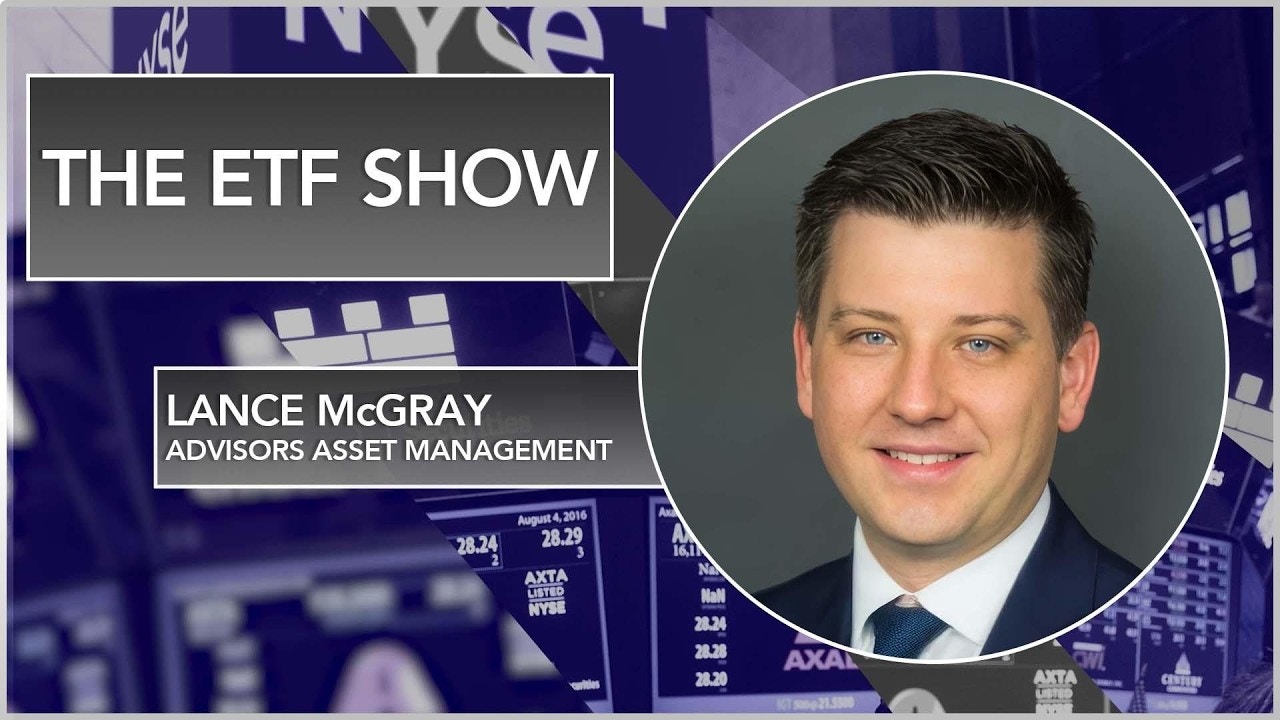
The ETF Show - US-Iran Conflict Sends Oil ETFs Soaring
Lance McGray, Managing Director and Head of ETF Product at Advisors Asset Management joins The ETF Show.

What’sTheFund
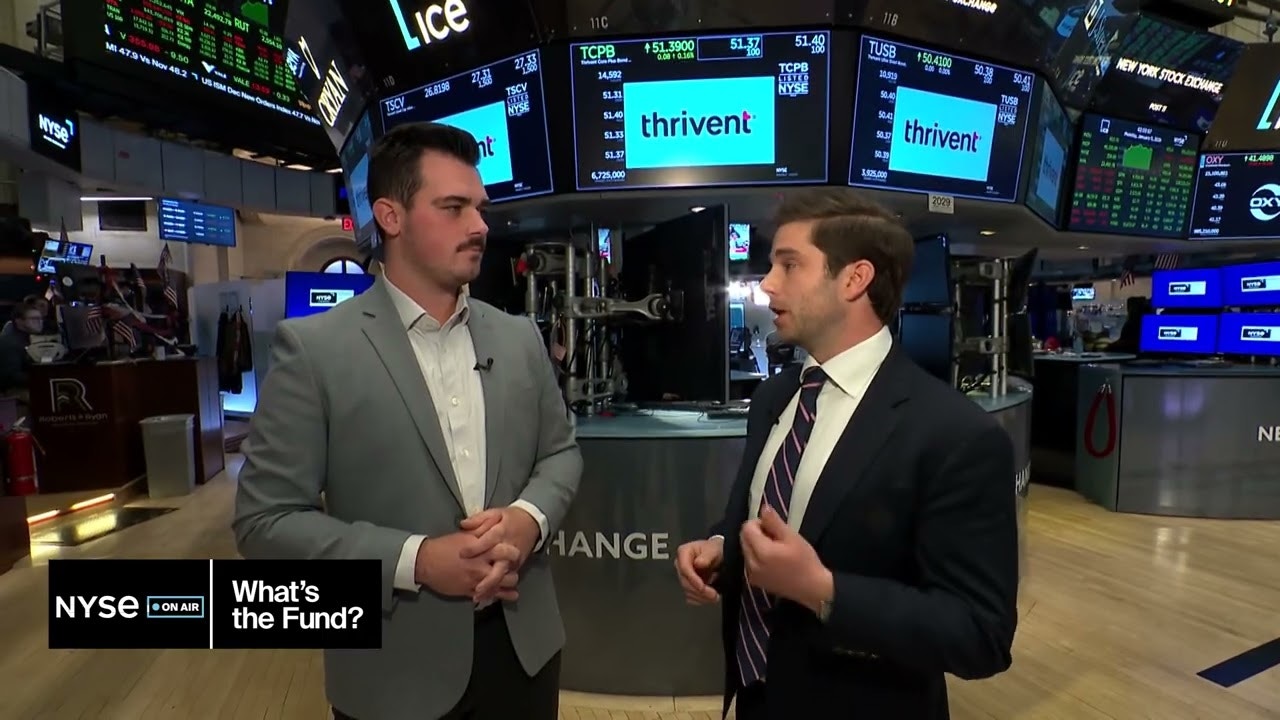
What's the Fund | Thrivent Small Cap Value ETF (Ticker: TSCV)
Kyle Detullio, ETF Capital Markets Specialist at Thrivent Asset Management, joins Ethan Hertzfeld on the NYSE trading floor to discuss the Thrivent Small Cap Value ETF (TSCV).

What’sTheFund
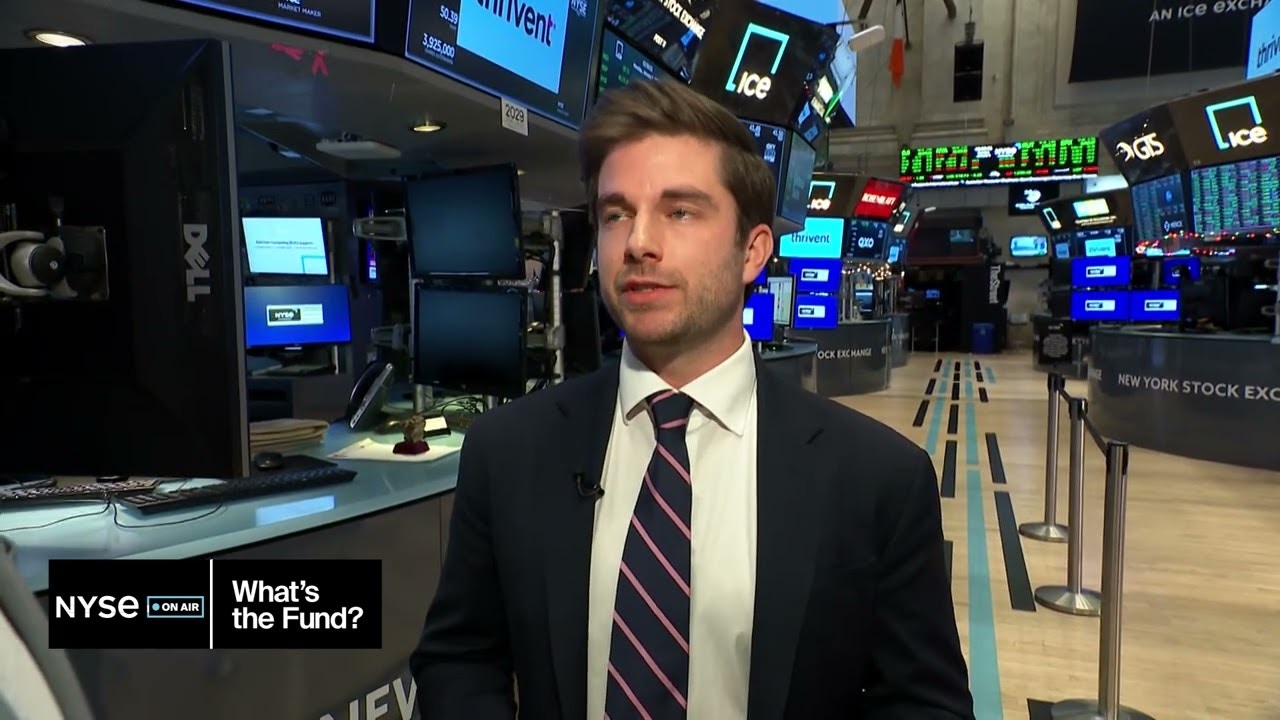
What's the Fund | Thrivent Small-Mid Cap Equity ETF (Ticker: TSME)
Kyle Detullio, ETF Capital Markets Specialist at Thrivent Asset Management, joins Ethan Hertzfeld on the NYSE trading floor to discuss the Thrivent Small-Mid Cap Equity ETF (TSME).
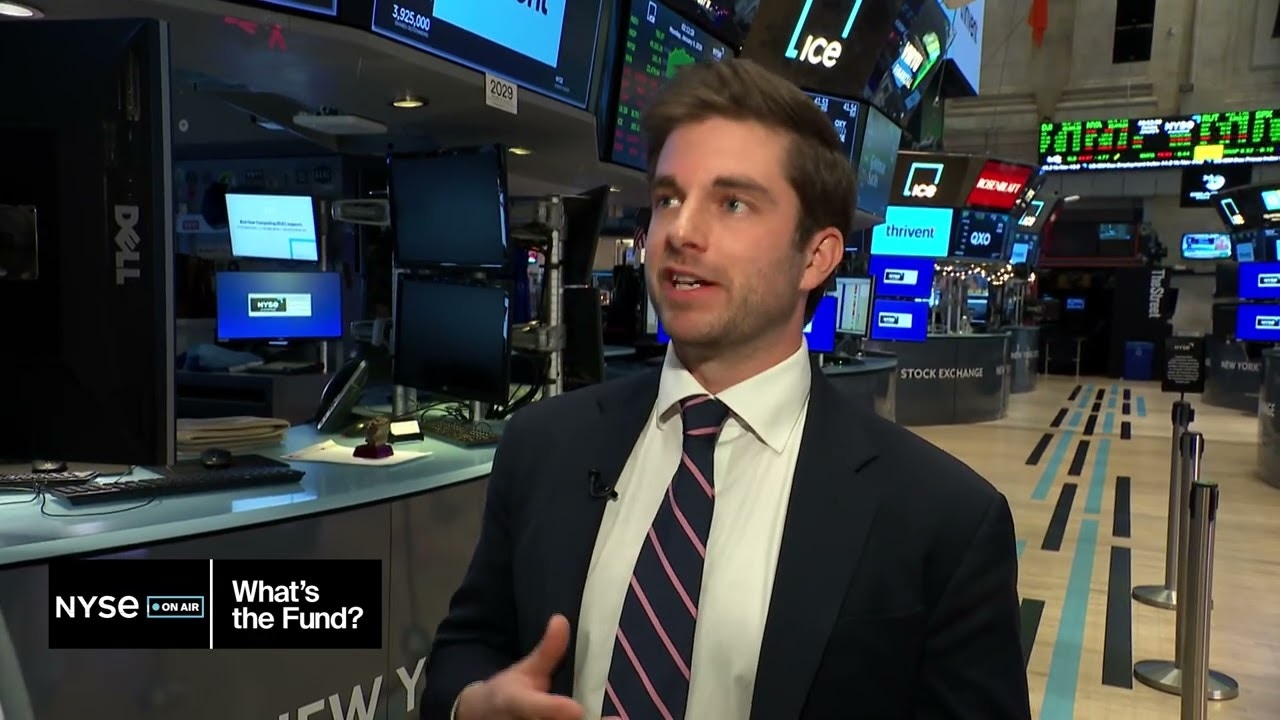
What’sTheFund
What's the Fund | Thrivent Mid Cap Value ETF (Ticker: TMVE)
Kyle Detullio, ETF Capital Markets Specialist at Thrivent Asset Management, joins Ethan Hertzfeld on the NYSE trading floor to discuss the Thrivent Mid Cap Value ETF (TMVE).
Browse all educational columns



Calamos Investments Powers the Next Phase of the Autocallable Revolution
Join J.P. Morgan’s Bram Kaplan, Head of Americas Equity Derivatives Strategy and Matt Kaufman from Calamos Investments as they dive into the growing global opportunity in autocallable income—an increasingly dominant strategy within structured products, now available through ETFs.
Accepted for 1 CE Credit