Ready-made ETF portfolios built for real investor needs. Explore now →



Entering A New Era of Defense Tech Spending
Defense spending is entering a tech-driven super-cycle, with AI, cybersecurity, and autonomous systems reshaping military budgets and creating a major multi-year investment theme.


Keep up with what matters in ETFs
Get timely ETF insights, market trends, and top ideas straight to your inbox.
Your newsletter subscriptions with us are subject to ETF Central's Privacy Policy and Terms and Conditions.
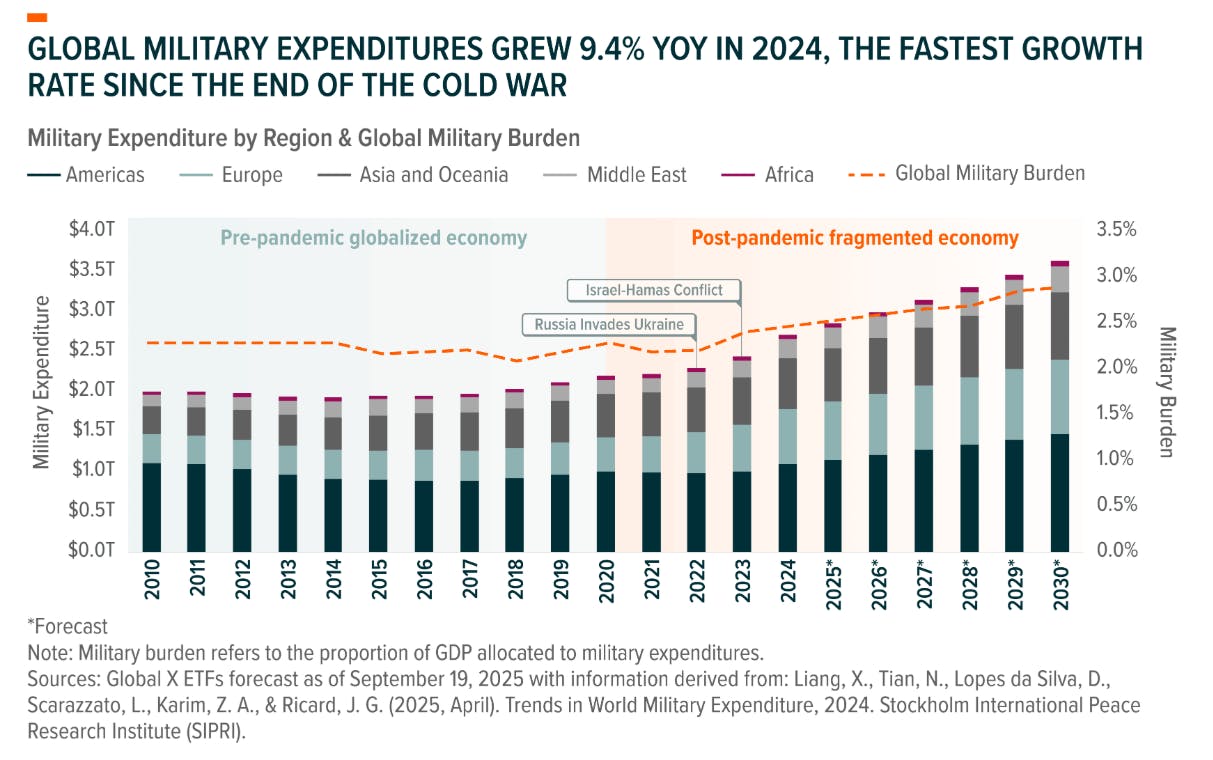
The global defense sector is entering a new super-cycle, driven by intensifying geopolitical pressures and a structural shift toward technology-led military capabilities. The world’s rising military burden – the share of global GDP spent on defense – rose to a record 2.5% in 2024, underscoring the growing urgency.¹ In the United States, the defense budget could reach $1 trillion nearly five years ahead of schedule, signaling a dramatic fiscal reprioritization under the current administration.² Meanwhile, NATO allies are pursuing greater self-reliance, committing to raising defense spending targets from 2% to 5% of GDP by 2035.³
Yet the most meaningful aspect of this transformation lies not in how much is being spent, but in how it’s being spent. Historically, defense budgets focused on weapons procurement. Today, as militaries seek to digitally modernize their defense stack, spending is increasingly allocated towards Research, Development, Test, and Evaluation (RDT&E) in an effort to integrate AI, autonomous systems, and cybersecurity. Militaries are moving beyond conventional weapons platforms, channeling investment into advanced command networks and defense frameworks designed to deliver the speed, precision, and resilience modern warfare demands.
Key Takeaways
- Global military expenditures have increased every year for a decade, reaching a record $2.7 trillion in 2024.⁴ This broad-based surge represents a global phenomenon not limited to leading military nations.
- Defense spending is increasingly flowing toward digital modernization, AI systems, autonomous platforms, and cybersecurity rather than traditional weapons and vehicles.
- The Global X Defense Tech ETF (SHLD) provides targeted exposure to companies driving the technological transformation of defense, and we believe is positioned to benefit from the realignment of a multi-trillion dollar industry.
The modernization of defense marks one of the most profound industrial shifts in generations. As global powers invest in AI, cybersecurity, and autonomous systems, the defense sector is entering an era that combines traditional arsenals with digital deterrence, where physical strength is reinforced by data-driven superiority. This structural transformation is expected to sustain elevated defense budgets for years to come, fueling innovation across hardware, software, and critical infrastructure. For investors, the convergence of technology and defense represents a multi-year growth theme that could redefine both global security and a key sector of the economy.
Click here to delve into the investment case behind Defense Technology.
¹ SIPRI. (2025, April.) Trends in World Military Expenditure, 2024
² Bloomberg. (2025, April 7). Trump, Hegseth Tout $1 Trillion in US Defense Budget.
³ CNBC. (2025, June 25). NATO Allies Agree to Higher 5% Defense Spending Target.
⁴ Global X ETFs estimate with information derived from: SIPRI. (2025, April). Trends in World Military Expenditure, 2024.
Like what you're reading?
Stay in the loop — get the latest ETF insights: trends, analysis, and expert picks.
Important Information
This material represents an assessment of the market environment at a specific point in time and is not intended to be a forecast of future events, or a guarantee of future results. This information is not intended to be individual or personalized investment advice and should not be used for trading purposes. Please consult a financial advisor for more information regarding your situation.
Investing involves risk, including the possible loss of principal. Concentrated investments in a particular sector tend to be more volatile than the overall market. International investments may involve the risk of capital loss from unfavorable fluctuation in currency values, from differences in generally accepted principles or from social, economic, or political instability in other nations. SHLD is non-diversified.
Shares of ETFs are bought and sold at market price (not NAV) and are not individually redeemed from the Fund. Brokerage commissions will reduce returns.
Carefully consider the fund’s investment objectives, risks, and charges and expenses before investing. This and other information can be found in the fund’s full or summary prospectuses, which may be obtained at globalxetfs.com. Please read the prospectus carefully before investing.
Global X Management Company LLC serves as an advisor to Global X Funds. The Funds are distributed by SEI Investments Distribution Co. (SIDCO), which is not affiliated with Global X Management Company LLC.
Topics
See all
Segments
See all
No specific market segments were tagged
Mentioned ETFs
No specific ETFs were tagged
Further reading


Latest ETF News
See all ETF newsHow SPXD Delivers a More Balanced S&P 500 Exposure

Autocallable Yield Advantage and Market Reception



Time to rethink the “plus” in core-plus bond funds



 Advantages of ETFs over Mutual Funds1/6
Lower Costs
In this guide, we'll explore the advantages of ETFs over mutual funds, giving you valuable insights into why ETFs have gained significant popularity among investors like yourself.
Leveraged ETFs: Unlocking the Potential for Amplified Returns1/6
Understanding Leveraged ETFs
Explore leveraged ETFs: potential for amplified returns & risks. 5 ETFs to consider across equities, commodities & fixed income.
What is a Leveraged ETF?1/6
Introducing Leveraged and Inverse ETFs
In this guide, we'll dive into the world of leveraged ETFs, exploring their definition, mechanics, potential risks, and rewards.
Recent educational content

ETF Trends
ETF Industry KPIs September 8, 2026
This week’s KPI data overview highlights key metrics and trends shaping the ETF landscape.

ETF Trends
ETF Industry KPIs August 31, 2026
This week’s KPI data overview highlights key metrics and trends shaping the ETF landscape.
ETF Trends
ETF Industry KPIs August 24, 2026
This week’s KPI data overview highlights key metrics and trends shaping the ETF landscape.
What’sTheFund
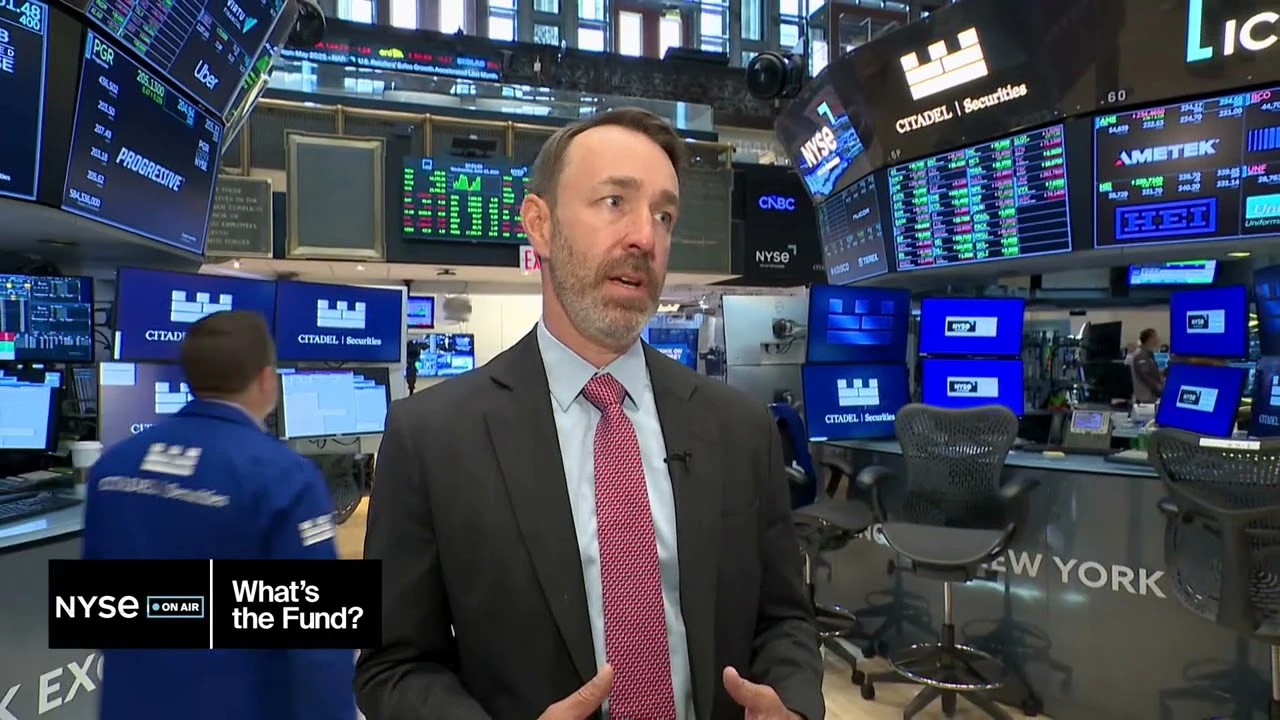
What's the Fund | Ocean Park Diversified Income ETF (DUKZ)
James St Aubin, Chief Investment Officer at Ocean Park Asset Management, discuss the DUKZ ETF, exposing investors to the whole spectrum of asset classes in the fixed income markets, through their rules-based process.

Browse all educational columns



Active Trader Report: Use of Leveraged & Inverse ETFs Way Up
Direxion partnered with Compound Insights and Vanda to explore what’s driving the evolution of active trading — and how active traders are using leveraged and inverse funds across equities, single stocks, commodities, and volatility.