From idea to ETF portfolio in minutes. Build yours now →



Easy To Buy, Hard to Read: Closing the Options ETF Understanding Gap
Survey data shows unfamiliarity, not access, is now the main brake on newer derivative-heavy ETF structures. Here is what to check before you invest.

Keep up with what matters in ETFs
Get timely ETF insights, market trends, and top ideas straight to your inbox.
Your newsletter subscriptions with us are subject to ETF Central's Privacy Policy and Terms and Conditions.
ETFs have arguably never been easier to buy. Low trading costs, widespread brokerage access and an expanding product lineup have made it possible for investors to access increasingly sophisticated strategies with the same ease as buying a conventional stock or index fund.
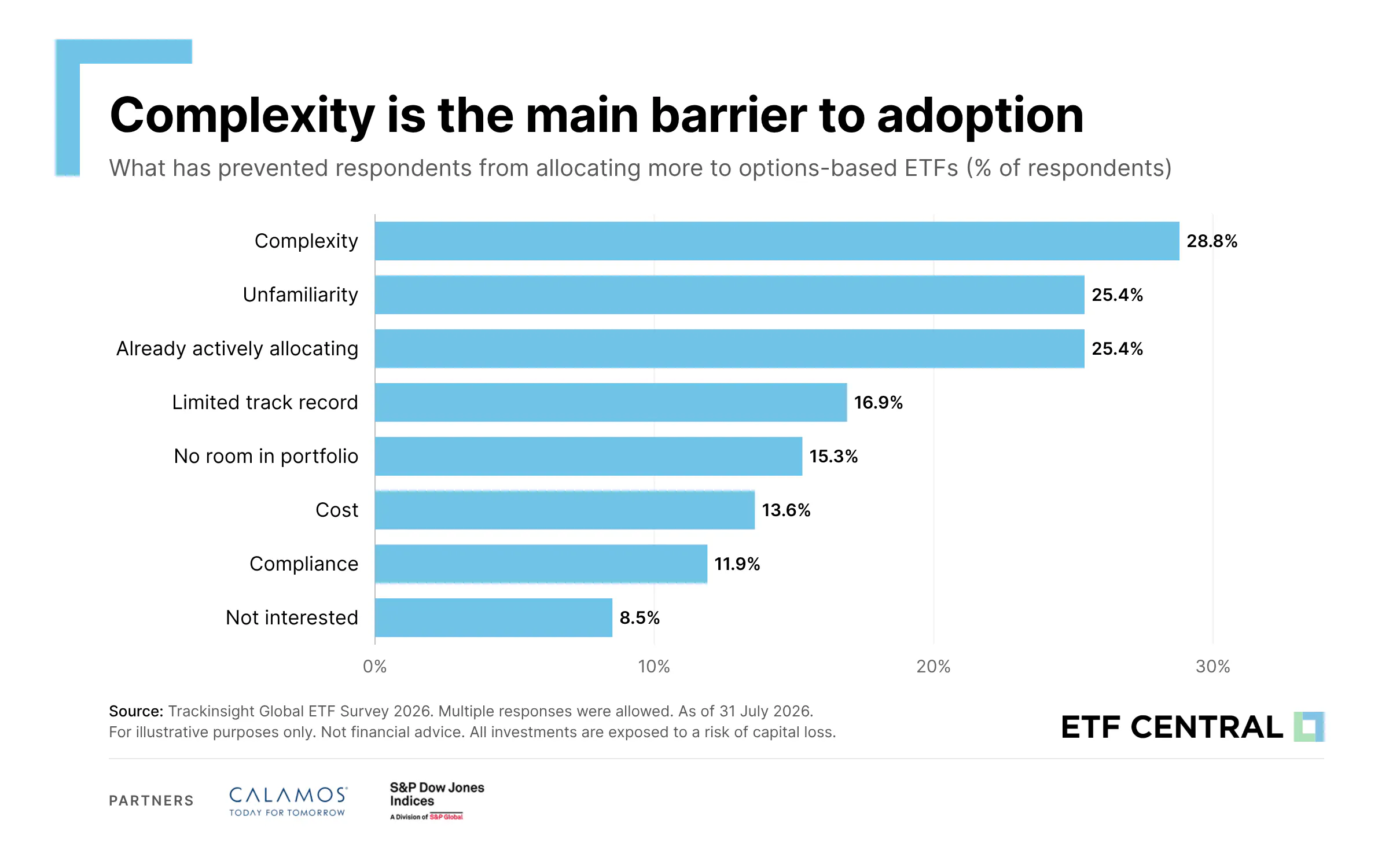
Understanding exactly what those strategies do, however, is becoming more challenging. Among investment professionals whose ETF allocations remain below their intended targets, unfamiliarity with newer ETF structures emerged as the leading barrier, ahead of concerns about market access or trading.
These findings point to an emerging challenge for the ETF industry. As product innovation accelerates, investors are being presented with increasingly complex combinations of derivatives, structured payoffs and income strategies, often packaged in the familiar ETF wrapper. Each structure can serve a different portfolio objective, but understanding the trade-offs requires looking beyond the fund's name, advertised protection level or headline distribution yield.
Consider buffer ETFs, which seek to absorb a specified portion of market losses over a defined outcome period, or floor ETFs, which aim to establish a maximum loss threshold under particular conditions. Covered call ETFs exchange some potential upside for option premium income, while autocallable ETFs introduce contingent coupons and outcomes tied to the performance of underlying reference assets.
This is the first article in a four-part series examining notable findings from Trackinsight's 2026 Global ETF Survey. Our starting point for this edition is a practical framework for evaluating four increasingly prominent ETF structures: buffers, floors, covered calls and autocallables.
For each, four questions are particularly important: 1). How long does the intended outcome period last? 2). Under what circumstances does the protection or payoff mechanism stop working as expected? 3). What might the headline income or return figure leave out? 4). How is the strategy implemented?
The answers can help investors distinguish between the convenience of accessing a strategy and the more demanding task of understanding the risks they are actually taking.
Like what you're reading?
Stay in the loop — get the latest ETF insights: trends, analysis, and expert picks.
ETF Innovation Is Outpacing Investor Familiarity
The growing complexity of ETFs is particularly evident in the options-based segment, where product development and investor demand have accelerated considerably.
Options strategy ETFs attracted a record $105.3 billion in net inflows during 2025, followed by another $77.4 billion through July 2026. Autocallable ETFs, a relatively new category that packages structured investment payoffs into an ETF wrapper, attracted approximately $3.1 billion during the first seven months of 2026 alone.
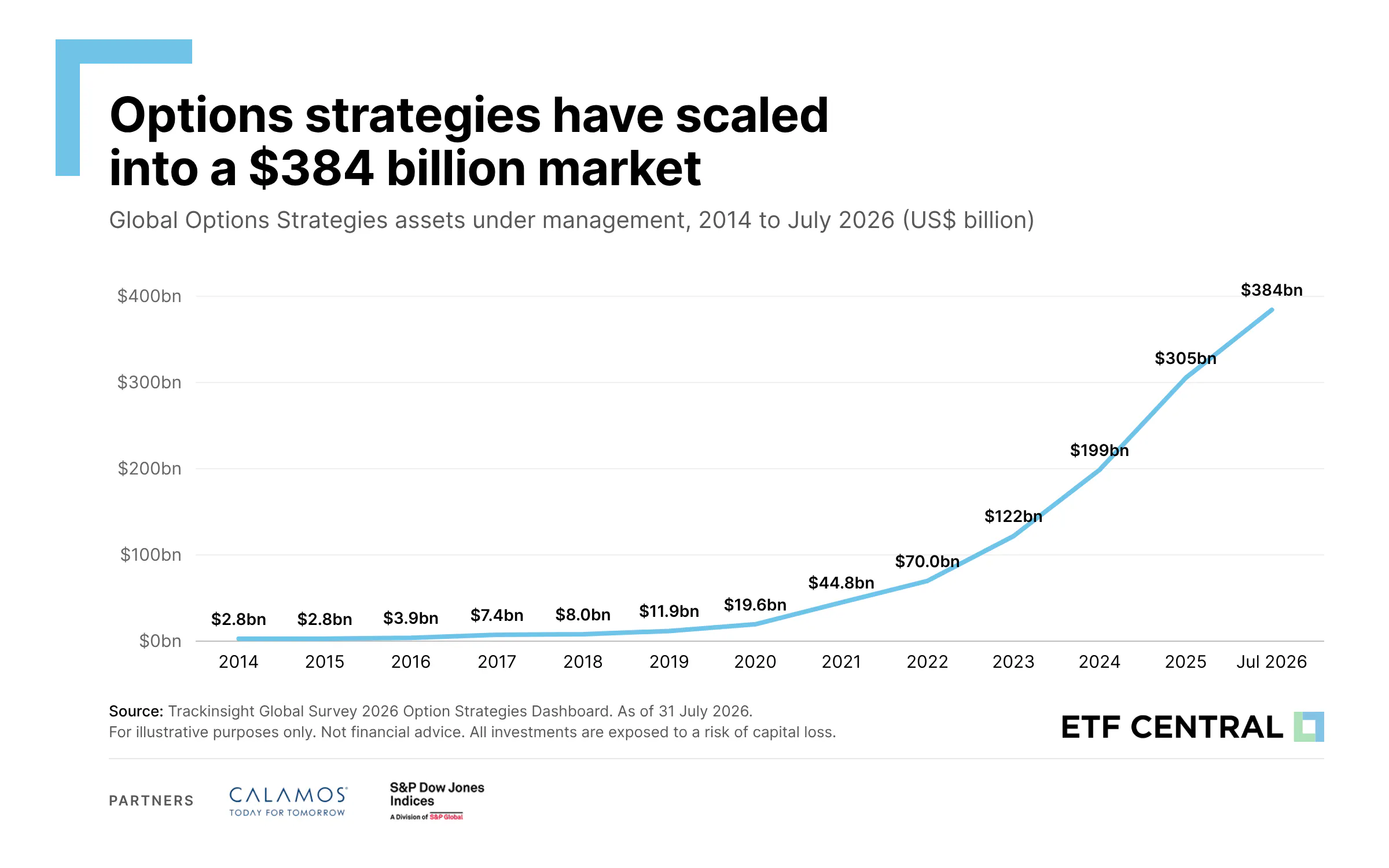
These figures suggest considerable appetite for strategies that go beyond conventional stock and bond exposure, particularly when it comes to income generation and risk management.
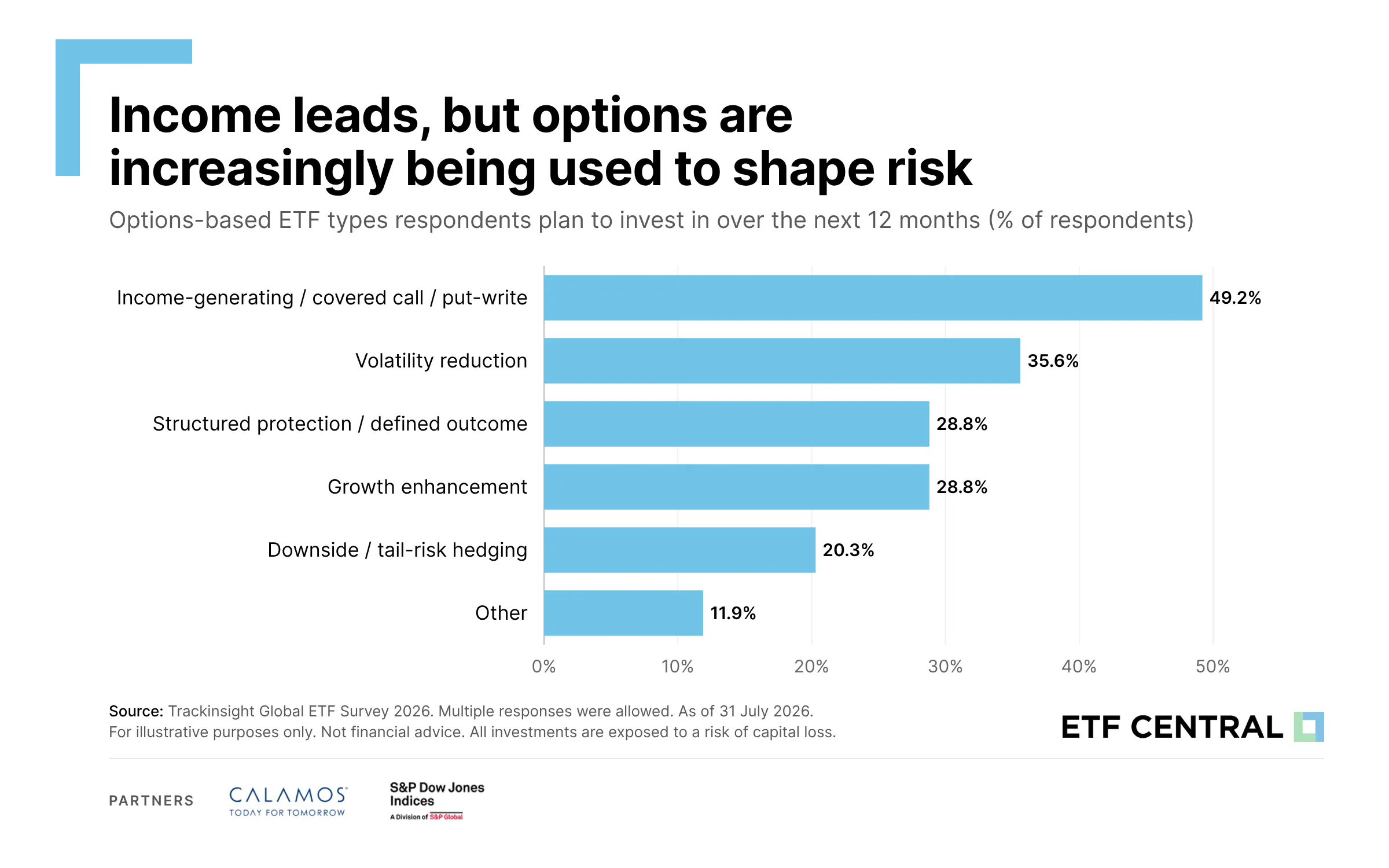
However, the survey also indicates that investor familiarity has struggled to keep pace with the expanding product lineup. Among professional respondents whose ETF allocations remain below their desired levels, unfamiliarity with newer structures was the most frequently cited obstacle.
Notably, the survey suggests that complexity and lack of familiarity are greater barriers to adopting options-based ETFs than outright rejection of the strategies themselves. Relatively few respondents indicated that they were simply uninterested.
A similar knowledge gap appears among personal investors. This result comes from a separate sample of approximately 2,800 self-directed, digitally engaged investors surveyed in collaboration with Stocktwits, rather than a representative cross-section of all retail investors.
According to Figure 8.6a, 26.3% of respondents admitted to frequently purchasing ETFs without fully assessing their mechanics or risks, while another 23.2% reported doing so occasionally. A further 17.8% said they had rarely done so, leaving just 32.4% who reported never making an ETF investment without conducting that assessment.
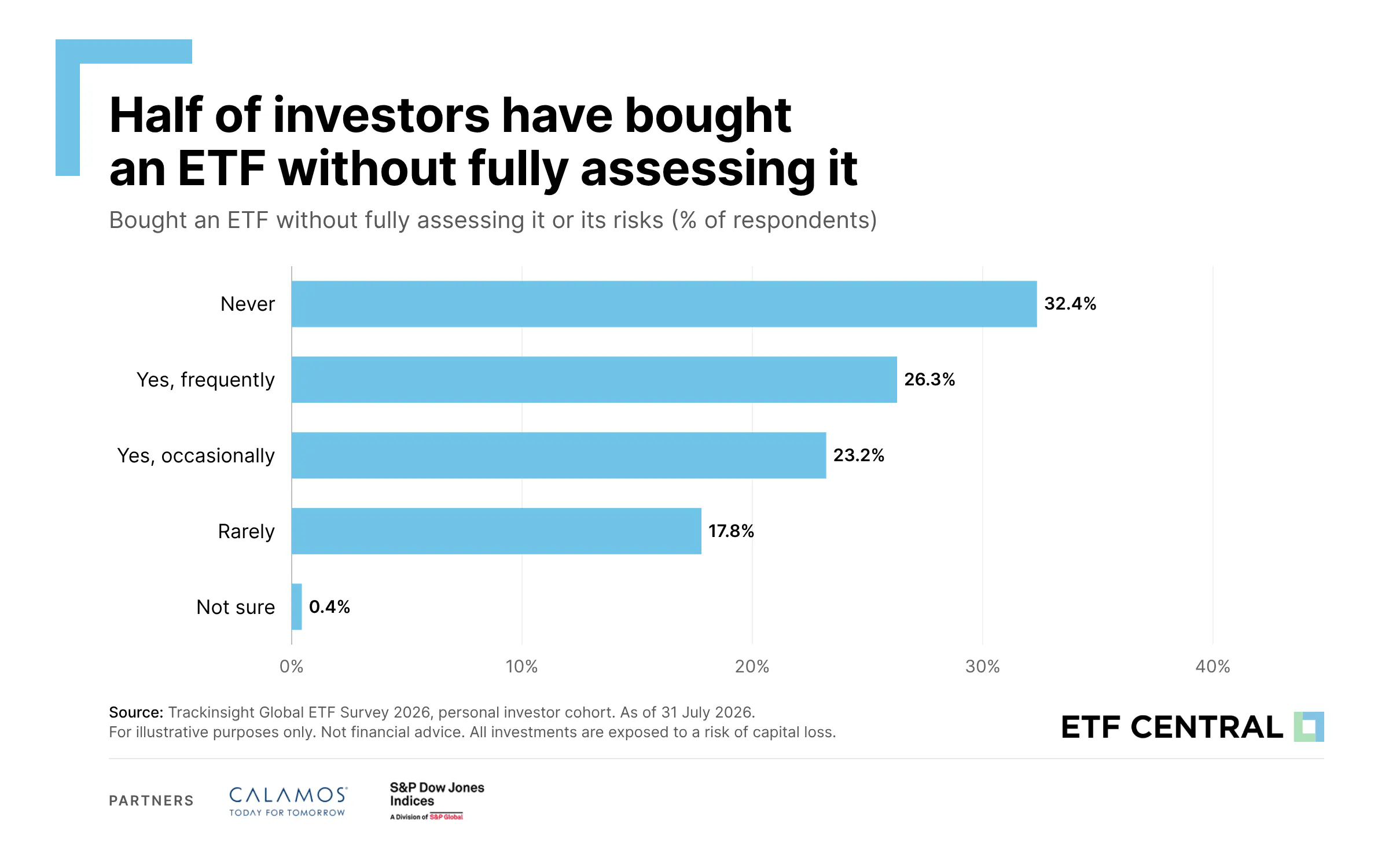
For investors and professional allocators, it reinforces the importance of understanding how a strategy behaves across different market environments before judging it by its advertised features. For ETF issuers, this creates an incentive to make product mechanics more transparent.
What Investors Want: Protection, Simplicity and a Track Record
The accessibility of the ETF wrapper has been one of the industry's greatest achievements. Making the strategies inside that wrapper equally understandable should be the next priority. There is an opportunity for ETF issuers to improve how they communicate product information.
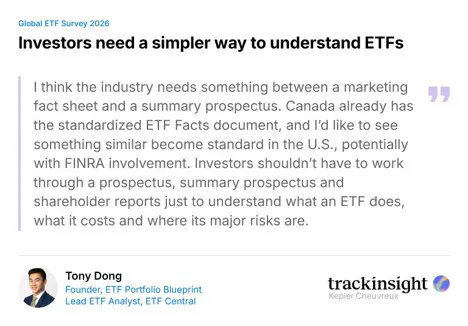
Marketing materials are useful for explaining a fund's investment objective, historical performance and headline characteristics, but they don't always provide enough detail about how more complicated strategies behave under different market conditions.
Meanwhile, prospectuses, summary prospectuses and shareholder reports contain important disclosures, but the information can be spread across multiple documents and presented in language that isn't particularly accessible to the average investor.
For options-based ETFs in particular, such a document could explain the strategy's payoff mechanics using standardized examples, including what happens when the underlying market rises sharply, trades sideways or experiences a substantial decline. It could also distinguish distribution rates from total returns, identify the circumstances in which downside protection applies and make the impact of fees and taxes easier to compare.
The objective would be to give investors a consistent starting point for understanding what an ETF does, what it costs and where its major risks lie, without requiring them to piece together that information from several different disclosures.
Four ETF Structures, Four Things to Check
The following checklist applies the same four questions to each strategy: How long does the intended outcome last? Where does the protection or payoff mechanism reach its limits? What might the headline yield or return figure leave out? How is the strategy implemented?
This article is part of a series drawing on findings from Trackinsight’s 2026 Global ETF Survey, sponsored by Calamos Investments and S&P Dow Jones Indices.
Please note that this article reflects the author’s personal views and does not represent the opinions of the publication or its affiliates. It is for informational purposes only and does not constitute investment advice. It is essential to seek guidance from a registered financial professional before making any investment decisions.
Latest ETF News
See all ETF news
 Advantages of ETFs over Mutual Funds1/6
Lower Costs
In this guide, we'll explore the advantages of ETFs over mutual funds, giving you valuable insights into why ETFs have gained significant popularity among investors like yourself.
Leveraged ETFs: Unlocking the Potential for Amplified Returns1/6
Understanding Leveraged ETFs
Explore leveraged ETFs: potential for amplified returns & risks. 5 ETFs to consider across equities, commodities & fixed income.
What is a Leveraged ETF?1/6
Introducing Leveraged and Inverse ETFs
In this guide, we'll dive into the world of leveraged ETFs, exploring their definition, mechanics, potential risks, and rewards.
Recent educational content

ETF Trends
ETF Industry KPIs November 9, 2026
This week’s KPI data overview highlights key metrics and trends shaping the ETF landscape.

ETF Trends
ETF Industry KPIs November 3, 2026
This week’s KPI data overview highlights key metrics and trends shaping the ETF landscape.

First Look ETF
First Look ETF: Income, International, and Cash Flow ETFs
In this season 6 episode of First Look ETF, Stephanie Stanton @etfguide examines the latest ETF marketplace trends with NYSE and guests.

ETF Trends
ETF Industry KPIs October 5, 2026
This week’s KPI data overview highlights key metrics and trends shaping the ETF landscape.