Global ETF Survey Is Live! 600+ ETF Professionals Weigh In. See Results →



Could Water ETFs Be the Next AI Bottleneck Trade?
Thematic water ETFs could offer another way to invest in the infrastructure constraints emerging from the rapid buildout of AI data centers.

Keep up with what matters in ETFs
Get timely ETF insights, market trends, and top ideas straight to your inbox.
Your newsletter subscriptions with us are subject to ETF Central's Privacy Policy and Terms and Conditions.
I've been watching the development of AI thematic ETFs with some amusement as providers frantically search for the next bottleneck. Roundhill Investments absolutely knocked it out of the park with the Roundhill Memory ETF
Since then, we've seen new ETFs targeting increasingly specific parts of the AI supply chain, including areas such as photonics and electrification. None, however, have come close to replicating DRAM's success. As much as I dislike the increasingly overused "bottleneck" framing, along with seemingly every AI investment being described as a "picks and shovels" play, there is some merit to the underlying idea.
Investing is partly about identifying pricing inefficiencies, and those inefficiencies can emerge from supply-demand imbalances. When demand accelerates faster than supply can respond, whether because of limited manufacturing capacity, infrastructure constraints, permitting, geography or some other friction, the companies positioned around that constraint can benefit. Of course, once supply catches up or demand changes, that same trade can work against you.
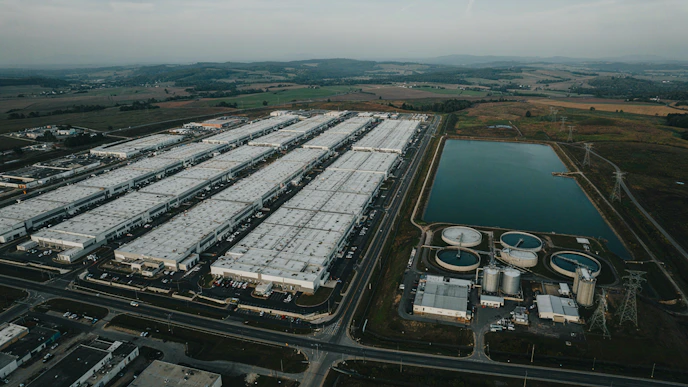
Thinking a little further outside the usual semiconductor and power infrastructure themes, I think water deserves a closer look. AI data centers require water both directly, particularly for cooling, and indirectly through the electricity generation supporting them. At the same time, water infrastructure is inherently local, capital intensive and difficult to expand quickly. If data center construction continues at its current pace, that creates another potential infrastructure constraint worth examining.
There's also no shortage of ETFs already targeting the water theme. So rather than declaring water the next AI bottleneck outright, I wanted to review the literature on AI's growing demands on water infrastructure and then examine some of the more notable thematic water ETFs available today.
Global ETF Survey 2026 is Live!
With 1,790 new products launched by July 2026, choosing is harder than ever. Our Global ETF Survey 2026, built on 620 professional investors and allocators, shows how active, fixed income, options-based and thematic ETFs are reshaping fund selection.
How Much Water Does AI Actually Need?
The water thesis starts with the physical reality of running AI infrastructure. More powerful graphics processing units (GPUs) pack increasing amounts of computing power into data centers, producing substantial heat that has to be removed.
Water-based evaporative cooling has traditionally been one of the more energy-efficient ways to do it, while water is also consumed indirectly by some of the power plants supplying electricity to data centers. The numbers are beginning to add up.
McKinsey estimates that U.S. data center water consumption could increase roughly 170% by 2030. Its separate research expects the global market for data center cooling equipment to reach $40 billion to $45 billion by 2030, including $15 billion to $20 billion for liquid cooling.
Bloomberg provides another useful estimate. Citing the International Energy Agency, it reported that an average 100-megawatt data center consumes around two million liters of water per day, roughly equivalent to 6,500 households. Global data center water consumption could rise from about 560 billion liters annually to 1.2 trillion liters by 2030.
Location makes the issue more complicated. Bloomberg found that roughly two-thirds of U.S. data centers built or under development since 2022 were located in areas already experiencing high water stress. The Financial Times has also documented growing resistance from rural communities concerned about data centers competing with agriculture and other users for local water supplies.
There is also an important caveat to the investment thesis: technology can reduce water intensity. Microsoft is moving toward closed-loop cooling systems that recirculate water, while liquid and direct-to-chip cooling can reduce dependence on traditional evaporative systems. The Wall Street Journal reports that these approaches are becoming important as the industry's water footprint attracts greater scrutiny.
The Water ETFs Available Today
For investors, that means the opportunity extends well beyond companies that simply own water utilities. Potential beneficiaries span industrial companies supplying pumps, valves, heat exchangers and cooling equipment; technology companies developing liquid-cooling systems and thermal management; water-treatment and filtration providers; wastewater and water-reuse specialists; and utilities responsible for supplying, treating and recycling the water itself.
According to the ETF Central Screener, investors currently have six dedicated water ETFs to choose from. Three come from the same issuer, Invesco, giving it easily the most developed lineup in the category.
The largest is the Invesco Water Resources ETF
PHO tracks the Nasdaq OMX US Water Index and currently holds 41 companies. Overall, I think the thematic relevance here is pretty good. Major holdings include Roper Technologies, Ecolab, Waters Corporation, Ferguson Enterprises, IDEX, Advanced Drainage Systems, American Water Works and Xylem, providing exposure across water treatment, testing, pumps, infrastructure and utilities.
Water isn't a GICS sector of its own, so the portfolio unsurprisingly ends up heavily concentrated in industrials, which account for 47.25% of the ETF. Technology and healthcare make up much of the remaining exposure.
For investors wanting more international diversification, Invesco's other two water ETFs may be more suitable. The larger is the Invesco S&P Global Water Index ETF
CGW tracks the S&P Global Water Index and expands the opportunity set beyond U.S. companies, including foreign securities accessible through American depositary receipts (ADRs) and global depositary receipts (GDRs). The portfolio is also broader, with 66 companies.
There's still substantial overlap with PHO, but the geographic composition is noticeably different. The U.S. accounts for just 58.6% of CGW, providing considerably greater exposure to water companies across other developed markets. Some of those holdings will be less familiar to U.S. investors, making it worth digging into the underlying portfolio rather than treating CGW as simply a more diversified PHO.
Finally, there's the Invesco Global Water ETF
PIO is essentially the global counterpart to PHO, tracking the Nasdaq OMX Global Water Index. Investors can therefore expect some familiar companies and overlap with PHO, but with a much larger international component. U.S. stocks account for only 50.95% of the portfolio.
Please note that this article reflects the author’s personal views and does not represent the opinions of the publication or its affiliates. It is for informational purposes only and does not constitute investment advice. It is essential to seek guidance from a registered financial professional before making any investment decisions.

Latest ETF News
See all ETF newsBeyond Big Tech: The Increasing Specialization of AI ETFs

There's an ETF for That? Humanoid Robotics and Physical AI

How Some ETF Issuers Use Their Own Funds for Cash Management

These Public-Private ETFs Invest in Polymarket and Anduril

There's an ETF for That? Frontier Markets



 Advantages of ETFs over Mutual Funds1/6
Lower Costs
In this guide, we'll explore the advantages of ETFs over mutual funds, giving you valuable insights into why ETFs have gained significant popularity among investors like yourself.
Leveraged ETFs: Unlocking the Potential for Amplified Returns1/6
Understanding Leveraged ETFs
Explore leveraged ETFs: potential for amplified returns & risks. 5 ETFs to consider across equities, commodities & fixed income.
What is a Leveraged ETF?1/6
Introducing Leveraged and Inverse ETFs
In this guide, we'll dive into the world of leveraged ETFs, exploring their definition, mechanics, potential risks, and rewards.
Recent educational content

First Look ETF
First Look ETF: Income, International, and Cash Flow ETFs
In this season 6 episode of First Look ETF, Stephanie Stanton @etfguide examines the latest ETF marketplace trends with NYSE and guests.

ETF Trends
ETF Industry KPIs October 5, 2026
This week’s KPI data overview highlights key metrics and trends shaping the ETF landscape.

ETF Trends
ETF Industry KPIs September 28, 2026
This week’s KPI data overview highlights key metrics and trends shaping the ETF landscape.
ETF Trends
ETF Industry KPIs September 22, 2026
This week’s KPI data overview highlights key metrics and trends shaping the ETF landscape.