NYSE CRTR Economy Event Watch the replay →



Could inflation-linked bonds act as inflation armor?
Inflation-linked bonds (or inflation-protected bonds) offer investors protection against a rise in inflation.


Keep up with what matters in ETFs
Get timely ETF insights, market trends, and top ideas straight to your inbox.
Your newsletter subscriptions with us are subject to ETF Central's Privacy Policy and Terms and Conditions.
Bonds tied to inflation, often known as inflation-protected bonds, provide investors with protection from rising inflation. They are government-issued debt with an interest rate closely correlated with the rate of inflation. Governments issue these bonds to lower their financing costs in the event that inflation declines or remains steady. At the same time, investors purchase those bonds to shield their portfolios from future inflation increases.
The ETF Industry Is Evolving Fast
From AI infrastructure to active strategies, the ETF landscape is shifting. Share your perspective in the 7th Annual Global ETF Survey and get exclusive early access to the final report.
Why is inflation a problem for investors?
The rate at which the cost of goods and services rises in a particular economy is known as inflation.
Central banks keep an eye on inflation to maintain a sound and stable economy. The average central bank targets inflation at 2%. If prices grow too slowly or too quickly, they may use a variety of monetary policy measures, such interest rate monitoring or quantitative easing, to either promote or discourage inflation.
Exogenous factors, however, can also affect the inflation rate. For instance, the after-effects of the COVID-19 pandemic are currently contributing to rising inflation in the United States.
The amount of goods and services that may be purchased with a certain amount of money is reduced by inflation for both businesses and individuals. The value of money is diminished by inflation, and this has an impact on the interest rates that bonds will eventually pay. This is why traditional fixed-coupon bonds lose value when inflation increases, and investors' portfolios do too (i.e., they lose money).
How do Inflation-linked bonds work in a portfolio
Bonds that are linked to inflation gain value when inflation does. Therefore, investors can utilize inflation-linked bonds to reduce the impact of an increase in inflation on the value of their portfolio.
Bonds that are related to inflation can also be used to express opinions about potential changes in inflation. Since their value rises with inflation, investors who anticipate greater inflation rates than the market predicts can purchase inflation-linked bonds at a favorable price and, if they are correct, sell them for a profit when inflation data is released.
Understanding inflation-linked bonds
Let's use the example of U.S. TIPS to clarify how inflation-linked bonds function (Treasuries Inflation-Protected Securities). The Consumer Price Index (CPI), a compilation of consumer goods and services, is used in the US to calculate inflation. By contrasting the CPI for the current year with a base year, inflation is determined.
The coupon (the interest) and principle (the amount lent) both rise in proportion to an increase in the CPI. The coupon and principal will be raised by 1 percent to reflect the impact of the increase in inflation, for instance, if it goes from 2 percent to 3 percent.
This is a very important feature because it means the value of the bond increase in an inflationary environment, unlike other types of bonds whose value decrease in such an environment.
The views and opinions expressed on this website are those of the original authors and other contributors.
These views and opinions do not necessarily represent those of ETF Central, the ETF Central team members, and/or any/all contributors to this site.
Segments
See all
Mentioned ETFs
No specific ETFs were tagged
Further reading
Latest ETF News
See all ETF newsETF Contrarian Corner: Two Unloved Segments That Investors Are Ignoring


The Super El Niño Trade: Two Potential ETF Winners and Losers


The SpaceX (SPCX) IPO: Here's Which ETFs Already Own it



 Advantages of ETFs over Mutual Funds1/6
Lower Costs
In this guide, we'll explore the advantages of ETFs over mutual funds, giving you valuable insights into why ETFs have gained significant popularity among investors like yourself.
Leveraged ETFs: Unlocking the Potential for Amplified Returns1/6
Understanding Leveraged ETFs
Explore leveraged ETFs: potential for amplified returns & risks. 5 ETFs to consider across equities, commodities & fixed income.
What is a Leveraged ETF?1/6
Introducing Leveraged and Inverse ETFs
In this guide, we'll dive into the world of leveraged ETFs, exploring their definition, mechanics, potential risks, and rewards.
Recent educational content
Asset TV
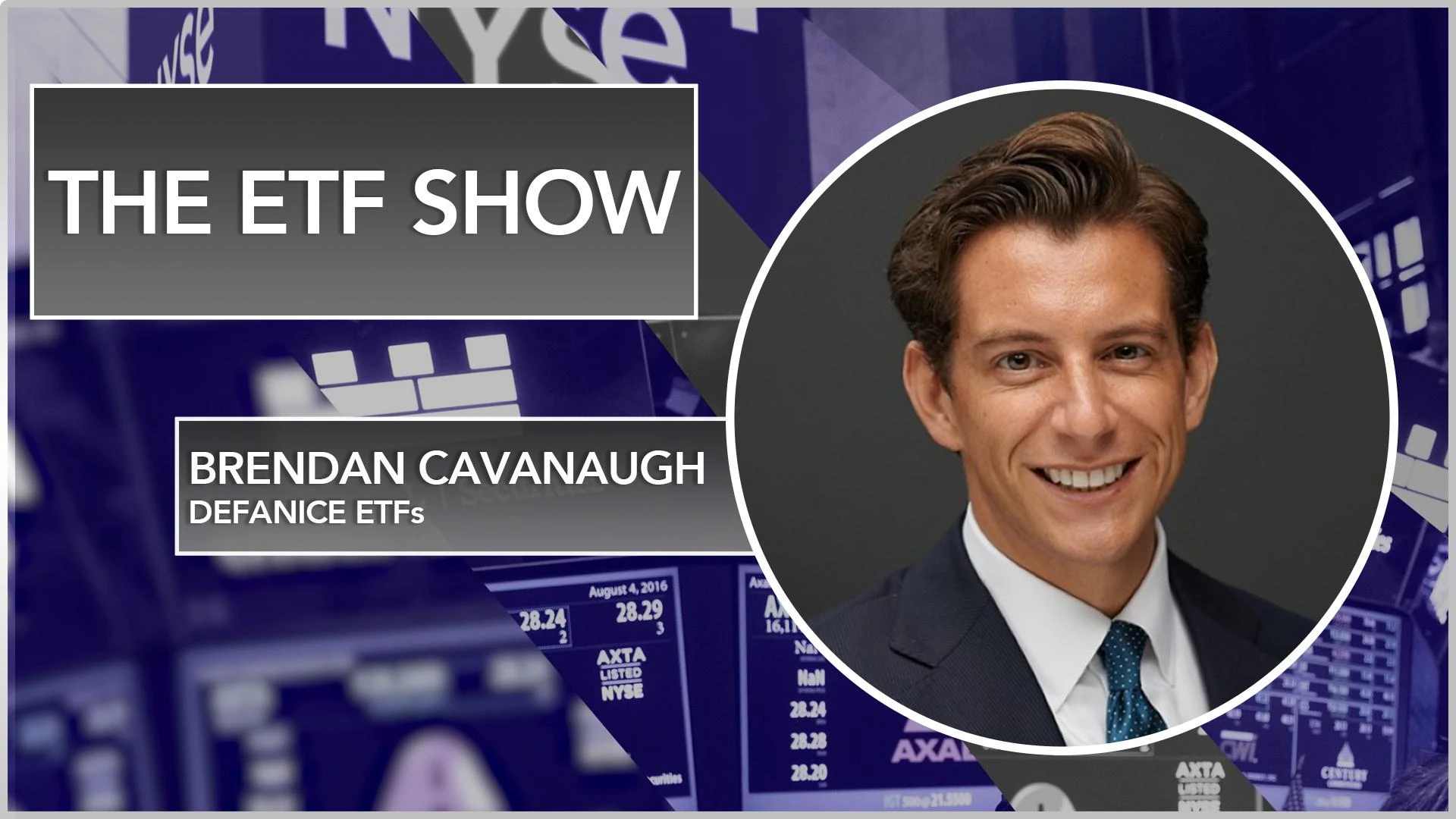
The ETF Show - New Autism-Impact ETF Launched
Defiance ETFs has launched the first ETF, $ASD, focused on the autism ecosystem, investing in companies that provide services, products, and research related to autism and neurodivergence.


ETF Trends
ETF Industry KPIs June 1, 2026
The ETF Industry saw 22 New Launches, 1 Ticker Change and 1 closure last week.

ETF Trends
ETF Industry KPIs May 20, 2026
The ETF Industry saw 44 New Launches, 3 Mutual Fund Conversions and 9 closures last week.


Asset TV
The ETF Show - Politics Becomes Investable Trade through ETFs
Dan Weiskopf, Senior Portfolio Manager at Tidal Financial Group spoke with the ETF Show about Subversive ETFs that help investors trade like politicians.
Browse all educational columns



Build and Analyze Your ETF Portfolio Like a Pro
Create your own ETF portfolio in minutes and instantly see allocations, exposures, performance, and risk. Visualize diversification across asset classes, regions, and sectors. Stress-test ideas, compare benchmarks, and refine your strategy with professional-grade analytics.