From idea to ETF portfolio in minutes. Build yours now →



China's Stock Market Struggles Amid Evergrande Crisis
Read about the complexities of China's market downturn, the Evergrande collapse, and what this means for global investors. Discover insights and how to navigate this investment landscape.


Keep up with what matters in ETFs
Get timely ETF insights, market trends, and top ideas straight to your inbox.
Your newsletter subscriptions with us are subject to ETF Central's Privacy Policy and Terms and Conditions.
The Chinese economy has hit another rough patch, as evidenced by the continuing weakness in its major financial indicators despite recent attempts at stimulation. The Shanghai Composite Index, a key barometer of China's financial health, nosedived to a five-year low, dropping 6.19% over the past week. Similarly, the FT Wilshire China Index witnessed a 3.71% decline during the same timeframe. This bearish trend comes in the wake of notably disappointing PMI (Purchasing Managers' Index) data. This is further exacerbated by a Hong Kong court's order to liquidate Evergrande, China’s largest property developer. This seismic event arrived after Evergrande failed to restructure a staggering $300 billion debt, sparking widespread concern and comparisons to past financial crises.
Get data on 14,000+ ETFs
Access Trackinsight's reliable and comprehensive data with 500M+ points on 14,000+ ETFs.
Evergrande Debacle: A Closer Look
Evergrande's collapse is monumental, rocking the foundations of the Chinese economy. As the largest property developer in China, Evergrande’s distress signals profound systemic vulnerabilities. The Hong Kong court's liquidation order caps a prolonged period of financial turbulence for Evergrande, which has been under severe financial strain, struggling to manage its colossal debt load. This precarious situation has drawn parallels to the Lehman Brothers collapse in 2008, which precipitated the global subprime mortgage crisis. However, opinions are divided: while some investors fear a similar cataclysm, others argue that the impact will be contained, noting that Evergrande's troubles have been brewing since at least 2020, thereby allowing some degree of preparedness within the market.
The iShares MSCI China ETF (MCHI), managing almost $5 billion in assets, decreased by 5.21% last week, reaching a year-to-date performance of -11.27%.
Group Data
Index Data
Funds Specific Data
Please note this article is for information purposes only and does not in any way constitute investment advice. It is essential that you seek advice from a registered financial professional prior to making any investment decision.

Latest ETF News
See all ETF newsMoneyShow Chart of the Day 9/4/26: Don't Just Watch Oil. Watch THESE.


Chart of the Day 8/14/26: The Great "Hot Money" Migration

MoneyShow Chart of the Day 7/29/26: Now, THAT's What I Call Market Rotation!

MoneyShow Chart of the Day 7/16/26: Good News/Bad News on Inflation (and the Fed)




 Advantages of ETFs over Mutual Funds1/6
Lower Costs
In this guide, we'll explore the advantages of ETFs over mutual funds, giving you valuable insights into why ETFs have gained significant popularity among investors like yourself.
Leveraged ETFs: Unlocking the Potential for Amplified Returns1/6
Understanding Leveraged ETFs
Explore leveraged ETFs: potential for amplified returns & risks. 5 ETFs to consider across equities, commodities & fixed income.
What is a Leveraged ETF?1/6
Introducing Leveraged and Inverse ETFs
In this guide, we'll dive into the world of leveraged ETFs, exploring their definition, mechanics, potential risks, and rewards.
Recent educational content

ETF Trends
ETF Industry KPIs September 8, 2026
This week’s KPI data overview highlights key metrics and trends shaping the ETF landscape.

ETF Trends
ETF Industry KPIs August 31, 2026
This week’s KPI data overview highlights key metrics and trends shaping the ETF landscape.
ETF Trends
ETF Industry KPIs August 24, 2026
This week’s KPI data overview highlights key metrics and trends shaping the ETF landscape.
What’sTheFund
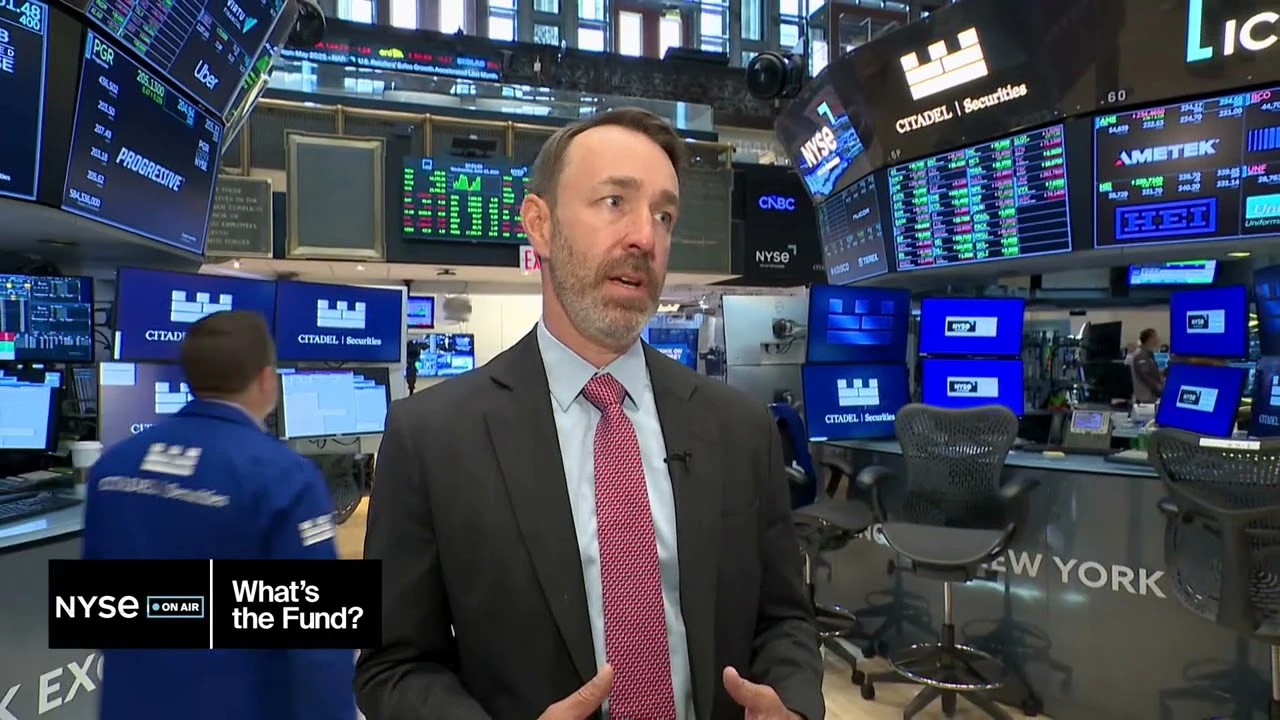
What's the Fund | Ocean Park Diversified Income ETF (DUKZ)
James St Aubin, Chief Investment Officer at Ocean Park Asset Management, discuss the DUKZ ETF, exposing investors to the whole spectrum of asset classes in the fixed income markets, through their rules-based process.

Browse all educational columns



Expert-Built ETF Portfolios, All in One Place
Don’t start from scratch. Discover ready-made ETF portfolios built by professionals to match different goals, timelines, and market views. Use them as inspiration or as a starting point for your own allocation.