NYSE CRTR Economy Event Watch the replay →



Can the HVAC Industry Handle Rising Tariff Pressures?
Amid rising tariff uncertainty, the HVAC industry—along with retail, construction, and manufacturing—faces mounting supply chain disruptions, increased costs, and strategic challenges as businesses scramble to adapt to shifting trade policies.


Keep up with what matters in ETFs
Get timely ETF insights, market trends, and top ideas straight to your inbox.
Your newsletter subscriptions with us are subject to ETF Central's Privacy Policy and Terms and Conditions.
U.S. Businesses Rush to Import Goods Amid Tariff Uncertainty
Recent trade developments have triggered a surge in U.S. imports, as businesses rush to stockpile goods ahead of potential tariffs. According to Descartes Systems Group, U.S. ports handled the equivalent of 451,000 40-foot containers of goods from China in December, marking a 14.5% increase compared to the previous year. This capped a year of growth in consumer goods imports, including bedding, toys, and electronics, which rose by 15% over 2023.
The ETF Industry Is Evolving Fast
From AI infrastructure to active strategies, the ETF landscape is shifting. Share your perspective in the 7th Annual Global ETF Survey and get exclusive early access to the final report.
The Anticipation of Tariffs and Its Ripple Effect
With proposed tariffs ranging between 10% and 60%, businesses are preparing for significant financial challenges. Unlike previous tariffs that primarily impacted raw materials and industrial components, the latest measures are expected to directly affect consumer goods. As a result, companies spanning retail, construction, and manufacturing are accelerating shipments to counteract impending cost increases.
Major retailers, including Walmart, have contributed to the import spike, driving up 2024 fourth-quarter shipments of textiles and apparel by 20.7%, leisure products by 15.4%, and consumer electronics by 9.6%, according to S&P Global Market Intelligence. Many businesses have opted to stockpile up to six months’ worth of inventory, reflecting widespread concern over cost inflation and potential supply chain disruptions.
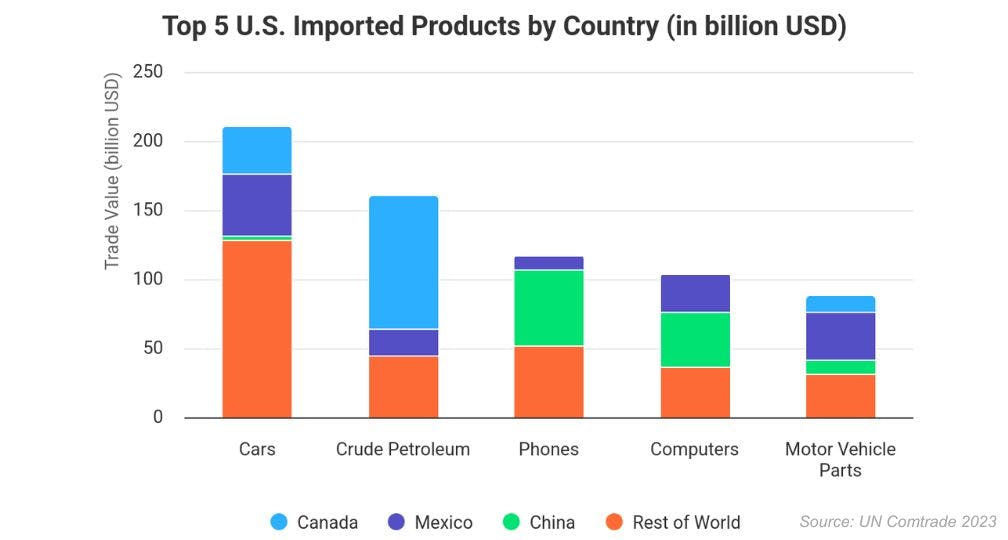
However, some experts warn that stockpiling could backfire. Excess inventory ties up capital, increases storage costs, and may lead to markdowns if demand shifts unexpectedly. Additionally, rapid changes in trade policy could result in companies overcommitting to preemptive purchases that may no longer align with the market by the time tariffs are enforced.
Supply Chain Disruptions and Economic Impact
The uncertainty surrounding tariffs has created instability across various industries, from agriculture to automotive manufacturing. In California, businesses are navigating shifting trade policies that affect exports and imports alike. Recent tariff adjustments include a 25% duty on imports from Canada and Mexico, as well as a doubling of tariffs on Chinese goods to 20%. China has responded with tariffs of up to 15% on U.S. agricultural exports, including wheat, soybeans, and pork.
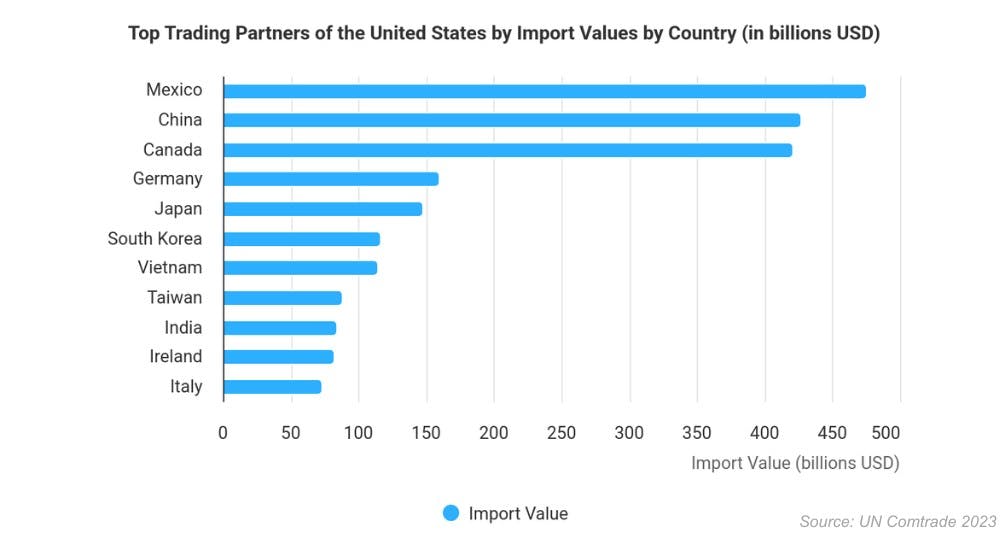
These policy fluctuations make strategic planning difficult, leading to increased costs and logistical challenges. The ports of Long Beach and Los Angeles, key entry points for international shipments, have seen import volumes surge due to preemptive stockpiling. The Port of Long Beach reported a 13.4% increase in container traffic in February, while January imports spiked 41.4%. Industry leaders warn that once tariffs take effect, import activity could decline sharply, potentially reducing port traffic and leading to job losses in the logistics sector.
Challenges Facing the HVAC Industry
The HVAC sector, which relies heavily on imported materials like steel, aluminum, and electronic components, faces significant disruptions. Many manufacturers source essential parts from China, Canada, and Mexico—regions directly impacted by new tariffs. A 25% tariff on steel and aluminum could push production costs higher, with price increases trickling down to distributors and consumers.
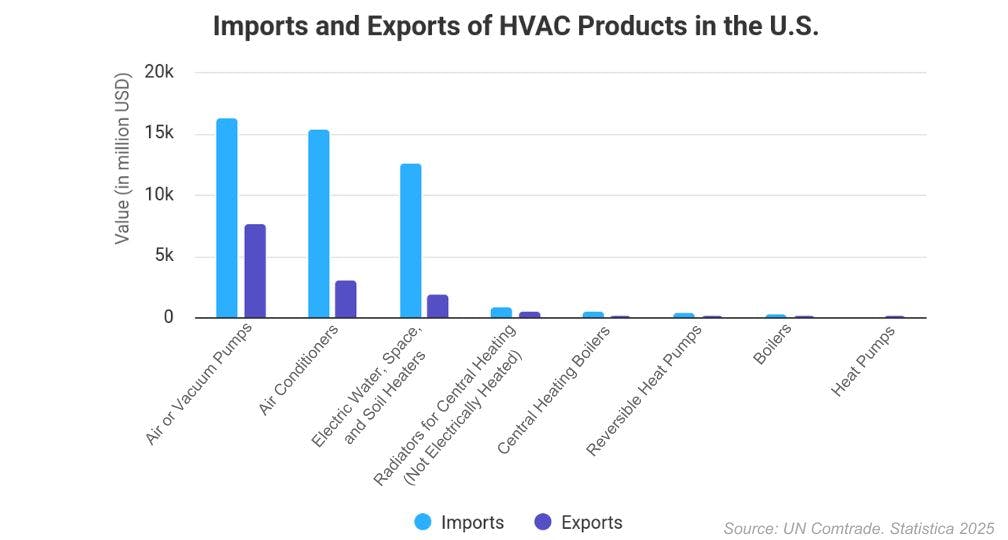
Extended supply chain delays may further complicate matters, causing project timelines to slip and forcing contractors to adjust their strategies. Some HVAC companies are looking to mitigate risks by exploring alternative supply sources, boosting domestic production, or shifting procurement to Southeast Asian suppliers. However, such transitions require time and may lead to short-term price instability.
To counteract supply chain challenges, some industry players are investing in automation, diversifying their supplier base, and negotiating long-term agreements to stabilize costs. Others are forging partnerships with domestic manufacturers to reduce reliance on foreign materials. While these strategies could enhance long-term resilience, they often involve higher initial investment and operational shifts.
As import levels fluctuate, businesses servicing the HVAC industry—including logistics providers and equipment distributors—may experience a slowdown. Some companies are already reporting project delays ranging from weeks to months, impacting construction and renovation timelines.
Looking Ahead: Adapting to Trade Shifts
As trade tensions persist, businesses across multiple industries must adjust their strategies to navigate ongoing economic uncertainty. For HVAC companies, this may involve securing alternative suppliers, rethinking inventory management, and passing additional costs to consumers.
Industry experts recommend that companies focus on building agile supply chains, utilizing predictive analytics for demand forecasting, and establishing contingency plans for potential disruptions. Additionally, trade organizations and policymakers may need to explore tariff exemptions for critical HVAC components to mitigate adverse effects.
The next few months will reveal the broader economic impact of these tariff measures. If trade policies remain volatile, companies will need to reassess their long-term strategies to maintain stability in an increasingly unpredictable global market.
The opinions expressed in this publication are those of the authors and are subject to change. They do not purport to reflect the opinions or views of ETF Central or its members. ETF central does not guarantee the accuracy, completeness, or reliability of the information provided.
The opinions expressed in this publication are those of the authors and are subject to change. They do not purport to reflect the opinions or views of ETF Central or its members. ETF central does not guarantee the accuracy, completeness, or reliability of the information provided.
Sources:
- Global Trade Mag, Tim Jay. U.S. Companies Stockpile Chinese Goods Amid Tariff Uncertainty. January 19, 2025.
- LA Times. Andrea Chang and Sandra McDonald. California businesses are reeling from Trump’s on-again, off-again tariffs. March 14, 2025.
- Nasdaq. Pete Grieve. Stockpiling Before Trump’s Tariffs? Experts Warn It Could Backfire. February 7, 2025.
- Reuters. Emma Rumney. Tariffs might not happen but tequila is already paying the price. March 17, 2025.
- Council On Foreign Trade. Shannon K. O'Neil and Julia Huesa. What Trump’s Trade War Would Mean, in Nine Charts. February 5, 2025.
- UN Comtrade. Statistica. Value of imports and exports of heating, ventilation, and air-conditioning equipment in the United States in 2024, by type (in million U.S. dollars). 2023-2025.
Topics
See all
Segments
See all
No specific market segments were tagged
Mentioned ETFs
No specific ETFs were tagged
Further reading


Latest ETF News
See all ETF news

Why ETF Spreads Often Mislead Investors








 Advantages of ETFs over Mutual Funds1/6
Lower Costs
In this guide, we'll explore the advantages of ETFs over mutual funds, giving you valuable insights into why ETFs have gained significant popularity among investors like yourself.
Leveraged ETFs: Unlocking the Potential for Amplified Returns1/6
Understanding Leveraged ETFs
Explore leveraged ETFs: potential for amplified returns & risks. 5 ETFs to consider across equities, commodities & fixed income.
What is a Leveraged ETF?1/6
Introducing Leveraged and Inverse ETFs
In this guide, we'll dive into the world of leveraged ETFs, exploring their definition, mechanics, potential risks, and rewards.
Recent educational content
Asset TV
The ETF Show - New Autism-Impact ETF Launched
Defiance ETFs has launched the first ETF, $ASD, focused on the autism ecosystem, investing in companies that provide services, products, and research related to autism and neurodivergence.


ETF Trends
ETF Industry KPIs June 1, 2026
The ETF Industry saw 22 New Launches, 1 Ticker Change and 1 closure last week.

ETF Trends
ETF Industry KPIs May 20, 2026
The ETF Industry saw 44 New Launches, 3 Mutual Fund Conversions and 9 closures last week.

Asset TV
The ETF Show - Politics Becomes Investable Trade through ETFs
Dan Weiskopf, Senior Portfolio Manager at Tidal Financial Group spoke with the ETF Show about Subversive ETFs that help investors trade like politicians.
Browse all educational columns



Build and Analyze Your ETF Portfolio Like a Pro
Create your own ETF portfolio in minutes and instantly see allocations, exposures, performance, and risk. Visualize diversification across asset classes, regions, and sectors. Stress-test ideas, compare benchmarks, and refine your strategy with professional-grade analytics.