Global ETF Survey Is Live! 600+ ETF Professionals Weigh In. See Results →



Can Psychedelics Heal Minds and Grow Portfolios?
Psychedelics offer hope for mental health treatment and attract investors despite biotech-like volatility and market shifts.


Keep up with what matters in ETFs
Get timely ETF insights, market trends, and top ideas straight to your inbox.
Your newsletter subscriptions with us are subject to ETF Central's Privacy Policy and Terms and Conditions.
Psychedelics have emerged as a promising frontier in mental health treatment, offering potential relief for conditions such as depression, anxiety, post-traumatic stress disorder (PTSD), and addiction. Notably, these substances have shown significant promise in addressing the mental health challenges faced by veterans. The cultural significance of psychedelics is highlighted by events like Bicycle Day, celebrated on April 19th, which commemorates a pivotal moment in psychedelic history. The nascent psychedelic industry presents investment opportunities accompanied by notable volatility, drawing parallels to the biotech sector.
Global ETF Survey 2026 is Live!
With 1,790 new products launched by July 2026, choosing is harder than ever. Our Global ETF Survey 2026, built on 620 professional investors and allocators, shows how active, fixed income, options-based and thematic ETFs are reshaping fund selection.
Bicycle Day: Commemorating a Psychedelic Milestone
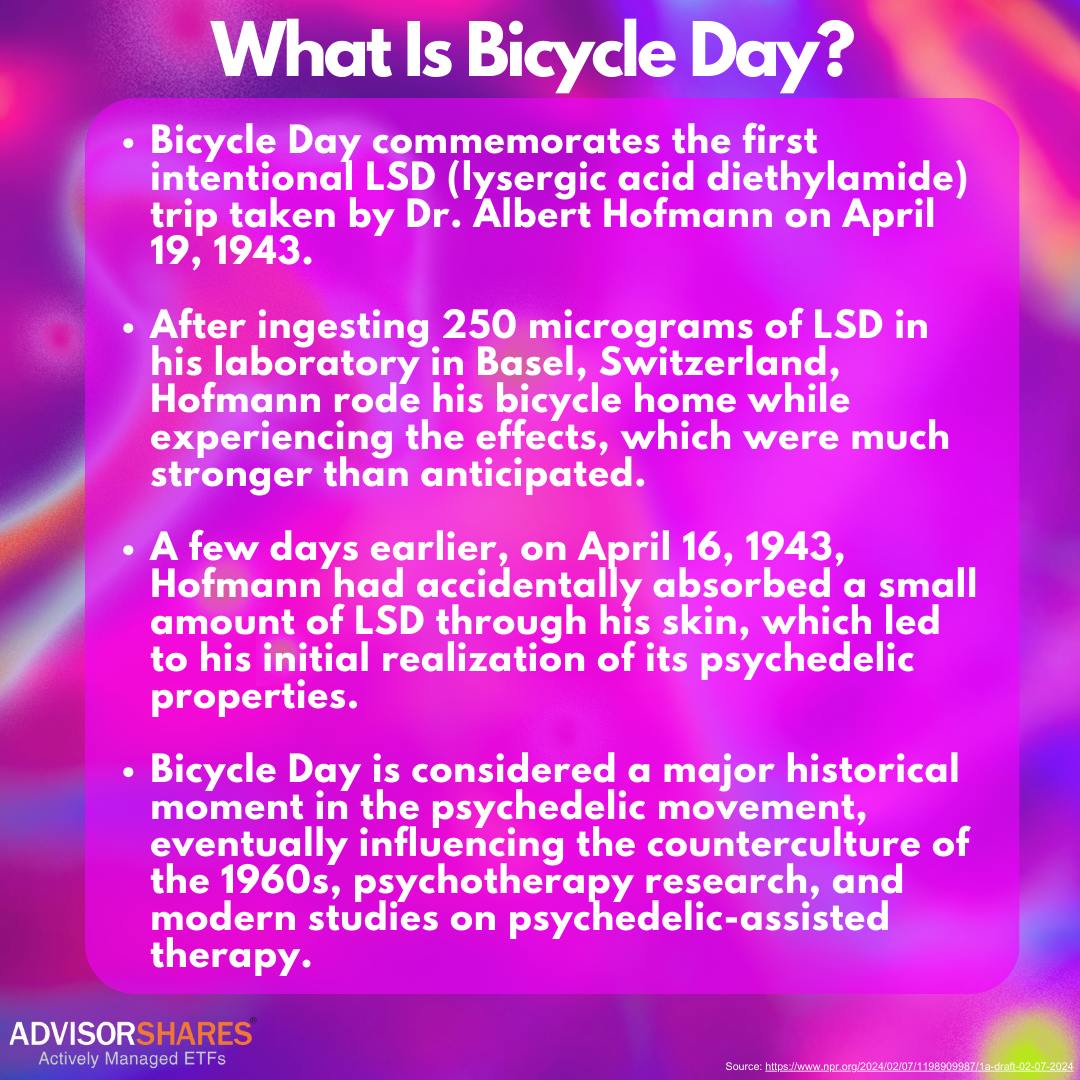
An interesting facet of psychedelic culture is "Bicycle Day," observed annually on April 19th. This day commemorates the first intentional LSD trip by Swiss chemist Dr. Albert Hofmann in 1943. After ingesting the substance, Hofmann experienced its profound effects while riding his bicycle home, marking a pivotal moment in psychedelic history.
The term "Bicycle Day" was coined in 1985 by Professor Thomas B. Roberts of Northern Illinois University, who chose the name to provide a concrete image associated with Hofmann's experience. The day is celebrated by psychedelic enthusiasts worldwide, often involving bicycle rides and discussions on the impact of psychedelics on science, medicine, and culture.
Investing in Psychedelics: Navigating Volatility and Market Dynamics
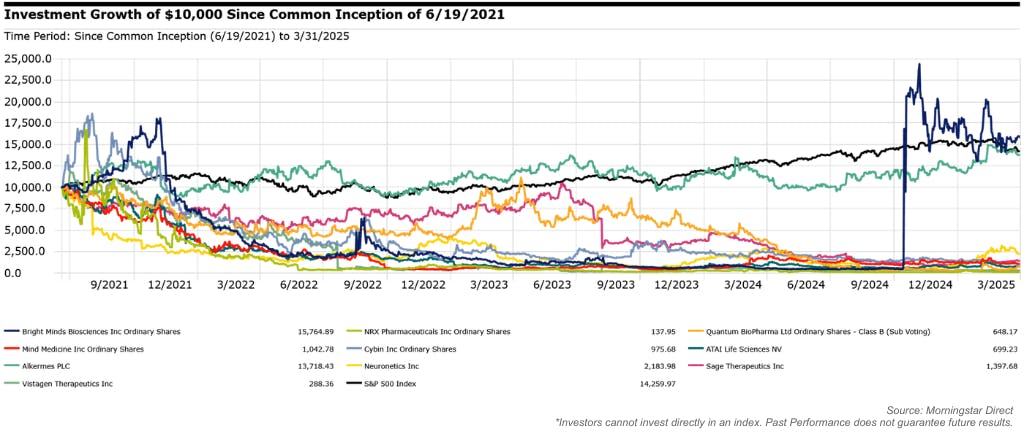
The growing interest in psychedelic research and therapy has also extended to the investment community. Much like the biotech sector, the psychedelic industry is characterized by significant volatility. Investors face the reality of rapidly fluctuating stock prices as companies progress through clinical trials, navigate regulatory landscapes, and react to shifts in public sentiment.
Examples of Market Volatility and Consolidation
Companies in this space—such as those pioneering clinical trials for psychedelic treatments—can experience dramatic price swings on the news of trial results or regulatory updates. There have been instances where a promising clinical trial led to a sharp upward movement in stock prices, only to be followed by a sudden drop when unexpected challenges arose.
Additionally, the industry has seen notable mergers and buyouts as larger players seek to consolidate expertise and resources. In several cases, successful clinical-stage companies have been acquired by or merged with larger biopharmaceutical firms, illustrating investor confidence in the long-term viability of psychedelic-based therapies. These mergers and acquisitions not only help streamline research and development but also tend to reduce volatility by spreading risk over a broader portfolio of assets.
Investors looking to mitigate the risks associated with individual stock volatility in this sector often turn to diversified investment vehicles such as ETFs (exchange traded funds). These vehicles provide exposure to multiple companies within the psychedelic industry, thus balancing the high-reward potential with a measure of risk management.
Psychedelics and Mental Health: A New Horizon
Recent years have witnessed a resurgence of interest in psychedelics for their therapeutic potential. Substances such as psilocybin (found in magic mushrooms), MDMA (commonly known as ecstasy), and LSD are being studied for their efficacy in treating various mental health conditions. Research indicates that these compounds can facilitate profound psychological experiences, potentially leading to lasting positive changes in mental health.
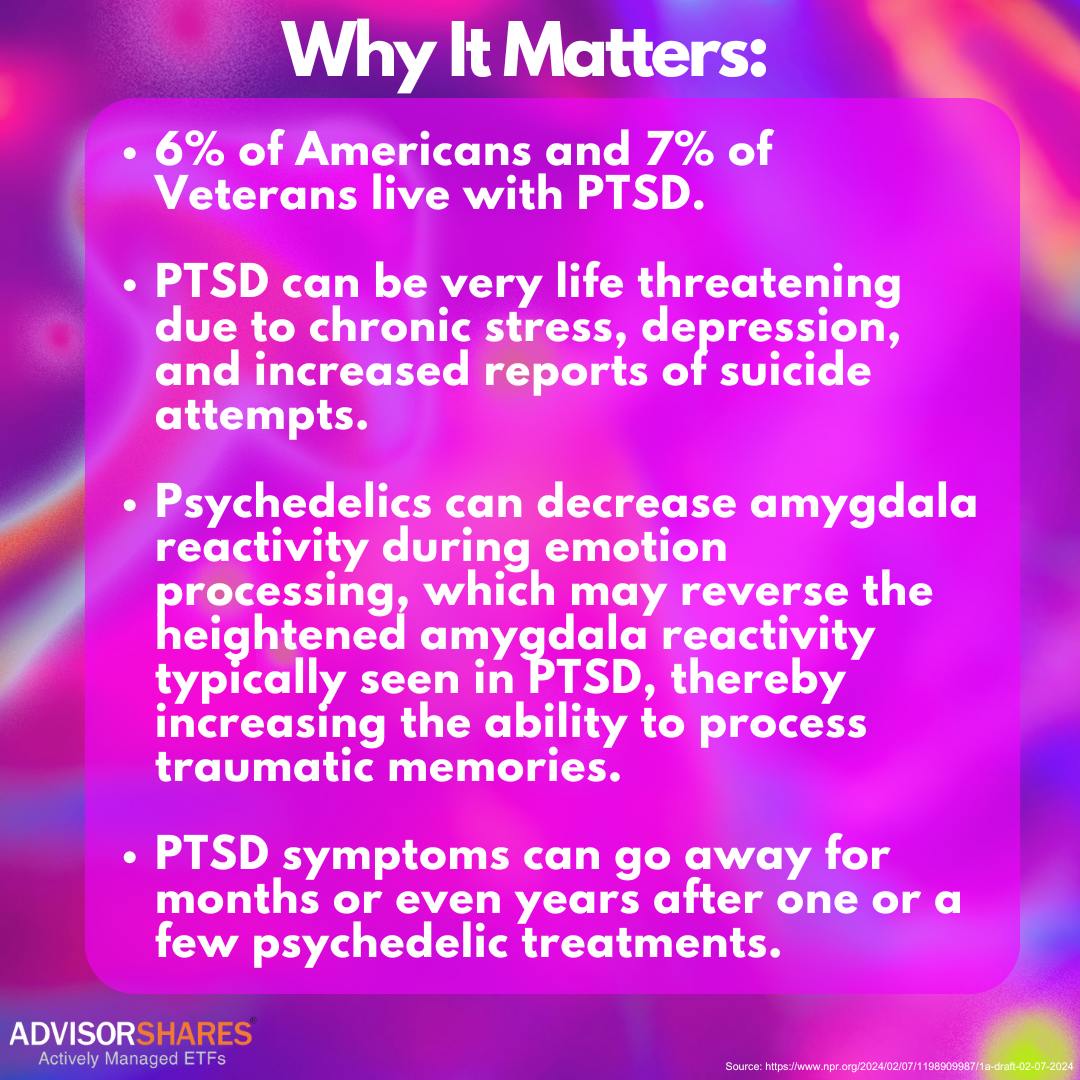
The Department of Veterans Affairs (VA) has initiated funding for studies to assess the benefits of psychedelics in treating PTSD and alcohol use disorder among veterans. This initiative underscores the growing recognition of alternative therapies in addressing complex mental health issues.
Veterans, who often grapple with PTSD and depression, have shown interest in psychedelic-assisted therapies. A study highlighted by Spectrum News revealed that over 88% of veteran participants found psychedelic treatments beneficial. The potential of psychedelics to provide relief where traditional treatments have failed underscores the importance of continued research and careful implementation.
The U.S. military has allocated $9.8 million for research on MDMA's therapeutic effects on mild to moderate PTSD. This initiative aims to legitimize the use of psychedelics in psychiatric treatment, offering hope to service members and their families.
Summary
Psychedelics are at the forefront of a transformative shift in mental health treatment, offering new hope for patients—especially veterans suffering from PTSD and other mental health challenges. The celebration of Bicycle Day serves as a reminder of the groundbreaking discovery that continues to influence both science and culture. Meanwhile, the investment landscape in psychedelics, though volatile and dynamic, presents opportunities for those willing to navigate its complexities through strategic diversification and by keeping an eye on emerging market consolidations.
As research advances and the therapeutic potential of psychedelics becomes increasingly recognized, both the medical and investment communities stand to benefit from the continued evolution of this promising field. Investing in the psychedelic sector presents opportunities reminiscent of the biotech industry, characterized by significant volatility. This volatility stems from factors such as regulatory hurdles, clinical trial outcomes, and shifting public perceptions.
The opinions expressed in this publication are those of the authors and are subject to change. They do not purport to reflect the opinions or views of ETF Central or its members. ETF central does not guarantee the accuracy, completeness, or reliability of the information provided.


Latest ETF News
See all ETF newsWhat To Watch This REIT Earnings Season - Q3 2026



Your ETF Is a Tool. Investors Will Decide How to Use It.

How Much ETF Infrastructure Do You Really Need?





 Advantages of ETFs over Mutual Funds1/6
Lower Costs
In this guide, we'll explore the advantages of ETFs over mutual funds, giving you valuable insights into why ETFs have gained significant popularity among investors like yourself.
Leveraged ETFs: Unlocking the Potential for Amplified Returns1/6
Understanding Leveraged ETFs
Explore leveraged ETFs: potential for amplified returns & risks. 5 ETFs to consider across equities, commodities & fixed income.
What is a Leveraged ETF?1/6
Introducing Leveraged and Inverse ETFs
In this guide, we'll dive into the world of leveraged ETFs, exploring their definition, mechanics, potential risks, and rewards.
Recent educational content

First Look ETF
First Look ETF: Income, International, and Cash Flow ETFs
In this season 6 episode of First Look ETF, Stephanie Stanton @etfguide examines the latest ETF marketplace trends with NYSE and guests.


ETF Trends
ETF Industry KPIs October 5, 2026
This week’s KPI data overview highlights key metrics and trends shaping the ETF landscape.

ETF Trends
ETF Industry KPIs September 28, 2026
This week’s KPI data overview highlights key metrics and trends shaping the ETF landscape.
ETF Trends
ETF Industry KPIs September 22, 2026
This week’s KPI data overview highlights key metrics and trends shaping the ETF landscape.