Open Now: The Global ETF Survey Take the Survey →



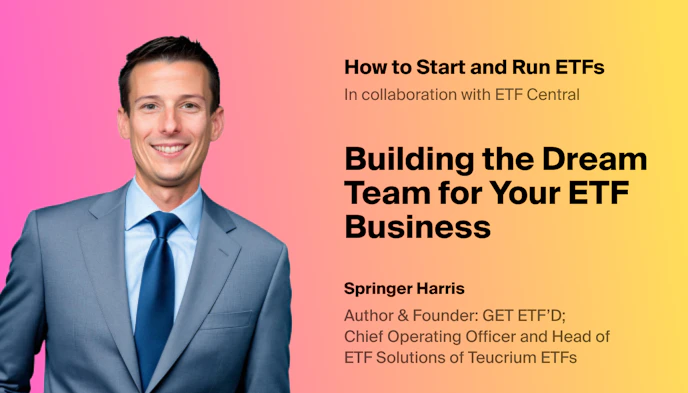
Building the Dream Team for Your ETF Business
Are you ready to build the dream team for your ETF business? Learn the key roles and strategies for creating a successful team.

Keep up with what matters in ETFs
Get timely ETF insights, market trends, and top ideas straight to your inbox.
Your newsletter subscriptions with us are subject to ETF Central's Privacy Policy and Terms and Conditions.
Introduction
Over the past few months, the time between my articles has stretched longer than expected. I haven't exactly been writing my weekly column every week. You might know I have spent nearly my entire career at Teucrium ETFs. A few weeks ago, I accepted the role of Chief Operating Officer, a position I embraced wholeheartedly. With this new role, my responsibilities have expanded, causing my writing schedule to slip a bit. Although it is not the best excuse, it is the reality of running an ETF business.
The ETF Industry Is Evolving Fast
From AI infrastructure to active strategies, the ETF landscape is shifting. Share your perspective in the 7th Annual Global ETF Survey and get exclusive early access to the final report.
During this transition, I've been reflecting a lot on leadership, team building, and what it takes to succeed in the ETF industry. So, it felt natural to focus on assembling the dream team for your ETF business this week.
Starting an ETF is More Than Investment Management
Launching an ETF is more than just investment management; it's about establishing and running a successful business. This involves building a strong brand and a robust company, which requires investing in both internal and external teams. Your relationships with external partners are just as important as those within your organization, because seamless collaboration is imperative!
Remember, building your team is not linear. It begins before you file and launch your ETF and continues throughout its lifespan. Change will be constant, and adapting and growing your team will be essential to your success.
Developing Your Core Team
While it's technically possible to operate as a 'solopreneur' in the ETF industry by outsourcing every facet of a fund, running an ETF is complex. Growing your business beyond a single fund or having your own platform requires significant time and effort. At a minimum, an ETF issuer should have a core team comprising the following roles:
- Chief Executive Officer
- Chief Investment Officer
- Chief Operations Officer
- Chief Compliance Officer
- Chief Marketing Officer
- Chief Financial Officer
In the early stages, it's common for founding members to take on multiple roles. Here's how it might break down:
- Executive 1 may take on the roles of CEO, CIO, and CMO.
- Executive 2 serves as the COO.
- Executive 3 juggles the duties of CFO and CCO.
In start-up ETF businesses, the term "executive" goes beyond traditional definitions. Executives manage strategic initiatives, sales, and service provider relationships, and they're involved in HR issues, property management, and even daily office tasks like replenishing coffee supplies. I've worn all these hats myself.
Key Executive Roles in the ETF Business
- The CEO shapes the strategic direction of the ETF and oversees operations. This role requires a comprehensive understanding of the ETF landscape, including product development, distribution, marketing, and unique operational factors. Strong leadership skills are essential, along with the ability to build an innovative team and align resources with strategic objectives. The CEO is also a key figure in stakeholder management, establishing relationships with investors, regulators, and partners, and effectively communicating the company's value proposition.
- The CIO directs the company's investment strategy, portfolio management, and research functions. This role demands a deep understanding of asset allocation, index construction, risk management, and various asset classes and market segments. The CIO aligns portfolio management, research, and product development with strategic objectives and adapts these strategies to changing market conditions. The CIO ensures the firm remains innovative by identifying new investment opportunities and trends.
- The COO oversees the company's day-to-day activities, ensuring that all functions run smoothly and efficiently to support growth and innovation. This role requires a thorough understanding of the operational aspects of ETFs, including portfolio management, trading, creation and redemption processes, tracking errors, and the role of authorized participants. The COO also manages the company's relationships with external partners, ensuring operational integrity and strategic agility.
- The CFO is responsible for guiding the company's financial health and providing insights to support growth objectives. In the ETF sector, the CFO must understand fund expenses, net asset value calculation, tax efficiency, and regulatory complexities. They evaluate the financial implications of growth initiatives, foster relationships with financial stakeholders, and ensure financial transparency and value creation.
- The CCO ensures the company adheres to laws, regulations, and internal policies. This role involves navigating securities regulations and other sector-specific requirements, overseeing compliance efforts, and playing a key role in risk management. The CCO develops compliance programs and ensures swift and effective responses to compliance issues, embedding compliance into the company's DNA.
- The CMO oversees the company's marketing strategy, brand development, and customer engagement. They must understand how to promote and distribute ETFs, considering investor education, product positioning, distribution channels, and diverse customer segments. The CMO drives brand awareness and customer acquisition and retention by aligning marketing strategies with company objectives and staying abreast of market and customer trends.
Building Your Founding Team
Choosing your founding partners is critical to your venture's success. This decision requires careful deliberation and foresight. Your team should be composed of individuals you respect and who align with your vision for the future. Long-term commitment is essential, as the path ahead will be challenging. Your team should possess the resilience and fortitude to confront these challenges head-on.
These connections may come from your current co-workers or existing investment practice partners. They might be others that you have met on your journey. The one item I would have you keep in mind is how you structure the business ownership between partners. No one goes into a new relationship thinking about divorce, but in business, you should. Just map out how it's all going to work if things go south. It's much easier and cheaper to do it at this stage. You have to ask yourself if maybe you shouldn't be partners with someone if you cannot have those hard conversations with them.
Recruitment: Finding and Retaining Top Talent
As your ETF business grows, the need to expand your team will become evident. Identify knowledge and skill gaps within your team and target individuals to fill these gaps. In an industry marked by volatility, aim to build a resilient, creative, and adaptable team.
Attracting Top Talent
Cultivate a strong employer brand that highlights your unique culture, values, and growth opportunities. In the close-knit ETF industry, the brand an individual works for carries significant weight and tells a story to the rest of the industry. Think of it like a sports league: while a player might be happy to join various teams, there is often one team's logo they would do anything to wear. Strive to be that team!
Equity incentives can be a powerful tool for attracting and retaining top talent in early-stage ventures. During interviews, prioritize candidates who have a deep understanding of the ETF industry and possess an entrepreneurial mindset. Ensure that they are a cultural fit as much as a skill fit and look for individuals who can innovate and take calculated risks. The challenges of an ETF startup often attract people eager to leave larger organizations, and equity incentives can be key in bringing those talented individuals to your team.
Retention Strategies
Running an ETF business is not cheap, with payroll likely being your biggest expense. Although the pool of experienced ETF professionals is growing, it remains relatively small, and there is fierce competition for talent. It's important to remember that you can’t attract much talent these days for anything under $100K.
Competitive compensation packages, including attractive salaries, bonuses, and comprehensive benefits, are essential to retaining top talent. Offering growth opportunities and meaningful stakes in the business keeps employees engaged and committed. Create an environment so appealing that your team members won’t be tempted by offers from other companies.
Finally, it's crucial to embrace remote work as a permanent standard. Building a new ETF business without the flexibility of remote work is almost unimaginable in today's landscape. Companies should invest in the necessary tools and infrastructure to ensure that remote work is successful.
External Teams: Partnering for Success
Building a cohesive internal team is just one side of the coin; selecting well-matched external service providers is equally important. In our next article, we will explore how to vet the necessary external positions.
About the Author
Springer Harris, author of "GET ETF'D: An Insider's Guide to Starting and Running an ETF," focuses on simplifying the complexities of launching and managing ETFs to empower entrepreneurs. He discusses the detailed processes and challenges of successfully introducing ETFs to the market in his writings. As Chief Operating Officer and Head of ETF Solutions at Teucrium ETFs, Springer has helped a broad spectrum of clients, from individuals to large asset managers, launch their ETFs efficiently. Connect with Springer on LinkedIn for more insights or help starting your ETF.
Please note this article is for information purposes only and does not in any way constitute investment advice. It is essential that you seek advice from a registered financial professional prior to making any investment decision.

Latest ETF News
See all ETF news


Should You Avoid a Small ETF?




Why ETF Spreads Often Mislead Investors


 Advantages of ETFs over Mutual Funds1/6
Lower Costs
In this guide, we'll explore the advantages of ETFs over mutual funds, giving you valuable insights into why ETFs have gained significant popularity among investors like yourself.
Leveraged ETFs: Unlocking the Potential for Amplified Returns1/6
Understanding Leveraged ETFs
Explore leveraged ETFs: potential for amplified returns & risks. 5 ETFs to consider across equities, commodities & fixed income.
What is a Leveraged ETF?1/6
Introducing Leveraged and Inverse ETFs
In this guide, we'll dive into the world of leveraged ETFs, exploring their definition, mechanics, potential risks, and rewards.
Recent educational content

ETF Trends
ETF Industry KPIs June 22, 2026
The ETF Industry saw 40 New Launches and 23 closures last week.

Asset TV
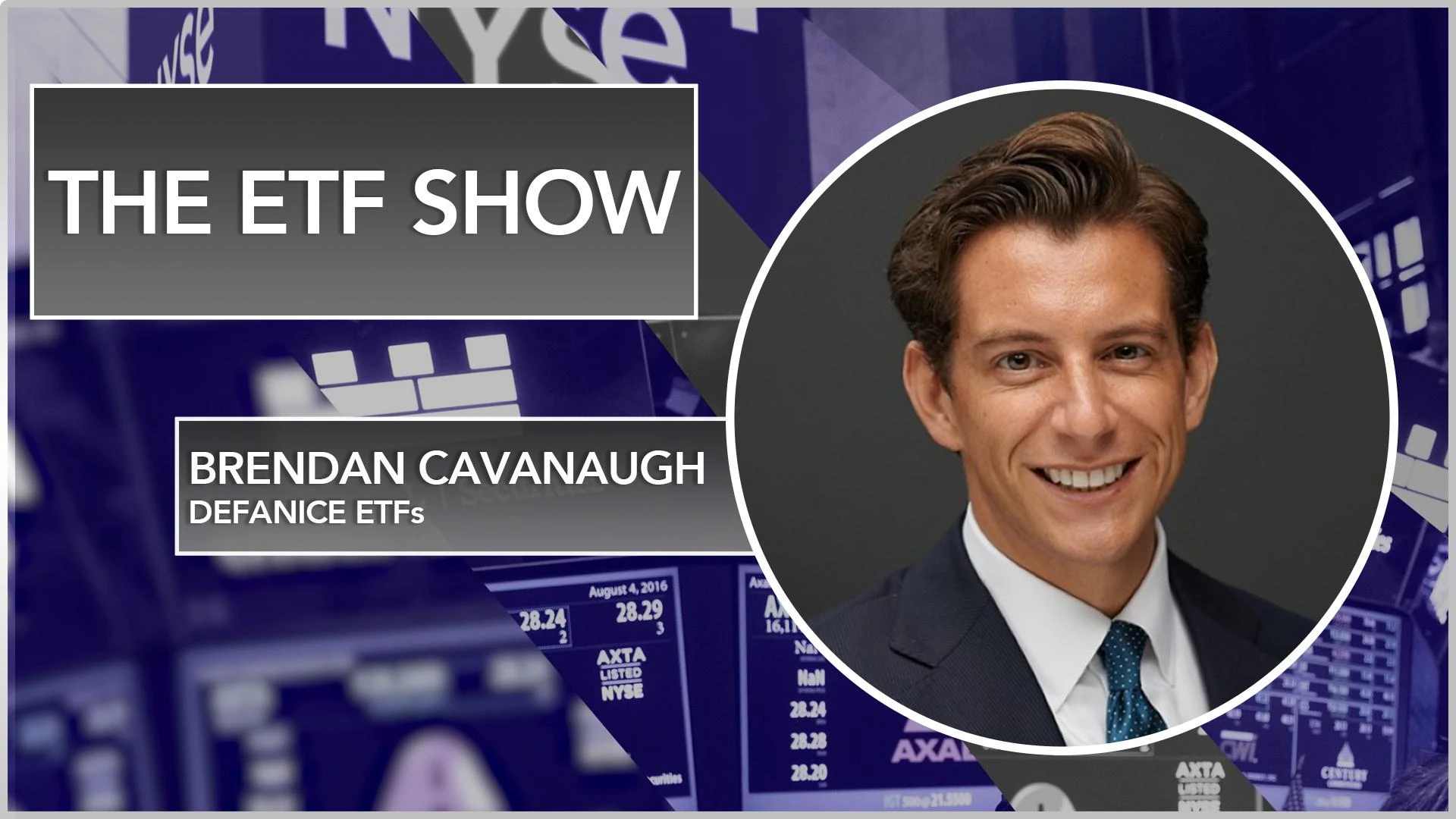
The ETF Show - New Autism-Impact ETF Launched
Defiance ETFs has launched the first ETF, $ASD, focused on the autism ecosystem, investing in companies that provide services, products, and research related to autism and neurodivergence.

ETF Trends
ETF Industry KPIs June 1, 2026
The ETF Industry saw 22 New Launches, 1 Ticker Change and 1 closure last week.
ETF Trends
ETF Industry KPIs May 20, 2026
The ETF Industry saw 44 New Launches, 3 Mutual Fund Conversions and 9 closures last week.
Browse all educational columns



Expert-Built ETF Portfolios, All in One Place
Don’t start from scratch. Discover ready-made ETF portfolios built by professionals to match different goals, timelines, and market views. Use them as inspiration or as a starting point for your own allocation.