Turn ETF ideas into real portfolios. Try the builder now →



BMO and REX Shares Team Up on MNGU to Offer 3x Leveraged AI Infrastructure Exposure
The MNGU ETN provides a 3x bet to the core chipmakers, platforms, and infrastructure powering the artificial intelligence boom.

Keep up with what matters in ETFs
Get timely ETF insights, market trends, and top ideas straight to your inbox.
Your newsletter subscriptions with us are subject to ETF Central's Privacy Policy and Terms and Conditions.
BMO and REX Shares are launching the MicroSectors™ 3× Long MANGOS+ ex Private Companies ETNs (MNGU), a new exchange-traded note built to deliver amplified exposure to a concentrated basket of companies spanning chips, cloud, software and AI infrastructure.
For traders with a strong short-term bullish view on AI, MNGU turns that conviction into a much more aggressive trade.
Global ETF Survey 2026 is Live!
With 1,790 new products launched by July 2026, choosing is harder than ever. Our Global ETF Survey 2026, built on 620 professional investors and allocators, shows how active, fixed income, options-based and thematic ETFs are reshaping fund selection.
MNGU is an ETN, Not an ETF
MNGU is an exchange-traded note, or ETN.
Unlike an ETF, an ETN does not hold a portfolio of the underlying stocks.
Instead, it is an unsecured debt security issued by a financial institution, with returns linked to the performance of a specified index.
In this case, investors are taking exposure to the MANGOS+ Index through a note issued by Bank of Montreal.
That means MNGU carries issuer credit risk in addition to the market and leverage risks of the strategy.
The distinction matters.
Investors are not directly owning shares of NVIDIA, Microsoft, Meta or the other companies in the basket.
So, What Is MANGOS+?
The NYSE® MaNGoS+ Index is an equally weighted basket of 10 U.S.-listed companies positioned at the center of the AI economy.
Its starting point is six named anchor companies: Meta, Anthropic, NVIDIA, Google, OpenAI and SpaceX.
Any publicly listed MaNGoS company that meets the index’s eligibility requirements is included.
The remaining positions are then filled by publicly traded companies with a disclosed supply-chain relationship to at least one of those six anchor names.
That is why the portfolio extends beyond the headline AI companies to names such as Microsoft, TSMC, AMD, Broadcom, Micron and Palantir.
IPO-bound Anthropic and OpenAI are currently private and therefore cannot qualify for inclusion.
If either eventually goes public and satisfies the index requirements, the methodology allows it to be added to the portfolio.
As of August 25, 2026, the index held:
The index is rebalanced quarterly toward an equal 10% allocation per constituent.
That gives MANGOS+ exposure across several parts of the AI value chain rather than concentrating solely on software or mega-cap technology.
A Cross-Section of the AI Buildout
The current basket covers much of the infrastructure behind the AI boom.
NVIDIA, AMD and Broadcom provide semiconductor exposure.
TSMC represents advanced chip manufacturing.
Micron adds memory.
Microsoft, Alphabet and Meta bring cloud, platform and AI development exposure.
Palantir adds enterprise software, while SpaceX introduces a different layer of technology infrastructure.
That makes the index less of a single-segment AI bet and more of a concentrated snapshot of companies positioned across the broader ecosystem.
"A small group of AI companies have delivered an outsized impact on economic growth, technological advancement, and equity market performance over the past decade," said Scott Acheychek, COO of REX Shares. "The MNGU ETNs seek to provide investors with focused leveraged exposure to these market leaders while offering the convenience and transparency of the ETN structure."
"AI is quickly becoming one of the defining themes of this generation," said Saurabh Kushwaha, Director, BMO Capital Markets. "By bringing together companies at the forefront of AI infrastructure, foundational models, and digital platforms, the 3× Long MANGOS+ ETNs seek to offer traders a targeted way to participate in the continued evolution of the artificial intelligence ecosystem."
The 3x Leverage Mechanics
MNGU targets 300% of the index’s daily return.
If the index gains 2% in one trading session, MNGU would theoretically target a gain of roughly 6% before fees and other adjustments.
If the index falls 2%, the downside is magnified in the same way.
Over longer periods, the relationship becomes less predictable.
Because leverage resets every day, compounding can cause MNGU’s performance to differ significantly from three times the index’s cumulative return.
That effect can become more pronounced during volatile markets.
For that reason, MNGU is better viewed as a tactical trading vehicle than a conventional long-term AI holding.
The Fee Is Waived at Launch
BMO is waiving the product’s Daily Investor Fee through January 31, 2027.
After that, the fee will be calculated using an annual rate of 0.95%.
For a leveraged ETN, however, the stated fee is only one consideration.
Compounding, financing effects, volatility and the path of daily returns can all influence what investors ultimately earn or lose.
About BMO
A Leading, Full-service Financial Services Provider - As a member of BMO Financial Group (NYSE, TSX: BMO), we’re part of one of the largest diversified financial services providers in North America with C$1.5 trillion total assets and approximately 53,000 employees as of April 30, 2026. BMO Financial Group is the 8th largest bank in North America as measured by assets (Bloomberg, as of April 30, 2026)
Please note this article is for information purposes only and does not in any way constitute investment advice. It is essential that you seek advice from a registered financial professional prior to making any investment decision.
Latest ETF News
See all ETF newsxETFs Launches NECK to Focus on the Physical Bottlenecks Behind the AI Buildout


Jensen Launches JQTY ETF With a Strict 10-Year Profitability Test





 Advantages of ETFs over Mutual Funds1/6
Lower Costs
In this guide, we'll explore the advantages of ETFs over mutual funds, giving you valuable insights into why ETFs have gained significant popularity among investors like yourself.
Leveraged ETFs: Unlocking the Potential for Amplified Returns1/6
Understanding Leveraged ETFs
Explore leveraged ETFs: potential for amplified returns & risks. 5 ETFs to consider across equities, commodities & fixed income.
What is a Leveraged ETF?1/6
Introducing Leveraged and Inverse ETFs
In this guide, we'll dive into the world of leveraged ETFs, exploring their definition, mechanics, potential risks, and rewards.
Recent educational content

ETF Trends
ETF Industry KPIs October 5, 2026
This week’s KPI data overview highlights key metrics and trends shaping the ETF landscape.

ETF Trends
ETF Industry KPIs September 28, 2026
This week’s KPI data overview highlights key metrics and trends shaping the ETF landscape.
ETF Trends
ETF Industry KPIs September 22, 2026
This week’s KPI data overview highlights key metrics and trends shaping the ETF landscape.
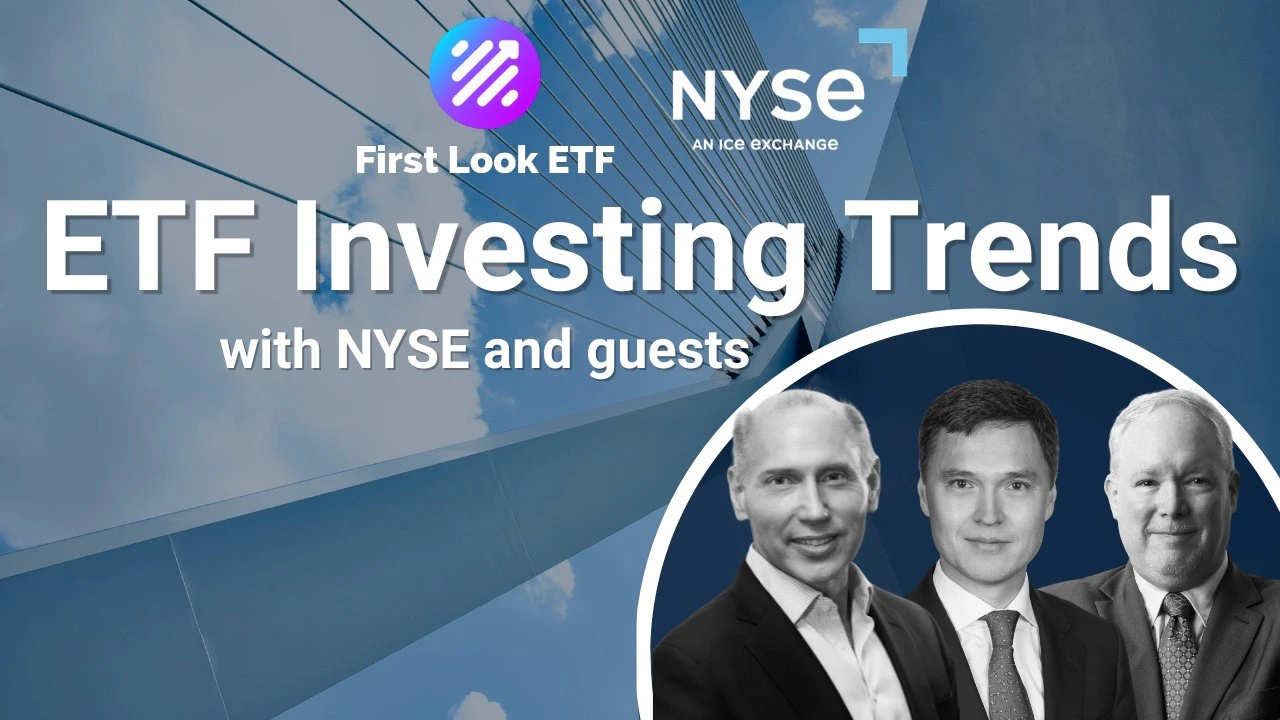
First Look ETF
First Look ETF: Income, Corporate Arbitrage, and Growth and Value Investing
First Look ETF September 2026: iCapital, Mast Investments and North Square unpack new ETFs targeting monthly income, merger arbitrage and complementary growth and value exposure.

Browse all educational columns



ETFs’ Next Act: From Access to Selection
With 1,790 new products launched by July 2026, choosing is harder than ever. Our Global ETF Survey 2026, built on 620 professional investors and allocators, shows how active, fixed income, options-based and thematic ETFs are reshaping fund selection.