From idea to ETF portfolio in minutes. Build yours now →



Bitwise’s Matt Hougan Makes the Case for Avalanche and 24/7 Markets
For Matt Hougan, Avalanche is part of a broader move toward yield, flexibility, and round-the-clock trading.


Keep up with what matters in ETFs
Get timely ETF insights, market trends, and top ideas straight to your inbox.
Your newsletter subscriptions with us are subject to ETF Central's Privacy Policy and Terms and Conditions.
Speaking with CoinDesk's Jennifer Sanasie, Bitwise CIO Matt Hougan reveals why investors are making a costly mistake by treating all staking ETFs as interchangeable. From Bitwise's Avalanche ETF to the explosive rise of Hyperliquid, Matt lays out the opportunities and risks shaping the next wave of crypto investing.
Get data on 14,000+ ETFs
Access Trackinsight's reliable and comprehensive data with 500M+ points on 14,000+ ETFs.
Markets That Never Clock Out
Crypto has quietly forced a change in expectations. Markets no longer sleep, and increasingly, neither can investors.
Matt’s point lands clearly. If you run a global macro strategy and a geopolitical event hits on a Saturday, waiting until Monday is not an option. Traditional finance still operates on a schedule. Crypto operates on reality.
That is where Hyperliquid comes in. It is not just gaining traction because it is new or exciting. Institutions are moving in because they need the ability to trade at all times. Right now, it is one of the only platforms offering that capability at scale.
This shift is not about convenience. It is about survival in a faster market environment. And it sets the tone for how new investment products are being designed.
BAVA: More Than a Passive ETF
Bitwise’s Avalanche ETF, BAVA, reflects this new mindset. It is not just holding crypto. It is putting it to work.
The structure is simple but deliberate.
The fund holds Avalanche in custody and stakes about 70 percent of its assets. That balance is key. Too much staking reduces liquidity. Too little leaves yield behind. Bitwise is aiming for the middle ground that keeps the ETF functional while still generating returns.
This is a meaningful evolution.
Earlier crypto ETFs focused on exposure alone. BAVA introduces built-in yield, which is much closer to how crypto-native investors think.
In other words, this is not just a wrapper. It is a strategy.
Avalanche’s Bet on Flexibility
The Layer-1¹ space is crowded, and standing out is not easy.
Bitwise looks for projects with clear differentiation. Ethereum leans into decentralization. Solana focuses on speed. Avalanche is taking a different route by emphasizing flexibility.
Its architecture allows for customizable blockchains, previously called subnets and now often referred to as Avalanche L1s.
This gives enterprises the ability to tailor their own environments instead of adapting to a fixed system.
That matters more than it might seem. Institutions entering blockchain are not always looking for maximum decentralization or raw speed. They often want control, predictability, and compliance options.
Avalanche is positioning itself as the chain that can meet those needs.
The Bull Case: Real Traction Is Showing
The optimism around Avalanche is grounded in actual growth.
Real world assets on the network have surged, rising roughly 950% over the past year. That kind of growth suggests that tokenization is moving beyond theory and into real adoption.
The broader trend supports this view. Stablecoins and tokenized assets are widely expected to scale into the trillions. As that happens, demand for high quality block space will rise with it.
Avalanche’s customizable design could resonate with companies entering this space. If businesses want tailored solutions, Avalanche offers a compelling path.
The Bear Case: No Clear Winner Yet
Still, there is no certainty in the Layer-1 race.
Different architectures are competing with very different philosophies. Ethereum prioritizes decentralization. Solana emphasizes efficiency. Avalanche focuses on modularity.
It is not clear which approach will dominate. The risk for Avalanche is that flexibility alone may not be enough to win the largest share of adoption.
Even with strong momentum in real world assets, the market is still early. A different design could ultimately capture more developers, users, or capital.
Matt’s personal approach is to own multiple Layer-1 assets. That reduces the need to pick a single winner. Not every investor will take that approach, which makes understanding these tradeoffs essential.
Staking ETFs Are Not Interchangeable
One of the biggest misunderstandings in the market is that staking ETFs are all the same.
They are not.
Matt highlights three factors that investors need to evaluate carefully. First, how much of the fund’s assets are actually staked. Second, how the staking rewards are split between the asset manager and investors. Third, the quality of the staking operation itself.
These details have a direct impact on returns. Two ETFs tracking the same asset can produce very different outcomes depending on how they handle staking.
Bitwise emphasizes its operational expertise, strengthened by acquisitions like Attestant and Chorus One. That experience matters because staking is not just a checkbox feature. It is an ongoing process that requires precision and reliability.
Compared to Bitcoin ETFs, which are relatively uniform, staking ETFs introduce real variation. Investors need to pay attention.
Hyperliquid and the Push Toward 24/7 Trading
The conversation naturally circles back to Hyperliquid because it represents where things are heading.
Institutional interest is growing quickly. The appeal is straightforward. It allows trading at any time, including weekends when traditional markets are closed.
This is part of a broader wave of newer DeFi projects. They are being built in a more mature regulatory environment and are designed with clearer token economics and stronger value capture.
Hyperliquid stands out because it has found product market fit and delivered strong performance. It is not just a concept. It is already being used.
Bitwise has filed for a Hyperliquid ETF, although details remain limited due to regulatory constraints. Even so, the intent is clear. If the platform continues to gain traction, demand for a public market vehicle will likely follow.
The Direction of Travel
Step back, and two trends become obvious.
First, crypto ETFs are becoming more active. Products like BAVA are designed to generate yield, not just track prices.
Second, the market itself is evolving toward continuous operation. Trading is no longer confined to business hours. Infrastructure is becoming more flexible, and new platforms are emerging to support that shift.
Avalanche may or may not emerge as a dominant Layer-1. Hyperliquid may or may not lead the trading ecosystem long term. Those outcomes are still uncertain.
What is certain is the direction. Finance is becoming faster, more adaptable, and always on.
ETFs are no longer catching up. They are starting to reflect that reality.
Definitions
1: A Layer-1 blockchain is the base network that processes transactions, secures the system, and maintains the official ledger.
It serves as the foundation for all applications and tokens built on top of it, like Ethereum or Avalanche.
Please note this article is for information purposes only and does not in any way constitute investment advice. It is essential that you seek advice from a registered financial professional prior to making any investment decision.


Latest ETF News
See all ETF news






 Advantages of ETFs over Mutual Funds1/6
Lower Costs
In this guide, we'll explore the advantages of ETFs over mutual funds, giving you valuable insights into why ETFs have gained significant popularity among investors like yourself.
Leveraged ETFs: Unlocking the Potential for Amplified Returns1/6
Understanding Leveraged ETFs
Explore leveraged ETFs: potential for amplified returns & risks. 5 ETFs to consider across equities, commodities & fixed income.
What is a Leveraged ETF?1/6
Introducing Leveraged and Inverse ETFs
In this guide, we'll dive into the world of leveraged ETFs, exploring their definition, mechanics, potential risks, and rewards.
Recent educational content

ETF Trends
ETF Industry KPIs August 31, 2026
This week’s KPI data overview highlights key metrics and trends shaping the ETF landscape.

ETF Trends
ETF Industry KPIs August 24, 2026
This week’s KPI data overview highlights key metrics and trends shaping the ETF landscape.
What’sTheFund
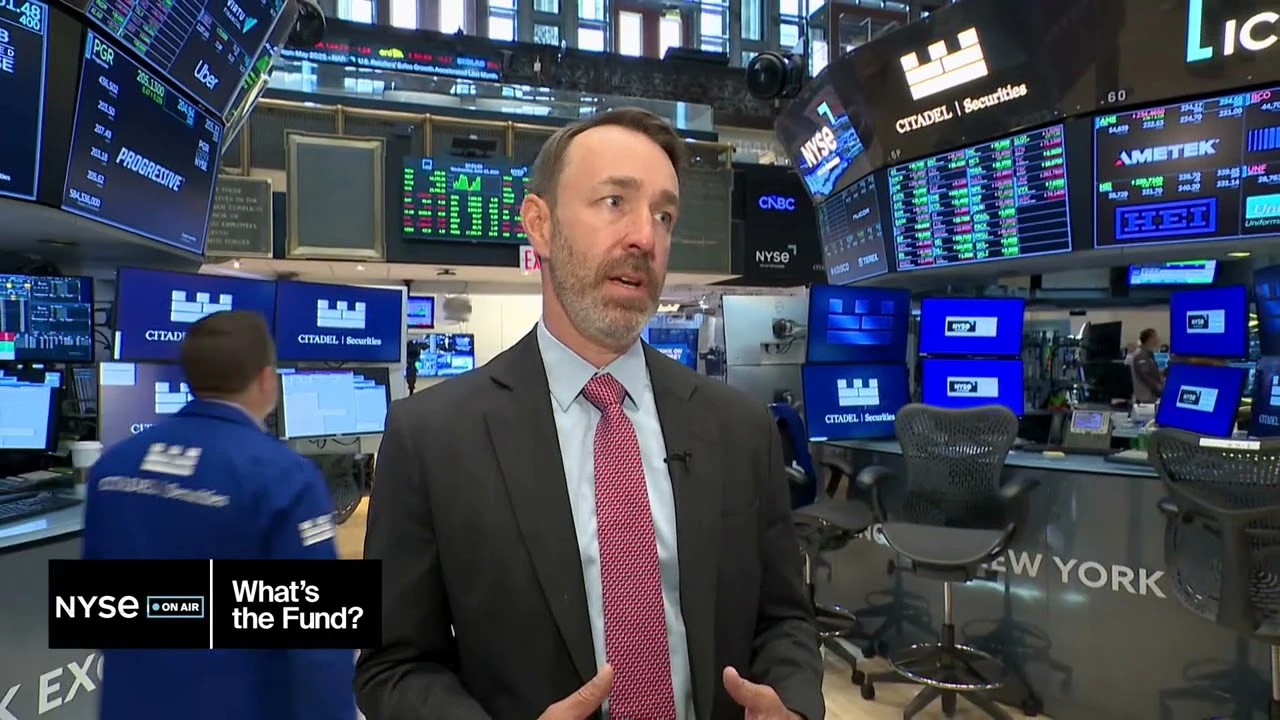
What's the Fund | Ocean Park Diversified Income ETF (DUKZ)
James St Aubin, Chief Investment Officer at Ocean Park Asset Management, discuss the DUKZ ETF, exposing investors to the whole spectrum of asset classes in the fixed income markets, through their rules-based process.

ETF Takeaway
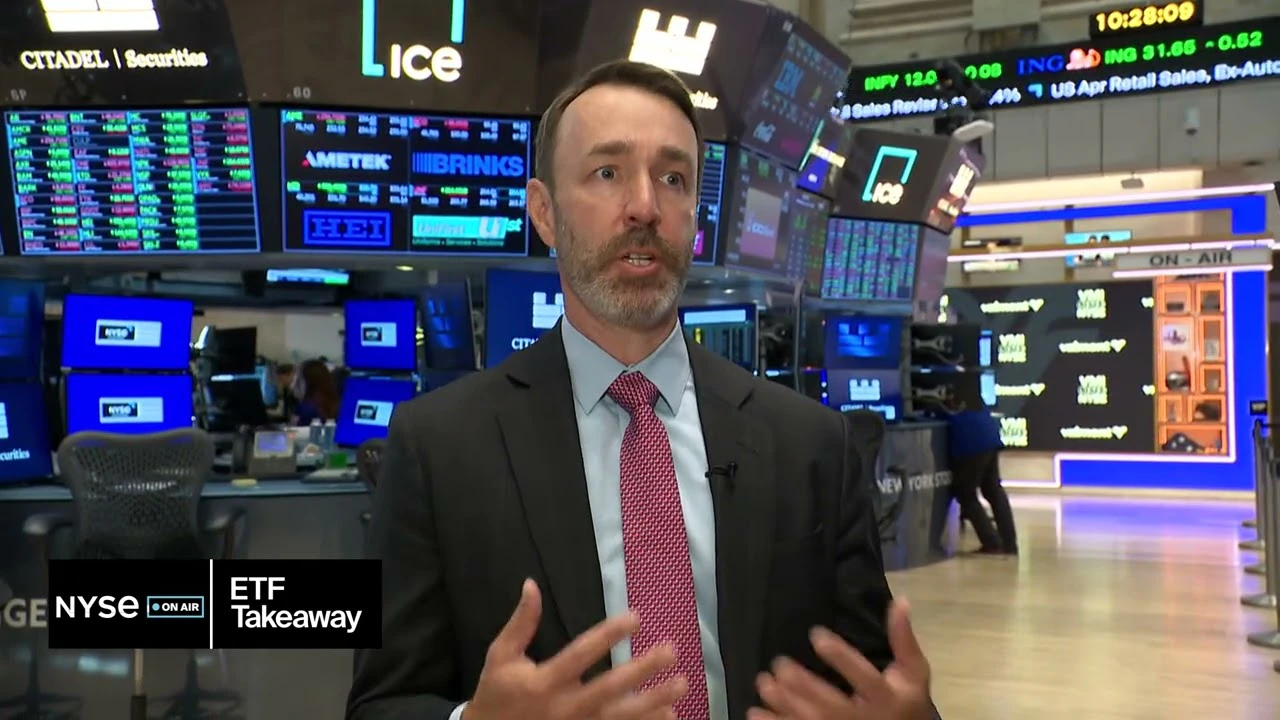
ETF Takeaway: Ocean Park Diversified Income ETF (DUKZ)
James St Aubin, Chief Investment Officer at Ocean Park Asset Management discusses the state of fixed income markets and how their DUKZ ETF, through their rules-based process, tactically allocates to 11 sectors of fixed income through underlying ETFs.
Browse all educational columns



Build and Analyze Your ETF Portfolio Like a Pro
Create your own ETF portfolio in minutes and instantly see allocations, exposures, performance, and risk. Visualize diversification across asset classes, regions, and sectors. Stress-test ideas, compare benchmarks, and refine your strategy with professional-grade analytics.