ETF model portfolios designed for real investor needs. Discover →



Before You Buy an ETF, Ask Yourself One Question
The most important question about an ETF isn't how it performed. It's what it was designed to accomplish.

Keep up with what matters in ETFs
Get timely ETF insights, market trends, and top ideas straight to your inbox.
Your newsletter subscriptions with us are subject to ETF Central's Privacy Policy and Terms and Conditions.
I'm Nicholas Phillips, President of ETF Capital Markets Advisors LLC, with 27 years of experience in ETF trading and capital markets. I provide fractional capital markets support to ETF issuers and asset managers, helping them navigate launches, liquidity, ETF market structure, market maker relationships, and sales and execution support. Through my contributions to ETF Central, I aim to provide practical insights for investors and issuers navigating the ETF landscape.
In this latest piece, I explain why understanding an ETF's investment objective should come before evaluating its performance, and how knowing what a fund is designed to accomplish can lead to better investment decisions.
Like what you're reading?
Stay in the loop — get the latest ETF insights: trends, analysis, and expert picks.
Understanding an ETF's Investment Objective Before Looking at Performance
One of the first questions investors often ask about an ETF is:
"How has it performed?"
Performance is certainly an important consideration, but it may not be the best place to begin.
A more fundamental question is:
"What is this ETF trying to accomplish?"
Today, investors have access to thousands of ETFs covering virtually every asset class, sector, investment style, and risk profile imaginable. Some seek broad market exposure. Others attempt to outperform a benchmark through active security selection. Some are designed to generate income, while others seek to manage downside risk or provide exposure to a specific investment theme.
Comparing two ETFs simply by looking at recent returns can often be misleading if their objectives are completely different.
Before evaluating performance, investors should first understand what the ETF was designed to accomplish.
Every ETF Begins With an Investment Objective
An ETF is simply an investment vehicle.
What differentiates one ETF from another is the investment strategy inside the wrapper.
For example, a broad-market ETF tracking the S&P 500 or Russell 2000 is designed to provide diversified exposure to a segment of the U.S. equity market. Success is generally measured by how closely the ETF tracks its benchmark while minimizing costs and tracking error.
An actively managed ETF may have an entirely different objective.
Rather than attempting to own every company within an index, the portfolio manager seeks to identify a smaller group of companies they believe can outperform over time.
Neither approach is inherently better.
They simply pursue different investment objectives.
Understanding that distinction provides important context before comparing historical performance.
Not Every Investor Has the Same Objective
Just as every ETF has a stated objective, every investor has one as well—whether they realize it or not.
Some investors seek long-term capital appreciation.
Others prioritize current income.
Some focus on reducing portfolio volatility or preserving capital.
Others simply want broad exposure to a particular market or asset class.
These objectives are very different.
Naturally, the types of ETFs designed to pursue those goals will also differ.
Rather than asking whether one ETF is "better" than another, investors may find it more useful to ask whether a fund's investment objective aligns with what they are trying to accomplish.
Investment Themes Can Be Exciting—but They Also Carry Risks
Every market cycle seems to produce investment themes that capture investors' imagination.
The internet.
3D printing.
Cannabis.
Electric vehicles.
Artificial intelligence.
Some of these innovations have gone on to reshape industries and create tremendous long-term value.
Others experienced periods where investor enthusiasm moved much faster than the underlying businesses.
The cannabis industry provides an interesting example.
As legalization efforts gained momentum several years ago, investor enthusiasm drove significant inflows into cannabis-related companies and ETFs. Expectations for future growth were substantial, even though the industry itself was still developing.
At the time, the publicly traded cannabis universe remained relatively small. Many companies had limited operating histories, little or no profitability, and relatively small market capitalizations with limited trading liquidity. Because ETFs can only invest in the securities available within a particular investment universe, many portfolios necessarily included companies that were still in the early stages of building sustainable businesses.
As expectations eventually became more closely tied to business fundamentals, many cannabis-related stocks declined sharply, reminding investors that an exciting investment theme does not eliminate the importance of understanding the underlying holdings and the risks involved.
That doesn't necessarily mean the cannabis industry lacks long-term potential today.
Markets evolve.
Companies mature.
Regulations change.
The lesson is broader than cannabis itself.
Understanding an ETF's investment objective should always be accompanied by an understanding of the characteristics of the underlying investments.
Performance Should Be Viewed in Context
Not every ETF is designed to produce the same outcome.
Some ETFs seek to provide broad exposure to a market or asset class and are designed to closely track a benchmark.
Others attempt to outperform through active security selection by constructing a portfolio of companies a manager believes offer attractive long-term opportunities.
Income-oriented strategies may intentionally sacrifice a portion of potential upside in exchange for generating higher current income through dividends or option-writing strategies.
Some risk-managed or volatility-based ETFs adjust their market exposure based on changing market conditions. For example, certain strategies may increase equity exposure during periods of lower market volatility and reduce exposure as volatility rises, seeking to manage portfolio risk while remaining invested.
Still others are designed to provide downside protection, buffered outcomes, or targeted exposure to a specific investment theme or sector.
Each of these strategies has a different objective, a different risk profile, and different expectations for performance.
Comparing them solely on recent returns without understanding what they are trying to accomplish can lead to misleading conclusions.
Performance becomes far more meaningful when viewed within the context of the fund's stated investment objective.
Final Thoughts
The ETF industry has provided investors with an unprecedented range of investment choices.
That variety is one of the industry's greatest strengths.
But more choice also requires greater understanding.
Before comparing performance, recent headlines, or the popularity of a particular investment theme, take a moment to understand what the ETF was designed to accomplish.
Its investment objective provides important context for evaluating its risks, expected behavior, and potential role within a portfolio.
Because before asking:
"How did this ETF perform?"
it may be worth asking:
"What was it trying to accomplish in the first place?"
Disclaimer
Please note this article is for information purposes only and does not in any way constitute investment advice. It is essential that you seek advice from a registered financial professional prior to making any investment decision.
Latest ETF News
See all ETF newsForm 4 Has 20 Transaction Codes. None Say "Section 351 ETF Swap"


Who Really Owns a White-Label ETF?

What If a Futures-Based ETF Never Had to Roll Again?

How Do You Build a Winning ETF Business?

Losers Of Q2 2026 REIT Earnings Season


Winners of Q2 2026 REIT Earnings Season


 Advantages of ETFs over Mutual Funds1/6
Lower Costs
In this guide, we'll explore the advantages of ETFs over mutual funds, giving you valuable insights into why ETFs have gained significant popularity among investors like yourself.
Leveraged ETFs: Unlocking the Potential for Amplified Returns1/6
Understanding Leveraged ETFs
Explore leveraged ETFs: potential for amplified returns & risks. 5 ETFs to consider across equities, commodities & fixed income.
What is a Leveraged ETF?1/6
Introducing Leveraged and Inverse ETFs
In this guide, we'll dive into the world of leveraged ETFs, exploring their definition, mechanics, potential risks, and rewards.
Recent educational content

ETF Trends
ETF Industry KPIs September 8, 2026
This week’s KPI data overview highlights key metrics and trends shaping the ETF landscape.

ETF Trends
ETF Industry KPIs August 31, 2026
This week’s KPI data overview highlights key metrics and trends shaping the ETF landscape.
ETF Trends
ETF Industry KPIs August 24, 2026
This week’s KPI data overview highlights key metrics and trends shaping the ETF landscape.
What’sTheFund
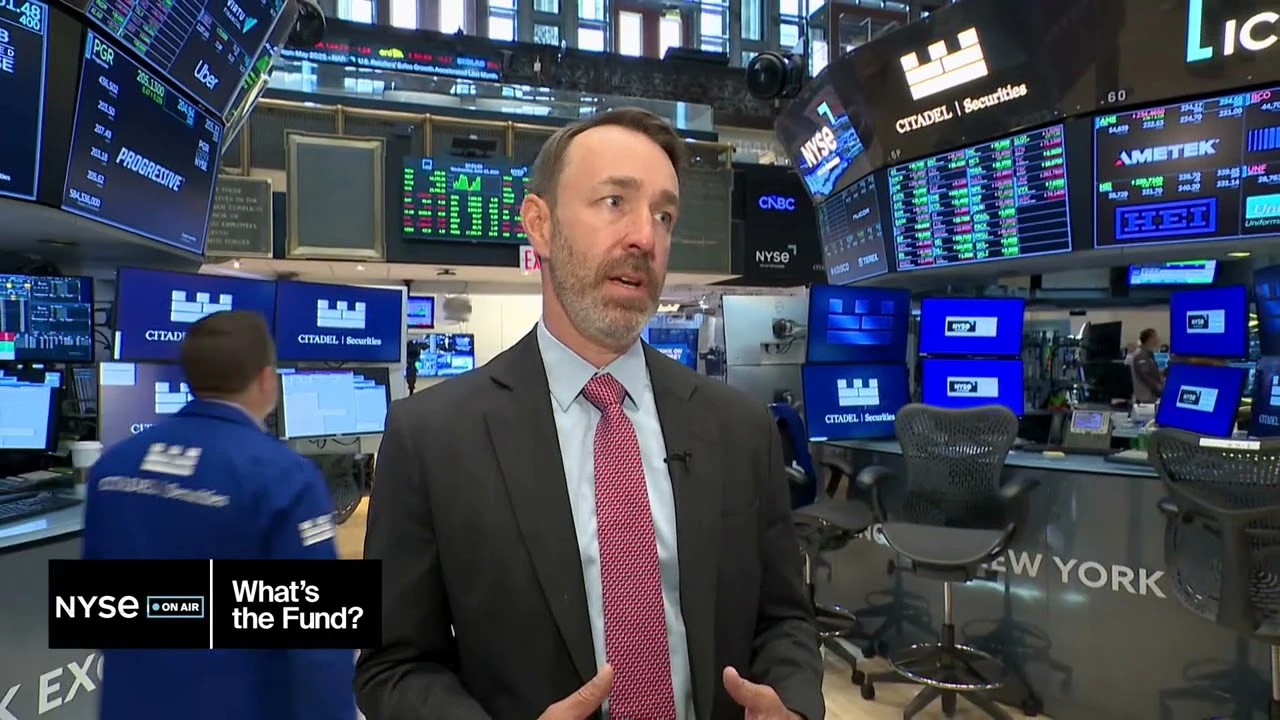
What's the Fund | Ocean Park Diversified Income ETF (DUKZ)
James St Aubin, Chief Investment Officer at Ocean Park Asset Management, discuss the DUKZ ETF, exposing investors to the whole spectrum of asset classes in the fixed income markets, through their rules-based process.

Browse all educational columns



Build and Analyze Your ETF Portfolio Like a Pro
Create your own ETF portfolio in minutes and instantly see allocations, exposures, performance, and risk. Visualize diversification across asset classes, regions, and sectors. Stress-test ideas, compare benchmarks, and refine your strategy with professional-grade analytics.