ETF model portfolios designed for real investor needs. Discover →



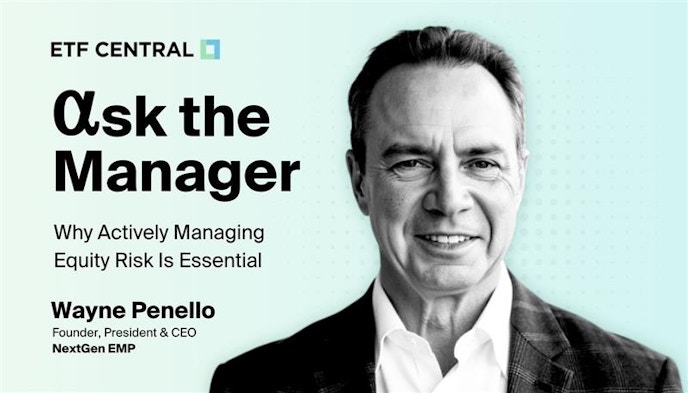
Ask the Manager: Wayne Penello on Why Actively Managing Equity Risk Is Essential
A conversation with Wayne Penello on why traditional diversification falls short—and how long/short ETF strategies can help manage systemic risk while preserving equity-level returns.

Keep up with what matters in ETFs
Get timely ETF insights, market trends, and top ideas straight to your inbox.
Your newsletter subscriptions with us are subject to ETF Central's Privacy Policy and Terms and Conditions.
In this edition of our Q&A series, we explore one of the most important challenges facing today’s equity investors: how to manage risk without sacrificing long-term returns. While diversification has long been considered the foundation of portfolio construction, it offers limited protection against the systemic shocks that increasingly drive market volatility. To better understand the limits of traditional approaches—and how long/short strategies delivered through ETFs may offer a modern alternative—we sat down with Wayne Penello, founder and CIO of NextGen EMP and co-creator of the EMPB ETF. With more than four decades of experience in risk management, Penello shares his perspective on why actively managing equity risk is becoming essential for investors navigating today’s markets.
What types of risk am I exposed to in my equity portfolio?
Equity investors face three primary forms of risk:
- Idiosyncratic risk: Company-specific events
- Systematic risk: Industry or sector-level pressures
- Systemic risk: Broad market or global uncertainty
Nobel Prize–winning economist Harry Markowitz, founder of Modern Portfolio Theory, famously noted that “diversification is the only free lunch in finance.” His work demonstrated that diversification can reduce risk without reducing expected returns.
Where does diversification fall short?
Diversification works extremely well at lowering idiosyncratic and sector-level risk.
However, it does not meaningfully reduce systemic risk—the broad market forces that cause correlations to rise across nearly all sectors during periods of stress.
To address systemic risk, many investors limit their equity exposure and shift into lower-risk, lower-return assets. While effective at reducing volatility, this approach also reduces long-term returns.
A more effective alternative is to actively manage risk, allowing a higher share of investment capital to remain positioned for equity-level returns.
Can option strategies fill the gap and protect against market risk?
Yes—but always at a cost.
Investors can:
- Buy options for direct protection (paying constant premiums), or
- Use option-based long/short structures that reduce extreme downside risk but also cap the upside.
Buying protection creates a persistent drag on returns.
Capping gains can be even more damaging over time.
Investment legend Charles Ellis, former chair of Yale’s Investment Committee, illustrated this tradeoff: over a 10-year period, missing the best 90 trading days would turn a $1 investment that could have grown to $5.59 into a $0.22 loss. Strategies that truncate gains risk undermining long-term performance.
How can I manage market risk without sacrificing long-term returns?
Introduce short positions to offset market exposure.
U.S. industry sectors are correlated to varying degrees, but they tend to move together during major macro events—rate shocks, inflation surprises, recessions, geopolitical stress, or market-wide crises such as COVID-19.
In these moments, disciplined short exposure can dampen drawdowns and control volatility.
Aren’t short positions themselves risky?
A single short position can be risky due to asymmetric payoff.
But in a diversified, risk-managed framework, short positions reduce overall portfolio risk.
This insight dates back to A.W. Jones, who developed the first long/short equity strategy in the 1940s. His approach—pairing long positions in strong companies with short positions in weaker ones—remains the foundation of modern risk-controlled investing.
Why aren’t long/short strategies more widely used by individual investors?
Institutional investors—foundations, endowments, pensions—have long relied on long/short approaches because they are effective and tax-efficient for them.
Individual investors often lack the time, tools, or expertise to manage a long/short portfolio themselves, which historically limited adoption.
Have ETFs changed the landscape for long/short strategies?
Yes.
ETFs using long/short strategies now give all investors access to institutional-quality risk management in a tax-efficient vehicle.
When an ETF adjusts its portfolio, it can use Section 351 exchanges, allowing in-kind transactions that avoid realizing capital gains. The investor’s tax liability is typically based only on their own buy and sell dates.
This structure opens the door for investors and advisors to efficiently incorporate long/short risk management.
What is EMPB’s investment strategy?
EMPB
The goal is simple:
Actively manage risk while delivering consistent, equity-like returns.
By emphasizing both the quality of long positions and the strategic role of shorts, EMPB aims to reduce drawdowns, control volatility, and improve risk-adjusted performance.
What role should long/short risk management play for equity investors?
Investment success becomes more consistent when risk is managed with discipline.
A portfolio that loses less during downturns advances from a higher base when markets recover. That means:
- Less ground to make up
- More capital working during the rebound
- Higher compounded long-term returns
This also reduces the emotional stress investors often feel during volatile markets.
Like what you're reading?
Stay in the loop — get the latest ETF insights: trends, analysis, and expert picks.
About the Author
Wayne Penello is an entrepreneur, risk-management innovator, and portfolio manager with more than 40 years of experience in financial markets. He is the founder and Chief Investment Officer of NextGen EMP, Inc. and co-creator of the Efficient Market Portfolio Plus (EMPB) ETF.
Penello previously served as a market maker and options-ring chairman on the New York Mercantile Exchange before founding Risked Revenue Energy Associates, where he pioneered and patented the Performance Risk Management System (U.S. Patent 7,822,670 B2). He is the co-author of Risk Is an Asset and is recognized for helping businesses and investors turn volatility into strategic advantage.
Please note this article is for information purposes only and does not in any way constitute investment advice. It is essential that you seek advice from a registered financial professional prior to making any investment decision.

Latest ETF News
See all ETF news
Ask the Manager: Kenneth Wong on Building the Next Wave of ETF Innovation, from Options to Korea's AI Semiconductor Opportunity

Ask the Manager: Kristof Gleich on Why AI Is Becoming an Asset Class

Ask the Manager: Vince Lorusso on Active Equity in an AI-Driven Market





 Advantages of ETFs over Mutual Funds1/6
Lower Costs
In this guide, we'll explore the advantages of ETFs over mutual funds, giving you valuable insights into why ETFs have gained significant popularity among investors like yourself.
Leveraged ETFs: Unlocking the Potential for Amplified Returns1/6
Understanding Leveraged ETFs
Explore leveraged ETFs: potential for amplified returns & risks. 5 ETFs to consider across equities, commodities & fixed income.
What is a Leveraged ETF?1/6
Introducing Leveraged and Inverse ETFs
In this guide, we'll dive into the world of leveraged ETFs, exploring their definition, mechanics, potential risks, and rewards.
Recent educational content

ETF Trends
ETF Industry KPIs September 8, 2026
This week’s KPI data overview highlights key metrics and trends shaping the ETF landscape.

ETF Trends
ETF Industry KPIs August 31, 2026
This week’s KPI data overview highlights key metrics and trends shaping the ETF landscape.
ETF Trends
ETF Industry KPIs August 24, 2026
This week’s KPI data overview highlights key metrics and trends shaping the ETF landscape.
What’sTheFund
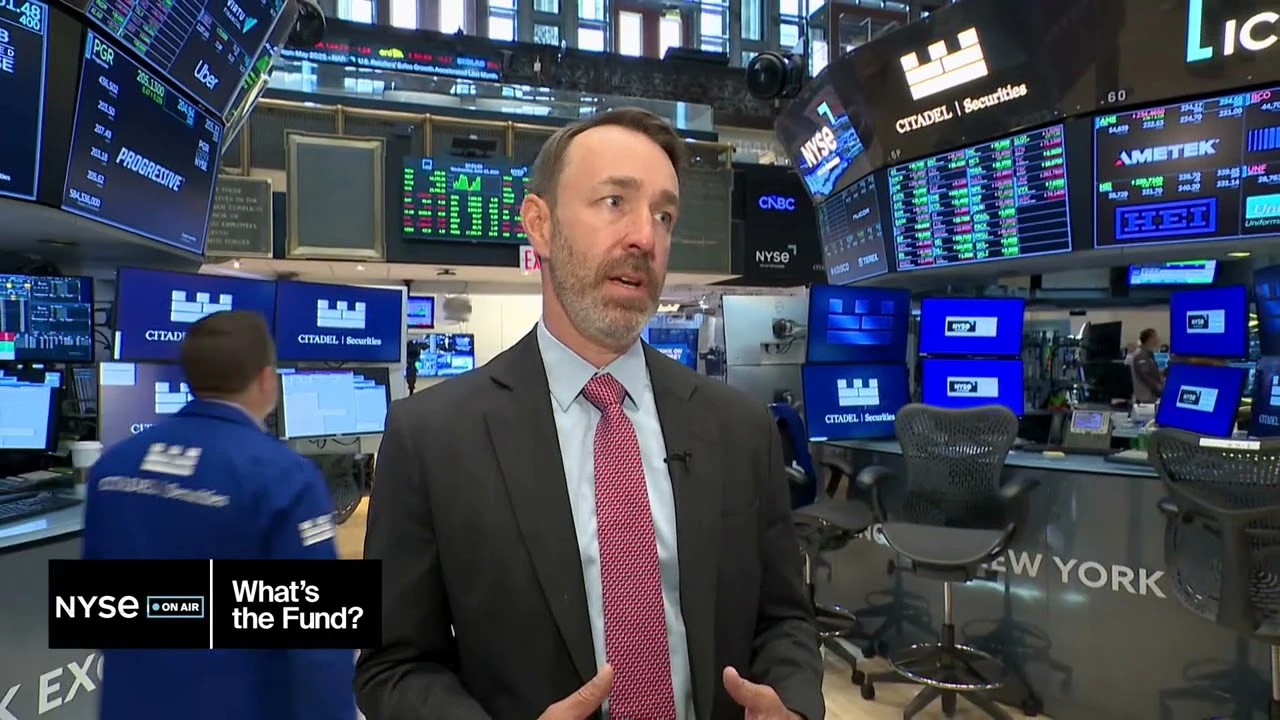
What's the Fund | Ocean Park Diversified Income ETF (DUKZ)
James St Aubin, Chief Investment Officer at Ocean Park Asset Management, discuss the DUKZ ETF, exposing investors to the whole spectrum of asset classes in the fixed income markets, through their rules-based process.

Browse all educational columns



Active Trader Report: Use of Leveraged & Inverse ETFs Way Up
Direxion partnered with Compound Insights and Vanda to explore what’s driving the evolution of active trading — and how active traders are using leveraged and inverse funds across equities, single stocks, commodities, and volatility.