Create, analyze, optimize your ETF portfolio. Start now →



Are You Judging ETFs the Wrong Way?
The metrics that defined yesterday's ETFs may not be the ones that matter most today.


Keep up with what matters in ETFs
Get timely ETF insights, market trends, and top ideas straight to your inbox.
Your newsletter subscriptions with us are subject to ETF Central's Privacy Policy and Terms and Conditions.
I'm Nicholas Phillips, President of ETF Capital Markets Advisors LLC, with 27 years of experience in ETF trading and capital markets. I provide fractional capital markets support to ETF issuers and asset managers, helping them navigate launches, liquidity, ETF market structure, market maker relationships, and sales and execution support. Through my contributions to ETF Central, I aim to provide practical insights for investors and issuers navigating the ETF landscape.
In this latest piece, I examine why many of today's ETFs deserve to be evaluated through a different lens as the industry continues to evolve.
Get data on 14,000+ ETFs
Access Trackinsight's reliable and comprehensive data with 500M+ points on 14,000+ ETFs.
Judging Today's ETFs by Yesterday's Standards
One of the comments I've heard most often throughout my career comes from investors, advisors, and even ETF sales teams.
"I'd like to see the fund gather a few more assets first."
"The trading volume is still pretty light."
"The spread is wider than I'd like."
Those are reasonable observations.
But they may not be the best way to evaluate many of today's strategy ETFs.
When ETFs Were Built for Market Access
For much of the ETF industry's history, there was a race to provide every type of market exposure imaginable.
There were ETFs for the S&P 500, international markets, sectors, industries, commodities, currencies, and eventually almost every index you could imagine.
The objective was straightforward: provide investors with efficient, low-cost access to a particular market.
Those products shaped investor expectations. Investors became accustomed to ETFs with billions of dollars in assets, penny-wide spreads, and portfolios that changed only when an index rebalanced.
When I entered the ETF industry nearly three decades ago, I had the opportunity to witness much of that evolution firsthand.
Much of my career as a market maker was spent helping investors gain access to markets that were often difficult or expensive to reach.
I was responsible for making markets in ETFs providing exposure to countries like South Korea and Taiwan, broad international and European indexes, thematic funds tied to industries like gold miners and coal, rare earth strategies, and even frontier markets like Egypt.
Whether it was a country ETF, a thematic ETF, or a frontier market fund, the common thread was the same, they were designed to provide exposure to a market or theme.
The portfolio management was largely driven by an index.
Back then, the challenge was giving investors access to a market.
Today, the challenge is helping investors achieve an investment objective.
From Market Exposure to Investment Solutions
Today's ETF industry is different.
While new index and thematic ETFs continue to launch, much of today's innovation is focused on delivering investment strategies rather than simply market exposure.
These strategies aren't designed to replace broad-market index ETFs.
They're designed for investors with specific objectives.
Some seek higher levels of income through professionally managed option strategies.
Others are designed to reduce downside risk during periods of market uncertainty.
Some dynamically increase or decrease leverage based on market volatility, while others tactically allocate among multiple asset classes or actively manage portfolios based on changing market conditions.
These aren't simply index funds packaged inside an ETF.
They're professionally managed investment strategies delivered through the ETF wrapper.
Why Traditional ETF Metrics Don't Tell the Whole Story
As a result, they shouldn't automatically be evaluated using the same metrics investors often use for large, broad-market ETFs like SPY or QQQ.
For example, I often hear investors express concern about a strategy ETF having a wider bid-ask spread than one of these large index ETFs.
The spread is important.
But it's also important to understand why the spread is what it is.
A broader spread may simply reflect the additional complexity involved in pricing and hedging options, multiple asset classes, international securities, or actively managed portfolios.
It may reflect the cost of implementing and managing a more sophisticated investment strategy rather than a lack of liquidity.
Of course, there are exceptions.
Occasionally, wider spreads may indicate that market quality could be improved or that an issuer should work more closely with its liquidity providers.
In my experience, however, issuers with an experienced ETF capital markets professional monitoring their funds tend to identify and address these issues quickly.
Those situations are far less common than many investors assume.
Liquidity Evolves Over Time
I can still remember standing on the AMEX trading floor when the QQQs first began trading.
I was making markets in other ETFs just a few feet away.
It's easy to forget today that one of the world's largest and most actively traded ETFs didn't begin with penny-wide spreads.
Early on, the market was measured in dollars rather than pennies.
Part of that reflected the fact that many of the underlying Nasdaq companies were younger, faster-growing, and considerably more volatile than they are today.
But it also reflected an ETF ecosystem that was still evolving.
As investors embraced the product, technology improved, market makers gained confidence, and the market matured, spreads naturally tightened.
That doesn't mean every strategy ETF will eventually look like QQQ, and it shouldn't.
But it does remind us that liquidity evolves.
A wider spread at launch doesn't automatically indicate a problem.
It often reflects the complexity of the underlying investment strategy, along with the time required for investors, market makers, and the broader ETF ecosystem to fully understand and efficiently price what the ETF is delivering.
In other words, a wider spread doesn't automatically mean something is wrong.
Success Should Be Measured by the Objective
The same can be said for assets under management and trading volume.
A strategy ETF designed to solve a specific investment problem may never gather the assets or trading volume of one of the industry's largest index ETFs, nor should we expect it to.
Its objective is to successfully deliver the investment strategy it was designed to provide.
No one compares a professionally managed mutual fund or separately managed account to a broad-market index fund and concludes it's unsuccessful because it has fewer assets or follows a different investment process.
Many of today's strategy ETFs deserve that same perspective.
A New Way to Evaluate ETFs
The ETF wrapper hasn't changed.
What's changed is what's inside it.
Perhaps the biggest evolution in the ETF industry is that we've moved from building products designed to provide market exposure to building products designed to provide investment solutions.
As the ETF industry continues to evolve, perhaps our expectations should evolve with it.
Rather than asking whether every ETF looks like one of the industry's largest index ETFs, perhaps we should ask a different question:
Is this ETF successfully delivering the investment solution it was built to provide?
Disclaimer
Please note this article is for information purposes only and does not in any way constitute investment advice. It is essential that you seek advice from a registered financial professional prior to making any investment decision.
Latest ETF News
See all ETF newsWhat If a Futures-Based ETF Never Had to Roll Again?

How Do You Build a Winning ETF Business?

Losers Of Q2 2026 REIT Earnings Season


Winners of Q2 2026 REIT Earnings Season


ETF Creation Windows Matter More Than You Think


 Advantages of ETFs over Mutual Funds1/6
Lower Costs
In this guide, we'll explore the advantages of ETFs over mutual funds, giving you valuable insights into why ETFs have gained significant popularity among investors like yourself.
Leveraged ETFs: Unlocking the Potential for Amplified Returns1/6
Understanding Leveraged ETFs
Explore leveraged ETFs: potential for amplified returns & risks. 5 ETFs to consider across equities, commodities & fixed income.
What is a Leveraged ETF?1/6
Introducing Leveraged and Inverse ETFs
In this guide, we'll dive into the world of leveraged ETFs, exploring their definition, mechanics, potential risks, and rewards.
Recent educational content

ETF Trends
ETF Industry KPIs August 24, 2026
This week’s KPI data overview highlights key metrics and trends shaping the ETF landscape.

What’sTheFund
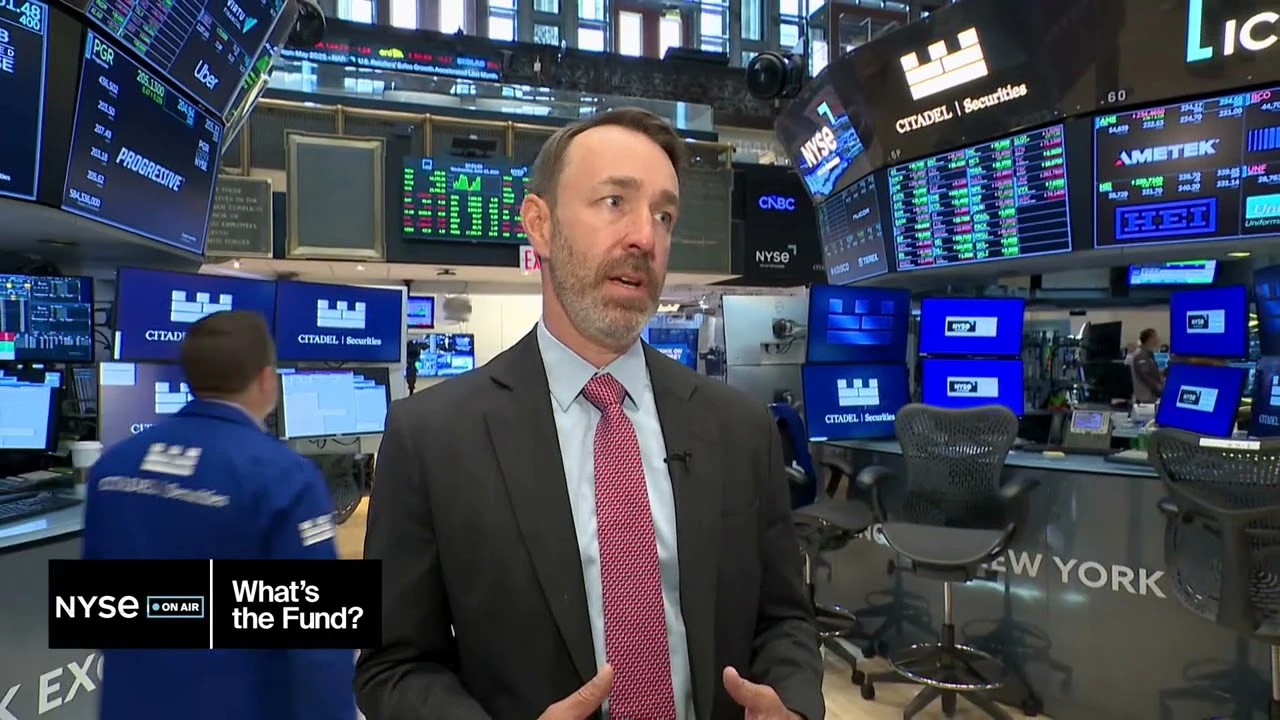
What's the Fund | Ocean Park Diversified Income ETF (DUKZ)
James St Aubin, Chief Investment Officer at Ocean Park Asset Management, discuss the DUKZ ETF, exposing investors to the whole spectrum of asset classes in the fixed income markets, through their rules-based process.

ETF Takeaway
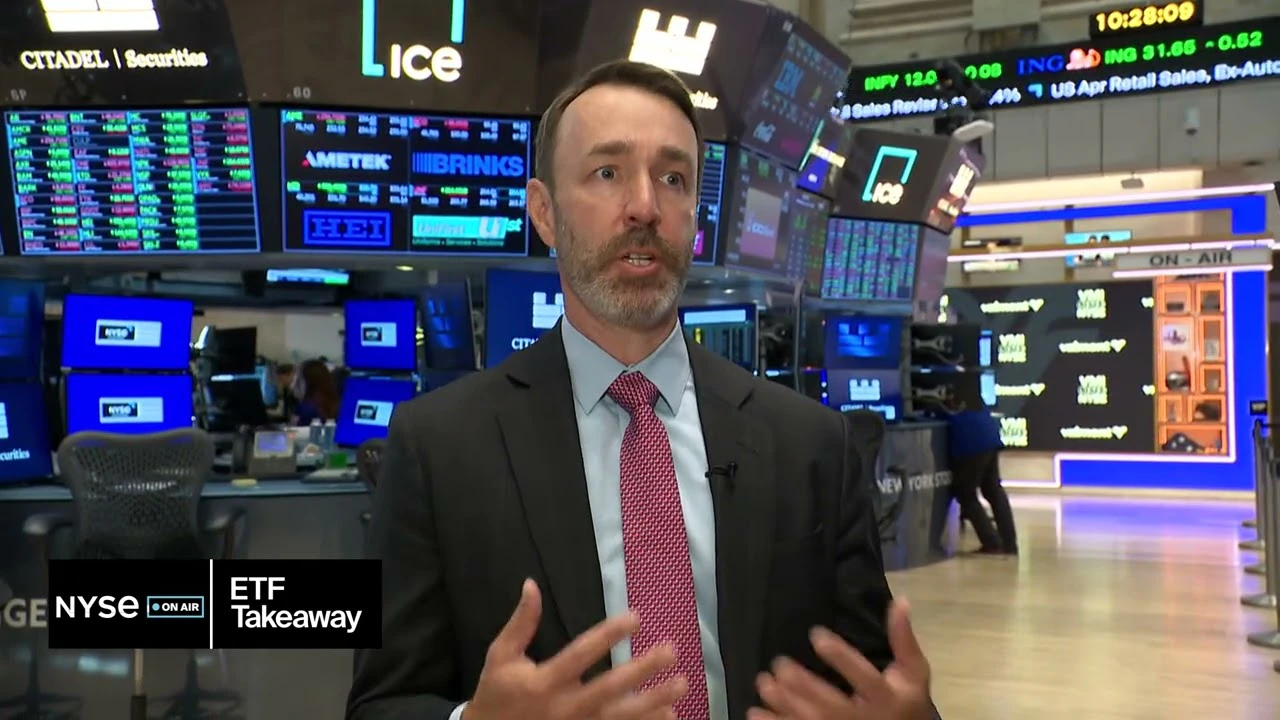
ETF Takeaway: Ocean Park Diversified Income ETF (DUKZ)
James St Aubin, Chief Investment Officer at Ocean Park Asset Management discusses the state of fixed income markets and how their DUKZ ETF, through their rules-based process, tactically allocates to 11 sectors of fixed income through underlying ETFs.
ETF Trends
ETF Industry KPIs August 17, 2026
This week’s KPI data overview highlights key metrics and trends shaping the ETF landscape:
Browse all educational columns



Have you tried our ETF Compare tool?
Compare ETFs like a pro. Analyze fees, performance, exposure & holdings side-by-side.