Ready-made ETF portfolios built for real investor needs. Explore now →



Active ETFs gaining prominence
In this article, we explore why active ETFs are gaining prominence in today’s difficult market conditions.


Keep up with what matters in ETFs
Get timely ETF insights, market trends, and top ideas straight to your inbox.
Your newsletter subscriptions with us are subject to ETF Central's Privacy Policy and Terms and Conditions.
When most investors think of ETFs, passive ETFs that track an index usually are the first thing that comes to mind. However, there is growing popularity and inflows to “active” ETFs, which are ETFs that employ active strategies as opposed to just following an index.
In today’s uncertain environment, investors are seeking downside protection that passive ETFs are unable to provide without an active decision having to be made by an investor. Active ETFs are a viable alternative for investors who are seeking the benefits of an ETF, but with greater oversight from investment managers.
Like what you're reading?
Stay in the loop — get the latest ETF insights: trends, analysis, and expert picks.
Active vs. Passive ETFs?
What is the key difference between a passive ETF and an active ETF?
Passive ETF: an exchange-traded fund that typically tracks an index (e.g., S&P 500 or MSCI World), with the portfolio being updated only to reflect changes in the underlying index that it tracks.
Active ETF: an exchange-traded fund where an investment manager will actively manage a portfolio and attempt to outperform the index.
The key here is that active ETFs aim to outperform an index while a passive ETF will try to match the index’s return as closely as possible.
Many investors may think that active ETFs simply sound similar to mutual funds, however active ETFs retain the same structure as other ETFs, namely:
- Being listed on a financial exchange
- Retaining high liquidity on a secondary market
- Relatively lower management fees
- High transparency as to the underlying securities being held
In contrast, mutual funds are not listed on a financial exchange and do not have as much liquidity since they are not listed on a secondary market, which is also known as being closed-ended. Furthermore, active ETFs, while generally retaining a higher fee than passive ETFs, are still more cost-effective than mutual funds in most cases.
Why Active ETFs are gaining traction
While active ETFs are gaining more inflows, they are not necessarily displacing passive ETFs. Both forms of ETFs are gaining more prominence as the benefits of the ETF structure are better understood, especially among retail investors.
But in today’s challenging environment investors are increasingly looking for an investment that can provide a strong return with some protection against downside risk. Rules-based, passive ETFs, which rigidly track an index and are thus unable to respond to changing market conditions are, by their very nature, going to struggle to achieve this, which is what we’ve seen so far in 2022.
Active managers, on the other hand, have the flexibility to direct their investments away from expected volatility, and therefore have a higher ability to protect investors from downside risk.
Examples of Active ETFs
There are many different types of active ETFs today, all of which employ various strategies. Some common examples are:
- Dimensional U.S. Core Equity 2 ETF (DFAC)
- JP Morgan Equity Premium Income ETF (JEPI)
- PIMCO Enhanced Short Maturity Active ETF (MINT)
- ARKK ARK Innovation ETF (ARKK)
Data for this article is as of September 28, 2022.
Please note this article is for information purposes only and does not constitute investment advice.

Latest ETF News
See all ETF newsMoneyShow Chart of the Day 9/4/26: Don't Just Watch Oil. Watch THESE.


Chart of the Day 8/14/26: The Great "Hot Money" Migration

MoneyShow Chart of the Day 7/29/26: Now, THAT's What I Call Market Rotation!

MoneyShow Chart of the Day 7/16/26: Good News/Bad News on Inflation (and the Fed)




 Advantages of ETFs over Mutual Funds1/6
Lower Costs
In this guide, we'll explore the advantages of ETFs over mutual funds, giving you valuable insights into why ETFs have gained significant popularity among investors like yourself.
Leveraged ETFs: Unlocking the Potential for Amplified Returns1/6
Understanding Leveraged ETFs
Explore leveraged ETFs: potential for amplified returns & risks. 5 ETFs to consider across equities, commodities & fixed income.
What is a Leveraged ETF?1/6
Introducing Leveraged and Inverse ETFs
In this guide, we'll dive into the world of leveraged ETFs, exploring their definition, mechanics, potential risks, and rewards.
Recent educational content

ETF Trends
ETF Industry KPIs September 8, 2026
This week’s KPI data overview highlights key metrics and trends shaping the ETF landscape.

ETF Trends
ETF Industry KPIs August 31, 2026
This week’s KPI data overview highlights key metrics and trends shaping the ETF landscape.
ETF Trends
ETF Industry KPIs August 24, 2026
This week’s KPI data overview highlights key metrics and trends shaping the ETF landscape.
What’sTheFund
What's the Fund | Ocean Park Diversified Income ETF (DUKZ)
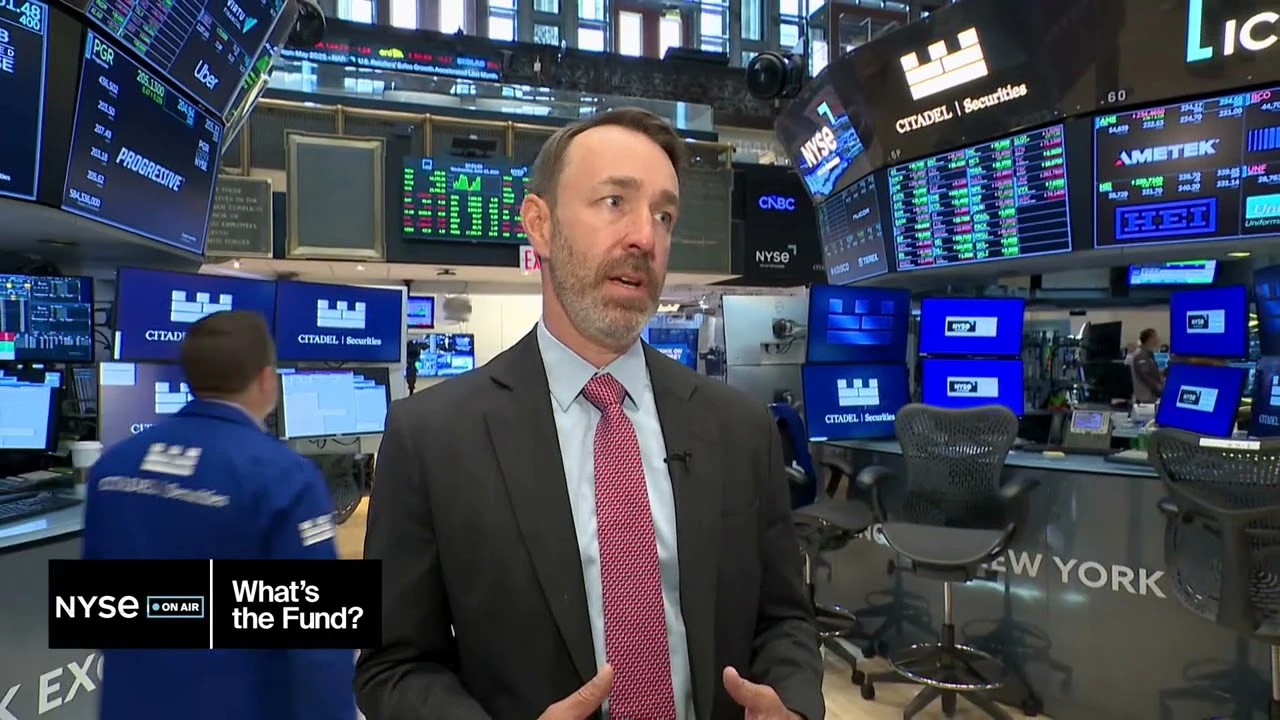
James St Aubin, Chief Investment Officer at Ocean Park Asset Management, discuss the DUKZ ETF, exposing investors to the whole spectrum of asset classes in the fixed income markets, through their rules-based process.

Browse all educational columns



Have you tried our ETF Compare tool?
Compare ETFs like a pro. Analyze fees, performance, exposure & holdings side-by-side.